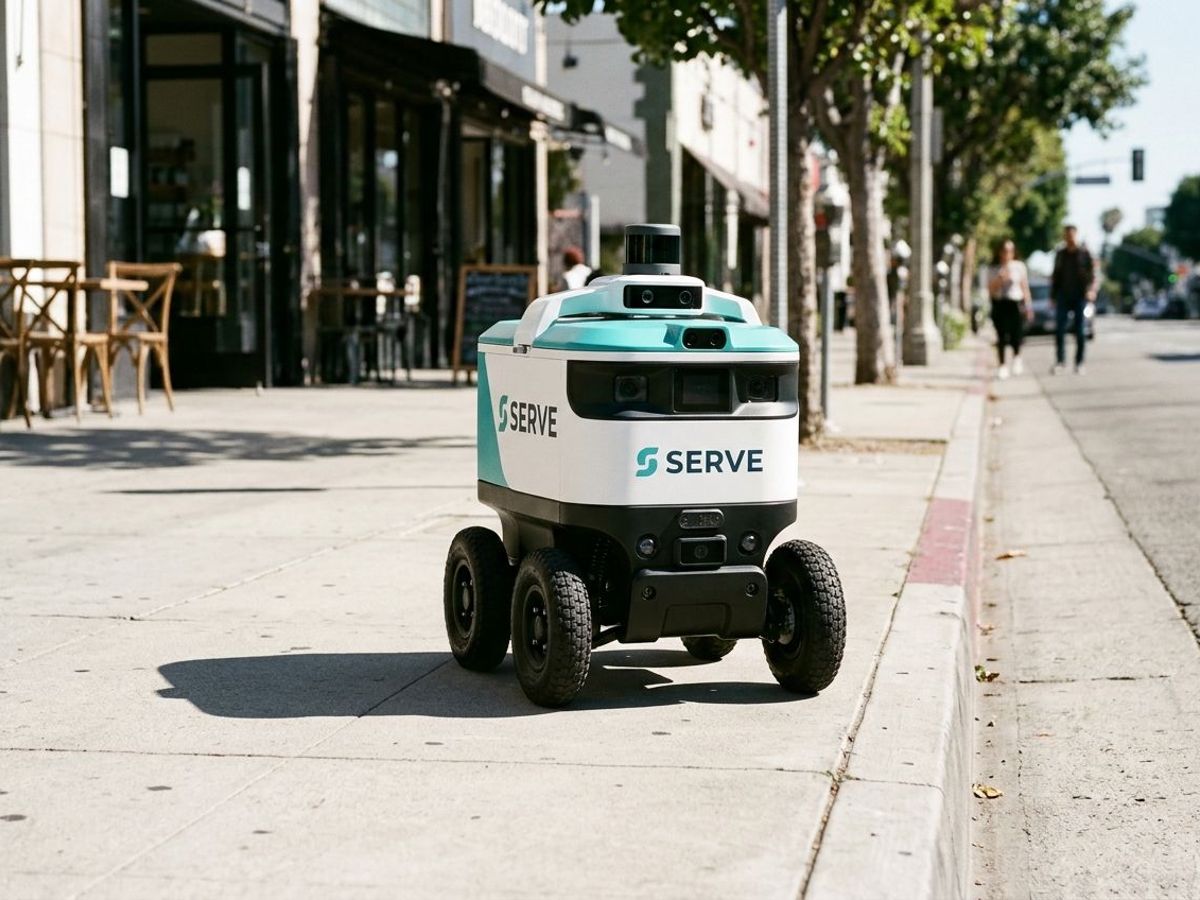

Serve Robotics is launching Physical AI Services to sell its connectivity and data tools to other robot builders, first reported by TechCrunch. The move gives companies a way to connect robots to data-center AI, sift field data for edge cases and use a data catalog built from Serve's sidewalk robots.
Physical AI Services adds a business line rather than replacing Serve's robot operations. CEO and co-founder Ali Kashani said the delivery and hospital-robot businesses are not going away, and that opening the technology to others would not have been possible without first developing Serve's own robot fleet.
The line has three products. Serve Link connects robots in the field to AI systems running in data centers, potentially letting customers use more powerful models without putting all the computing power onboard. A data curator helps companies find edge cases in real-world robot data and feed them into a training model to improve performance. The third product is a real-world foundation-model data catalog built from Serve's sidewalk robots to teach AI models to understand complex human environments.
Bedrock Robotics, a startup developing self-driving systems for construction equipment, is a customer, according to Serve. Serve is also working with T-Mobile to bring AI computing power closer to robots.
Serve is offering tools to other builders while drawing on its own robots: its sidewalk fleet supplies the data catalog, and the new line sells connectivity and data services. Kashani said the approach follows a playbook he learned from Amazon: build an end-to-end application first, then open the technology as others seek to build similar systems.
Serve spun out of Uber's acquisition of Postmates in 2021 and went public in 2024. Its sidewalk delivery business is expanding while shifting away from Uber toward other partners, including DoorDash and Wonder.