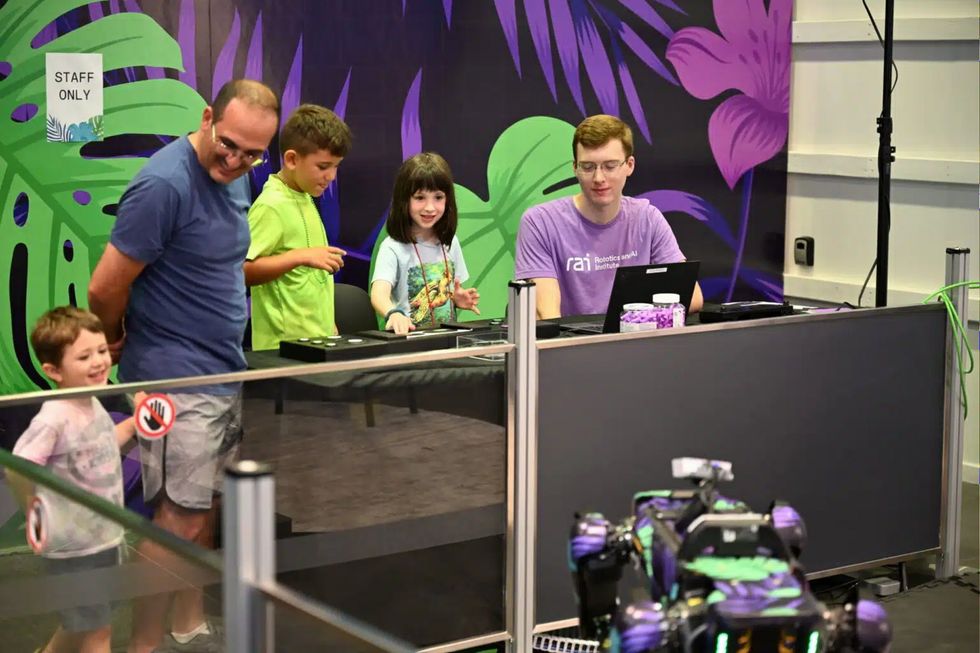

In the summer of 2025, the Robotics and AI Institute (RAI Institute) launched an innovative pop-up robotics lab inside the CambridgeSide mall. This unique initiative aimed to bridge the gap between the general public and advanced robotics technology by offering direct, hands-on experiences with state-of-the-art robots. The experiment not only showcased the technological capabilities of modern robots but also explored how people perceive and interact with them across different real-world scenarios.
Designing a Robot Experience for the General Public
The RAI Institute designed the mall pop-up lab to provide both educational and interactive experiences, making robotics accessible to a diverse audience. The space was divided into two main areas: a museum exhibit showcasing historical and modern robots, and an interactive driving arena called “Drive-a-Spot,” where visitors could control a Spot quadruped robot.
The museum area featured a range of robots, including earlier legged prototypes developed by RAI and commercially available models like ANYmal from ANYbotics. This helped visitors appreciate the evolution and diversity of robotic platforms. Meanwhile, the “Drive-a-Spot” arena allowed people of all ages—from toddlers to seniors—to remotely operate Spot using a custom adaptive video game controller designed with large, easy-to-press buttons. This inclusive design ensured that anyone could engage with the robot, regardless of physical ability or prior experience.
The driving arena was intentionally challenging, featuring tight spaces, low and tall obstacles, and barriers that required Spot to crouch or step over. Spot’s autonomous terrain adaptation was a highlight, as it could adjust its movements to navigate these obstacles while under joystick supervision. The arena’s scenario themes rotated among factory, home, hospital, and outdoor/disaster settings, reflecting environments where robots are at varying levels of acceptance and utility.
Impact of Direct Interaction on Public Perception
A key objective of the pop-up lab was to understand how firsthand interaction with robots influences public comfort and perceived suitability of robots in different settings. Visitors who drove Spot participated in surveys before and after their experience. They rated their comfort levels and opinions on how well Spot would function in factory, home, hospital, office, and outdoor/disaster environments.
Results showed that direct interaction generally increased comfort and positively influenced perceptions of robot suitability, especially in industrial and emergency response contexts. Interestingly, even in settings where people initially felt ambivalent or skeptical—like homes and hospitals—exposure to the robot’s capabilities helped reduce apprehension. Participants often expressed surprise at Spot’s agility and responsiveness, which contrasted with their prior assumptions shaped by sensationalized media.
These findings emphasize the importance of experiential learning in shaping realistic attitudes toward robots, highlighting how physical encounters can demystify technology and foster acceptance.
Challenges in Public Robotics Engagement
While the pop-up lab succeeded in engaging a broad audience, it also highlighted challenges in public robotics interaction. One is the balance between robot autonomy and user control; visitors needed to feel in command while appreciating the robot’s autonomous adjustments. Designing intuitive interfaces that accommodate all ages and abilities remains a key consideration.
Another challenge is managing expectations. Many visitors had preconceived notions fueled by media portrayals, leading to either unrealistic optimism or fear. The controlled environment of the lab helped set realistic expectations, but scaling such educational efforts to wider audiences poses logistical and cost challenges.
Finally, integrating robots into public spaces like malls requires careful attention to safety, accessibility, and social norms, ensuring that robots complement human activities without causing discomfort or disruption.
The Role of Context: Where Robots Fit Best
The rotating themes of the driving arena underscored how context shapes acceptance of robotic technology. Industrial and emergency response scenarios generally elicited higher comfort and perceived suitability ratings, reflecting existing familiarity with robots in these domains.
In contrast, domestic and healthcare settings remain more sensitive. People expressed concerns about privacy, reliability, and emotional connection when imagining robots in homes or hospitals. However, hands-on experience helped alleviate some of these concerns by showcasing robots’ practical benefits and user-friendly operation.
For buyers and developers, this underscores the importance of tailoring robot design and communication strategies to specific environments and user expectations. Understanding where robots naturally integrate and where additional trust-building is needed will be crucial for broader adoption.
What This Means for Buyers
For organizations and individuals considering robot adoption, the RAI Institute’s mall experiment offers several insights:
- User Experience Matters: Intuitive, accessible control systems can significantly improve user acceptance and operational effectiveness. Consider investing in adaptive interfaces that cater to diverse users.
- Context Is Key: Evaluate how the robot will fit into your specific environment—industrial, healthcare, home, or outdoor—and address the unique challenges and expectations of each.
- Education Builds Trust: Providing hands-on demonstrations and experiences can help stakeholders and end-users develop realistic expectations and reduce apprehension.
- Autonomy with Supervision: Balancing autonomous capabilities with user oversight enhances safety and confidence, especially in complex or dynamic environments.
For those interested in exploring robots similar to Spot or other interactive platforms, browse quadruped robots on Robot Overflow or explore industrial and service robots suited for various applications.
Conclusion
The pop-up robotics lab in a busy public mall demonstrated that direct experience with robots can meaningfully shift public perceptions and increase comfort with robotic technology. By combining education, interaction, and inclusive design, the RAI Institute provided valuable data on how people relate to robots in different settings. This approach offers a model for stakeholders aiming to integrate robots into everyday spaces, emphasizing that successful adoption depends not only on technology but also on thoughtful engagement with users.