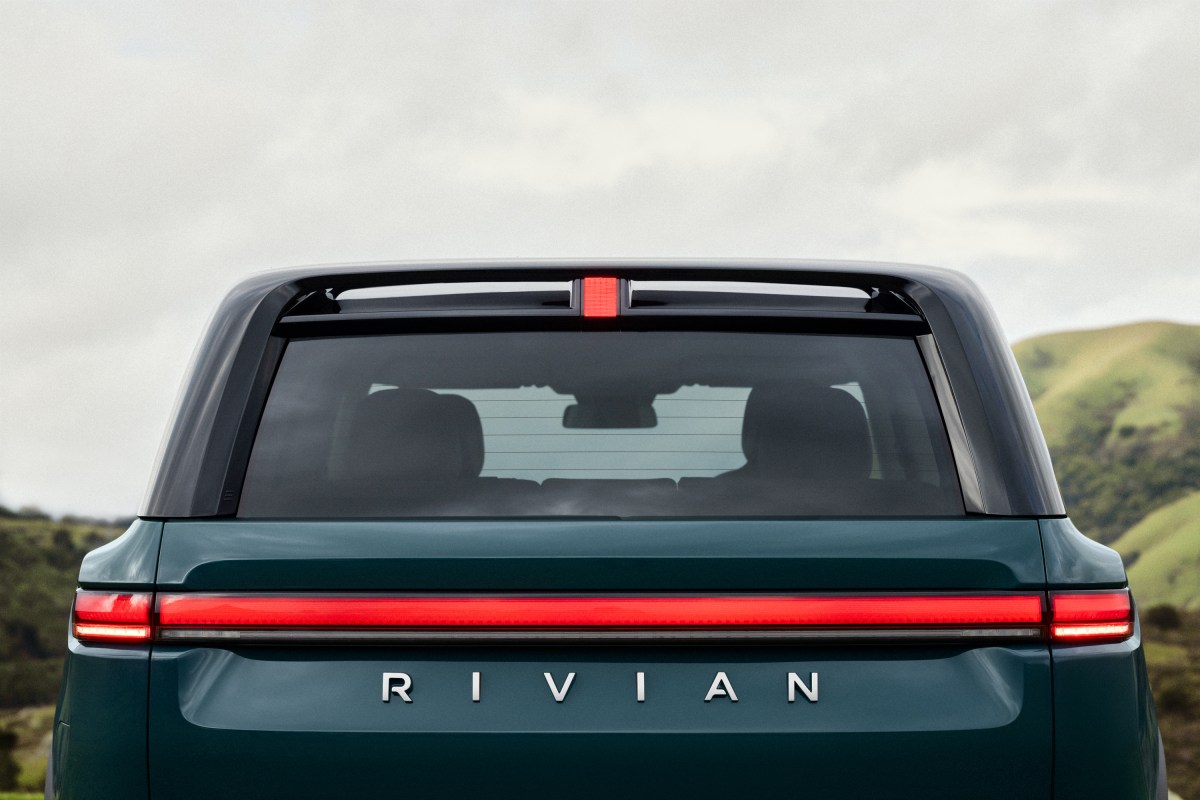

Rivian raised its 2026 outlook as Q3 revenue rose 38% year over year and the R2 became its best-selling vehicle in its first full delivery quarter, first reported by Electrek. The automotive segment still posted an $80 million gross loss, as Rivian attributed about $120 million in added cost of revenue to the R2 ramp.
Rivian said R2 launch-edition reservation conversion stayed above expectations, added a second production shift in Normal, Illinois, and saw demo drives rise to more than 103,000 from 57,000 in Q2.
Rivian beat Bloomberg consensus on revenue, adjusted EPS and adjusted EBITDA. Analysts expected about $2.02 billion in revenue, an adjusted loss of $0.61 per share and an adjusted EBITDA loss of roughly $576 million; Rivian reported adjusted EPS of -$0.48 and adjusted EBITDA of -$435 million.
Deliveries reached a record 19,248, up 46% year over year and 58% from Q2; production also set a record at 19,751 vehicles.
Rivian raised its 2026 delivery range to 67,000 to 70,000 from 65,000 to 70,000 and improved adjusted EBITDA guidance by $100 million at the midpoint, to a loss of $1.85 billion to $1.75 billion. Capital expenditures are now projected at $1.40 billion to $1.50 billion, down $300 million at the midpoint; Rivian said the cut reflects timing of spend, not savings.
Automotive gross loss widened to $80 million from $36 million in Q2, with the segment’s margin at -5% versus -3%; a year earlier, its gross loss was $130 million. Rivian attributed about $120 million in added cost of revenue to the R2 ramp compared with more normalized production.
The quarter also included $81 million in regulatory credit revenue and an IEEPA tariff refund receivable. Excluding credits, automotive gross loss was about $161 million, or roughly $8,400 per vehicle delivered.
Rivian said automotive cost of goods sold per unit fell by more than $12,000 quarter over quarter, helped by a higher R2 mix and better fixed-cost leverage. Revenue per vehicle excluding credits fell to about $76,300 from $85,000 in Q2. The figures put lower unit costs alongside lower revenue per vehicle.
Software and services generated $605 million in revenue and $256 million in gross profit, a 42% margin, making it the only segment to contribute to Rivian’s consolidated gross profit. Volkswagen Group’s joint venture supplied $354 million, or 59%, of segment revenue; Rivian expects to recognize that revenue through about mid-2028.