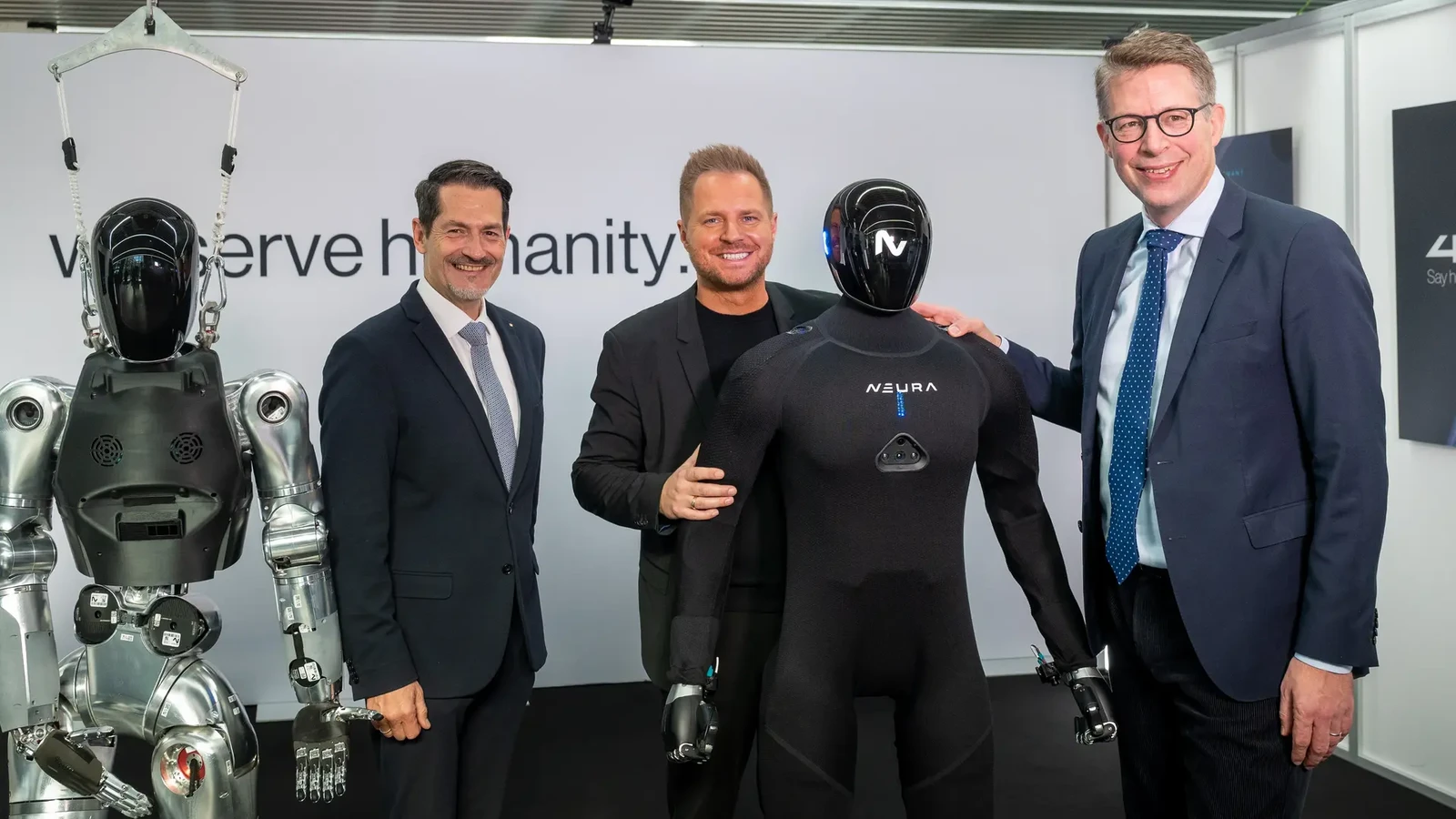

Neura Robotics, E.ON and German energy company enviaM are partnering to develop physical AI applications for electricity networks, with initial real-world trials planned for 2027, first reported by Roboticsandautomationnews. The work is aimed at inspecting and monitoring energy infrastructure, including substations, while supporting workers handling physically demanding, repetitive or potentially hazardous tasks.
Mitnetz Strom, an enviaM subsidiary and one of eastern Germany’s largest electricity distribution network operators, will serve as pilot partner. The companies say their longer-term objective is a scalable approach to physical AI in critical energy infrastructure, rather than isolated robotic demonstrations.
The partners will develop robotic capabilities at TUM RoboGym powered by Neura, a 2,300-square-meter robotics training facility opened at Munich Airport in October 2026 in collaboration with the Technical University of Munich. The facility combines human demonstrations, real-world robotic data and simulation.
Energy infrastructure specialists will demonstrate tasks using motion-capture systems, sensor-equipped suits and teleoperation. Robots will practice those activities and generate additional training data before their capabilities are tested in operational environments.
Training will use Neura’s Neuron AI multimodal foundation model, which combines vision, touch, audio, language and robot-state information. The Neuraverse platform will connect the training environment with real-world applications, allowing skills to be refined and potentially reused across compatible systems.
One potential application involves Neura’s 4NE1 humanoid, designed to navigate environments originally built for human workers, including stairs, doors and control cabinets. That could allow robots to undertake inspection and maintenance-support activities without requiring extensive modifications to existing facilities.
Training and application selection come before operational testing in the partners’ plan. Mitnetz Strom expects its first practical experience with the technology during 2027.