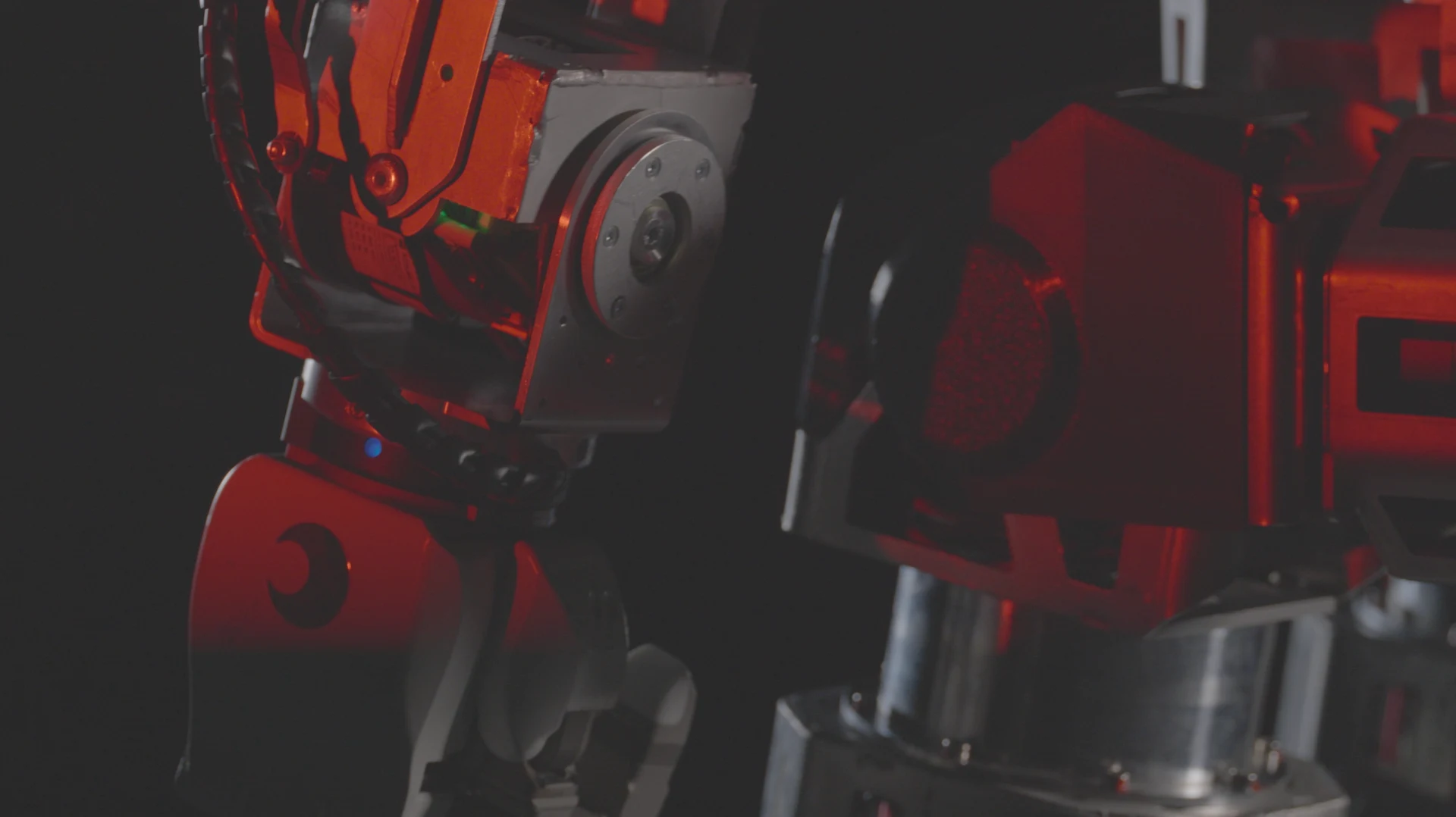

Minerva Humanoids has emerged from stealth with approximately $10 million in pre-seed funding to develop semi-autonomous humanoids for hazardous work, first reported by Roboticsandautomationnews. Roger is designed to let trained specialists remotely perform dangerous tasks in energy and public safety, keeping their judgment in the process while they stay outside hazardous environments.
Minerva is developing a humanoid robot called Roger, designed to let trained specialists remotely perform dangerous tasks. The company is initially targeting onshore and offshore oil and gas operations, explosive ordnance disposal (EOD), hazardous material response and other public safety work.
Minerva is also launching its first paid industry pilot this month. General Catalyst led the funding round, with Long Journey Ventures and Credo Ventures as co-leads.
Specialists operate Roger through a VR headset and force-feedback haptic gloves. They can see through its cameras, receive tactile feedback from its hands and remotely carry out fine manipulation tasks.
Minerva Intelligence, the company’s proprietary AI control system, handles balance, fall recovery and navigation while translating operator commands into physical actions. Minerva says low-latency control loops provide an immediate response to operators’ movements, and users can learn full-body control in under five minutes.
Roger’s arrangement pairs specialists’ remote judgment and fine manipulation with AI handling of balance, recovery and navigation.
Minerva estimates that around 7,000 energy workers worldwide die on the job each year, equivalent to approximately one death every 75 minutes. The company says it calculated the figure by applying the International Labour Organization’s global fatal work accident rate to the International Energy Agency’s estimate of a global energy workforce of 76 million people.
Remote robots have been used for decades in EOD and hazardous material response, but are typically wheeled machines with a single robotic arm and limited dexterity.
Minerva says it went from an initial concept to a fully functional walking humanoid in five months, including Roger’s design, manufacture and assembly. Its software and AI are primarily developed in the United States, while the first Roger prototypes are manufactured and assembled in Germany.
The company plans to manufacture commercial versions in Germany and the United States, building a Western-based supply chain that does not depend on single-source Chinese components. Minerva plans to use the funding to continue developing Roger’s AI and hardware for energy and EOD applications, with further deployments planned for later this year.