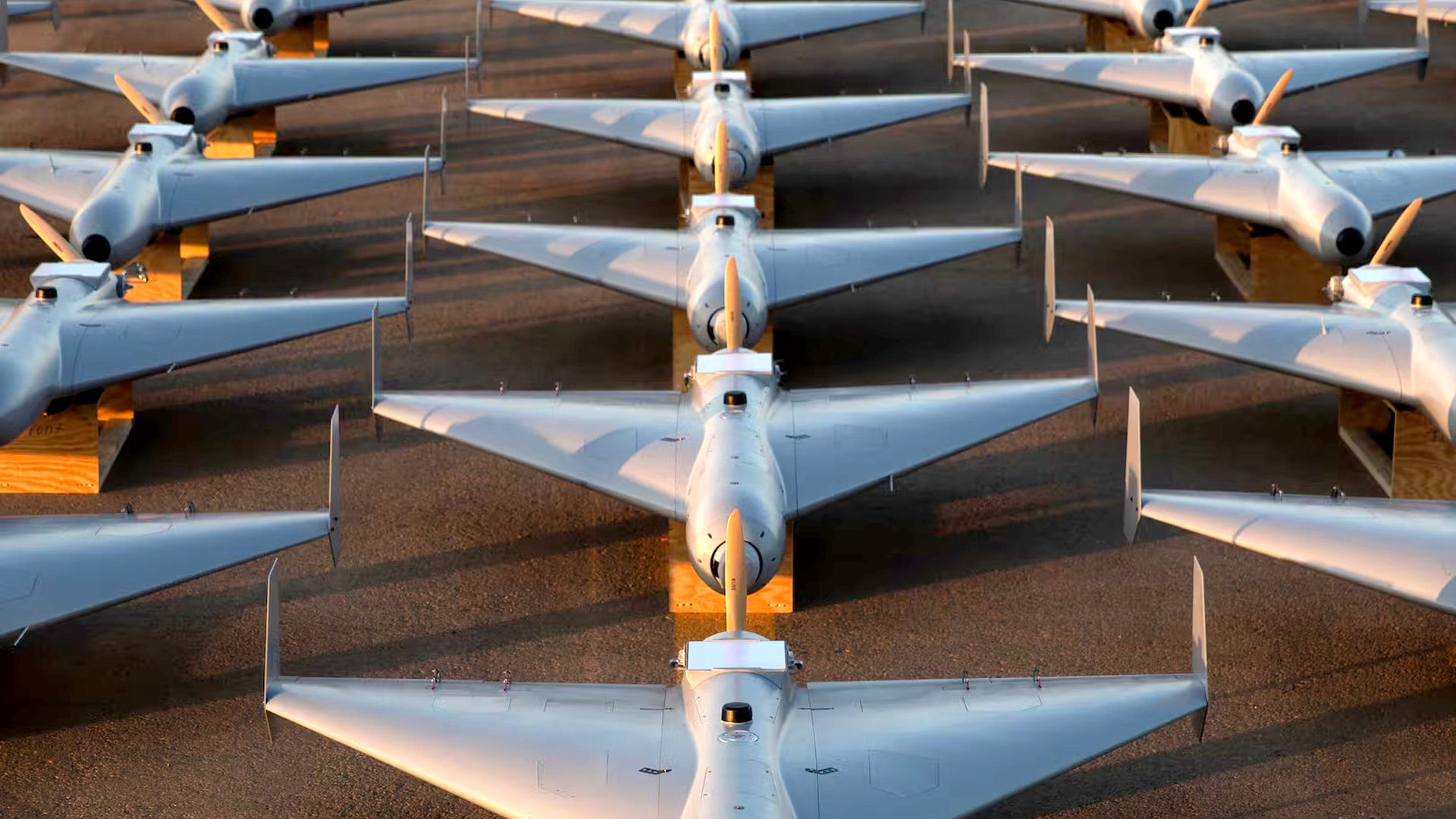

Waymo and Tesla are routing safety-critical remote supervision of autonomous vehicles through operators in the Philippines — a decision that violates hard-earned principles the U.S. military developed over 35 years of UAV operations. The parallels are not theoretical: military drone programs suffered catastrophic accident rates until they fixed the same problems that commercial AV companies are now replicating.
Table of Contents
- Why Remote Supervision of Self-Driving Cars Is a Known Risk
- Five Military UAV Lessons That AVs Are Ignoring
- The Philippines Controversy: What the Outsourcing Decision Actually Means
- Operator Workload and the One-to-Many Supervision Trap
- What This Means for Autonomous Vehicle Robotics
- Frequently Asked Questions
Why Remote Supervision of Self-Driving Cars Is a Known Risk
Self-driving vehicles still cannot reliably handle construction zones, unresponsive pedestrians, or citywide power outages — the kinds of edge cases that are routine in human driving. So companies like Waymo rely on remote human operators to monitor fleets and intervene when the AI gets stuck.
This architecture — a human supervising an autonomous vehicle from a distance — is not a cutting-edge innovation. It is a decades-old problem the U.S. military has been wrestling with since the 1980s. According to IEEE Spectrum, Dr. Missy Cummings, a former Navy fighter pilot and UAV researcher, argues that commercial AV operators are repeating the military's early, deadly mistakes.
The consequences in the military context were measurable. Early Predator and Global Hawk UAV programs saw accident rates 16 times higher than manned fighter jets conducting equivalent missions — largely due to communication latency, poor interface design, inadequate training, and unrealistic operator workload assumptions. The military spent decades and significant resources fixing these problems. Self-driving car companies appear to be treating them as afterthoughts.
Five Military UAV Lessons That AVs Are Ignoring
The military's 35-year UAV operational record identified five recurring failure modes. Each maps directly onto current AV remote supervision practices.
1. Latency Is the Single Most Dangerous Variable
Latency — the delay between a command being issued and the vehicle responding — is not merely an inconvenience. It is a safety-critical parameter. Human neuromuscular lag alone runs 200–500 milliseconds under perfect conditions. Add network delay, and real-time teleoperation becomes unreliable.
The military learned this through wreckage. U.S. Air Force pilots in Las Vegas attempting to remotely land drones in the Middle East faced a minimum two-second command-response delay. The crash rate was 16× that of manned aircraft. The solution was local, line-of-sight operators and eventually fully automated takeoffs and landings.
Waymo has documented a directly analogous incident: a remote operator instructed a vehicle to turn left when the traffic light appeared yellow in their video feed. By the time the command reached the car, the light had turned red. That is not a software bug — it is physics. Moving remote operations further offshore to the Philippines increases that latency gap further.
2. Workstation Design Determines Error Rates
| UAV Platform | Human Factors | Interface Design | Procedure Design |
|---|---|---|---|
| Army Hunter | 47% | 20% | 20% |
| Army Shadow | 21% | 80% | 40% |
| Air Force Predator | 67% | 38% | 75% |
| Air Force Global Hawk | 33% | 100% | 0% |
Source: FAA analysis of U.S. Army and Air Force UAV crashes, 1986–2004
In some UAV platforms, 100% of human-error crashes were attributable to interface design failures — not operator incompetence. One well-documented case: buttons were positioned such that operators accidentally shut off the engine instead of firing a missile.
The AV industry is showing comparable warning signs. Some autonomous shuttle operators use off-the-shelf gaming controllers — hardware designed for entertainment, not safety-critical vehicle intervention. Mode confusion from these controllers was identified as a contributing factor in at least one documented shuttle crash.
3. Training Gaps Produce Accidents
Early drone programs were designed by pilots, for pilots — but supervising a drone is closer to air traffic control than active flight. Operators were placed in supervisory roles without adequate preparation. The AV industry faces a structural version of the same problem: there are no standardised certification requirements, no agreed-upon simulation training hours, and no common competency benchmarks for remote vehicle operators.
4. Situational Awareness Degrades Over Distance
Military UAV research consistently found that operators far removed from the operating environment lose critical contextual awareness — local traffic patterns, weather conditions, emergency response activity. A remote operator in Manila monitoring a Waymo vehicle in San Francisco has no lived familiarity with that city's infrastructure, driving culture, or emergency protocols.
5. Security Vulnerabilities Scale With Distance
Routing safety-critical vehicle control commands through intercontinental networks introduces cybersecurity attack surfaces that simply do not exist with locally based supervision. The military treats command-and-control link security as a tier-one concern in UAV operations. Commercial AV remote operations frameworks have not yet demonstrated equivalent rigour.
The Philippines Controversy: What the Outsourcing Decision Actually Means
Recent U.S. Senate testimony confirmed that both Waymo and Tesla are using remote operators based in the Philippines to supervise autonomous vehicle fleets operating on American roads. The business logic is straightforward — labour arbitrage reduces operating costs significantly. The safety logic is considerably harder to defend.
The military's unambiguous lesson is that control distance must be minimised, not maximised. The shift to offshore supervision increases three compounding risks simultaneously: latency, cultural/contextual unfamiliarity with the operating environment, and cybersecurity exposure across longer network paths.
None of this is to suggest overseas operators are less capable. The problem is structural. Even highly trained operators cannot overcome physics: signal propagation delay is real, and the consequences during a time-critical intervention are not abstract.
Operator Workload and the One-to-Many Supervision Trap
The military spent years attempting to have one operator supervise multiple drones simultaneously — the economics are compelling. It largely failed. Cognitive switching costs (the time and attention required to rebuild situational awareness when shifting between vehicles) produce dangerous workload spikes. The more vehicles per operator, the worse the compounding effect.
AV companies face the same economic pressure and the same cognitive ceiling. If every vehicle in a fleet realistically demands dedicated human attention during edge cases — and edge cases in dense urban environments are not rare — then the cost model for remote supervision breaks down entirely.
Conversely, under low-demand conditions, operators become bored, complacent, and slower to respond. UAV research documented this pattern extensively. The AV industry has not publicly addressed how it models or monitors operator alertness during low-activity periods.
What This Means for Autonomous Vehicle Robotics
The autonomous vehicle sector sits at the intersection of robotics, AI, and physical safety systems — and the remote supervision architecture it has built is arguably the most under-scrutinised element of the entire stack. For engineers and buyers evaluating AV platforms:
Latency budgets matter more than autonomy benchmarks. A vehicle that handles 99.9% of scenarios autonomously but relies on a 300ms+ latency remote override for the remaining 0.1% is not safe — it is a latency-failure waiting to happen in the wrong 0.1%.
Interface design is safety infrastructure. The military data shows that even small UI failures produce outsized accident rates. Operators using off-the-shelf hardware for life-safety applications is not a cost optimisation — it is a liability.
Regulation is coming. The Senate hearing that surfaced the Philippines outsourcing story signals that U.S. legislators are beginning to ask questions the industry has not fully answered. Companies building remote supervision infrastructure now should expect those architectures to face formal standards within the next regulatory cycle.
For those tracking the broader trajectory of used industrial robots and autonomous ground vehicle platforms, the remote supervision question will shape how physically deployed AI systems are evaluated for safety certification for years to come. The companies that build military-grade supervisory control discipline into their AV operations today will have a significant regulatory and reputational advantage when standards inevitably arrive.