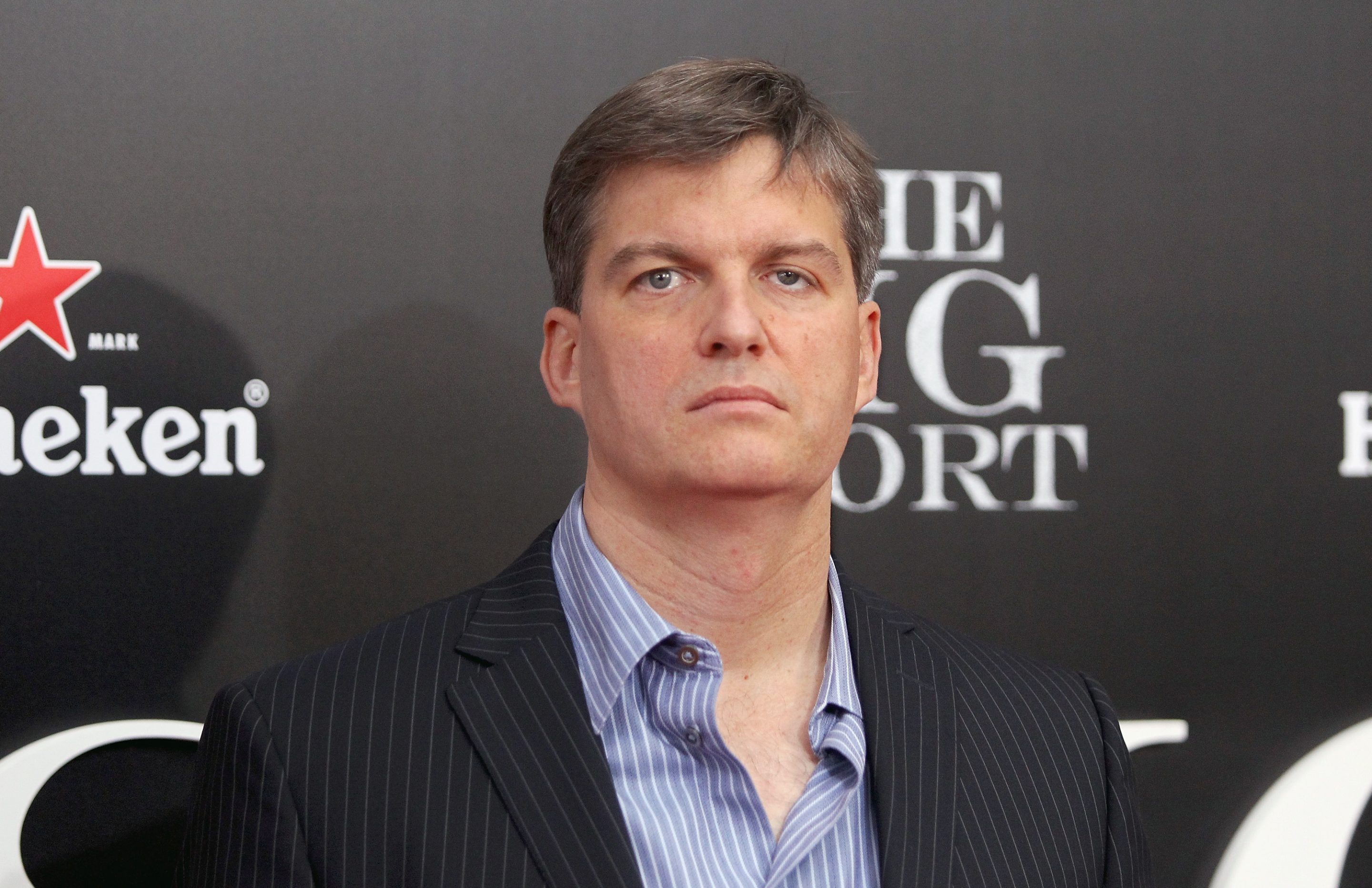

Michael Burry, the investor who predicted the 2008 housing crash, said he was tempted to bet against SpaceX after its recent IPO but ultimately passed on expensive put options. His skepticism underscores a growing disconnect between SpaceX’s nearly $3 trillion valuation and its heavy losses, raising doubts about the feasibility of Elon Musk’s Mars ambitions.
- What Happened
- Why Burry Passed on the Trade
- SpaceX’s Financial Picture: Revenue Up, Losses Up
- The Musk Short History: A Bet Against the CEO
- What This Means for the Industry
- Frequently Asked Questions
- Conclusion
What Happened
In a Substack post reported by Fortune, Burry revealed he had reviewed options for shorting SpaceX following its IPO last week. The stock has already surged more than 25%, pushing the company’s market cap close to $3 trillion—briefly surpassing Amazon’s valuation.
Burry described SpaceX as “fundamentally a small space company, a niche telecom, a bedeviled social media company, and a CoreWeave-light.” He said he was “tempted” by a put option expiring in December 2026 priced at roughly $6.75, but ultimately concluded: “But no thank you.”
Why Burry Passed on the Trade
Burry examined two put options: a June 2027 expiry costing about $13 per contract, and the December 2026 option at $6.75. With the stock trading near $212, the premiums were steep enough to dissuade him. He noted that the options were “not enticing enough” given the uncertainty around SpaceX’s actual business fundamentals.
This cautious, value-driven approach is classic Burry. He made his name by betting against subprime mortgages in 2008, and later shorted Tesla and other high-flying tech stocks. Here, he sees a similar overvaluation story—but the price of the bet itself spoils the risk-reward equation.
SpaceX’s Financial Picture: Revenue Up, Losses Up
The S-1 filing SpaceX submitted ahead of its IPO offers a rare look inside the company’s books. Revenue climbed roughly 33% to $18.7 billion in 2025, up from $14.1 billion in 2024. But losses accelerated even faster: the company posted a net loss of $4.27 billion in Q1 2025 alone, compared to $528 million in the same quarter a year earlier. Since inception, SpaceX has accumulated a deficit of $41.3 billion.
Burry pointed out that the company’s core businesses—rocket launches, Starlink satellite internet, and the social media platform X—aren’t generating the kind of returns that would justify a $3 trillion market cap. He likened it to a “small space company” whose value depends heavily on Musk’s long-term vision for Mars colonization.
The Musk Short History: A Bet Against the CEO
Betting against Musk can be personally costly. Musk has a history of attacking short sellers, most famously Bill Gates. In 2022, Gates shorted $500 million of Tesla stock, prompting an angry text exchange. Musk later publicly called Gates’ position “crazy” and told him he could not take his climate philanthropy seriously while holding a short position.
Burry knows this firsthand: he previously shorted Tesla and faced Musk’s online ire. Now, with SpaceX public and Musk overseeing multiple ventures—Tesla, X, and a controversial stint in the Trump administration—any short seller risks not only financial loss but public ridicule.
What This Means for the Industry
Burry’s decision to pass on shorting SpaceX is more than a footnote from a famous investor. It highlights a structural tension in the market: retail and institutional investors are pricing in a future that may take decades—if ever—to materialize. SpaceX’s core businesses are real but small relative to its valuation. Starlink has 4 million subscribers and generates about $5 billion in revenue, but faces heavy infrastructure costs. The launch business, while dominant, is also capital-intensive.
For competitors like Blue Origin (Jeff Bezos) and United Launch Alliance, SpaceX’s public status could force more financial transparency. If Burry is proven right and the stock corrects, it could reset expectations for the entire space sector. But if he’s wrong, and SpaceX absorbs losses en route to a Mars settlement, the shorts will be crushed again.
Investors should watch the Q2 earnings report due in August for signs of whether losses stabilize or widen. The next milestone for Musk is Starship’s first orbital cargo mission, which could refuel the narrative—or expose the gap between promise and profit.
Conclusion
Michael Burry’s decision to pass on shorting SpaceX reflects a classic value-investor’s caution: the trade is interesting, but the price of entry kills the thesis. With nearly $62.8 billion of IPO proceeds already spoken for by insiders and vendors, and losses mounting, the risk-reward equation remains tilted toward Musk’s vision—at least for now. Whether the market eventually agrees with Burry or the optimists will depend on how quickly SpaceX can turn its billion-dollar deficits into profitable operations.