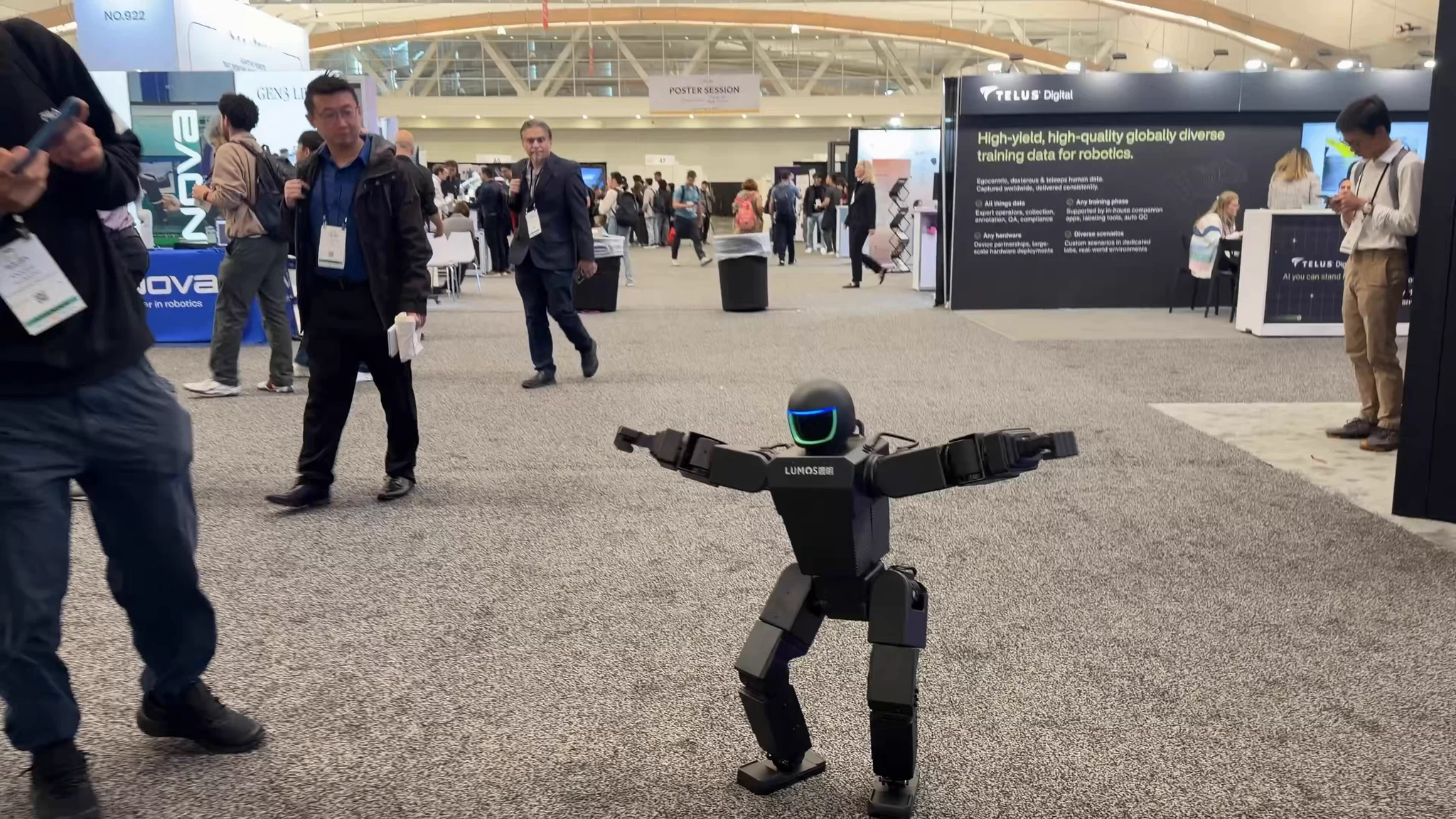

Lumos Robotics staged a 45-minute humanoid robot theater performance in Shenzhen, designed to run autonomously from opening to curtain call, first reported by Roboticsandautomationnews. The organizer, Shenzhen Tourism and Culture Industry Development Co., will operate the theater regularly as Lumos explores entertainment, tourism and other offline commercial settings for its robots.
The show at the Dream Theater of the Shenzhen Bao’an District Youth Palace featured a robot host and six formats: dance, cross talk, sketch comedy, martial arts, a DJ set and magic. A robot band opened with a group dance, followed by a cross-talk routine pairing Lumos’s smaller NIX robot with a child.
Other acts gave the Monkey King a cyberpunk twist, showcased robotic martial arts and featured DJ sets blending electronic and traditional Chinese music. Multiple robots also performed alongside human actors.
The production tested whether robots could execute a chain of tasks rather than demonstrate isolated movements, while coordinating with people and other machines. Thomas Zhang, head of R&D for NIX at Shenzhen-based Lumos, said making the entire performance autonomous was harder than any individual movement.
Robots had to independently manage stage entrances, positioning, movement transitions, audience interaction and the final curtain call. The group dance required multiple robots to synchronize, while the comedy routine required speech and gestures to line up in real time; Zhang described the performance as a one-take setting where mistakes were public.
Lumos’s NexCore skill-production system integrates task definition, data input, model training, skill evaluation, deployment and continuous learning into a standardized workflow. Individual skills can be combined into performances by multiple robots, and data and feedback from live shows can be used to refine the programs and underlying skills.
The theater pairs a commercial outlet with a demanding setting for testing complex sequences, coordination and responses to real audiences. Lumos also sees it as a potential gateway to science and engineering education.
According to a TrendForce study, a humanoid robot can take on about 10 paid performances a month, with payback periods of six to eight months in China. Lumos aims to make the theater format replicable across more cities and settings.