
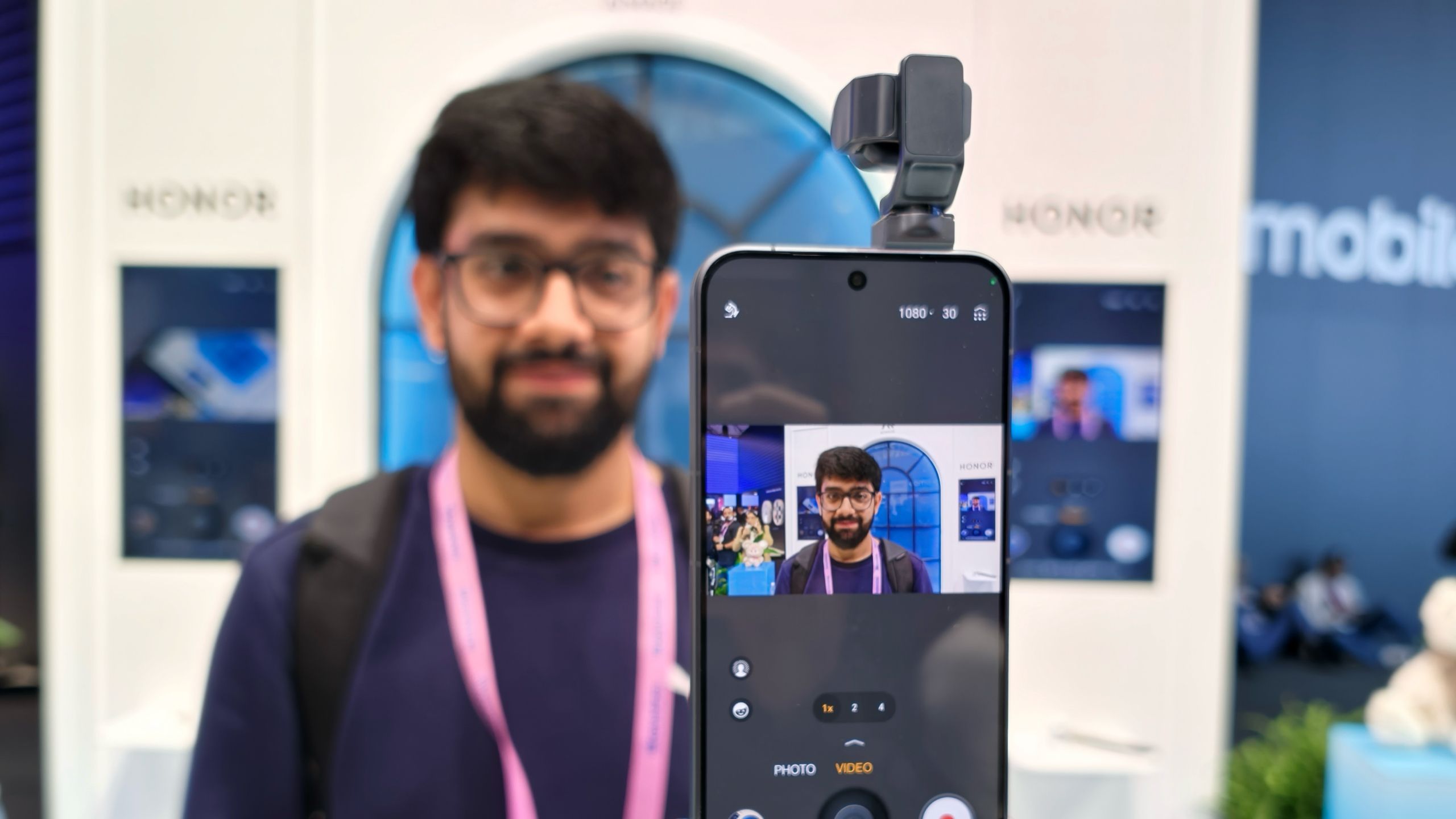
Honor unveiled a new smartphone at Qualcomm's Snapdragon Fans event, featuring a retractable mechanical arm that extends from the device to provide active camera stabilization and tracking. The design eliminates the need for a separate external gimbal, potentially reshaping how consumers capture stable video on a phone.
- The Device: A Retractable Camera Arm in Action
- Powered by Qualcomm's Latest Snapdragon Chipset
- Launch Timeline and Market Positioning
- Competitive Context: Redefining Phone Photography
- What This Means for the Industry
- Frequently Asked Questions
- Conclusion
The Device: A Retractable Camera Arm in Action
The standout feature of Honor's new phone is a motorized arm hidden inside the chassis. When not in use, the arm sits flush within the body, invisible to the user. With a single tap, it slides out horizontally, supporting the camera module and enabling physical movement for automatic framing, subject tracking, and advanced stabilization.
According to TechWeb, the arm acts as an integrated gimbal, allowing the phone to pan and tilt during video recording without requiring the user to manually adjust the device. High-resolution images released by Qualcomm show the arm extended from the back of the phone, with the camera module mounted on its tip. The arm retracts completely when not needed, maintaining a standard smartphone profile.

The design suggests Honor prioritized durability: the arm must withstand repeated extension cycles and the torque of rapid panning motions. Leaked specifications indicate the arm supports 360-degree rotation and can tilt the camera up to 30 degrees, giving it a range comparable to standalone gimbals.
Powered by Qualcomm's Latest Snapdragon Chipset
Honor paired the mechanical system with a flagship Snapdragon processor, which handles the on-device AI needed to drive the arm's movements. The chipset processes real-time camera data to track subjects, adjust framing, and stabilize footage — tasks that previously required either a separate gimbal processor or a cloud connection.
Qualcomm's involvement in showcasing the phone at its own event signals close collaboration between the chipmaker and Honor. The Snapdragon platform's on-device AI capabilities are central to the arm's performance, enabling low-latency decisions about when to pan, tilt, or hold position. This tight integration means the arm's movements feel natural rather than mechanical.
The AI also powers advanced stabilization that merges optical and electronic correction with the physical movement of the arm. Early hands-on reports describe a "liquid-smooth" panning effect during video recording, even when the user is walking.

Launch Timeline and Market Positioning
Honor plans to officially launch the phone in the third quarter of 2026 — roughly three months from now. No specific date or pricing has been announced, but the device is expected to sit in Honor's premium lineup, likely competing with flagship phones from Samsung, Apple, and Xiaomi.
The mechanical arm introduces a clear differentiator: no other major smartphone currently integrates a physical moving camera system. While phones have long offered optical stabilization, the ability to physically reposition the camera module in two axes is unprecedented in a mainstream handset. This could justify a premium price — analysts speculate a starting point above $1,200.
Honor is likely targeting content creators and vloggers who currently carry separate gimbals. By embedding the hardware directly into the phone, Honor eliminates the friction of carrying and pairing an extra device. The company may also market the phone to users who want professional-looking video without investing in dedicated gear.
Competitive Context: Redefining Phone Photography
The phone camera arms race has historically focused on sensor size, megapixel count, and computational photography. Honor's approach adds a physical dimension — moving the camera module itself — which rivals have not adopted. Samsung experimented with rotating camera modules in the Galaxy A80, but that design rotated the entire camera bump rather than extending a separate arm.
Other brands, including Xiaomi and Oppo, have explored under-display cameras and pop-up selfie modules, but none applied a motorized arm to the primary rear camera system. Honor's integration with a flagship Snapdragon chipset gives it an edge in AI-powered tracking, potentially making the feature more than a gimmick.
The challenge will be durability and bulk. The arm mechanism adds thickness and weight — early images show a slightly thicker profile than typical flagships. If Honor can deliver reliable operation over hundreds of thousands of cycles, the phone could capture a niche but loyal audience.
What This Means for the Industry
For consumers, the phone eliminates the need for a separate gimbal, simplifying mobile videography. Travel vloggers and social media content creators could see this as a significant convenience — one device that handles stabilization without bulky accessories.
For competitors, Honor's move forces a strategic question: Do they also develop mechanical camera systems, or do they double down on computational photography and sensor hardware? Expect Samsung, Apple, and others to watch consumer reception closely. If early sales are strong, rival brands may accelerate their own physical-camera research.
For the accessory market, integrated gimbals threaten standalone gimbal makers like DJI (Osmo series) and Zhiyun. A phone that offers professional-level stabilization out of the box reduces the rationale for buying a separate device, especially for casual users. However, professionals may continue to prefer dedicated gimbals for heavier rigs and longer battery life.
For Qualcomm, the partnership showcases the Snapdragon platform's ability to handle complex hardware-software integration. Other phone makers may now consider working with Qualcomm to develop similar physical features, leveraging the chip's AI and motion-control capabilities.
The broader smartphone industry trend here is toward adding physical mechanisms to improve camera output — a departure from the past decade's focus on software alone. If successful, mechanical camera arms could become a new battleground in the premium phone segment.
Conclusion
Honor's mechanical camera arm represents a genuine hardware innovation in a smartphone market that often relies on iterative software upgrades. By integrating a motorized gimbal directly into the phone and pairing it with Qualcomm's AI-capable chipset, Honor offers videographers a compelling all-in-one solution. The device's success will depend on reliability, pricing, and whether users embrace a thicker, heavier phone for the sake of smoother video. If the gamble pays off, expect other manufacturers to quickly follow with their own moving camera systems.