
Hello Robot gets nearly $3M to study Stretch in elder care

Hello Robot gets nearly $3M to study Stretch in elder care

Live•Oct 6, 08:30 PM•2 min read•
Liu Wei
Liu Wei

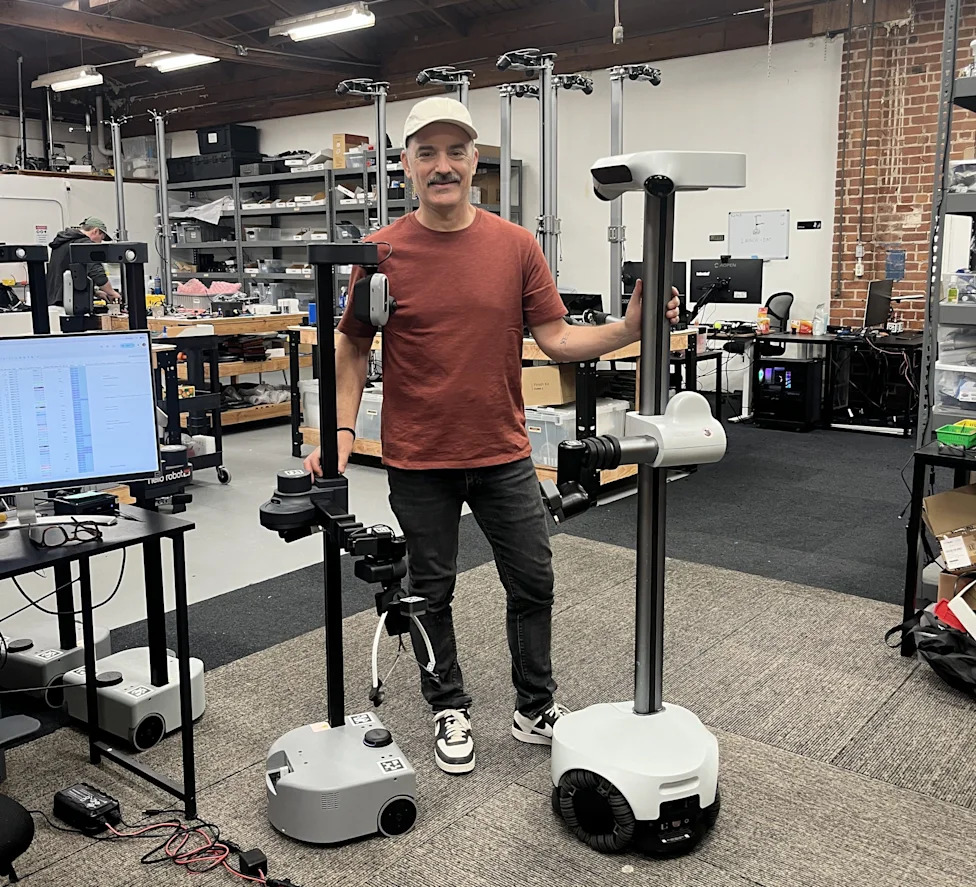
Hello Robot has received nearly $3 million over three years to study its Stretch robot for elder care, first reported by Roboticsandautomationnews. The three-year project will examine how the robot could support cognitive assistance, social engagement and safety management for people with mild cognitive impairment and early Alzheimer’s dementia at home and in care settings.

The award is a Phase IIB Small Business Innovation Research grant from the National Institute on Aging, part of the National Institutes of Health. The University of Illinois Urbana-Champaign is the research partner, and the funding is intended to advance Stretch’s commercialization for in-home and care-setting use.

Researchers will use Stretch 4, Hello Robot’s newest model, introduced in May, and AI-powered advances in language, planning, perception and voice interaction. Planned functions include reminders and activity guidance, initiating social interactions, and support for routines involving mobility, hydration and other daily needs.

The study will include participatory design research with 60 older adults, care partners and professional care staff. Home evaluations will involve older adults with mild cognitive impairment or mild dementia and their care partners; professional staff will use Stretch in care settings over an eight-week period.

Researchers will assess effectiveness, usability, reliability, trust, acceptance and safe operation around older adults, while identifying practical requirements for deployment. The evaluation plan spans homes and professional care settings and measures trust and acceptance alongside effectiveness.

Hello Robot CEO and co-founder Aaron Edsinger said, “A robot’s value isn’t how complicated the task is. It’s how much agency that task gives someone.”

The project builds on earlier NIH-funded work that used participatory design to refine Stretch for older adults with cognitive and physical impairments. Researchers also evaluated the robot in naturalistic settings with ClarkLindsey Life Plan Community to identify applications for further development.

More than 11,000 Americans turn 65 every day, and nearly 9.7 million direct caregiving job openings, including new jobs and vacancies, need to be filled by 2034. The Phase IIB project began on September 22, 2026, and is expected to continue through May 2029.

Arizona appeals court vacates manslaughter sentence after AI video

An Arizona appeals court vacated the 10.5-year sentence of Gabriel Horcasitas while upholding his manslaughter conviction, first reported by Nytimes. The case returns to Maricopa County Superior Court for resentencing without the video, after judges found that it presented scripted statements as if the victim himself were speaking in court.

The three-judge panel said the video generated a likeness of Christopher Pelkey’s voice and appearance but did not reflect actual events. It found that allowing and relying on the video made the sentencing fundamentally unfair, and noted that no prior Arizona case had addressed the admissibility of such a depiction at sentencing.

The judges said a victim’s right to speak cannot override a defendant’s right to be sentenced on accurate, reliable information. They said the video collapsed the distinction between the family’s belief about what Pelkey would have said and Pelkey’s own voice and opinions.

The ruling distinguishes family members speaking about Pelkey from a generated likeness that appeared to speak for him.

Pelkey’s sister, Stacey Wales, presented the video during Horcasitas’s sentencing alongside victim-impact statements from family and friends. Wales wrote the script and said her husband and the couple’s longtime business partner helped create the video using Pelkey’s voice from a YouTube video and his face and torso from a funeral-service poster.

Judge Todd F. Lang praised the video as genuine, then imposed the maximum sentence of 10.5 years, more than the nine years prosecutors had sought.

Wales said nobody intended to make the court believe Pelkey was alive or that he had recorded the video before his death. She said she disagreed with the ruling and argued that families use slide shows, collages, hypothetical conversations and poetry to convey grief.

Wales compared the AI video with photography, saying it took 15 years of landmark cases around the 1860s before photography was widely accepted in courts.

The case returns to Maricopa County Superior Court for a new sentencing hearing without the AI-generated video.