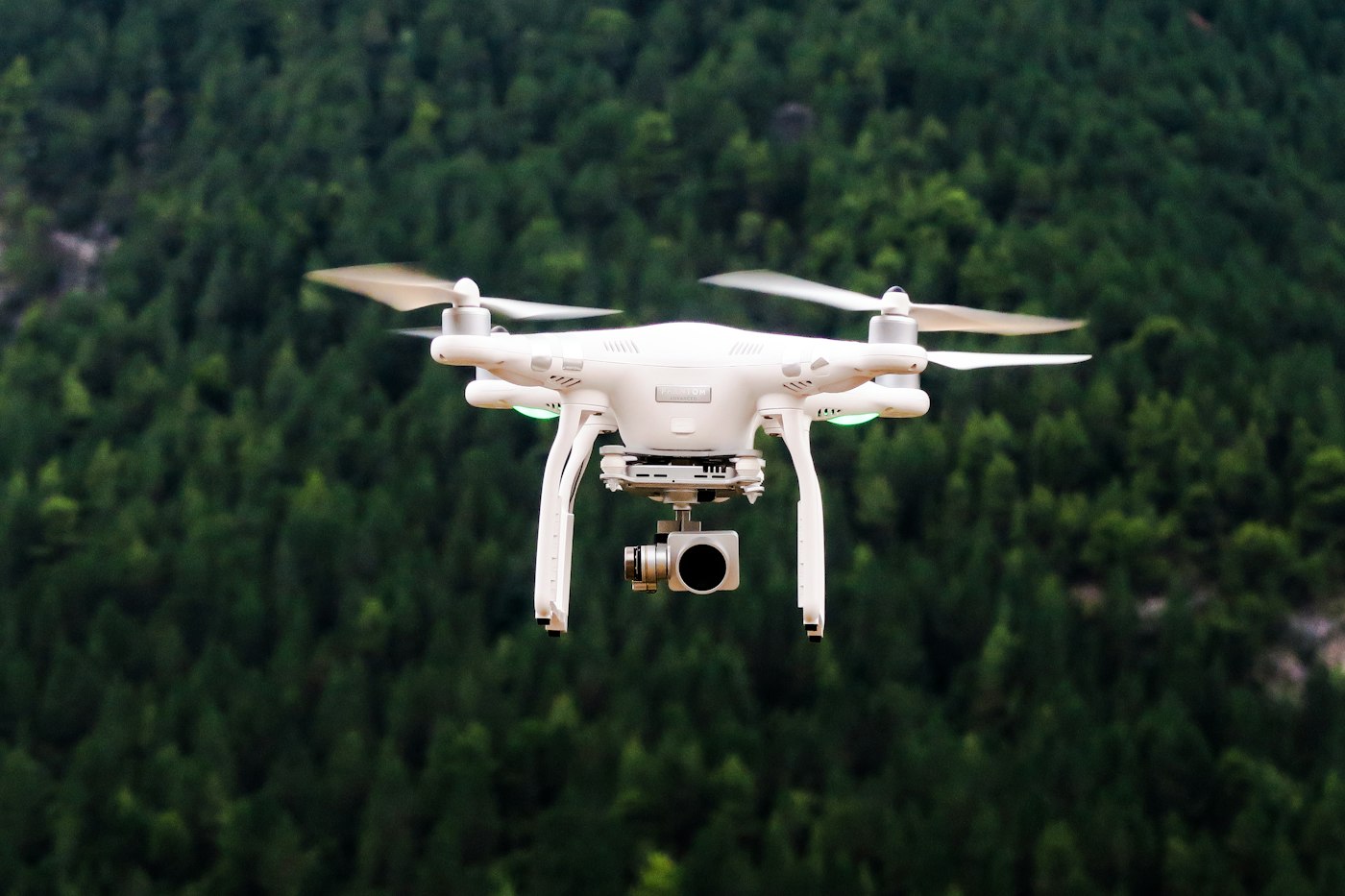

Commercial drones are moving beyond experimental pilot projects into real-world operations across delivery, agriculture, and inspection. A new forecast predicts annual shipments will exceed 9 million units by 2036 as industries prove drones can solve labor shortages, reduce risks, and enable services impossible with traditional methods.
- What's Driving the Shift from Pilots to Operations?
- Where Are Drones Delivering Real Economic Value?
- Why Delivery Drones Will Scale in Phases, Not All at Once
- How Agricultural and Inspection Drones Offer Clearer ROI
- What This Means for Buyers
- Frequently Asked Questions
What's Driving the Shift from Pilots to Operations?
For years, commercial drones lived in the pilot-project phase—small fleets, limited geofences, glowing press releases but no real scale. That is changing. A report from British analyst firm IDTechEx shows the industry is now prioritizing applications that deliver measurable operational value: safe flight at scale, reliable data collection, and repeatable mission outcomes. The result is a projected compound annual growth rate (CAGR) that lifts drone shipments from roughly 1 million units today to over 9 million by 2036.
The shift comes as early adopters in delivery, agriculture, and inspection have demonstrated concrete ROI on labor savings, asset utilization, and risk reduction. Drones that once required a human operator per flight are now being deployed with automated loading, self-navigation, and centralized fleet management software. These technical advances unlock Beyond Visual Line of Sight (BVLOS) operations—flying where the pilot cannot physically see the drone—which is the critical enabler for scaling beyond fenced-in test zones.
Where Are Drones Delivering Real Economic Value?
The IDTechEx analysis identifies three main sectors where drones are moving from proof-of-concept to operational programs: delivery, agriculture, and inspection. Each follows a different business logic.
| Sector | Key Driver | Projected Revenue (2036) | Early Adoption Pattern |
|---|---|---|---|
| Delivery | Time-sensitive logistics (medical, pharmacy, emergency) | $25.3B (up from $2.2B in 2026) | Corridors, suburbs, medical networks |
| Agriculture | Spraying precision, labor reduction, field data | Not separately forecast | Regional farms with repeatable flight patterns |
| Inspection | Wind turbines, powerlines, solar farms, pipelines | Not separately forecast | Asset-heavy industries with existing drone programs |
Agriculture and inspection drones currently offer the clearest ROI for buyers. A farmer can replace a manual crop-spraying crew with a single drone that flies pre-programmed routes, reduces chemical use by spraying only where needed, and returns with multispectral field data. Similarly, an energy company can inspect a wind turbine blade without sending a technician up a mast—saving hours of downtime and eliminating safety risk.

Why Delivery Drones Will Scale in Phases, Not All at Once
Drone delivery has attracted the most media attention—and the most venture capital—but it also faces the steepest operational hurdles. IDTechEx forecasts delivery drone revenue to grow from $2.2 billion in 2026 to $25.3 billion by 2036, a roughly 11× increase. That growth, however, will not be evenly distributed.
The strongest early delivery use cases are time-sensitive, high-value logistics rather than low-margin parcel delivery. Medical supply transport, pharmacy fulfillment, emergency deliveries, and remote community resupply are leading because drones can cut delivery times from hours to minutes, bypass road damage or traffic, and reach areas with poor infrastructure.
Large-scale deployment requires more than capable hardware. Operators must integrate automated loading systems, safe landing or drop-off mechanisms, fleet management software, detect-and-avoid sensors, and logistics network software. The report expects delivery drones to prove out first in defined corridors, suburban areas, medical logistics networks, remote regions, and regulated service zones before expanding to dense urban environments.
How Agricultural and Inspection Drones Offer Clearer ROI
While delivery drones chase regulatory approvals, agricultural and inspection applications are already scaling on commercial terms. Farms in the U.S., Europe, and Asia now use drones for precision spraying, crop monitoring, and livestock management. The operational value is straightforward: drones reduce labor intensity (fewer workers needed for manual spraying), improve spraying accuracy (less chemical drift and waste), and enable more frequent field data collection (weekly or daily instead of monthly).
Inspection drones are similarly direct in their business case. A single drone can inspect a 100-meter wind turbine blade in under an hour—a job that previously required a ground crew, a crane, or a rope-access team. The same economics apply to powerline surveys, pipeline monitoring, solar farm scans, bridge assessments, and construction site progress tracking. For asset-heavy industries, the ROI is often measured in months, not years.
What This Means for Buyers
For anyone evaluating whether to invest in a commercial drone fleet, the IDTechEx report provides a useful roadmap. Delivery drones offer the biggest long-term revenue opportunity but require patience for regulatory clearances and infrastructure buildout. Agricultural and inspection drones offer the fastest payback today, with proven ROI on labor and safety.
- Delivery buyers (hospitals, pharmacies, logistics firms): Start with defined corridors and time-critical routes. Prioritize partners with BVLOS approvals and fleet management integrations.
- Agricultural buyers (farm operators, agtech firms): Current-generation spraying and surveying drones are mature. Look for models with swappable payloads (multispectral cameras, sprayers) to maximize utilization.
- Inspection buyers (energy, utilities, construction, mining): ROI is strongest in high-frequency or high-risk inspection routes. Choose platforms with automated flight planning and third-party software integration.
As the market crosses 9 million annual shipments, drone hardware costs will continue to decline while autonomy and regulatory maturity increase. Early adopters who align with the most proven use cases—precision agriculture and asset inspection—will capture returns faster than those betting on last-mile parcel delivery alone.
Conclusion
Commercial drones have crossed the threshold from experimental pilots to operational deployments in delivery, agriculture, and inspection. With annual shipments projected to exceed 9 million units by 2036, the market is entering a phase of rapid scaling—but the path varies by sector. Buyers who focus on applications with proven, measurable ROI (agriculture and inspection) will see faster returns, while delivery drone investments require patience for regulatory maturity and infrastructure buildout. The shift is real, and the numbers give it weight.