
Drone delivery just got its most credible signal yet. Matternet, the only company with FAA Type Certification for a drone delivery platform, has raised $33 million by going public via a reverse merger. The California firm says the funds will launch a next-generation drone system and expand commercial operations across food, retail, and healthcare — betting that 2026 is the year drone delivery finally hits the mainstream in the United States.
- Why FAA Type Certification Matters for Drone Delivery
- How the Reverse Merger Worked and Who Invested
- What "2026 Inflection Point" and "Physical AI" Actually Mean
- What This Means for Logistics Buyers
- Frequently Asked Questions
- Conclusion
Why FAA Type Certification Matters for Drone Delivery
Getting a drone certified by the Federal Aviation Administration isn't easy — and it's the single biggest barrier to scaling drone delivery in the US. FAA Type Certification (a formal approval that an aircraft design meets safety standards) is required for any drone that flies beyond the operator's line of sight or over people. As of early 2026, Matternet remains the only company to hold Type Certification for a drone delivery platform, giving it a regulatory moat that competitors haven't matched.
Without this certification, drone delivery operators are stuck flying within visual line of sight (VLOS — the pilot must see the drone at all times) or need individual waivers for each flight route. Matternet's M2 drone, which can carry up to 2 kilograms (4.4 pounds) over distances of about 20 kilometers (12 miles), received its initial Type Certification in 2022 and has since been amended to expand operational capabilities. That means Matternet can fly autonomously beyond visual line of sight (BVLOS) without case-by-case exemptions — a massive operational advantage.
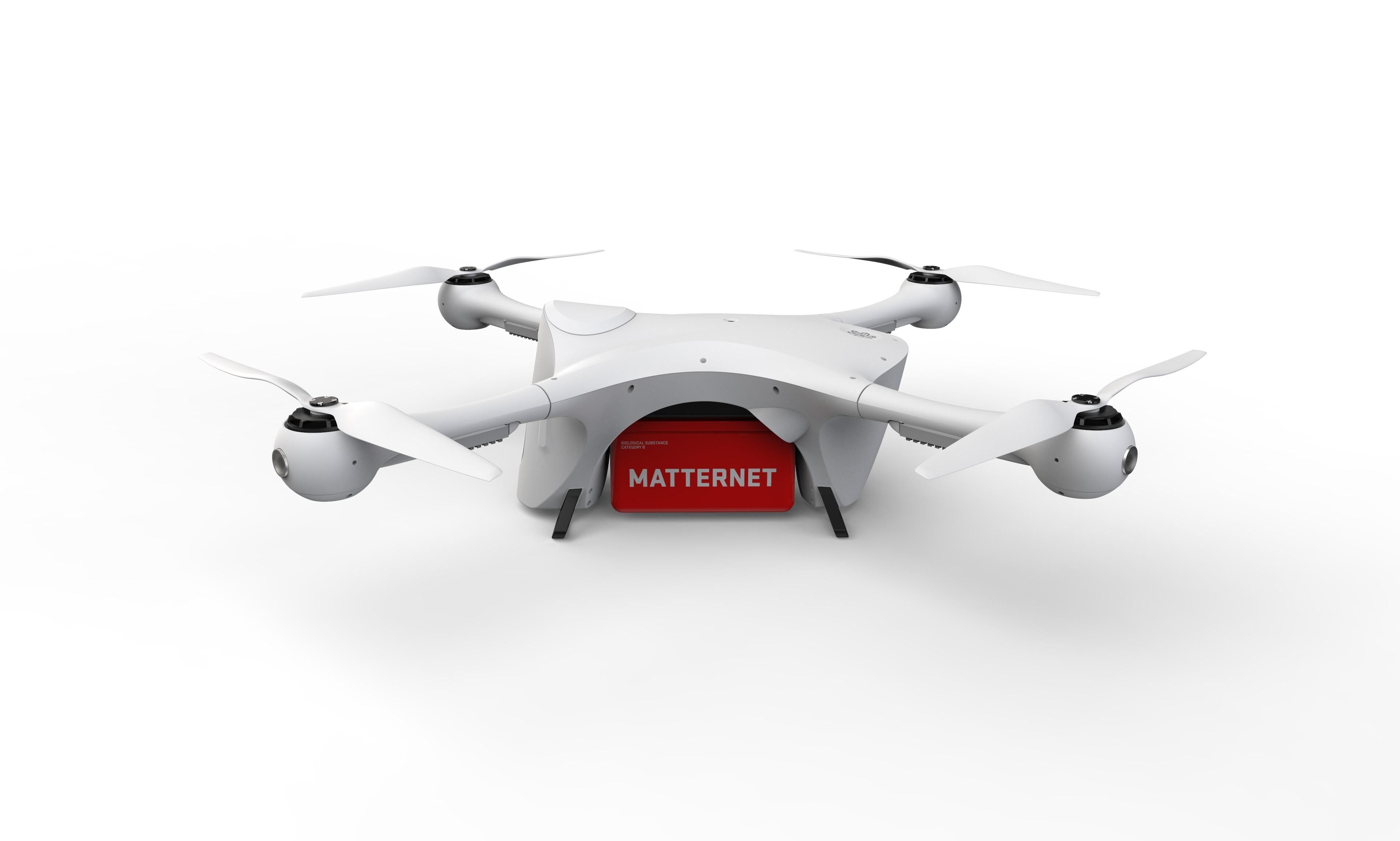
The certification also provides a clear regulatory path for Matternet's next-generation platform, which the company says will offer higher payload, longer range, and lower per-delivery cost. For logistics operators evaluating drone fleets, FAA certification isn't a nice-to-have — it's the difference between a pilot program and a commercially viable service.
How the Reverse Merger Worked and Who Invested
Matternet didn't go public via a traditional IPO. Instead, it used a "reverse merger" — a transaction where a private company merges with an already-public shell company (in this case, Los Altos Ventures Corp., renamed Matternet, Inc.) to bypass the lengthy IPO process. The structure lets Matternet access public markets faster and with lower regulatory overhead.
The $33 million came from a private placement (a sale of shares to select investors rather than the general public) led by new backers including Ed Eisler of EE Holdings and Mark Tompkins of Montrose Capital Partners, alongside several existing investors. The exact valuation wasn't disclosed, but the amount is substantial for a drone delivery company at this stage — enough to fund platform development and initial commercial scaling.
Among the existing investors is Boeing, which backed Matternet through its HorizonX venture arm and has partnered with the company on autonomous delivery projects. That industrial credibility matters: Boeing's involvement signals that a major aerospace player sees drone delivery as a real logistics channel, not just a novelty.
What "2026 Inflection Point" and "Physical AI" Actually Mean
CEO Andreas Raptopoulos framed the market moment around two key concepts: an "inflection point" and the "era of physical AI." Both deserve unpacking because they hint at why drone delivery could accelerate faster than many expect.
An inflection point is a moment when a technology transitions from early adoption to exponential growth. Raptopoulos points to three converging factors: regulatory advances (more BVLOS frameworks from the FAA), growing enterprise adoption (companies like Walmart, Amazon, and medical logistics firms actively scaling drone programs), and lower hardware costs (drones becoming cheaper than vans per-delivery for short-range routes). Combined, these create conditions where drone delivery shifts from pilot projects to routine operations.
"Physical AI" is the broader trend of AI systems that operate in the real world — robots, autonomous vehicles, and yes, delivery drones. Drone delivery is a particularly pure example: the drone must sense its environment (obstacles, weather, air traffic), make decisions in real time (reroute, land, wait), and execute physical actions (pick up, drop off). Recent advances in computer vision and edge AI (AI running on the drone's own hardware rather than the cloud) have made autonomous flight far more reliable than even two years ago.
Raptopoulos's statement — "Instead of sending a two-ton car across town to deliver a meal or retail item" — captures the efficiency argument. A small electric drone uses a fraction of the energy and road infrastructure of a delivery van, and for last-mile legs under 20 km, the cost per delivery can be 50–70% lower than conventional courier services, according to industry estimates cited by Matternet.
What This Means for Logistics Buyers
If you run a restaurant group, a pharmacy chain, or a retail logistics operation, Matternet's public listing matters for a practical reason: the drone delivery market now has a public company with a clear regulatory moat and a roadmap for scaling. That reduces the risk of committing to a drone delivery platform from a startup that might not survive.
Key considerations for buyers evaluating drone delivery:
| Factor | Matternet | Competitors (e.g., Zipline, Wing, Amazon Prime Air) | Buyer Takeaway |
|---|---|---|---|
| FAA Type Certification | Only one with full certification | Most still rely on waivers or exemptions | Lower regulatory risk for Matternet |
| Average delivery cost per package | Estimated $1–3 (last mile under 10 km) | $3–8 (varies by route density) | Potentially cheaper, but volume-dependent |
| Max payload | 2 kg (4.4 lb) | 1.5–3 kg (Zipline: 2.5 kg, Wing: 1.5 kg) | Good for food, retail, small medical items |
| Operational range | ~20 km (12 mi) | 15–80 km (Zipline: up to 80 km) | Matternet's range suits urban/suburban, not rural |
| Funding stage | Public (debt-free IPO) | Private (mostly venture-backed) | Public company may offer more stability |
The clear opening for Matternet is urban last-mile delivery — restaurants, convenience stores, pharmacy, and small retail items. The 2 kg payload covers about 95% of restaurant meal deliveries and most prescription drug deliveries. For heavier or longer-range logistics (like industrial spare parts or grocery restocking), other platforms may still make more sense.
If you're considering adding drone delivery to your supply chain, the practical path today is: - Identify short-range routes (under 20 km) with high delivery frequency - Evaluate regulatory readiness — Matternet's certification means you don't need to fight for individual BVLOS waivers - Run a pilot on a single route to measure cost-per-delivery vs. van or courier - Scale only when the per-delivery economics beat your current method by at least 20%
Conclusion
Matternet's $33 million public listing is more than a funding event — it's a marker that drone delivery is moving from pilot projects to commercial reality. The company's FAA Type Certification gives it a regulatory head start, and the CEO's bet on a 2026 inflection point rests on real trends: falling hardware costs, expanding regulatory frameworks, and growing enterprise appetite for autonomous last-mile logistics. For logistics buyers, the question is no longer "will drone delivery work?" but "does it work on my specific routes?" — and Matternet's certification makes that answer easier to find.