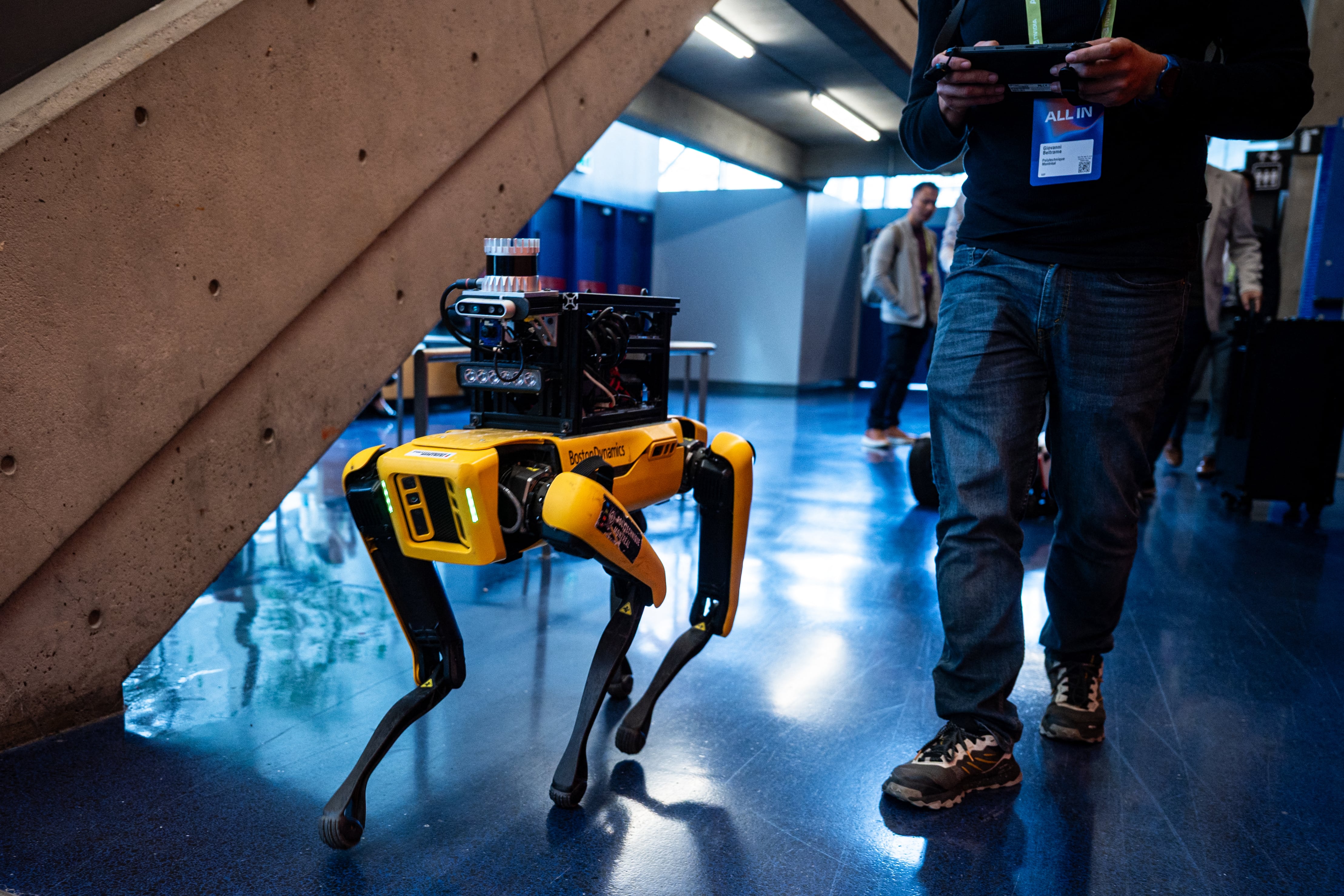

More than 300 Boston Dynamics employees have asked executives to halt a sale of robot dogs to US Immigration and Customs Enforcement, first reported by Arstechnica. The company is standing by the deal, saying the robots would not be weaponized, while workers warn the agreement could hurt hiring and retention.
On September 25, the Department of Homeland Security awarded Connecticut company Radeco a $1.3 million contract to provide ICE with four Boston Dynamics Spot robots modified and marketed as Cerberus. The contract says the robots are intended to detect radiation, toxic gas leaks and explosive threats, and support remote observation and inspection. Boston Dynamics’ role would mainly be technical support for the modified robots.
The petition was sent in early September and carried more than 300 signatures, half anonymous, from a workforce of approximately 1,400. It cited a September 4, 2025 ICE and Homeland Security Investigations raid at Hyundai Motor Group’s Metaplant America facility in Georgia, where 475 mostly South Korean workers were detained.
Boston Dynamics has said the robots would primarily serve ICE’s Homeland Security Investigations (HSI) unit. The Brennan Center for Justice has documented HSI’s frequent involvement in deportations and workplace raids between 2018 and 2021; the Immigration Policy Tracking Project says thousands of agents were again diverted to immigration enforcement and deportations during Trump’s second term.
The company’s Spot terms prohibit intentional use of the product to harm or intimidate any person or animal, as a weapon, or to enable any weapon. Boston Dynamics says it would void the warranty, refuse future software updates, terminate the license or take appropriate legal action if a customer misused Spot. It also says there have been no customer violations while working with DHS and other public safety agencies.
The contract’s stated tasks are hazard detection and remote inspection; the petition’s objection is ICE’s wider enforcement work and the staffing risks employees associate with the deal. Boston Dynamics is developing a $100 million robotics and AI facility in Waltham, Massachusetts, with a project plan that includes creating 1,250 new jobs by 2033. Signatories warn the deal could make the company less attractive to workers and harder to staff as it scales.