
Blue Origin's New Glenn rocket exploded on its launch pad Thursday night at Cape Canaveral, Florida, destroying the company's only orbital-class launch facility and grounding the heavy-lift vehicle for an extended period. The incident deals a severe blow to Blue Origin's commercial and government launch ambitions, handing a major competitive advantage to SpaceX and other rivals.
- What Happened: A Catastrophic Pad Explosion
- Why This Matters: Blue Origin's Only Orbital Pad Destroyed
- Market Implications: Winners and Losers in the Launch Industry
- What's Next for Blue Origin
- What This Means for the Industry
- Frequently Asked Questions
- Conclusion
What Happened: A Catastrophic Pad Explosion
The incident occurred during a pre-launch fueling operation on Thursday evening, according to sources familiar with the matter. The explosion engulfed both the New Glenn rocket and its dedicated launch pad at Cape Canaveral Space Force Station's Launch Complex 36, causing extensive structural damage. No injuries were reported as the area was cleared for standard propellant loading operations.
Detailed analysis of the accident is in its early stages, but preliminary assessments indicate that much of the ground support equipment, fueling infrastructure, and launch mount will require complete replacement. According to Ars Technica's Rocket Report, "much of Blue's sole orbital-class launch pad has been destroyed." The rocket itself was likely a total loss.
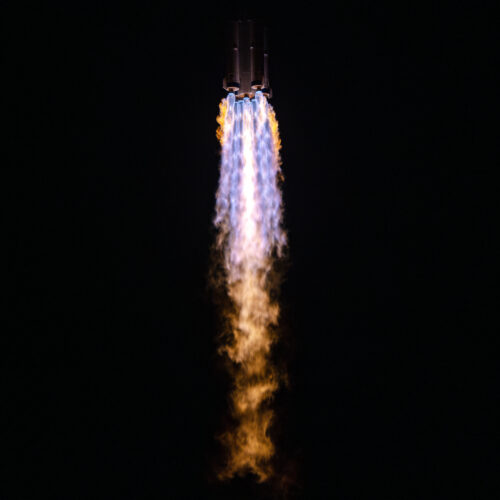
This is not Blue Origin's first launch pad mishap. In 2022, a New Shepard suborbital booster suffered an engine failure mid-flight, triggering an in-flight abort system that destroyed the vehicle. However, that event occurred over desert terrain and did not damage ground infrastructure. The current incident is far more consequential because it has disabled the company's only orbital launch capability.
Why This Matters: Blue Origin's Only Orbital Pad Destroyed
New Glenn — Blue Origin's $2.5 billion heavy-lift rocket capable of carrying 45 metric tons to low Earth orbit — was the company's flagship vehicle for competing in the lucrative commercial satellite launch market and for winning U.S. national security launch contracts. The rocket had flown only three times prior to the explosion, with its most recent flight in February 2026 successfully delivering a classified payload for the U.S. Space Force.
The destruction of Launch Complex 36 means Blue Origin now has no operational orbital launch site. While the company also operates a launch facility at Vandenberg Space Force Base in California, that pad is not yet fully built out for New Glenn operations and would require extensive modifications — a process likely to take 12–18 months at minimum. Building a completely new pad at Cape Canaveral would cost upward of $500 million and take two years or more.
For Blue Origin, this represents an existential operational crisis. The company has a backlog of commercial satellite launches and a $3.4 billion NASA contract for the Human Landing System (HLS) that depends on New Glenn to deliver cargo to lunar orbit. While the HLS contract primarily uses a different vehicle (Blue Moon lander), the launch infrastructure delay could cascade into schedule slips for NASA's Artemis program.
Market Implications: Winners and Losers in the Launch Industry
The immediate beneficiary of Blue Origin's misfortune is SpaceX, whose Falcon 9 and Falcon Heavy rockets now become the default option for customers who contracted with Blue Origin but cannot wait months for a new launch pad. SpaceX already dominates the commercial launch market with a $20 billion annual revenue run rate and a launch cadence of roughly one Falcon 9 mission every three days.
Other competitors also stand to gain. United Launch Alliance's Vulcan Centaur rocket, which completed its certification for national security launches in early 2026, could pick up defense contracts that Blue Origin was competing for. Relativity Space's Terran R and Rocket Lab's Neutron vehicle — both expected to debut in 2027–2028 — may see accelerated interest from customers seeking multiple launch providers.
"Blue Origin's grounding leaves a significant hole in the launch market, particularly for heavy-payload missions to geostationary orbit," said a space industry analyst who spoke on condition of anonymity. "The Pentagon, which has been actively trying to reduce its dependence on SpaceX, now has one fewer option."
The U.S. Space Force recently awarded Blue Origin a $1.5 billion contract for seven National Security Space Launch (NSSL) Phase 3 missions. That contract may now be at risk if Blue Origin cannot demonstrate a credible path to resuming launches within the contract timeline. The Space Force has "termination for convenience" clauses that allow it to reassign missions, and past delays have prompted such actions — most notably when Vulcan's delays shifted some missions to Falcon 9.
What's Next for Blue Origin
Blue Origin's leadership faces three urgent decisions: whether to rebuild the damaged pad at Cape Canaveral, accelerate development of the Vandenberg pad, or pursue both strategies in parallel. Given the months-long investigation required by the Federal Aviation Administration's accident review process, even the quickest rebuild scenario would likely ground New Glenn for at least 18–24 months.
The company's financial position is strong — founder Jeff Bezos has pledged to invest $1 billion per year from his Amazon stock sales to fund the venture. However, cash cannot buy time. The engineering redesign and construction of a heavy-lift launch pad is a multi-year undertaking, as proven by SpaceX's own experience building its Starship launch facilities in Boca Chica, Texas.
There is also the question of whether Blue Origin will accelerate its in-development reusable second stage for New Glenn, code-named "Project Jarvis." If the company is forced to redesign the pad anyway, integrating a reusable upper stage from the start could save money in the long run — but it would further delay the vehicle's return to flight.
What This Means for the Industry
For investors in space companies, the Blue Origin incident underscores the high-risk nature of launch infrastructure. A single accident can erase years of progress and billions in market value. Blue Origin is privately held, but its misfortune will likely depress valuations for other launch startups and make insurers more cautious about underwriting pre-flight coverage.
The Pentagon's diversification strategy now faces a serious setback. The Biden administration and Congress have repeatedly pushed the Space Force to reduce reliance on SpaceX by funding competitors like Blue Origin and ULA. With Blue Origin grounded, the military's options for heavy-lift launches narrow to essentially two providers: SpaceX and ULA. This dynamic could accelerate the Pentagon's review of alternative launch sites, including potential use of new spaceports in Alaska or Australia.
For the broader tech industry, Blue Origin's delay means fewer options for launching large satellite constellations, including Amazon's Project Kuiper internet network. Amazon has already contracted for 83 launches with various providers, including 12 New Glenn flights. With New Glenn unavailable, Amazon may need to shift more of its launches to ULA's Vulcan or Europe's Ariane 6, adding cost and schedule risk to a project already behind Starlink.
Conclusion
The destruction of Blue Origin's only orbital launch pad represents one of the most severe setbacks any private launch company has faced. The incident leaves Blue Origin with no clear path to its next orbital flight for at least two years, reshapes the competitive landscape in the commercial launch market, and complicates Pentagon efforts to maintain a diverse supplier base. For a company that had finally begun to deliver on decades of promises, the timing could not be worse.