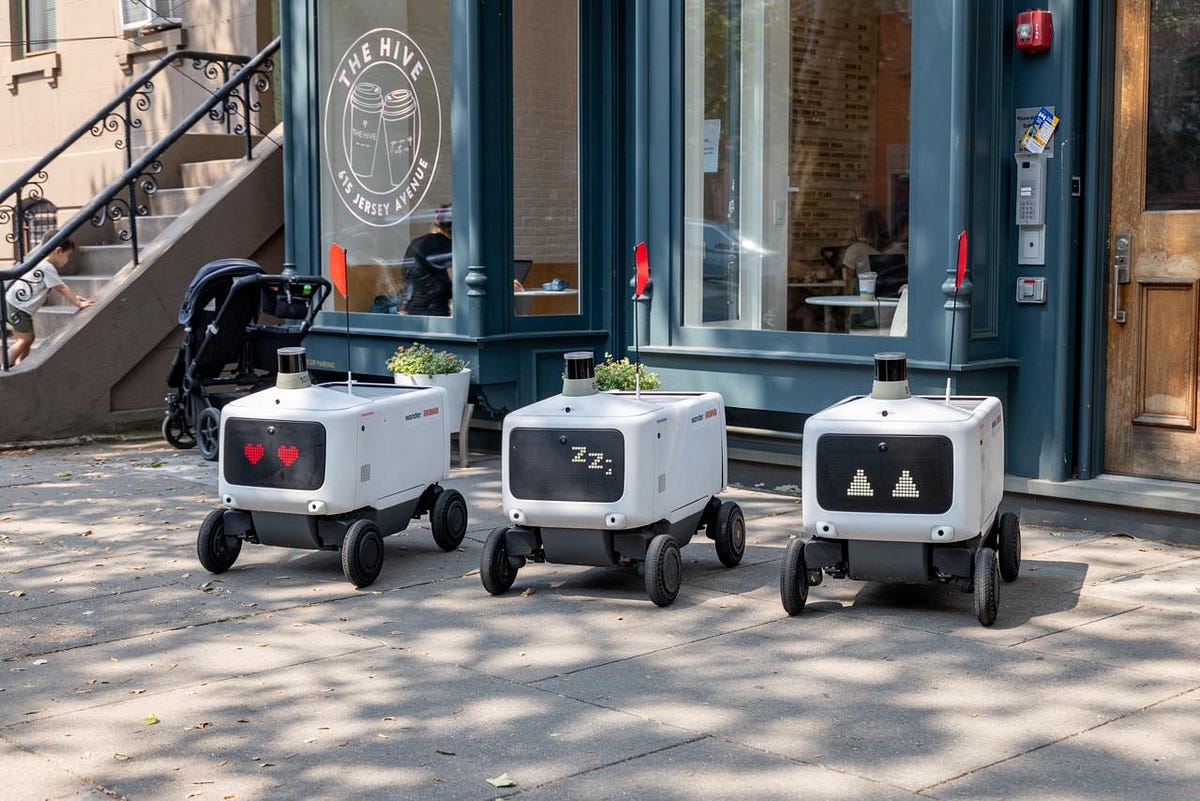

Avride says its delivery robots have completed 1 million deliveries

Avride says its delivery robots have completed 1 million deliveries

Live•Nov 16, 12:30 AM•2 min read•
Elena Vasquez
Elena Vasquez

Avride says its autonomous delivery robots have completed one million deliveries across the United States, a milestone first reported by Roboticsandautomationnews. The milestone highlights growth into urban neighborhoods and university campuses, where campus lunch rushes, busy neighborhood sidewalks and evening restaurant pickups place different demands on technology and operations in each setting.

Avride reported completing 180,000 deliveries in October alone, and its operations have reached a daily volume of 7,000 deliveries. It operates in more than 30 markets across the US, including Austin, Dallas, Jersey City, Philadelphia and Miami.

The robots are integrated with established food-delivery platforms, including Uber Eats and Grubhub, allowing customers to order through existing applications. Restaurant staff load orders into the robots, which navigate to their destinations. Customers can track deliveries and unlock the cargo compartments through participating apps.

The work differs by setting: Avride says campus lunch rushes, busy neighborhood sidewalks and restaurant evening pickups place different demands on technology and operations. The company attributes its growth to coordination among its engineering, manufacturing and operations teams, along with commercial delivery partners.

The figures put delivery volume and geographic spread in view, while the company’s examples show that the service operates across distinct environments. Sidewalk delivery robots are becoming a more established part of last-mile logistics, particularly for short-distance food deliveries in urban areas.

Avride says it plans to continue expanding its autonomous delivery network and improving services for restaurants, university dining operations and customers.

Bessent urges Nvidia board to seek an outside CEO

Treasury Secretary Scott Bessent urged Nvidia’s board to seek an outside CEO and said the OCC would intervene if a bank had similar compliance failures, first reported by Fortune. He questioned whether Nvidia had a culture of compliance with U.S. export restrictions and asked whether shell companies had been used as a workaround to sell chips to China.

On Sunday, Bessent said he wanted to know whether compliance failures began at a low level, somewhere in the middle or in the C-suite. He also questioned whether seemingly illicit sales had been used to boost Nvidia’s revenue and earnings.

Bessent said Treasury, War, USTR and State had favored placing Megaspeed on the entity list for months, while the decision rested with Commerce. The Information reported that the Singapore-based cloud computing company and its Malaysian subsidiary shipped at least $7.5 billion in Nvidia chips to China over two years.

The Trump administration has blocked exports of certain high-end chips, including Nvidia’s, while allowing lesser models. Bessent said it did not matter whether Alice Huang, who had a romantic affair with the former Nvidia CEO, was actually a spy for China.

Nvidia announced Thursday that Huang had stepped down as CEO, named CFO Colette Kress as interim CEO during the search for a replacement, and appointed Harvey Jones as its first-ever board chair. Bessent said Sunday the board should seek an outside CEO and that Nvidia needed a dramatic shakeup.

Nvidia did not immediately respond to a request for comment. Megaspeed said it conducts legitimate and lawful business and had retained external legal counsel for an internal investigation; the company added that Alice Huang left effective Aug. 30, 2025, and currently has no role there.

Kress and Nvidia engineer Ian Buck were considered possibilities for the permanent CEO role, while AMD CEO Lisa Su and Arm CEO Rene Haas were also seen as potential candidates. The Financial Times reported, citing sources, that Huang had discussed a return with confidantes; one ally said Silicon Valley executives were coming together to lobby for him. Elon Musk and other executives were circulating a public letter seeking Huang’s return.