
Amazon raised $25 billion in a surprise bond sale on July 7, offering extra yield to attract buyers as investor demand fell short of expectations. The weaker-than-typical appetite from bond buyers signals that Wall Street is beginning to push back against the massive debt pile tech giants are accumulating to fund AI infrastructure.
- What Happened
- Why the Bond Market Matters for AI
- Amazon's Capex and Cash Flow Squeeze
- What This Means for the Industry
- Frequently Asked Questions
- Conclusion
What Happened
Amazon tapped the bond market on Tuesday with an eight-tranche offering spanning three to 40 years, bringing its total debt issuance this year to $92 billion — more than Alphabet, Meta, or Oracle have each raised in 2026. Bank of America described the move as a “surprise” sale in a note to clients.
To get the deal done, Amazon offered between 18 and 21 basis points of extra yield on its longest bonds. Even with that premium, orders came in at just 2.5 times the bonds on offer, down from 3.2 times in its March debt sale. According to BofA, that made Amazon’s overall new-issue performance the weakest for any hyperscaler since Meta’s $30 billion bond sale in October 2025.
“Investors are pushing back,” BofA wrote. “The deal should also inject even more uncertainty into the hyperscaler/AI supply outlook.”
Amazon still had more buyers than bonds on offer — the company is rated AA by Moody’s (third-highest) and S1 by S&P (fifth-highest) — but the slowing demand is a clear shift in sentiment.
Why the Bond Market Matters for AI
The AI industry has issued roughly $270 billion in debt so far in 2026 — nearly double the $136 billion issued in all of 2025. Of that, BofA estimates $194 billion comes from hyperscalers: Amazon, Alphabet, Meta, Microsoft, and Oracle. Each has announced enormous capital expenditure plans to build and operate data centers for AI workloads. Even Alphabet broke new ground by issuing a 100-year bond earlier this year.
Bond investors had largely absorbed this wave calmly — until now. The extra yield Amazon had to offer, combined with the drop in order coverage, suggests the market is growing choosy. Hyperscaler bond spreads widened by six to 15 basis points on the day of the sale, and Amazon’s deal even lifted the 10-year Treasury yield by eight basis points.
Wider spreads and slightly weaker demand indicate that the pace of AI infrastructure buildout may be moving faster than investors’ appetite to finance it. If the cost of debt rises further, companies could face pressure to moderate their capital spending plans.
Amazon's Capex and Cash Flow Squeeze
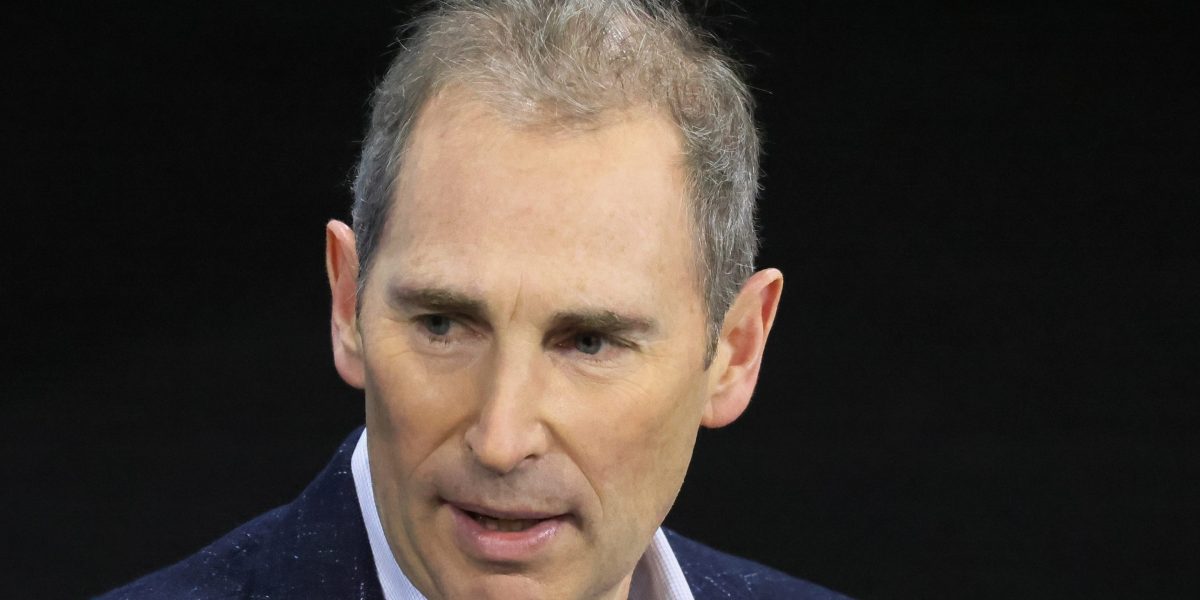
Amazon’s bond sale proceeds will fund its cloud computing business, Amazon Web Services (AWS). CEO Andy Jassy told analysts in April that AWS must pay cash upfront for “land, power, buildings, chips, servers, and networking gear” before it can start earning returns six months to two years later.
Amazon spent $43.2 billion on capital expenditures in the first quarter alone, CFO Brian Olsavsky said, directed toward both AWS and generative AI. That spending is pinching free cash flow: Amazon’s trailing 12-month free cash flow fell to $1.2 billion, down from $25.9 billion a year earlier. The decline was driven by a $59.3 billion year-over-year increase in property and equipment purchases.
Still, Amazon generated $148.5 billion in operating cash flow over the same period, up 30% from last year. The bond deal itself was not a distress signal — the company clearly has ample cash generation — but it highlights the tension between aggressive AI investment and near-term financial discipline.
What This Means for the Industry
- For investors: The weaker demand for Amazon debt could trigger a broader reevaluation of hyperscaler valuations. If the cost of capital rises, future returns on AI projects need to be higher to justify the spending. Bond vigilantes may begin demanding more discipline.
- For competitors: Smaller AI companies and startups that rely on cloud infrastructure or venture debt will likely face an even tougher fundraising environment. If the largest tech companies see pushback, other firms will encounter even tighter conditions.
- For the tech industry overall: The debt-fueled AI capex cycle has been a major driver for chipmakers (Nvidia, AMD), data center REITs, and construction firms. Any slowdown in hyperscaler capital spending would ripple through the entire supply chain. The bond market’s caution does not mean the AI boom is ending, but it could mark a deceleration.
BofA noted that the pushback is “not too significant at this point” — heavy spending is still expected, and overall demand remains robust. But the signal is unmistakable: investors want more proof that AI dollars will translate into returns.
Conclusion
Amazon’s $25 billion bond sale is a fresh data point in the unfolding story of AI investment discipline. The company still got its deal done, but the extra yield and weaker demand suggest the easy money era for hyperscaler debt may be drawing to a close. Whether this is a momentary blip or the beginning of a broader pullback will become clearer when Amazon reports its second-quarter earnings in late July or early August. Investors will be watching closely.