
Agility Robotics is expected to begin trading on Nasdaq Thursday as the first humanoid-focused company to go public in the US, first reported by Businessinsider. The merger valued Agility's existing equity at about $2.5 billion, while the company reported $1.8 million in revenue and a $138.1 million net loss last year.
The merger with Churchill Capital Corp XI, a special-purpose acquisition company led by former Citigroup executive Michael Klein, closed Wednesday. CEO Peggy Johnson said Agility chose the SPAC route to bring Klein in. The combined company is expected to trade as AGLT when the market opens Thursday. Agility expects about $465 million in gross capital before expenses, including $100 million already received.
More than half of Agility's revenue came from five robots purchased by one of its investors. The company said in SEC filings that it expects additional losses and higher operating expenses for the foreseeable future.
About $38 million of the net loss came from non-cash expenses tied to employee stock awards. Agility also used $99.8 million in cash to run its business in 2025 and lost $2.7 million on sales before research and other company expenses.
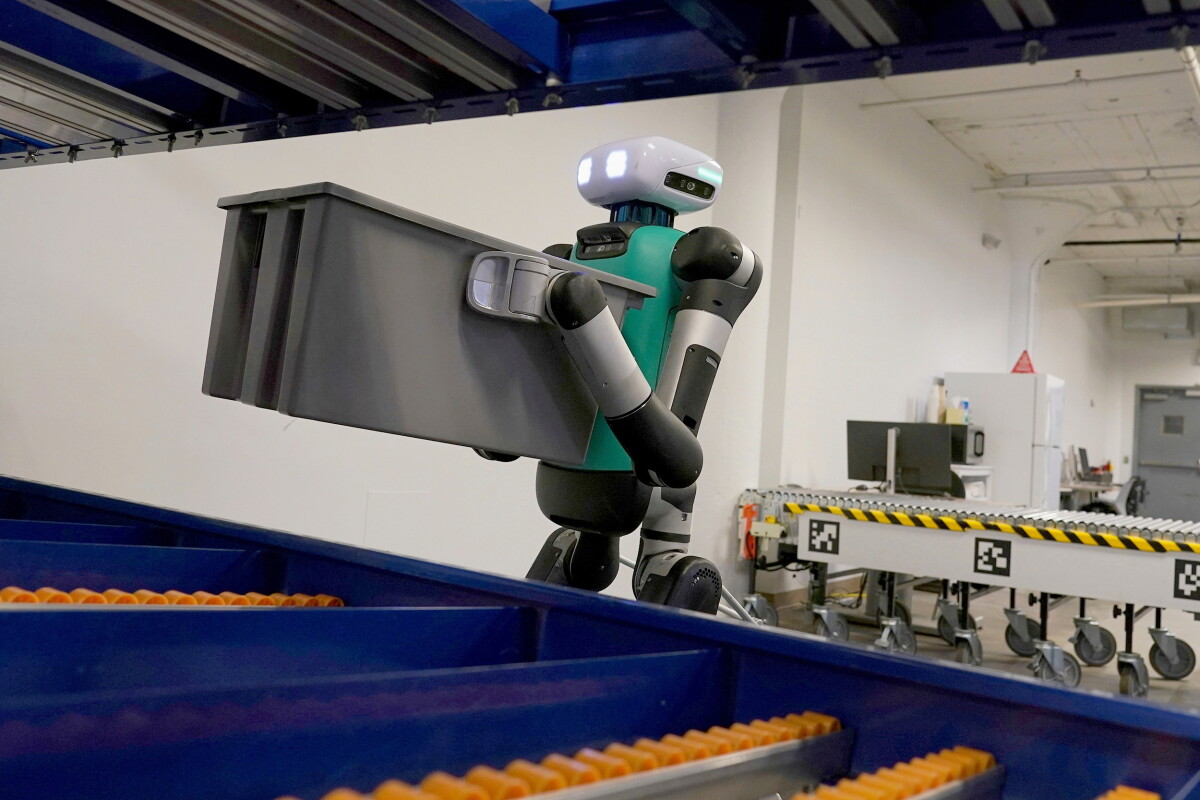
Agility has deployed Digit, its humanoid robot, across nine customer facilities, including those belonging to Amazon, Toyota and logistics company GXO. ABI Research principal analyst George Chowdhury said the deployments are small overall but significant for commercial humanoids.
Agility's nine-facility footprint sits alongside a $2.5 billion valuation, below those of some privately held humanoid rivals: Figure AI at about $39 billion, Apptronik at about $5.5 billion and Neura Robotics at around $7 billion.
Chowdhury said companies with deployments that are shipping hardware today are valued by the market below companies betting on the future. Robotics analyst Michelle Sun said the listing would give public markets a reference point for valuing humanoid companies.
Agility is betting on Digit 5, designed to work safely near people without the safety barriers required by earlier versions. A company filing lists more than $300 million in orders for 1,000 robots from one customer, who would pay to use them over three years.
Those orders depend on Agility meeting deadlines and delivering robots with the promised features. Agility targets deliveries in the first half of 2027 and general availability by the end of that year.