

Chinese EV innovation meets German cognitive engineering. The XPENG Robotics Iron and NEURA Robotics 4NE‑1 embody two distinct visions for the general‑purpose humanoid. Both robots target enterprise workloads in manufacturing and logistics, yet they are still prototypes with no open sales channel. This comparison unpacks what is known — from dimensions and payload to the real‑world track record — to help robotics buyers, integrators, and researchers decide which platform better suits their long‑term strategy. Prices are estimates; final availability is unconfirmed.
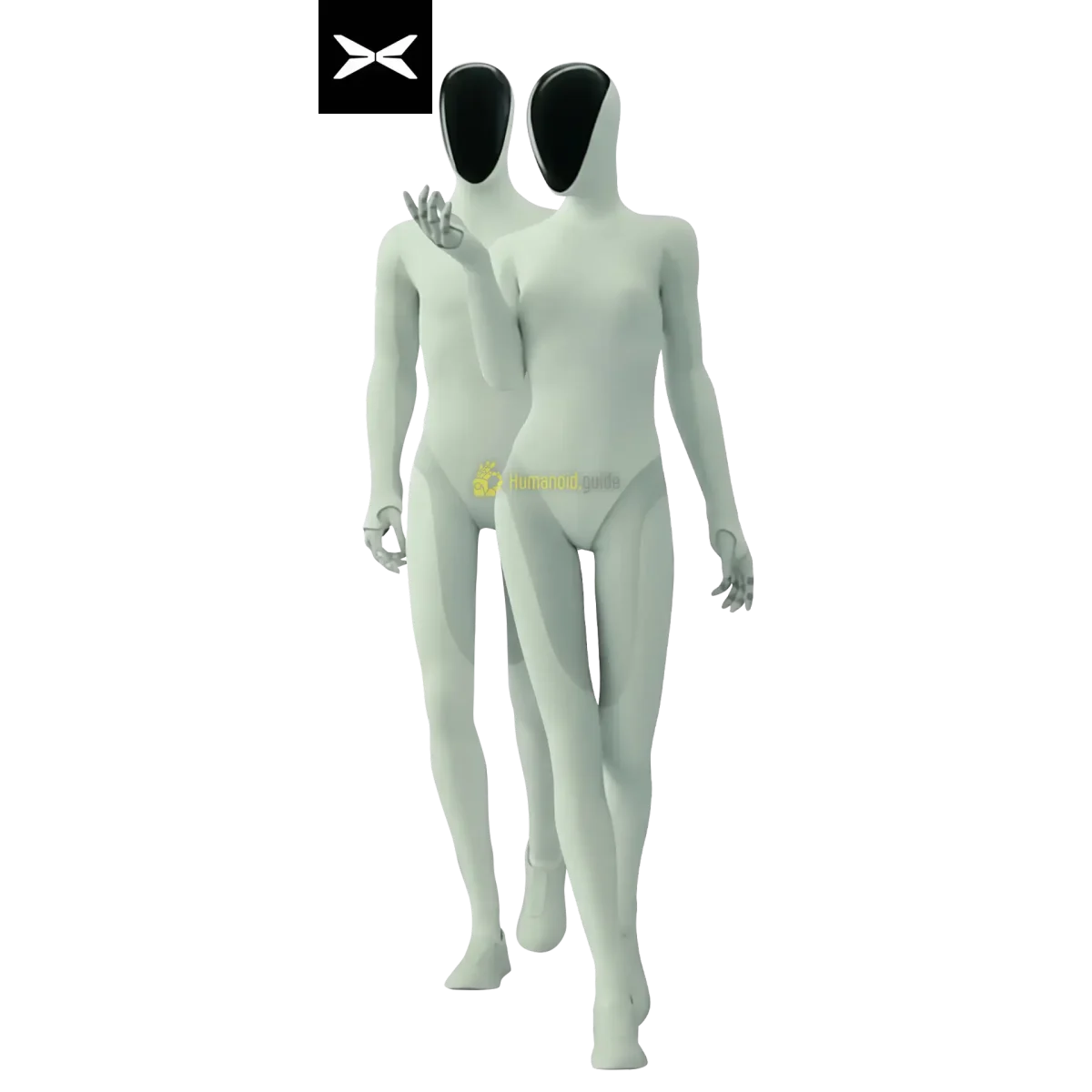 XPENG Robotics Iron — 72‑DOF prototype with an estimated $150,000 price point.
Quick Verdict: Who Wins?
- Best overall value (prototype): XPENG Iron — lower anticipated cost, significantly higher degrees of freedom, and faster mobility.
- Best for long‑duration tasks: NEURA 4NE‑1 — 6‑hour battery gives it a 50% runtime advantage over the Iron.
- Best for dexterity‑heavy R&D: XPENG Iron — 72 DOF, including 12‑DOF hands, promises advanced fine‑manipulation capabilities.
- Best for European deployment & data sovereignty: NEURA 4NE‑1 — engineered and supported from Germany, plus NEURA’s established cobot ecosystem.
- Best budget pick (relative): XPENG Iron — $50,000 cheaper target price, though both remain enterprise‑only.
XPENG Robotics Iron vs NEURA Robotics 4NE‑1: Specs Compared
| Feature | XPENG Robotics Iron | NEURA Robotics 4NE‑1 |
|---|---|---|
| Estimated price | ~$150,000 (target) | ~$200,000 (target) |
| Height | 173 cm | 180 cm |
| Weight | 70 kg | 80 kg |
| Payload | 20 kg | 15 kg |
| Max speed | 5.8 km/h | 4.0 km/h |
| Battery life | ~4 hours | ~6 hours |
| Degrees of freedom (DOF) | 72 (total body) | 30 |
| Hand DOF | 12 per hand (estimated) | Not published |
| IP rating | Not published | Not published |
| Onboard compute | Not published | NEURA OS (cognitive AI) |
| Key sensors | LiDAR + depth cameras (inferred) | Multi‑modal: vision, voice, gesture |
| ROS 2 support | Not confirmed | Expected (NEURA’s cobots use ROS 2) |
| Availability | Enterprise pilot (2026) | Enterprise pilot (no release date) |
Both robots are pre‑production. Specs are based on partial manufacturer disclosures; “Not published” indicates data not officially released as of June 2026.
XPENG Robotics Iron: 72‑DOF Prototype with a Factory Pedigree
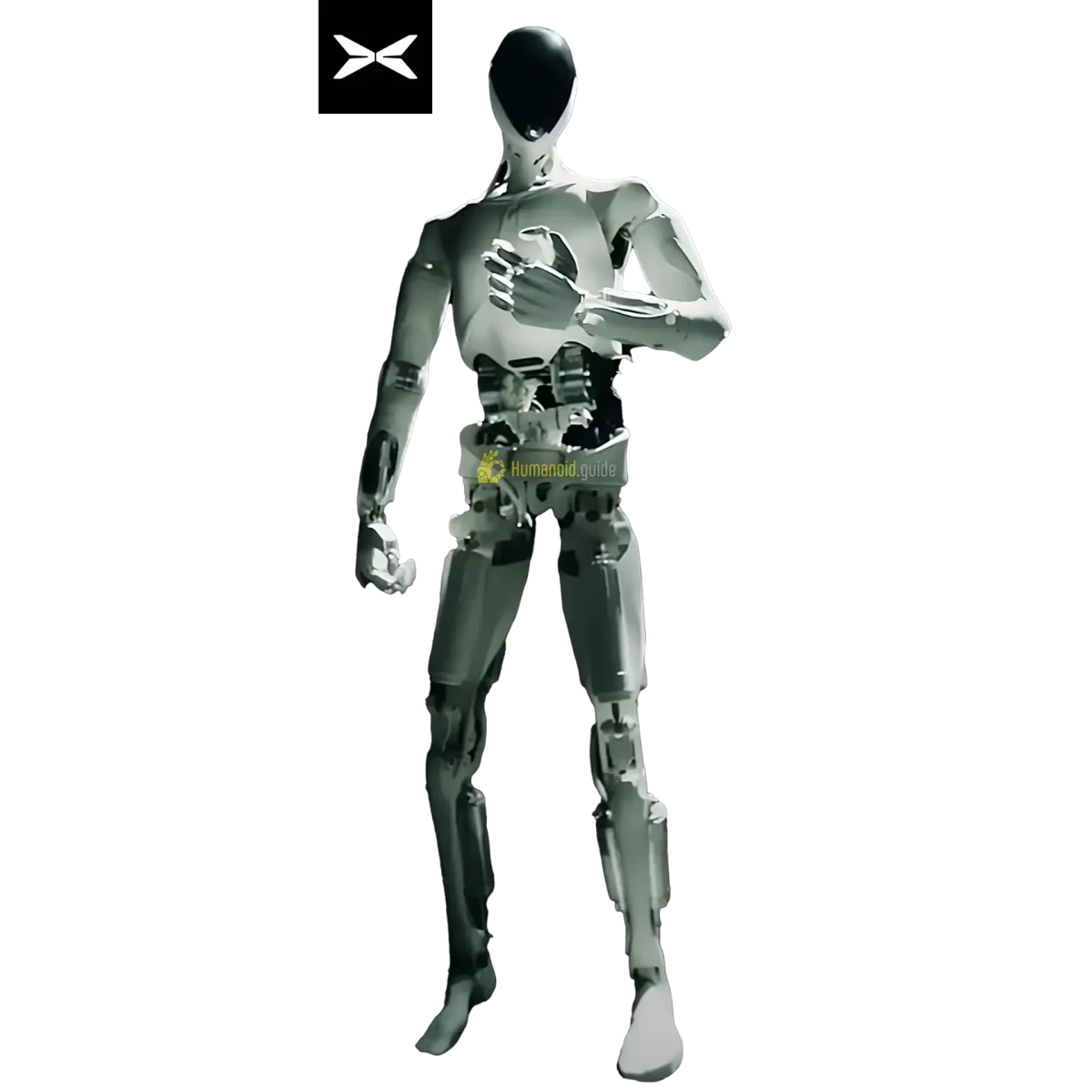 The Iron has already been trialled inside XPENG’s own automotive assembly lines.
Unveiled in 2024 by XPENG Robotics, a division of the Chinese EV‑maker XPENG, the Iron humanoid is a full‑size prototype (173 cm, 70 kg) that pushes the envelope on mechanical agility. Its 72 degrees of freedom — including dexterous multi‑finger hands — are designed for fine manipulation tasks like picking up small components or operating hand tools. Early video demonstrations show the Iron walking at 5.8 km/h, lifting a 20 kg payload, and performing quality‑inspection routines on a vehicle assembly line in XPENG’s Guangzhou factory. As of mid‑2026 the robot remains in pre‑production; XPENG has not published a release date or a definitive price, though industry estimates place the target around $150,000 per unit. No used market exists.
Read the full Iron‑1200 specification at the XPENG Iron Robot Database.
NEURA Robotics 4NE‑1: Cognitive Humanoid with 6‑Hour Stamina
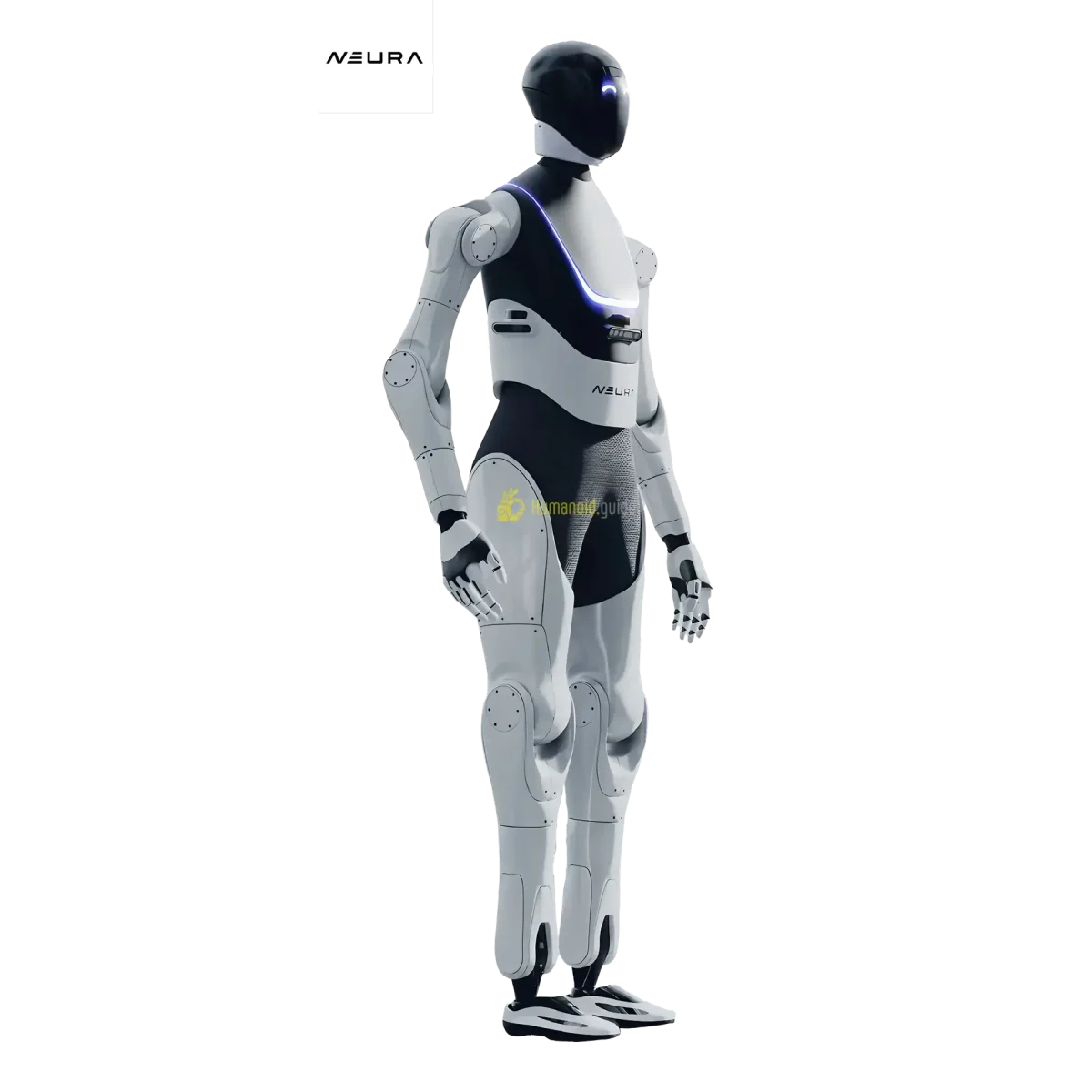 The 4NE‑1 combines a 180 cm frame with NEURA’s multi‑modal cognitive interface.
NEURA Robotics, the German company behind the commercial cobot lines MAV and LARA, introduced the 4NE‑1 as its general‑purpose humanoid prototype. Targeting a $200,000 price point, the 4NE‑1 stands taller (180 cm, 80 kg) and focuses on endurance: its 6‑hour battery life is class‑leading among current humanoid prototypes. While its total DOF count is less flashy at 30, the robot leans heavily on cognitive AI — the ability to understand voice commands, interpret gestures, and interact with human co‑workers — built on NEURA’s own software stack. Final pricing and availability remain unconfirmed; as of 2026 the 4NE‑1 is in development with no commercial sales.
Check the full 4NE‑1 profile at the NEURA 4NE‑1 Robot Database.
Head‑to‑Head by Dimension
Price & Configurations
Both companies have shared target price brackets but no firm MSRP. The XPENG Iron is expected to launch around $150,000, whereas NEURA Robotics projects $200,000 for the 4NE‑1. Neither robot is available to purchase nor offers configuration tiers at this stage; they are strictly enterprise‑pilot models with no rental or leasing programs announced.
Winner: XPENG Iron — its estimated sticker is $50,000 lower, a significant sum for early‑adopter labs and factory pilot programs.
Performance & Specs
Payload
The Iron lifts 20 kg to the 4NE‑1’s 15 kg — a 33% advantage. For tasks like material handling or tool manipulation, the Iron’s higher payload capacity provides more headroom.
Winner: XPENG Iron.
Speed
With a top walking speed of 5.8 km/h, the Iron outpaces the 4NE‑1’s 4.0 km/h. The extra speed may translate to quicker movement between workstations on a factory floor, but real‑world endurance and stability at maximal speed remain unverified.
Winner: XPENG Iron.
Battery
The NEURA 4NE‑1’s 6‑hour runtime is a clear 50% improvement over the Iron’s 4 hours. For shifts exceeding half a day, the 4NE‑1 requires fewer recharge cycles. Neither manufacturer has published charging times or battery swap options.
Winner: NEURA 4NE‑1.
Degrees of Freedom (DOF)
The Iron’s 72 DOF versus the 4NE‑1’s 30 is the starkest difference. Seventy‑two degrees of freedom — especially the reported 12‑DOF hands — suggests the Iron can execute far more complex, human‑like motions. NEURA’s 30 DOF is adequate for many pick‑and‑place tasks but limits fine dexterity.
Winner: XPENG Iron.
Software & SDK Ecosystem
On the software side, NEURA Robotics has an existing ecosystem: its cobot arm series already supports ROS 2, a developer‑friendly SDK, and a cognitive OS that handles speech and gesture recognition. The 4NE‑1 is expected to inherit those tools, giving it a head start in developer onboarding. XPENG has not released a public SDK or confirmed ROS 2 compatibility; its autonomy stack likely draws on XPENG’s automotive experience (LiDAR‑based perception, end‑to‑end learning), but the developer‑facing component is opaque.
Winner: NEURA 4NE‑1 — the only robot with a proven, commercial‑grade software foundation accessible today.
Autonomy & Sensors
The Iron’s sensor package has not been detailed, though footage from the Guangzhou factory shows it using LiDAR and depth cameras for navigation and object detection. XPENG’s autonomous‑vehicle heritage suggests a sophisticated SLAM and planning stack. The 4NE‑1 leans on multi‑modal sensing — cameras, microphones, and possibly force‑torque sensors in the hands — to enable its cognitive, human‑facing interactions. Neither robot has published quantitative benchmarks for object recognition, localization, or failure‑recovery rates.
Winner: Too early to call — both approaches are credible but need real‑world data.
Build Quality & Durability
Both humanoids are built for industrial conditions, yet neither has an official IP rating. The Iron’s 70 kg weight at 173 cm suggests a compact, potentially more stable static stance; the 4NE‑1’s 80 kg and 180 cm extra height may affect balance dynamics. Material choices and joint sealing remain undisclosed. Any statements about reliability are speculative until field‑data surfaces.
Winner: Tie — no durability data available for either robot.
Price & Total Cost of Ownership
Even as prototypes, it helps to project three‑year ownership costs beyond the unit price. Assuming a $150,000 Iron and $200,000 4NE‑1:
- Hardware: $150K vs $200K upfront.
- Software & support: NEURA typically charges an annual support subscription for its cobots (e.g., ~10% of list price). No comparable figure from XPENG, but enterprise hardware often carries 15–20% annual service contracts.
- Spares & consumables: Unknown — both will likely need end‑effector replacements over time.
- Downtime cost: The 4NE‑1’s 6‑hour battery translates to fewer charging interruptions per shift, potentially lowering operational overhead.
A rough 3‑year TCO model could place the Iron at $210,000–$240,000 and the 4NE‑1 at $270,000–$300,000 when software, maintenance, and energy are factored in. So far, neither manufacturer offers a Robot‑as‑a‑Service (RaaS) or leasing path, making large capital deployment the only foreseen route.
💬 Interested in pilot opportunities? Contact XPENG Robotics or NEURA Robotics directly for enterprise inquiries, as no public ordering portal exists.
Which Should You Buy? XPENG Iron vs NEURA 4NE‑1 by Use Case
Choose the XPENG Iron if… - You need maximum mechanical dexterity (72 DOF, high‑DOF hands) for fine assembly or inspection. - Faster mobility (5.8 km/h) matters for traversing large production halls. - A lower target price (~$150K) fits a tighter capital budget. - You’re comfortable sourcing enterprise hardware from a Chinese manufacturer.
Choose the NEURA 4NE‑1 if… - Long‑duration shifts (6‑hour battery) are non‑negotiable. - Cognitive, multi‑modal human‑robot interaction (speech, gesture) is central to your workflow. - You require a European‑based engineering team and data‑sovereignty assurances. - NEURA’s existing ROS 2‑enabled cobot ecosystem provides a seamless path for developers.
Choose neither if… - You need a commercially available, warranty‑backed robot today. Both remain pre‑production prototypes with no firm delivery date. - You expect a full specification sheet — many details remain under NDA.
Real‑World Deployments & Track Record
The Iron has one notable, albeit limited, deployment: internal trials at XPENG’s Guangzhou automobile factory (2025). The robot performed quality‑inspection tasks and material handling alongside human workers, providing the first proof of its practical utility. No operational hours or reliability statistics have been published.
The 4NE‑1 has been demonstrated at trade shows and in NEURA’s Metzingen R&D center, showcasing its cognitive abilities — understanding spoken commands, responding to gestures, and safely handing over objects. However, no independent, long‑term pilot data exists.
Verdict: The Iron holds a slim lead in real‑world readiness purely because of its documented factory trials, but both are in early pilot phases and should not be considered production‑ready.
SDK, Software & Developer Ecosystem
- NEURA 4NE‑1: NEURA’s own NEURA OS powers its entire product line. The company has publicly stated that all its robots, including the 4NE‑1, will share a unified SDK, simulation environments (likely using NVIDIA Isaac Sim and/or Gazebo), and fleet management through NEURA Cloud. ROS 2 compatibility is standard on existing MAV/LARA cobots, so 4NE‑1 adopters can expect a plug‑in‑ready developer experience.
- XPENG Iron: No SDK or developer portal has been released. However, XPENG’s automotive division heavily invests in ROS 2 and Autoware for autonomous driving; the robotics team may build on the same open‑source base. For now, the stack is closed, which limits early‑community engagement.
Bottom line: The NEURA 4NE‑1 is far more promising for developers who want a familiar toolchain today, while the Iron remains a black box for external teams.
Support, Warranty & Availability
Neither robot is publicly available. XPENG has stated the Iron is targeting limited enterprise pilots in 2026, but no order process exists. NEURA Robotics is similarly pre‑launch, accepting inquiries but not processing orders. Any discussion of warranty terms, spare‑parts logistics, or SLAs is premature. However, NEURA’s global network of cobot integrators will likely extend to the 4NE‑1 once it launches, giving it a potential support edge in Europe and North America.
Comments