

Verdict: Unitree H2 vs CASBOT 02 at a Glance
Which robot wins? For most research and light‑industry applications, the Unitree H2 is the stronger pick — it costs less ($29K base vs $63.5K), offers 31 degrees of freedom against 25, runs for twice as long (3 hours vs 1.5 hours), and is backed by a mature software ecosystem with ROS2. The CASBOT 02 wins only if you need the highest raw walking speed (6 km/h) and exceptionally dexterous hands (11 DOF per hand), but you’ll pay a hefty premium for those features.
If you’re choosing between two of China’s most ambitious full‑size humanoids, you’re looking at very different value propositions. The Unitree H2 is the latest from the company that brought you the G1 and H1, now packing 31 DOF, a 3‑hour battery, and a starting price of $29,000 that undercuts most rivals. The CASBOT 02 (from Beijing‑based Zhongke Huiling Robotics) counters with a flagship $63,500 price, 11‑DOF hands, and a 6 km/h top speed. This article compares every spec, buyer‑relevant capability, and the total cost of ownership, so engineers, integrators, and research labs can decide which humanoid fits their program.
Quick Verdict: Who Wins?
- Best overall value – Unitree H2. Lower entry price, longer runtime, higher DOF, and a proven SDK make it the pragmatic choice for most labs and pilot lines.
- Best for high‑speed locomotion – CASBOT 02. 6 km/h walking speed edges out the H2’s 5.4 km/h for applications where traversal tempo is key.
- Best for fine manipulation – CASBOT 02. 11‑DOF hands offer unparalleled dexterity for grasping, assembly, and teleoperation tasks that the H2’s 7‑DOF arms can’t match.
- Best budget pick – Unitree H2. At $29,000 it’s less than half the CASBOT’s price, while still delivering 31 DOF and a 3‑hour mission window.
Unitree H2 vs CASBOT 02: Specs Compared
The best‑way‑up‑front comparison. Both robots are on pre‑order in 2026; prices are manufacturer‑stated MSRPs.
| Specification | Unitree H2 | CASBOT 02 |
|---|---|---|
| Price (base) | $29,000 | $63,500 |
| Price (configured) | $29,000 – $60,000 | $63,500 (single configuration) |
| Height | 182 cm | 163 cm |
| Weight | 70 kg | 50 kg |
| Payload (manipulation) | 7 kg per arm | Not published |
| Max walking speed | 5.4 km/h (1.5 m/s) | 6.0 km/h (1.67 m/s) |
| Battery life | 3 hours | 1.5 hours |
| Degrees of freedom | 31 | 25 |
| Hand DOF (per hand) | Not separately published (arms 7‑DOF) | 11 DOF |
| IP rating | Not published | Not published |
| Onboard compute | NVIDIA Jetson Orin‑class (unconfirmed) | Unpublished |
| Sensors | Depth cameras, LiDAR, IMU (spec bump expected) | RGB‑D cameras, LiDAR, IMU |
| ROS2 support | Yes | Unconfirmed (likely) |
| Autonomy / fleet | Unitree Robot Management Platform (expected) | CASBOT Cloud platform |
| Safety certifications | Not published | Not published |
| Availability | Pre‑order; shipments from April 2026 | Early commercial production; lead times apply |
| Warranty / support | 1‑year standard; enterprise SLA options | TBD (likely 1‑year) |
Unitree H2: Accessible Full‑Size Humanoid with 31 DOF
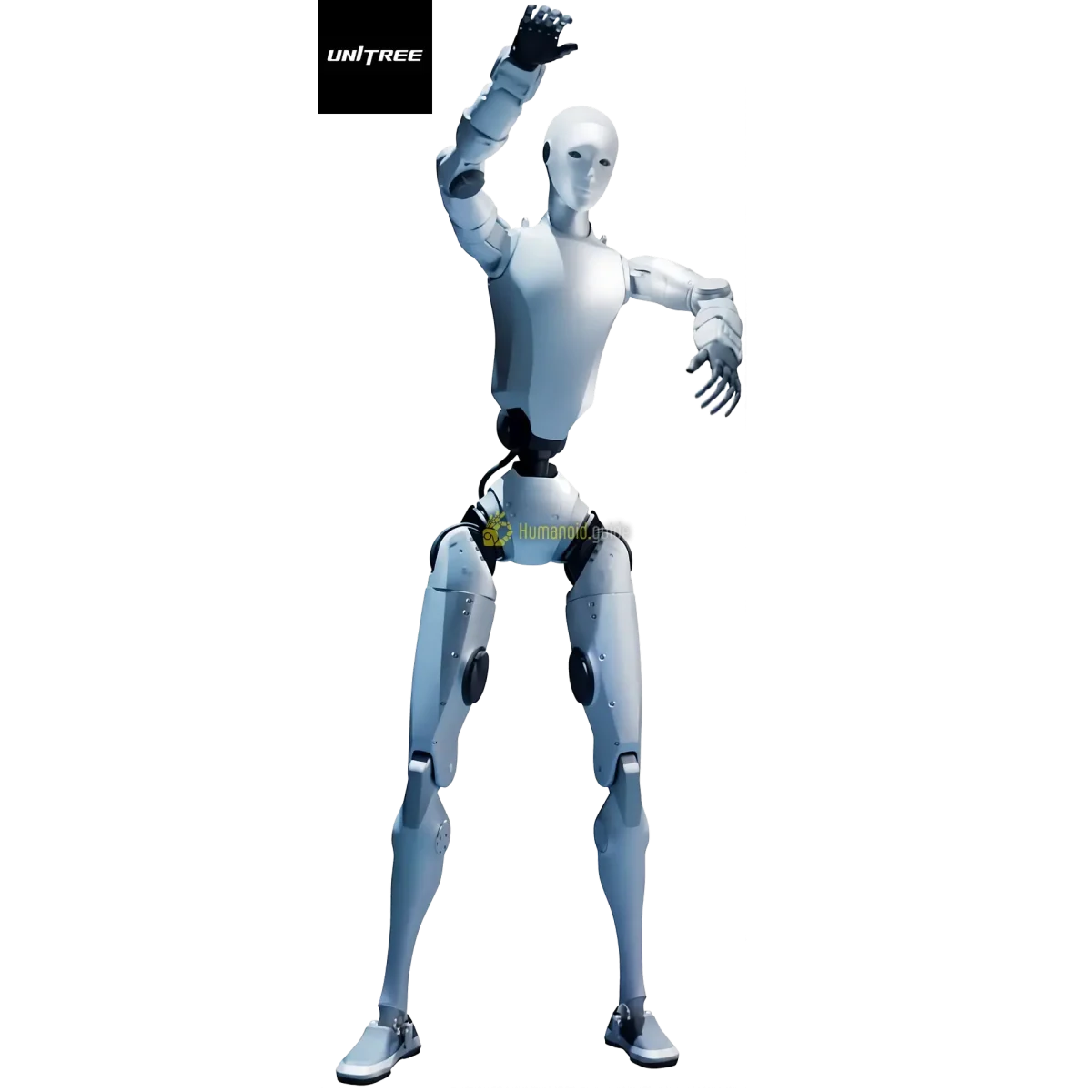
Launched in 2025 as the successor to the H1, the Unitree H2 pushes closer to general‑purpose utility. Standing 182 cm tall and weighing 70 kg, it matches average human stature. Its 31 degrees of freedom include 7‑DOF arms and a bionic head with facial features — a clear step up from the H1’s 19 DOF. The base price of $29,000 makes it one of the most affordable full‑size humanoids, while the fully‑loaded configuration climbs to $60,000 with additional sensor packages and compute. Three hours of runtime, pre‑order availability with first shipments slated for April 2026, and the backing of Unitree’s ROS2‑compatible developer stack make it a strong candidate for university labs, industrial pilots, and service‑robot development. Unitree has already demonstrated the H2 walking dynamically and performing basic pick‑and‑place tasks at events like CES.
CASBOT 02: Dexterous Hands at a Premium
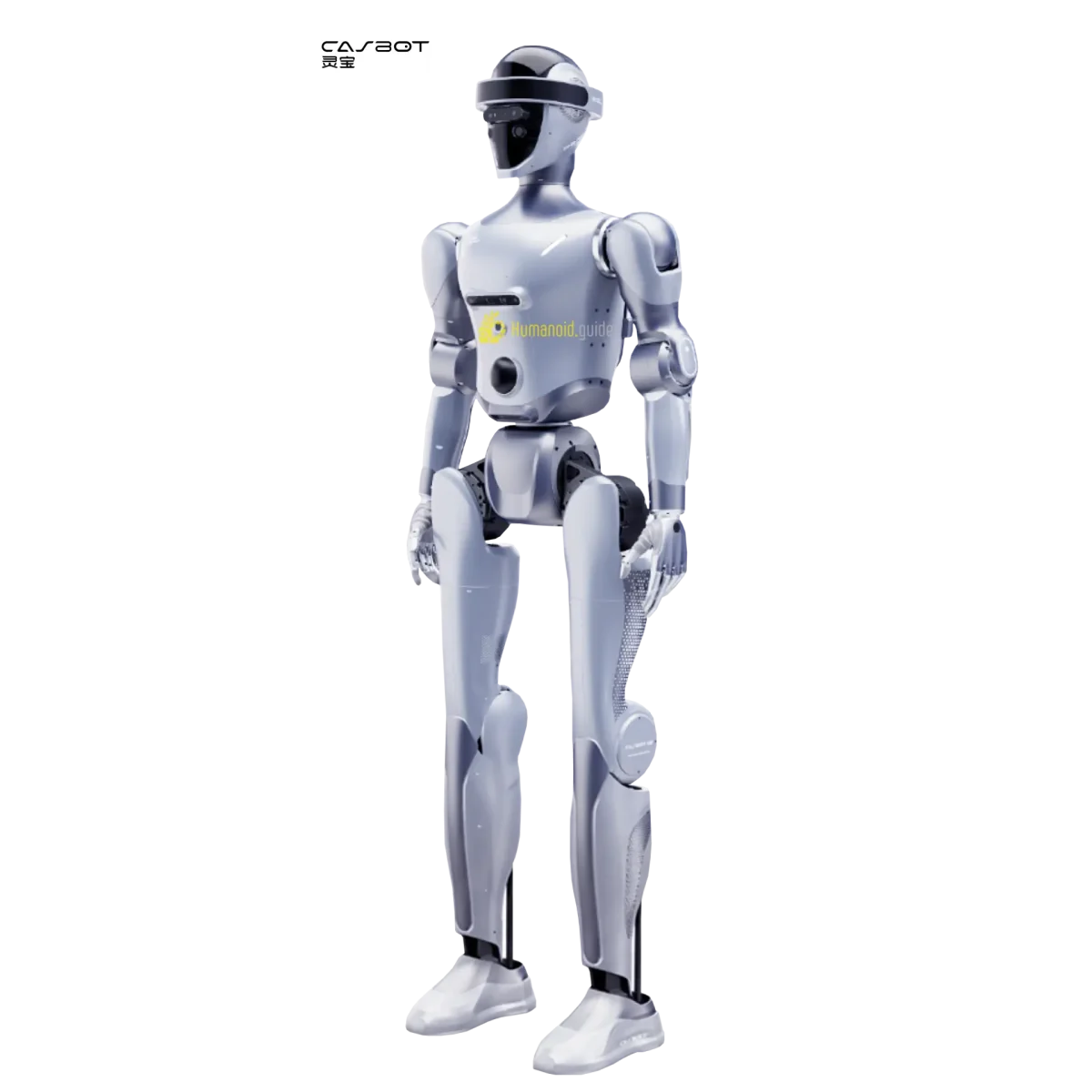
The CASBOT 02 is a second‑generation platform from Beijing‑based CASBOT (Zhongke Huiling Robotics), priced at a fixed $63,500. It’s lighter than the H2 at 50 kg, and its 163 cm height is more compact. The headline feature is the pair of 11‑DOF hands, which enable extraordinarily fine manipulation — video demos show the robot picking up delicate objects, threading cables, and executing teleoperated surgical tasks. It walks at 6 km/h, making it one of the faster humanoids in this class. Battery endurance is a weak point at just 1.5 hours, and the company has not published payload, compute details, or an IP rating. SDK access is available, though detailed ROS2 integration remains unconfirmed. Deliveries are underway in small batches through early‑stage commercial production, and lead times should be expected.
Price & Configurations
The price gap is stark: the Unitree H2 starts at $29,000 and tops out at $60,000; the CASBOT 02 is a single $63,500 offering. For a lab on a budget, the H2’s base configuration already delivers 31 DOF, 3‑hour battery, and full access to Unitree’s developer toolkit. The CASBOT demands nearly double the minimum spend but includes those premium hands and a slightly faster walking gait. Buyers who need to scale a pilot program will find the H2’s lower per‑unit cost far easier to justify. If your use case hinges on extreme hand dexterity, the CASBOT’s fixed price may be acceptable, but for most evaluation projects the H2 gives more value per dollar.
Winner: Unitree H2 — dramatically lower entry cost, configurable to suit different budgets, while still delivering best‑in‑class DOF and runtime.
Performance & Specs
Payload
The H2 states a 7 kg manipulation payload per arm. CASBOT has not released any payload figure for the 02. In the absence of data, the H2’s published 7 kg makes it the only verifiable choice for lifting and carrying tasks. If your use case involves tool handling or component transfer, the H2 is the safer bet.
Winner: Unitree H2 — known payload beats an unknown one.
Speed
The CASBOT 02 edges ahead with a 6 km/h top speed versus the H2’s 5.4 km/h. The difference is modest (~0.6 km/h) but could matter in large‑footprint warehouses or outdoor traversals where time‑to‑task is measured in seconds.
Winner: CASBOT 02 — but it’s a thin margin.
Battery
The H2’s 3‑hour battery is double the CASBOT’s 1.5 hours. For research demos, multi‑hour inspection rounds, or teleoperation sessions, the H2 can work a full morning uninterrupted; the CASBOT will need mid‑shift swaps or power‑on standby.
Winner: Unitree H2 — twice the endurance for missions that demand uptime.
Degrees of Freedom
The H2’s 31 DOF surpasses the CASBOT’s 25. However, the CASBOT’s 11‑DOF hands per arm (22 DOF from hands alone) likely leave fewer DOF distributed across the rest of the body. The H2’s 7‑DOF arms don’t split hand DOF out, but overall body articulation is higher. For whole‑body tasks like dynamic walking, stair climbing, and torso twisting, the H2 has an advantage.
Winner: Unitree H2 — more total mobility, though CASBOT 02’s hands are a specialized strength.
Software & SDK Ecosystem
Unitree has a mature software stack: all their robots ship with a C++/Python SDK, ROS2 drivers, and support for NVIDIA Isaac Sim. The H1 already leveraged reinforcement learning for locomotion, and the H2 will inherit that toolchain. CASBOT offers an SDK and a cloud management platform, but public documentation is sparse and ROS2 integration hasn’t been formally announced. For developers who need a turn‑key simulation‑to‑deployment pipeline, the H2 is the clear choice.
Winner: Unitree H2 — the proven Unitree SDK and ROS2 ecosystem are battle‑tested across quadruped and humanoid lines.
Autonomy & Sensors
Neither manufacturer has disclosed full sensor specs. The Unitree H2 is expected to carry an Orin‑class compute module, depth cameras, LiDAR, and IMU — consistent with its predecessor. CASBOT states the 02 uses RGB‑D cameras, LiDAR, and IMU, but compute details are missing. In terms of autonomy, Unitree’s Robot Management Platform supports autonomous patrols and SLAM‑based navigation, while CASBOT’s cloud platform is in earlier stages. Without published perception benchmarks, it’s hard to declare a winner, but Unitree’s existing deployment history with quadrupeds gives more confidence.
Winner: Unitree H2 — based on ecosystem maturity, though both lack public sensor details.
Build Quality & Durability
Both robots are designed for indoor use and light outdoor conditions, but neither has an published IP rating. The H2 is substantially heavier (70 kg vs 50 kg), which may indicate a more robust structure, though weight alone doesn’t guarantee ruggedness. CASBOT’s lighter build is easier to transport and may be safer around humans, but its long‑term durability in industrial settings is unproven. Without standardized ingress or impact data, this comparison remains speculative.
Winner: Too close to call — wait for official IP ratings and field‑deployment reports.
Price & Total Cost of Ownership
A 3‑year TCO snapshot:
- Unitree H2 (base): $29,000 hardware + ~$3,000/year software & support + spare parts (~$1,500) ≈ $38,500 over three years.
- CASBOT 02: $63,500 hardware + estimated $3,000/year support (unconfirmed) + spares (~$2,000) ≈ $72,500.
The Unitree’s lower sticker price and the ability to start with the base model keeps TCO 47% lower. Lease or RaaS (Robot‑as‑a‑Service) plans are not yet announced for either platform, though Unitree has historically offered financing options for its quadruped line. If you need a cost‑sensitive evaluation fleet, the H2 is the obvious pick.
→ Request a quote for Unitree H2 → Inquire about CASBOT 02
Which Should You Buy? Unitree H2 vs CASBOT 02 by Use Case
Choose the Unitree H2 if… You’re a university lab needing an affordable full‑size platform with ROS2 support and a rich simulation environment. Your use case demands long battery life (3 hours) for multi‑hour demos, patrols, or data collection. You value whole‑body mobility (31 DOF) and a published payload over specialised hand dexterity. You’re scaling a pilot program and need to keep per‑unit cost under $30,000.
Choose the CASBOT 02 if… Your application is centred on fine manipulation — micro‑assembly, teleoperation, or lab‑grade handling — where 11‑DOF hands are non‑negotiable. You require every metre of walking speed, and 6 km/h is worth the premium. * You’re comfortable with a less‑mature SDK and are willing to wait for expanded documentation and ROS2 confirmation.
Choose neither if… Neither robot meets your payload requirement (the CASBOT’s payload is unknown, and the H2’s 7 kg may be insufficient for heavy tooling). You need outdoor‑rated IP protection or ATEX certification — neither has published ingress protection. * You require immediate delivery; both are in pre‑order/pre‑production phases with lead times.
Real‑World Performance & Deployment
As of June 2026, both robots are very new to the market. The Unitree H2 has been demonstrated at CES and in Unitree’s own videos performing dynamic walking, stair climbing, and basic object manipulation, but no large‑scale customer deployments have been publicly announced. Its predecessor, the H1, has been used in several research labs and even set a Guinness World Record for walking speed (3.3 m/s), so the underlying locomotion stack is proven.
The CASBOT 02 has appeared in publicity videos showcasing its hand‑driven capabilities — threading a needle, picking up fragile items — but there are no reports of pilot deployments at customer sites. The manufacturer states it is in “early commercial production” with unspecified lead times. Without independent operating‑hour data or named enterprise deployments for either platform, real‑world track records remain largely unestablished. Buyers should request factory‑visit demos and insist on trial units before committing to a fleet.
SDK, Software & Developer Ecosystem
A deeper dive into the code and tools:
- Unitree H2 runs on Unitree’s unified SDK (C++ and Python). ROS2 drivers are available out of the box, and the robot integrates with NVIDIA Isaac Sim for simulation. Unitree also provides a visual programming interface and the Robot Management Platform for fleet operations. The community is active, with dozens of open‑source projects and papers already using H1 and G1 platforms.
- CASBOT 02 ships with a proprietary SDK (languages not specified) and a cloud‑based management console. ROS2 support has been hinted at but not publicly documented. The developer community is nascent, with few third‑party packages or tutorials. If you intend to build custom autonomy stacks or integrate with existing R&D pipelines, the Unitree H2 offers far less friction.
Winner: Unitree H2 — a mature, open, ROS2‑native environment that accelerates development.
Support, Warranty & Availability
Unitree provides a standard 1‑year warranty and optional enterprise SLA packages (pricing on request). The H2 is on pre‑order with first shipments expected in April 2026; lead times beyond the initial batch are unknown but likely short given Unitree’s manufacturing scale. CASBOT’s warranty terms are not yet published, though a 1‑year coverage is anticipated. The 02 is in limited production; buyers should expect longer lead times as production ramps. Both companies sell direct via purchase orders, and Unitree also works through regional distributors. Spare‑parts availability is better assured for Unitree thanks to its larger installed base across quadruped and humanoid lines.
Comments