
The Unitree H2 Plus and H1 are both full-size humanoid robots from Unitree Robotics, yet they sit at opposite ends of the development timeline. The H1 (launched 2023, widely available) redefined open-platform humanoid speed and agility; the H2 Plus (2026, partner-only pre-order) is the heavyweight successor built for serious manipulation and industrial tasks. This head-to-head comparison breaks down every critical dimension—price, payload, speed, software, and availability—to help research labs, integrators, and early-adopter enterprises decide which Unitree humanoid platform fits their mission.
Quick Verdict: Who Wins?
- Best for heavy payload & industrial pilot tasks: Unitree H2 Plus — 30 kg payload and reinforced torso enable real-world lifting and manipulation.
- Best proven, immediately available research platform: Unitree H1 (or H1-2 variant) — shipping since 2023 with robust ROS 2 SDK, world-record agility, and optional 27-DOF arm upgrade.
- Best value for high-speed locomotion research: Unitree H1 — 11.9 km/h top speed and backflip capability at a starting price of $90,000.
- Best future‑proof investment (if you can wait): Unitree H2 Plus — expected to surpass H1’s compute/sensor stack and full 31-DOF dexterity once general availability opens.
Unitree H2 Plus vs Unitree H1: Specs Compared
| Specification | Unitree H2 Plus | Unitree H1 |
|---|---|---|
| Price (new) | Undisclosed | $90,000 – $150,000 |
| Price (configured) | Undisclosed | Up to $150,000 (with arm/manipulation package) |
| Weight | 70 kg | 47 kg |
| Height | 180 cm | 180 cm |
| Payload | 30 kg | 7 kg (standard); up to ~15 kg with H1-2 arm |
| Max Speed | 14.4 km/h (4 m/s) | 11.9 km/h (3.3 m/s) |
| Battery Life | ~2 hours | ~2 hours (hot‑swappable 864 Wh) |
| Degrees of Freedom (DOF) | 31 | 19 (base); 27 (H1-2 variant) |
| IP Rating | Not published | Not published |
| Onboard Compute | Undisclosed (likely upgraded Jetson/sensor hub) | NVIDIA Jetson Orin NX |
| Sensors | Undisclosed (expected LiDAR + depth cameras) | Intel RealSense D435i, Livox MID360 LiDAR, IMU |
| SDK / ROS 2 | Undisclosed (expected ROS 2, Python, C++) | ROS 2, Python, C++, Unitree SDK |
| Autonomy / Fleet | Undisclosed (likely updated teleop + autonomy stack) | Unitree Autowalk, teleop, open‑source research stack |
| Availability | Pre‑order (partners only, 2026) | In production, available via Unitree & resellers |
| Warranty / Support | Undisclosed | Standard Unitree enterprise warranty; reseller options available |
Data as of June 2026. “Undisclosed” means Unitree has not publicly released that specification for the H2 Plus; estimates are not substituted.
Unitree H2 Plus: Next‑Gen Heavyweight Humanoid
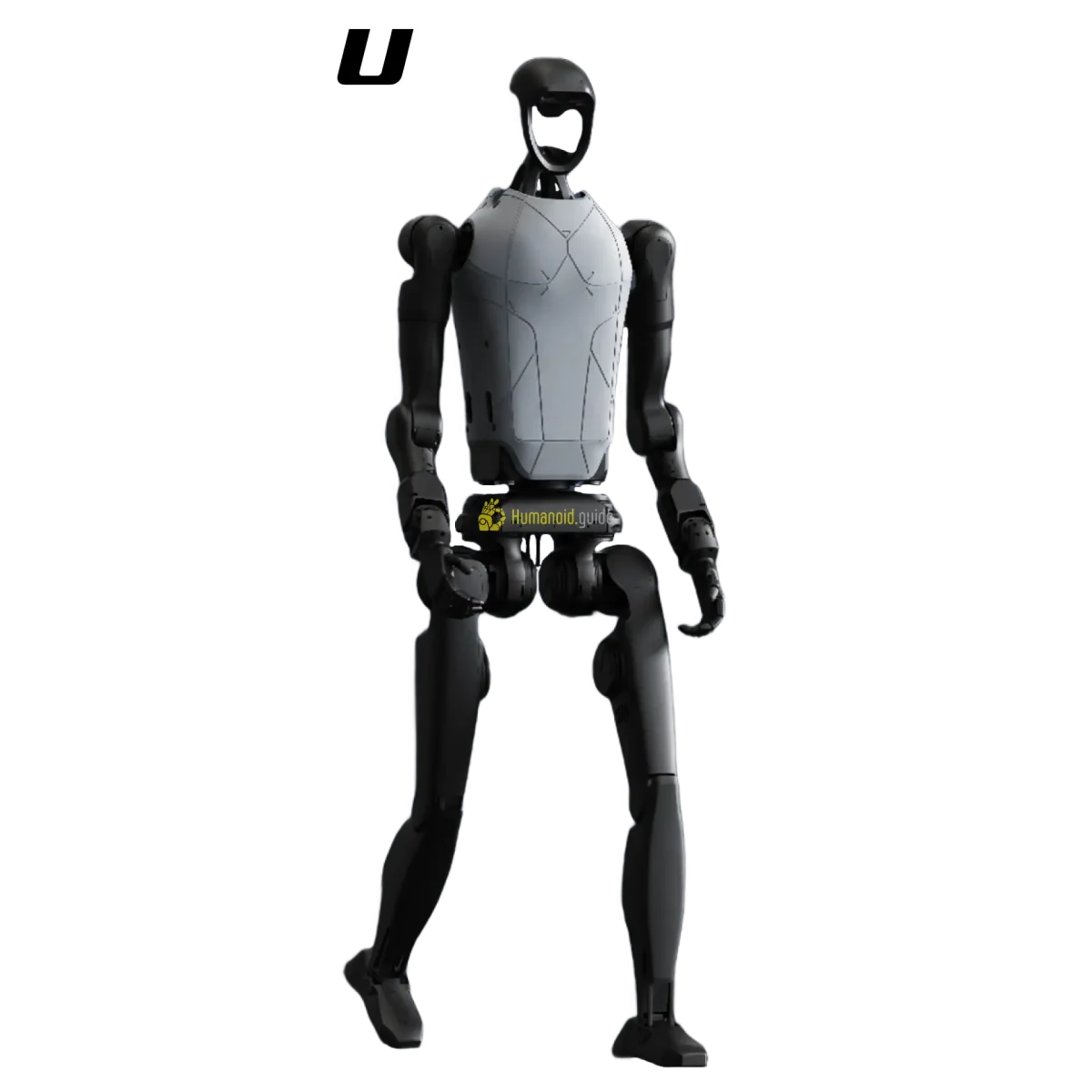
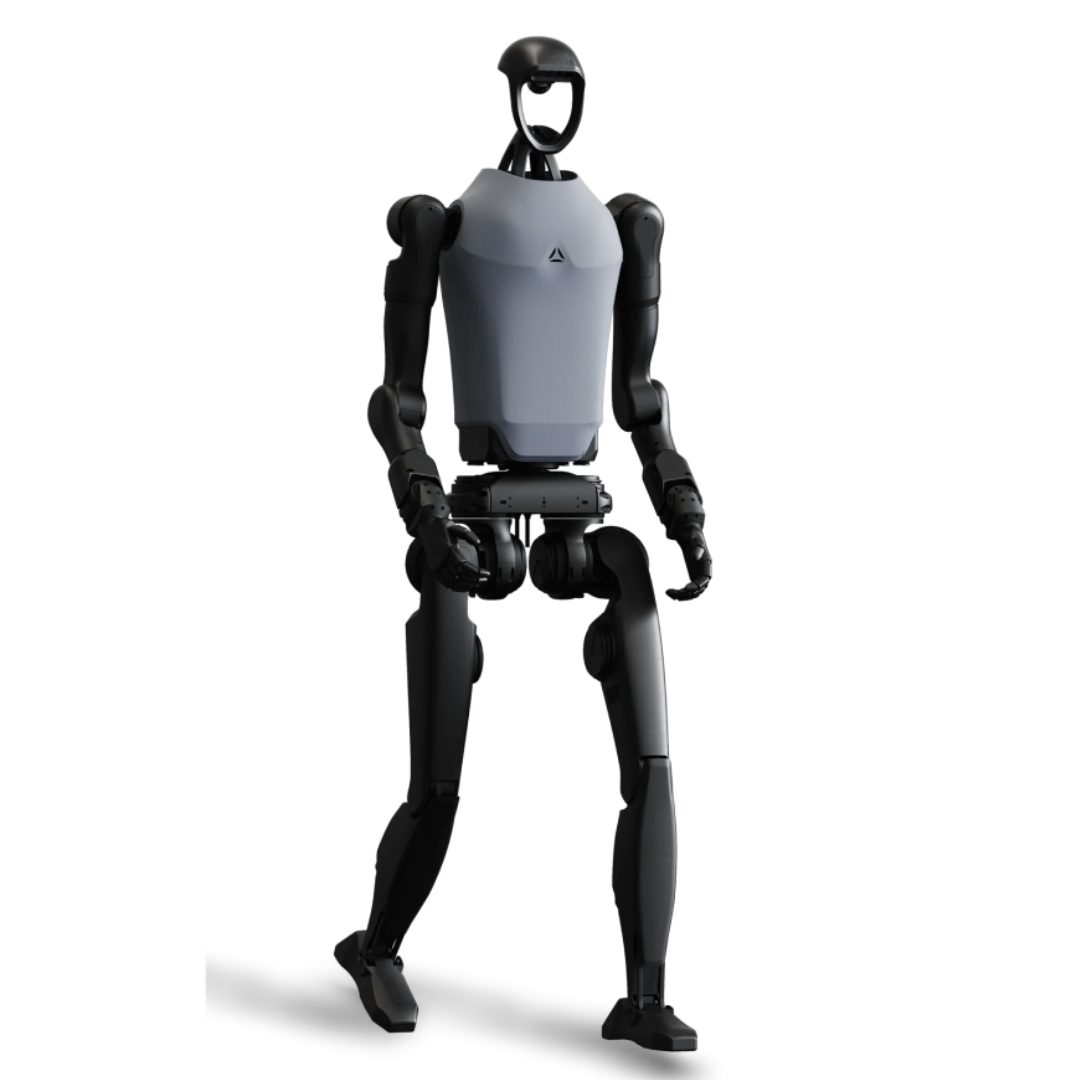
Unveiled in early 2026, the Unitree H2 Plus represents a generational leap over the H1. Standing the same 180 cm but weighing 70 kg (nearly 50 % heavier), the H2 Plus trades the H1’s lightweight speed‑focus for a reinforced torso, dual high‑torque arms, and a massive 30 kg payload capacity. With 31 degrees of freedom—including fully articulated hands and increased waist mobility—this platform targets industrial manipulation, heavy‑object logistics, and AI‑driven dexterity research.
Pricing remains undisclosed, and Unitree is limiting initial pre‑orders to strategic partners, signaling that the H2 Plus is still in advanced pilot phase. The robot has been shown in teaser videos executing fast walking and whole‑body coordination, but full sensor specs and SDK details have not been published. For labs and corporations that need maximum per‑robot capability and are comfortable waiting for wider rollout, the H2 Plus is the Unitree flagship to watch.
> Image: Unitree H2 Plus – watch teaser (credit: Unitree)
Unitree H1: Record‑Setting Open‑Platform Pioneer
The Unitree H1, first released in 2023, put full‑sized humanoid performance on the map. Capable of 11.9 km/h (3.3 m/s) sustained running—a speed that held a Guinness World Record—and a celebrated backflip, the H1 proved that an open‑platform humanoid could be both agile and accessible. It weighs just 47 kg, packs a hot‑swappable 864 Wh battery for ~2‑hour runtime, and comes standard with 19 DOF; the H1-2 variant adds two 4‑DOF arms, raising total DOF to 27 and payload to approximately 15 kg.
Priced from $90,000 to $150,000 depending on configuration, the H1 is available for direct purchase from Unitree and select resellers, including on Robot Overflow. A robust ROS 2 SDK, Python and C++ support, and an active developer community make it a favorite in university robotics labs, locomotion research, and early manipulation studies. Units occasionally appear on the secondary market (used range $64,000–$120,000), further lowering the entry barrier.
Price & Total Cost of Ownership
One of the biggest contrasts between these two robots is financial clarity. The H1 has a transparent, published price range: $90,000 for a base unit, climbing to $150,000 for a full H1-2 configuration with manipulation arms, upgraded sensors, and software options. Over a 3‑year ownership period—including spare batteries (around $2,000 each), software maintenance, and typical research‑grade wear—total cost of ownership (TCO) for an H1 often lands between $120,000 and $200,000, depending on usage intensity. Used units bring TCO down substantially.
For the H2 Plus, Unitree has not released any public pricing. Early partner‑only pre‑orders and the robot’s heavier, more complex build suggest a base price at least in the H1’s upper range ($120,000–$150,000) and likely higher when fully configured with dexterous hands and advanced compute. Without a published support structure or spare‑parts roadmap, it is impossible to calculate TCO. Organizations that cannot tolerate opaque pricing must wait or look to the H1.
Winner: The H1 wins on price transparency and immediate affordability. If budget certainty matters, the H1 is the only choice right now.
Performance & Specs
Payload & Strength
The H2 Plus’s 30 kg payload—over four times the H1’s standard 7 kg—redefines what’s possible. This leap likely stems from a reinforced spine, higher torque actuators, and a stiffer whole‑body structure. Even the H1-2 variant’s ~15 kg arm payload is half of the H2 Plus’s number. For tasks that involve lifting boxes, tool handling, or rigid payload integration, the H2 Plus is in a different class.
Winner: H2 Plus, by a wide margin.
Speed & Mobility
The H1 set records with 3.3 m/s running and dynamic backflips; the H2 Plus pushes the limit further to 14.4 km/h. While the H1’s lightweight build aids agility, the heavier H2 Plus achieving 4 m/s suggests dramatically improved actuator power density and whole‑body control. Both robots are stable across uneven terrain, but the H2 Plus may sacrifice some of the H1’s extreme acrobatics for load‑bearing stability.
Winner: H2 Plus on raw speed, but H1 remains the agility benchmark for tricks and rapid turns. For pure forward velocity, H2 Plus wins.
Battery Life & Energy
Both robots achieve around 2 hours on a charge. The H1 uses a field‑proven hot‑swappable 864 Wh battery, allowing non‑stop operation if spare packs are available. Unitree has not published the H2 Plus’s battery specification, but given the higher payload and weight, it likely carries a larger pack to maintain similar runtime. Hot‑swap capability is unconfirmed for the H2 Plus.
Winner: Tie, pending full H2 Plus battery/swap details. Current H1’s hot‑swap is a proven advantage.
Degrees of Freedom & Dexterity
The H2 Plus’s 31 DOF (likely paired with 5‑fingered dexterous hands) far exceeds the H1’s 19 standard DOF or the H1-2’s 27 DOF. This suggests a dedicated waist axis, dual high‑DOF arms, and fully articulated hands, enabling complex manipulation and whole‑body coordination. The H1-2’s 27 DOF is respectable, but it relies on add‑on arm modules and does not match the integrated dexterity of the H2 Plus.
Winner: H2 Plus.
Software & SDK Ecosystem
The H1 has a mature, public‑facing software stack: ROS 2 integration, Python and C++ SDK, Unitree’s own motion‑control libraries, Autowalk for pre‑planned routes, and an active open‑source community on GitHub. Researchers routinely pair it with NVIDIA Isaac Sim and Gazebo for simulation. Fleet management is possible through Unitree’s cloud tools, though enterprise‑grade software is still evolving.
For the H2 Plus, Unitree has not yet released SDK details or confirmed ROS 2 support. Given the company’s history, it is almost certain that a similar open‑source‑friendly stack will be provided, possibly with enhanced real‑time control and AI‑model integration. However, until official documentation ships, the H1 retains a decisive real‑world advantage.
Winner: H1, by virtue of proven, immediately available software.
Autonomy & Sensors
The H1’s sensor suite—Intel RealSense D435i depth camera, Livox MID360 LiDAR, and IMU—combined with the Jetson Orin NX compute module delivers robust SLAM and autonomous navigation. It supports teleoperation, vision‑based reactive walking, and basic object detection via published research stacks.
Unitree has not disclosed the H2 Plus’s sensor payload or compute board. Based on the form factor and expected AI‑upskilling, the H2 Plus likely integrates more advanced vision (perhaps multiple depth cameras), a more powerful edge GPU, and perhaps tactile sensors in the hands. Teaser footage shows stable locomotion, but no published autonomy benchmarks. Until those emerge, the H1’s well‑documented, third‑party‑validated performance is the safer bet.
Winner: H1, based on available evidence.
Build Quality & Durability
The H1’s 47 kg carbon‑fiber‑and‑aluminum chassis has proven durable in lab environments, with users reporting minimal structural issues after hundreds of operating hours. Its IP rating is not officially published, and it’s not intended for outdoor rain or heavy dust, but it handles controlled indoor spaces well.
The H2 Plus, at 70 kg, is built like a tank. The extra mass is dedicated to stronger joints, a rigid torso, and heavy‑duty grippers. No durability or IP rating has been released, but the intended industrial usage hints at a more robust enclosure and possibly some environmental sealing. Still, without data, the H1’s field‑proven reliability wins by default.
Winner: H1 (proven); H2 Plus potential but unverified.
Which Should You Buy? Unitree H2 Plus vs Unitree H1 by Use Case
- Choose the Unitree H2 Plus if you…
- Need a payload ≥ 20 kg for real‑world object manipulation, logistics pilot, or heavy‑tool handling.
- Are building next‑gen whole‑body control or dexterous manipulation research that demands 31 DOF and advanced hands.
- Can commit to a partner‑only pre‑order and are comfortable with undisclosed pricing and wait times.
- Want the fastest full‑size humanoid (4 m/s) and are willing to beta‑test emerging software.
- Choose the Unitree H1 (or H1-2) if you…
- Need a shipping, proven humanoid platform with transparent pricing starting at $90,000.
- Run a locomotion or control lab that values world‑record agility and a mature ROS 2 developer ecosystem.
- Want the option to start with a lower‑cost base unit and upgrade to manipulation arms later (H1-2).
- Prefer a hot‑swappable battery and widely available spare parts.
- Choose neither if you…
- Require an IP‑rated rugged robot for outdoor work (look at quadrupeds like B2 or Spot).
- Have a hard budget under $50,000—consider the Unitree G1 humanoid ($16,000 base) instead.
Real‑World Deployments & Track Record
The Unitree H1 has been shipping since 2023; multiple universities and research institutes have published locomotion and teleoperation results using the platform. Guinness World Records certified its 3.3 m/s run in March 2024 (source: Guinness, March 2024). The H1-2 variant, with 27‑DOF arms, began shipping in 2025 and is being used in early manipulation and mobile‑manipulation experiments. Used H1 units sometimes surface on marketplaces like Robot Overflow, confirming a growing second‑hand market and decent durability after months of lab use.
The Unitree H2 Plus, announced in 2026, is still in a limited pre‑order phase. No public beta testers, industrial pilot sites, or operating hours have been disclosed. Its performance numbers come from manufacturer‑released demo footage, which should be treated as best‑case examples until independent validation emerges.
Winner (proven track record): H1 by a large margin. The H2 Plus is a promise, not yet a proven product.
SDK, Software & Developer Ecosystem
Beyond the ROS 2 and Python support mentioned above, the H1 benefits from a growing repository of community projects: Open‑source walking controllers, simulation models for Isaac Gym/MuJoCo, and integration tutorials are freely available. Unitree maintains an official GitHub organization with regular updates, and third‑party developers offer add‑ons like Unity‑based teleoperation interfaces.
The H2 Plus will almost certainly inherit and extend this ecosystem, but as of mid‑2026 there are no public repositories, documentation, or simulation models. Developers who need production‑ready toolchains today must choose the H1.
Winner: H1.
Support, Warranty & Availability
Unitree offers enterprise‑grade support and warranty for H1 buyers through direct sales and authorized resellers (including Robot Overflow). Standard warranty covers manufacturing defects; extended plans are negotiable. The H1 is regularly stocked and can ship within weeks depending on configuration.
The H2 Plus is on pre‑order exclusively for partner organizations. Support terms, warranty length, and spare‑parts availability have not been announced. Buyers should anticipate longer lead times and potentially limited initial support as Unitree ramps production. For organizations that need a robot in the summer of 2026, the H1 is the only realistic choice.
Winner: H1.
Comments