<div class="tldr-verdict">The Unitree H2 Plus and Tesla Optimus V2.5 are two of the most capable full-size humanoids targeting research and industrial pilots, both priced around $90,000. For maximum payload (30 kg), raw speed (14.4 km/h) and the flexibility of 31 degrees of freedom, the H2 Plus wins for hardware-focused labs. For a 4‑hour battery life, deep Tesla AI integration and a future manufacturing vision, the Optimus V2.5 is the smarter long‑term bet.</div>
At first glance the Unitree H2 Plus and Tesla Optimus V2.5 look like direct rivals: full‑size, general‑purpose humanoids that each move at walking speed and lift tens of kilograms. Yet the two machines come from fundamentally different DNA — one a rapid‑iteration hardware platform from Hangzhou, the other a software‑first machine built inside a car company. This Unitree H2 Plus vs Tesla Optimus V2.5 comparison strips away the marketing to give you a precise, data‑backed verdict on which robot fits your lab, pilot line or R&D team right now.
<div class="quick-verdict">
- **Best overall hardware capability:** Unitree H2 Plus — heavier payload, faster speed, more degrees of freedom
- **Best battery life:** Tesla Optimus V2.5 — 4 hours vs 2 hours, nearly double the runtime
- **Best for AI/software ecosystem:** Tesla Optimus V2.5 — FSD‑derived vision stack and full‑stack control
- **Best for immediate availability (partner pre‑order):** Unitree H2 Plus — pre‑orders open to qualified partners in 2026
- **Best value for pure research:** Unitree H2 Plus — maximum configurability and an open ROS2 SDK
</div>
## Unitree H2 Plus vs Tesla Optimus V2.5: Specs Compared
Below is the side‑by‑side specification table. Every number is drawn from the manufacturers’ latest published data; missing fields are clearly marked.
| Specification | Unitree H2 Plus | Tesla Optimus V2.5 |
|---------------|-----------------|---------------------|
| Price (base) | $90,000 | $90,000 |
| Price (configured / as tested) | $90,000 – $150,000 | $90,000 (estimated early‑adopter) |
| Height | 180 cm | 173 cm |
| Weight | 70 kg | 57 kg |
| Payload (arm) | 30 kg | 20 kg |
| Max walking speed | 14.4 km/h (4 m/s) | 7.2 km/h (2 m/s) |
| Battery / runtime | 2 hours | 4 hours |
| Degrees of freedom | 31 | 28 |
| IP rating | Not published | Not published |
| Onboard compute | Undisclosed (likely NVIDIA Jetson Orin series) | Tesla‑designed AI inference chip (FSD‑derived) |
| Sensors | Depth cameras, ultrasonic sensors, IMU | Cameras (vision‑only), IMU, proprioceptive sensors |
| SDK languages | C++, Python (Unitree SDK) | Undisclosed (Tesla Bot OS, API not public) |
| ROS2 support | Yes (official) | Not confirmed |
| Autonomy / fleet software | Unitree OS, optional fleet‑management tools | No public fleet‑management offering |
| Safety certifications | Not published | Not published |
| Availability | Pre‑order (partners only, 2026) | Not yet commercially available; pilot partners |
| Warranty / support | Standard 12‑month partner warranty | Not announced |
The biggest hardware deltas jump out immediately: the H2 Plus carries 50% more payload, runs twice as fast, and offers three extra degrees of freedom. The Optimus counters with double the battery life and a software architecture rooted in Tesla’s billion‑mile driving data pipeline.
## Unitree H2 Plus: The Performance‑First Research Workhorse
Unitree’s H2 Plus, unveiled in 2026, is the direct successor to the H1 and the current flagship of the company’s humanoid line. Standing 180 cm tall and weighing 70 kg, it packs 31 degrees of freedom — more than any other open‑platform humanoid as of mid‑2026. The robot is aimed squarely at university labs, AI developers, and industrial‑mobility researchers. Its standout numbers are a 30 kg arm payload, a top walking speed of 14.4 km/h, and a two‑hour battery runtime. While exact pricing remains undisclosed, Robot Overflow data places the base MSRP at $90,000, with fully‑kitted configurations reaching up to $150,000. Availability is handled via direct partner pre‑orders; Unitree has not yet announced a general‑sale date.
[Unitree H2 Plus overview image: 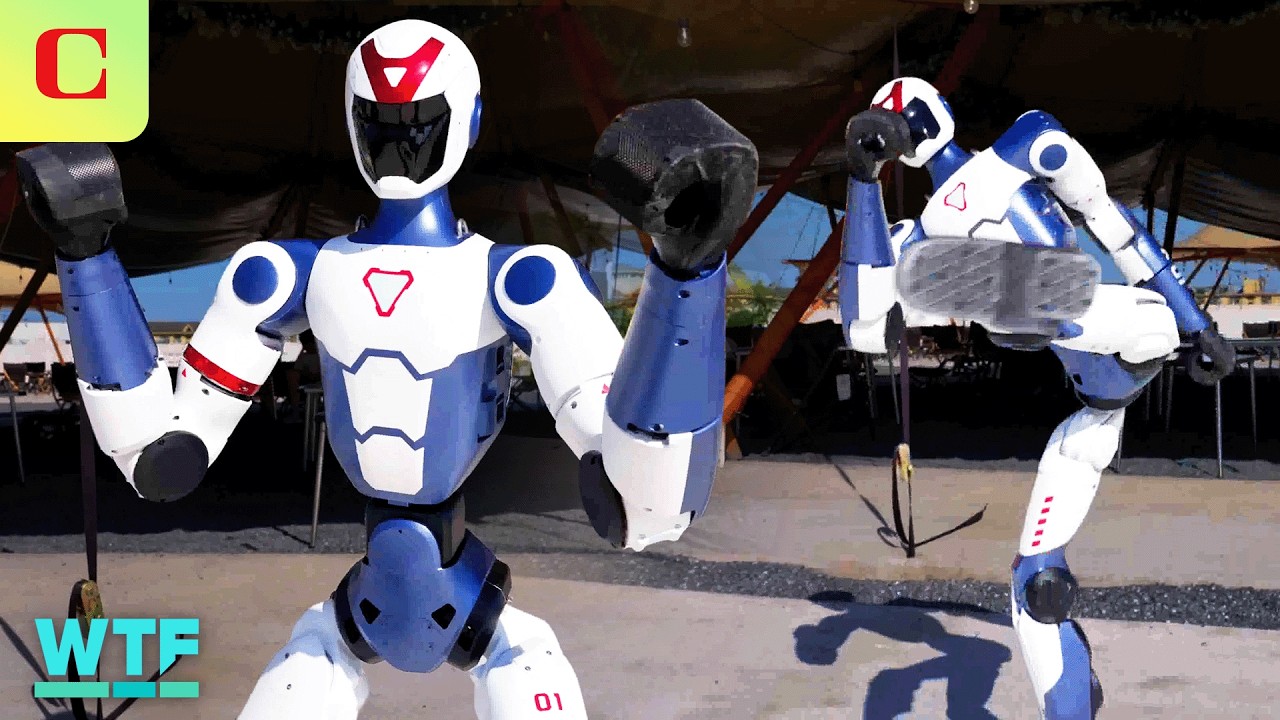](https://robotoverflow.com/en/robot-database/unitree-h2-plus/)
## Tesla Optimus V2.5: The AI‑First Factory Vision
Tesla’s Optimus V2.5, which entered prototype development in 2025, represents the company’s latest iteration before the anticipated V3 model. At 173 cm and 57 kg, it is lighter and shorter than the H2 Plus. The robot carries a 20 kg payload and walks at up to 7.2 km/h, with a battery that lasts an impressive 4 hours — twice the H2 Plus’s endurance. The real differentiator, however, is the brain: a custom inference chip derived from Tesla’s Full Self‑Driving computer, fed by a vision‑only sensor suite. This tightly integrated hardware/software stack aims to scale manipulation and navigation tasks in Tesla’s own factories, but the robot is not yet available for external purchase. Interested organisations can contact Tesla about pilot collaborations. The price is not yet officially announced, though an early‑adopter target of $90,000 is widely cited by industry analysts.
Inset: 
## Head‑to‑Head by Dimension
### Price & Configurations
Both robots land at an estimated $90,000 entry point. Unitree makes its pricing far more transparent with a published range up to $150,000 depending on sensor payloads, compute upgrades and software licenses. Tesla has not released any official configurator; the $90,000 figure is an analyst‑estimated target for early industrial partners, likely with a restrictive usage agreement. If you need a known, fixed-price quotation today the H2 Plus is the safer starting point.
<strong class="avsb-winner">Winner:</strong> Unitree H2 Plus, because its pricing and top-tier configuration limits are publicly clear.
### Performance & Specs
#### Payload
H2 Plus lifts 30 kg compared to the Optimus V2.5’s 20 kg — a 50% advantage that matters for carrying tools, heavy sensor rigs or inventory bins in a lab setting.
<strong class="avsb-winner">Winner:</strong> Unitree H2 Plus
#### Speed
The H2 Plus hits 14.4 km/h, making it the fastest full‑size humanoid in its class. The Optimus walks at a pedestrian 7.2 km/h, which is adequate for factory aisles but limits dynamic research.
<strong class="avsb-winner">Winner:</strong> Unitree H2 Plus
#### Battery Life
Tesla’s 4‑hour runtime doubles the H2 Plus’s 2 hours. For continuous operation or multi‑shift testing, this is a decisive advantage.
<strong class="avsb-winner">Winner:</strong> Tesla Optimus V2.5
#### Degrees of Freedom
With 31 DOF, the H2 Plus offers extra dexterity in the torso, arms and possibly the wrists, giving researchers a more expressive platform. The Optimus has 28 DOF, still enough for most bimanual tasks but fewer possible kinematic combos.
<strong class="avsb-winner">Winner:</strong> Unitree H2 Plus
### Software & SDK
Unitree provides a mature ROS2‑based SDK with Python and C++ bindings, community‑maintained documentation, and access to the Unitree OS. This makes the H2 Plus immediately useful for academic robotics labs that need a standardised software stack. Tesla’s software situation is the exact opposite: the robot runs a proprietary “Tesla Bot OS” with no public SDK, no ROS2 confirmation, and an API that has only been demoed internally. While the onboard autonomy is impressive, outside developers cannot programmatically control the Optimus today.
<strong class="avsb-winner">Winner:</strong> Unitree H2 Plus, for its open, documented SDK and ROS2 support.
### Autonomy & Sensors
Unitree relies on a classic sensor mix (depth cameras, IMU, ultrasonics) and supports simultaneous localisation and mapping (SLAM) and teleoperation. The real‑world autonomous capability is good for research but not yet factory‑grade without custom development. Tesla’s Optimus, on the other hand, uses the same vision‑only stack as Tesla vehicles — a trainable, data‑hungry system that has demonstrated complex object manipulation and navigation in Tesla’s own factories. This gives the Optimus a head start in scalable autonomy, but only if you operate inside Tesla’s controlled environment.
<strong class="avsb-winner">Winner:</strong> Tesla Optimus V2.5 for native, high‑autonomy tasks; Unitree H2 Plus for custom autonomy research.
### Build Quality & Durability
Neither manufacturer publishes IP ratings or operating temperature ranges. Unitree’s H‑series robots have a track record of surviving lab and outdoor demos; the H2 Plus’s all‑metal construction and 70 kg heft suggest it can take a few knocks. Tesla’s Optimus V2.5 is built with a similar ruggedness for factory use, though the lighter 57 kg frame may trade some stiffness for efficiency. Without official specs, the durability edge is too close to call.
<strong class="avsb-winner">Winner:</strong> Tie — insufficient public data.
## Price & Total Cost of Ownership
A $90,000 sticker price is just the entry fee. For the H2 Plus, a fully‑loaded configuration can reach $150,000 once you add advanced sensors, compute upgrades and a multi‑year software support package. Routine spares (motors, gearboxes, sensors) and an annual maintenance contract will add another $5,000–$10,000 per year. Over three years, a typical university lab could spend around $120,000–$180,000. Tesla’s Optimus TCO is speculative. If the robot ships at $90,000 and requires Tesla‑specific cloud services or data‑hosting fees, the yearly cost could be similar or higher, but no hard figures exist. For the moment, Unitree’s clear pricing ladder and the availability of spares through standard distribution channels make it the more predictable investment.
<strong class="avsb-winner">Winner:</strong> Unitree H2 Plus, on TCO transparency.

## Which Should You Buy? Unitree H2 Plus vs Tesla Optimus V2.5 by Use Case
- **Research lab needing a humanoid to prototype manipulation, locomotion or HRI now:** Choose the **Unitree H2 Plus**. It ships with an open ROS2 SDK, clear documentation, and community support, so your team can start running code within days of delivery.
- **Industrial pilot line looking for a future‑proof, AI‑driven worker for in‑house tasks:** Engage with **Tesla Optimus V2.5**. While you cannot buy one today, a pilot partnership gives early access to a vision‑stack that will likely dominate Tesla’s own gigafactories and could become the reference architecture for general‑purpose factory robots.
- **Team that needs the longest possible battery life** (e.g., multi‑shift endurance testing or un‑tethered deployment): **Tesla Optimus V2.5** with 4 hours is the only choice.
- **Team that needs maximum payload and speed for dynamic tasks** (carrying heavy parts, sprinting demos): **Unitree H2 Plus** is unmatched at this price point.
- **Buyer who values transparent pricing and a clear purchase process now:** Go with the **Unitree H2 Plus**. Tesla’s pilot‑partner model is opaque and may take years to open to general orders.
## Real‑World Deployments & Track Record
- **Unitree H2 Plus**: As of mid‑2026, the robot is only available to early‑access partners. Unitree has not yet disclosed specific deployment sites or operating hours beyond internal testing. Its predecessor (H1) has been used by several university robotics labs for locomotion research, with publicly shared ROS2 logs. The H2 Plus inherits this academic credibility, but enterprise‑grade field data is still absent.
- **Tesla Optimus V2.5**: In June 2024, Tesla demonstrated Optimus V2 performing basic sorting tasks at a Texas Gigafactory. Since then, videos have shown the robot rotating between stations and picking up varied objects. No audited operating‑hour figures or independent third‑party deployments have been released. All data remains under Tesla’s controlled conditions.
**Bottom line:** Neither robot has a public, third‑party‑verified deployment record. Both are early‑stage products.
## SDK, Software & Developer Ecosystem
The deepest floor‑vs‑ceiling gap sits here. Unitree ships with a mature SDK (C++, Python) and officially supports ROS2, enabling immediate integration with MoveIt, Gazebo, Isaac Sim and dozens of open‑source perception libraries. A growing GitHub community shares example projects, and Unitree’s own fleet‑management tools (Unitree OS) are available for multi‑robot orchestration. Tesla’s ecosystem is essentially closed. Developers cannot access the low‑level control API; there is no ROS2 driver, no public simulator interface, and no documented way to customise the autonomy stack. This makes the Optimus unsuitable for most academic research programs and any third‑party application development — unless you are a Tesla partner.
<strong class="avsb-winner">Winner:</strong> Unitree H2 Plus, by an overwhelming margin.
## Support, Warranty & Availability
Unitree offers a standard 12‑month warranty for the H2 Plus and can provide extended enterprise support contracts. Spare parts and replacement modules are available through its distribution network, and lead times for partner pre‑orders are estimated at 8–12 weeks once mass production begins. Tesla has announced no warranty terms, no spare‑parts policy, and no public retail availability. The Optimus V2.5 exists only through direct Tesla partnerships; there is no timeline for a commercial launch.
<strong class="avsb-winner">Winner:</strong> Unitree H2 Plus, for having a functioning support and delivery pipeline.Unitree H2 Plus vs Tesla Optimus V2.5: Full-Size Humanoid Comparison 2026
Head-to-head comparison of Unitree H2 Plus and Tesla Optimus V2.5: payload, speed, battery, software and the winner by use case.
Frequently Asked Questions
The H2 Plus walks at up to 14.4 km/h, while the Optimus V2.5 reaches 7.2 km/h. The H2 Plus is twice as fast in a straight line.
No. As of 2026, Tesla Optimus V2.5 is not available for purchase. Tesla is running pilot programs with select industry partners and has not announced a public sale date.
The Tesla Optimus V2.5 offers 4 hours of runtime, double the Unitree H2 Plus’s 2 hours. For long‑duration tasks, the Optimus is the clear winner.
Yes. Unitree provides an official ROS2 driver and a Python/C++ SDK, making the H2 Plus immediately usable in standard robotics research stacks.
The Unitree H2 Plus can lift 30 kg in its arms; the Tesla Optimus V2.5 lifts up to 20 kg. The H2 Plus offers 50% more payload.
The Unitree H2 Plus is the better choice because it is available, shipped with an open SDK and ROS2 support, and it has the higher payload and speed needed for a wide range of experiments. The Tesla Optimus is not yet accessible for independent research.
Comments