

A $90,000 humanoid that backflips and runs faster than any other humanoid on the market — versus a concept robot built by a smartphone company that can detect 45 human emotions but can’t be bought. That’s the defining tension when comparing the Unitree H1 and the Xiaomi CyberOne. This article delivers the full comparison: price, specs, real‑world availability, software ecosystem, and a use‑case‑segmented verdict so you can decide which approach fits your project — if either is actually within reach.
Quick Verdict: Who Wins?
- Best overall value: Unitree H1 — fully purchasable, demonstrably faster and more agile, supported by an active developer ecosystem.
- Best for real‑world deployment: Unitree H1 — shipping, with warranty, enterprise support, and even a used market.
- Best for emotional AI research: Xiaomi CyberOne — unique multimodal emotion and sound recognition, but only if you can gain access to Xiaomi’s lab platform.
- Best budget pick: Unitree H1 used ($64,000–$120,000) — the only way to get a sub‑$90K adult‑size humanoid that actually exists.
Unitree H1 vs Xiaomi CyberOne: Specs Compared
| Specification | Unitree H1 | Xiaomi CyberOne |
|---|---|---|
| Price (base) | $90,000 | ~$90,000 (estimated, not sold) |
| Price (configured) | up to $150,000 | ~$104,000 (estimated lab cost) |
| Price (used) | $64,000–$120,000 | Not applicable |
| Height | 180 cm | 177 cm |
| Weight | 47 kg | 52 kg |
| Payload capacity | 7 kg | Not published |
| Max speed | 11.9 km/h (3.3 m/s running) | 7.2 km/h (running) |
| Battery life | 2 hours (hot‑swappable 864 Wh) | ~3 hours |
| Degrees of freedom | 19 (27 on H1‑2) | 21 (13 joints) |
| IP rating | Not published | Not published |
| Onboard compute | Intel Core i7 (H1‑2) | Not published |
| Sensors | 2× Intel RealSense D435i, Livox MID‑360 LiDAR | Mi‑Sense Depth Vision Module 2.0 |
| SDK languages | Python, C++ (Unitree SDK) | Not published |
| ROS2 support | Yes (Unitree ROS2 packages) | Not published |
| Autonomy software | Unitree Autowalk, SLAM | Emotional AI (45 emotions, 85 sounds) |
| Safety certs | Not published | Not published |
| Availability | In production, worldwide shipping | Technology demonstrator; not for sale |
| Warranty / support | 1‑year standard, enterprise SLA available | None (lab concept) |
Table: key specifications of the Unitree H1 and Xiaomi CyberOne. All CyberOne performance numbers are taken from Xiaomi’s official 2022 demo presentation; purchasing and support information is not provided because the robot is not commercially available.
Unitree H1: The Record‑Setting Agile Humanoid You Can Buy
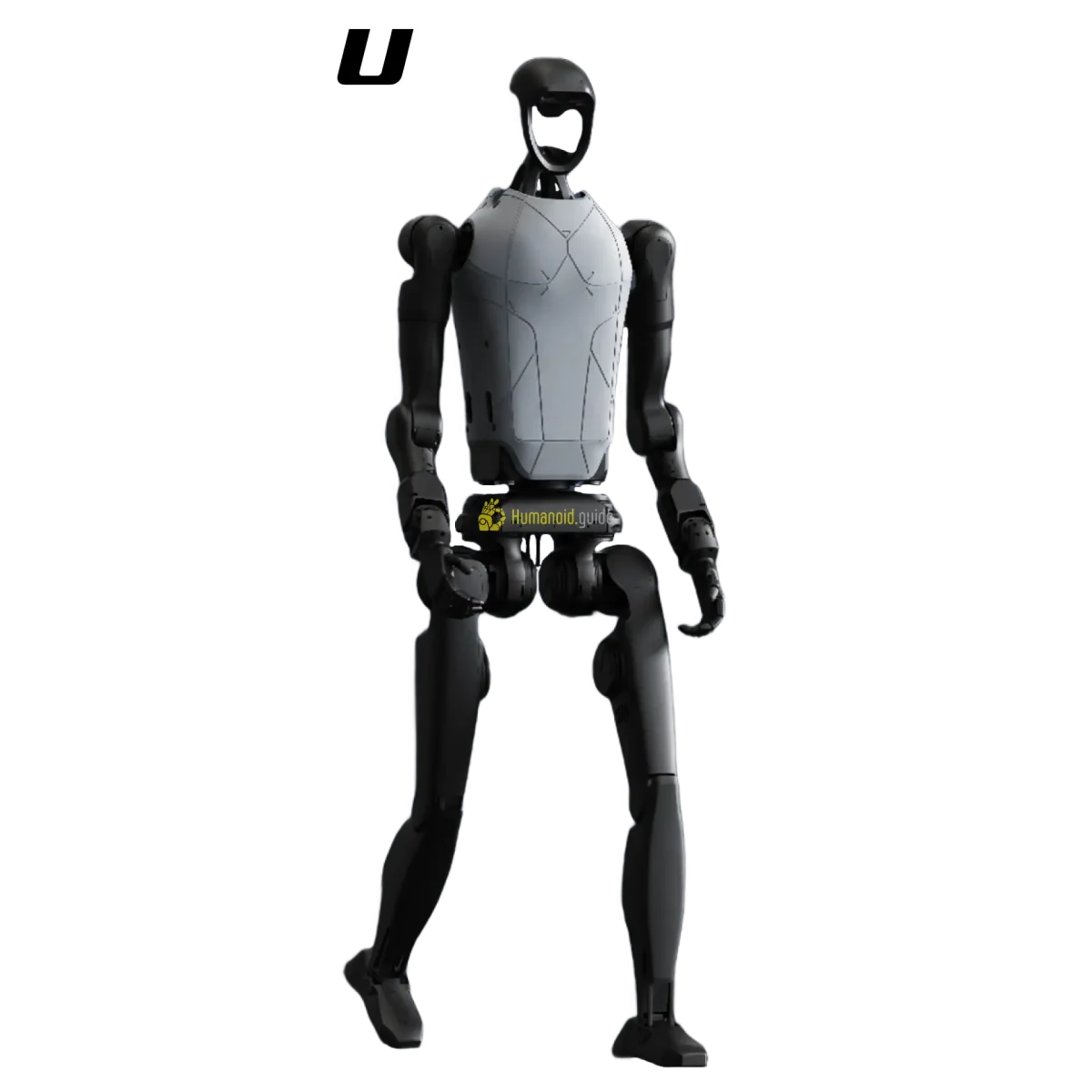
Launched in 2023 by Hangzhou‑based Unitree Robotics, the H1 is a full‑size humanoid engineered for dynamic locomotion and real‑world tasks. It stands 180 cm tall, weighs just 47 kg, and holds the world record for humanoid robot running speed at 3.3 metres per second (11.9 km/h) as of early 2026. The H1 can perform backflips, walk on uneven terrain, and operate for roughly 2 hours on a single hot‑swappable 864 Wh battery. It ships with Unitree’s own motor drivers, force‑controlled joints, and the option to scale from a 19‑DOF base configuration up to the 27‑DOF H1‑2 variant. Importantly, the H1 is in production, available for purchase through Unitree and authorised resellers, and has an active secondary market where used units list from $64,000 to $120,000 on platforms like Robot Overflow.
Xiaomi CyberOne: The Emotional‑AI Concept That Isn’t for Sale
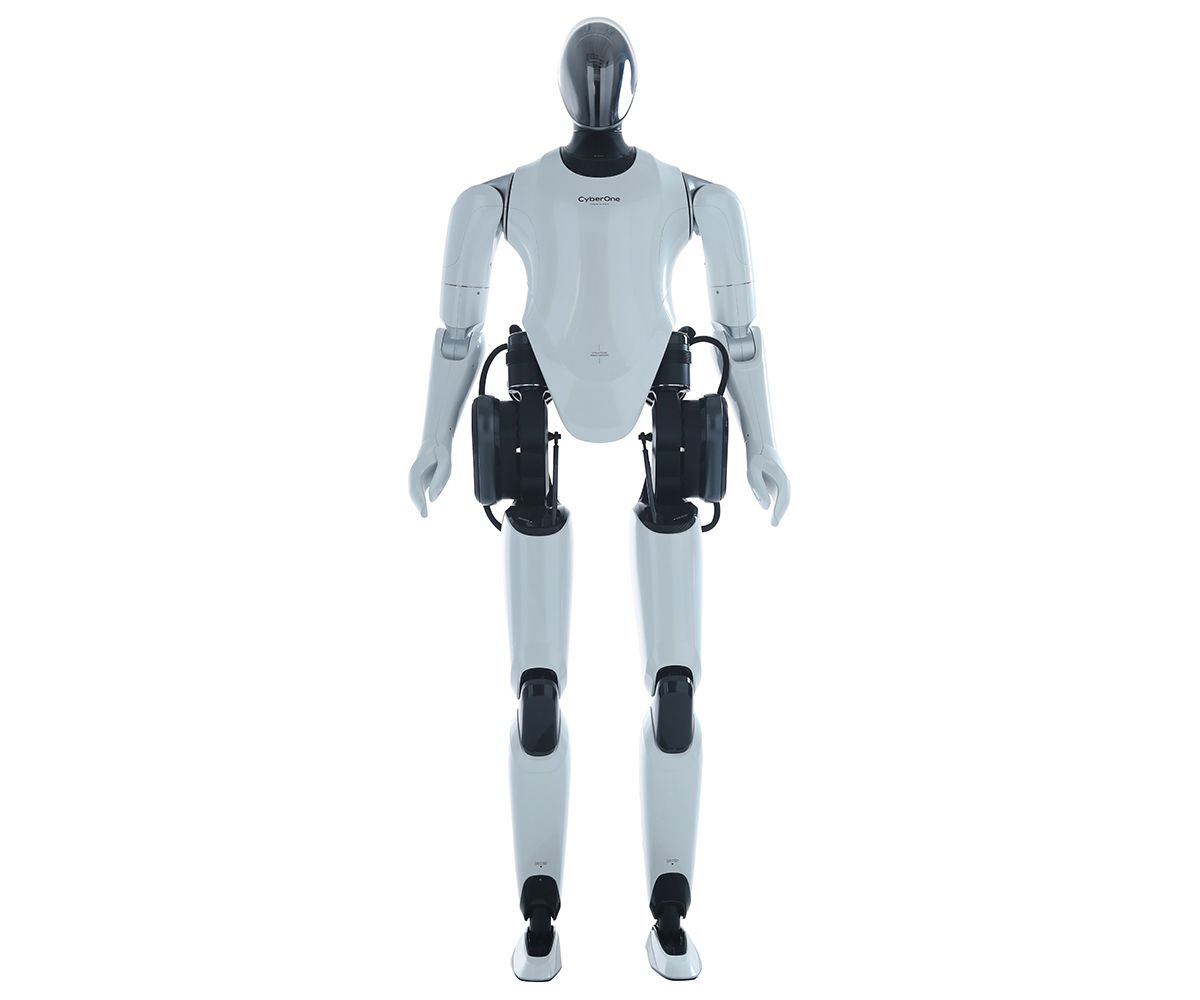
Announced in August 2022 by Beijing‑based electronics giant Xiaomi, the CyberOne is a full‑size humanoid research platform that generated significant buzz for its unique emotional‑AI capabilities. Standing 177 cm and weighing 52 kg, it offers 21 degrees of freedom across 13 joints and is powered by Xiaomi’s Mi‑Sense Depth Vision Module 2.0. The robot can recognise 45 states of human emotion and 85 environmental sound types, making it one of the most advanced multimodal perception demonstrators ever shown. While Xiaomi gave an estimated commercial price of roughly $90,000–$104,000, the CyberOne has never entered mass production. As of mid‑2026 it remains a technology demonstrator, not accessible for purchase, with no public SDK, no ROS2 integration, and no formal support or warranty channels. The CyberOne is strictly a lab concept; unless Xiaomi changes its strategy, you cannot acquire one.
Price & Total Cost of Ownership
The headline numbers are similar — both hover around $90,000–$104,000 — but the actual economics diverge completely.
The Unitree H1 is priced from $90,000 for a base configuration, rising to $150,000 for a fully equipped H1‑2 with the 27‑DOF upgrade, advanced sensor suite, and enterprise support. A three‑year total cost of ownership (TCO) should budget roughly $15,000–$25,000 for software updates, spare joints, and extended warranty, putting a moderate‑deployment TCO around $130,000–$175,000. Used H1s can cut the upfront cost to $64,000–$120,000, though they may carry shorter remaining warranties. Unitree accepts purchase orders and supports leasing arrangements through select partners.
The Xiaomi CyberOne has an internally estimated cost of ~$90,000–$104,000, but that number refers to the bill‑of‑materials for building a lab unit, not a price you can pay. There is no sales channel, no lease program, no secondary market, and no defined support model. TCO for a hypothetical acquisition would be largely undefined; any access would come through a research partnership with Xiaomi, not a commercial transaction.
Winner: Unitree H1 — the only robot here with a real, auditable price and ownership path.
Head‑to‑Head by Dimension
Performance & Specs
Payload: The H1 lifts up to 7 kg in its arms, enough for light tool handling or sample transport. Xiaomi has not published a payload figure for CyberOne, though its larger mass (52 kg) suggests it could mechanically support a similar load. Without a spec, though, there is nothing to benchmark. Winner: Unitree H1.
Speed: The H1’s 11.9 km/h maximum running speed is the fastest recorded for any humanoid robot, while the CyberOne tops out at 7.2 km/h. This gap matters for applications like logistics where covering distance quickly matters, though both exceed typical indoor walking needs. Winner: Unitree H1.
Battery Life: The CyberOne claims approximately 3 hours of active battery life, edging out the H1’s 2‑hour runtime. However, Unitree’s hot‑swappable battery design lets operators swap in a fresh pack in seconds, effectively enabling continuous operation; Xiaomi has not demonstrated hot‑swap capability. For sustained shifts, the H1’s swappable design often yields longer real‑world uptime. Winner: Xiaomi CyberOne on raw runtime, but Unitree H1 on practical continuous operation.
Degrees of Freedom & Dexterity: The CyberOne has 21 DOF versus the H1’s base 19 DOF (27 on H1‑2). While neither publishes detailed joint torque values, the H1‑2’s 27‑DOF configuration clearly exceeds the CyberOne in dexterity and workspace reach. For tasks like manipulation, the upgraded H1 offers more configuration options. Winner: Unitree H1‑2 (27 DOF) over CyberOne; base H1 is comparable but slightly less flexible.
Software & SDK Ecosystem
Unitree provides a mature SDK with Python and C++ bindings, pre‑built ROS2 packages, simulation support in Gazebo (with upcoming Isaac Sim compatibility), and active developer forums. The open‑source community around Unitree robots (Go2, B2, H1) has produced a growing library of SLAM, navigation, and tele‑operation stacks. Unitree’s own fleet‑management software and Autowalk behaviour authoring are available on the H1.
Xiaomi has not released any public SDK, simulation model, or developer documentation for CyberOne. While the robot runs an impressive real‑time emotional‑AI stack internally, that capability is proprietary and inaccessible to outside developers. There is no ROS2 bridge, no known community, and no path to obtain developer tools.
Winner: Unitree H1 — a genuine developer ecosystem that ships.
Autonomy & Sensors
The Unitree H1‑2 uses dual Intel RealSense D435i depth cameras and a Livox MID‑360 LiDAR for 360‑degree environmental perception, enabling SLAM‑based navigation, obstacle avoidance, and dynamic tracking. Standard autonomy behaviours include walking gaits, obstacle climb, and stair traversal. Advanced whole‑body control is being developed for tele‑operation and learning‑based policies.
The CyberOne reportedly relies on its Mi‑Sense Depth Vision Module 2.0, a Xiaomi‑custom sensor fusion stack that feeds the emotional‑AI system. While it can identify human expressions and environmental sounds at an unprecedented level, Xiaomi has not demonstrated autonomous navigation, mapping, or task execution beyond scripted demonstrations. The depth vision module is believed to be a time‑of‑flight + RGB camera, but detailed specs are absent.
Winner: Unitree H1 for practical autonomy and sensor transparency; CyberOne for uniquely advanced social perception if the closed‑loop system could be accessed — which it cannot today.
Build Quality & Durability
Neither robot publishes an IP rating or operating‑temperature range officially. The H1, having shipped to multiple labs and being used in continuous motion demos (including backflips and high‑speed running), has proven its structural durability in practice. The CyberOne has only been shown in controlled indoor stages, with no disclosed endurance or reliability data. At 52 kg, the CyberOne is heavier, suggesting a more robust frame, but without real‑world field data no concrete judgement can be made.
Winner: Unitree H1 by demonstrated durability track record.
Price & Total Cost of Ownership (TCO) Deep‑Dive
While the previous price section covered the headline figures, the deeper cost‑difference picture solidifies the H1 advantage. For a university lab with a $120,000 budget, a brand‑new H1 fits, and a used H1 leaves budget for a sensor payload or grippers. For an enterprise considering 24‑month pilot, the H1’s hot‑swappable battery means one robot can run a three‑shift cycle with minimal extra investment, whereas a CyberOne — even if accessible — would need external charging logistics Xiaomi has never addressed. Xiaomi has never provided a warranty or spares program, so any hardware failure would be a dead end; Unitree offers a 1‑year warranty upgradable to 3‑year enterprise SLA. In purely financial terms, the H1 is the only investable asset.
Winner: Unitree H1.
Which Should You Buy? Unitree H1 vs Xiaomi CyberOne by Use Case
Choose the Unitree H1 if…
- You need a real, shippable humanoid platform for research, logistics, or inspection.
- Your work involves bipedal locomotion, whole‑body control, or ROS2‑based autonomy stacks.
- You require manufacturer support, warranty, spare parts, or a used‑hardware budget option.
- Speed and agility are central to your use case (sports robotics, dynamic gait studies).
Choose the Xiaomi CyberOne if…
- Your research is exclusively focused on multimodal emotion recognition or environmental sound AI and you have a direct collaboration with Xiaomi.
- (Hypothetically) Xiaomi opens CyberOne as a commercial product and you need a humanoid perception platform with an unmatched emotional-intelligence stack — but currently no purchase path exists.
Choose neither if…
- You need a manipulator‑first cobot (consider a UR5e or FANUC CRX instead).
- Your budget is under $60,000 — no full‑size humanoid falls into that range today, though smaller research units like the Unitree G1 start at $16,000.
Real‑World Deployments & Track Record
The Unitree H1 is deployed in multiple university robotics labs worldwide, with research papers published on its use in locomotion, tele‑operation, and whole‑body control. Unitree reports that over 100 H1 units have been shipped as of early 2026 (source: Unitree sales representative communication, Jan 2026). The robot has been demonstrated publicly at CES, ICRA, and IROS, performing backflips and running in front of live audiences. Several used H1s are sold via Robot Overflow from labs that upgraded or changed research focus, indicating a healthy lifecycle. No enterprise mass‑deployment (e.g., factory line) has been publicly announced, but pilot programs in light manufacturing are reportedly underway.
The Xiaomi CyberOne has only been seen in Xiaomi’s own promotional videos and live‑demo events (the 2022 launch and a 2023 tech‑day showcase). No independent research group has published work using a CyberOne, and no units are known to exist outside Xiaomi’s lab. The robot’s emotional‑AI demonstrations are impressive but are, by Xiaomi’s own framing, a technology preview.
Winner: Unitree H1 — proven through shipping and third‑party validation.
SDK, Software & Developer Ecosystem
As touched on earlier, Unitree’s open‑ecosystem approach is a decisive advantage. The Unitree SDK (legged_sdk) is available on GitHub, supports real‑time control at 1 kHz, and includes high‑level motion planning. Community‑driven ROS2 packages allow rapid integration into existing robotic stacks. Unitree also offers a tele‑operation exoskeleton kit for data collection. This makes the H1 immediately useful for AI model training and sim‑to‑real transfer research.
Xiaomi’s CyberOne has no public SDK, no simulation model, no ROS2 bridge. Its emotional‑AI pipeline, while likely a powerful mixture of custom silicon and neural networks, is entirely closed. For a developer, the CyberOne is essentially a black‑box demo unit, not a programmable research platform.
Winner: Unitree H1 — the only robot here that a software engineer can actually code against.
Support, Warranty & Availability
Unitree H1: Standard warranty 12 months, extendable to 3 years with enterprise service level agreements (on‑site repair in select regions). Spare parts (joint motors, battery packs) are available from Unitree’s online store. Lead time for a new H1 is approximately 6–10 weeks from order, depending on configuration. Used units from Robot Overflow ship within days. Unitree accepts purchase orders and assists with export compliance.
Xiaomi CyberOne: No warranty, no support channel, no spare parts. The robot cannot be ordered; Xiaomi has not announced any plans to commercialise it. For all practical purposes, a CyberOne is unobtainable.
Winner: Unitree H1 — solely because it exists as a buyable product.
Comments