

The Unitree lineup now splits into two distinct humanoid philosophies: one raw, athletic, and already breaking world records — the other refined, expressive, and priced to make humanoid robotics accessible to far more labs and businesses. The H1 has been shipping since 2023, used in university locomotion labs and demo videos that stunned the robotics world with a 3.3 m/s sprint. The H2 launches in 2026 with 31 degrees of freedom, a face, and a base price of just $29,000 — less than a third of the H1’s entry point. This in‑depth comparison breaks down every dimension that matters: speed, precision, price, runtime, software, and real‑world track record — so you can decide which Unitree humanoid fits your research, industrial pilot, or education program.
Quick Verdict: Who Wins?
- Best overall value — Unitree H2. At $29K entry, it packs 31 DOF, a bionic head, and longer battery life, offering far more manipulation capability per dollar.
- Best for speed & dynamic motion research — Unitree H1. The only humanoid to hit 3.3 m/s and land a backflip; ideal for legged locomotion, fall‑recovery, and extreme‑agility projects.
- Best for human‑robot interaction & manipulation — Unitree H2. The expressive bionic head and 7‑DOF arms make it the clear choice for service‑robot trials, HRI studies, and dexterous‑manipulation R&D.
- Best budget pick — Unitree H2. Starting at $29,000, it undercuts the H1 by more than $60K while delivering greater DOF and runtime.
Unitree H1 vs Unitree H2: Specs Compared
The table below shows the key specifications side by side. Note that the H2 is still in pre‑order (first shipments April 2026) as of this writing.
| Feature | Unitree H1 | Unitree H2 |
|---|---|---|
| Price (base) | $90,000 | $29,000 |
| Price (configured) | $90,000 – $150,000 | $29,000 – $60,000 |
| Height | 180 cm | 182 cm |
| Weight | 47 kg | 70 kg |
| Payload | 7 kg | 7 kg |
| Max speed | 11.9 km/h (3.3 m/s) | 5.4 km/h |
| Battery life | 2 hours | 3 hours |
| Degrees of freedom (DOF) | 19 (27 on H1‑2 variant) | 31 |
| Onboard compute | NVIDIA Jetson Orin + Intel RealSense + 3D LiDAR | Not published (expected similar with upgraded head sensors) |
| Sensors | 3D LiDAR, depth cameras (Intel RealSense) | Depth cameras, LiDAR (details TBA), head‑mounted RGB cameras |
| IP rating | Not published | Not published |
| SDK / languages | Unitree SDK, C++/Python, ROS2 | Unitree SDK, ROS2 (expected) |
| Autonomy / fleet | Unitree proprietary, manual tele‑op / scripted gaits | Expected improved Unitree autonomy stack |
| Warranty | 1‑year standard | 1‑year standard (anticipated) |
| Availability | In stock, shipping | Pre‑order; ships April 2026 |
The H1 is the only machine here with published speed records and real‑world deployment data. The H2 nearly doubles the H1’s DOF, extends battery life by 50%, and drops the price to a fraction — yet its hands‑on performance in the field is still unproven.
Unitree H1: The Athletic Speed Demon
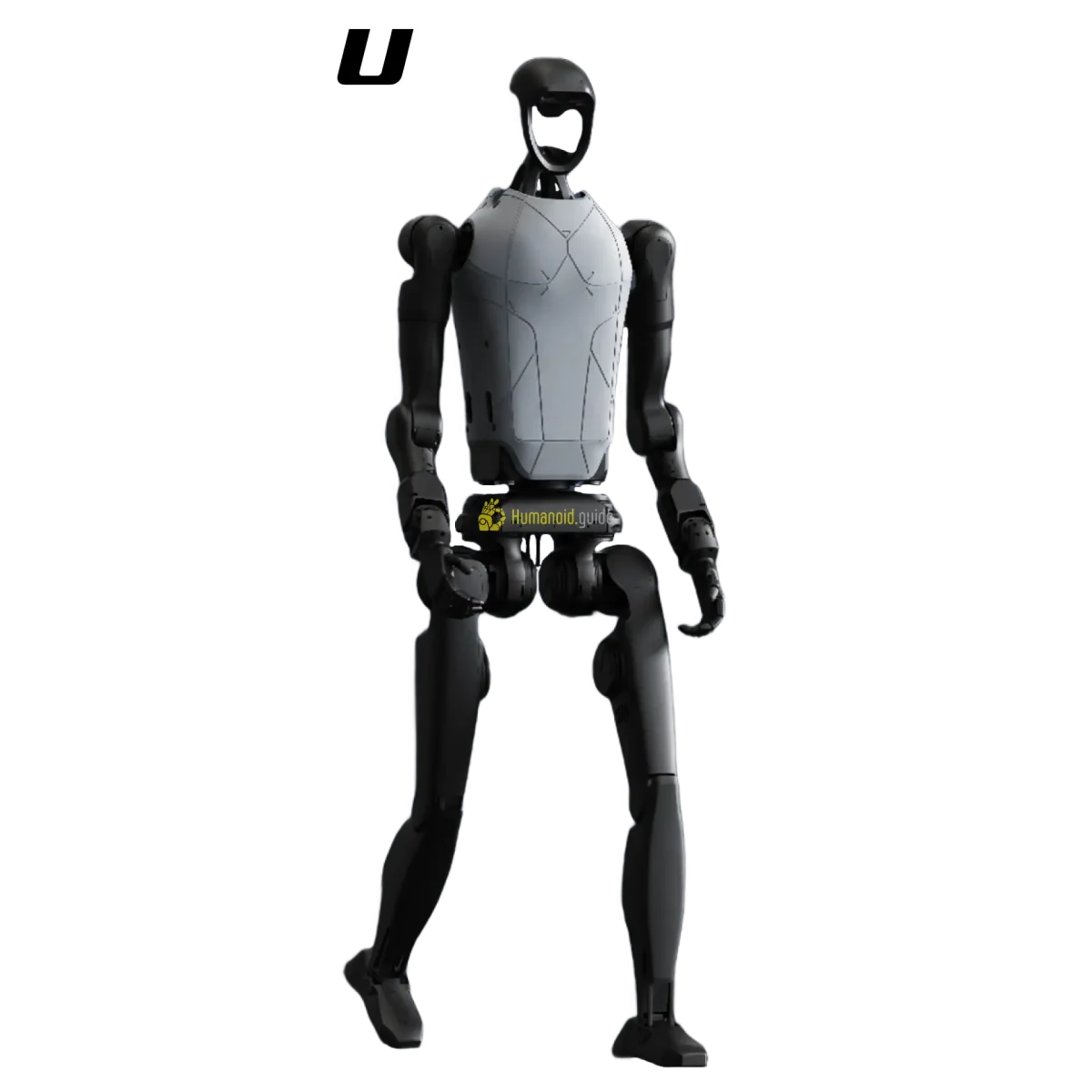
Launched in 2023 by Chinese robotics powerhouse Unitree Robotics, the H1 is a full‑size (180 cm, 47 kg) general‑purpose humanoid that immediately grabbed headlines for its extreme agility. In a 2024 video, an H1 ran 3.3 m/s — the fastest recorded bipedal robot speed to date — and executed a standing backflip, feats that cemented its reputation as the world’s most dynamic humanoid. The base H1 has 19 degrees of freedom; an H1‑2 variant later boosted that to 27. Under the hood it packs an NVIDIA Jetson Orin module, Intel RealSense depth cameras, and a 3D LiDAR, while a hot‑swappable 864 Wh battery powers around 2 hours of operation. The H1 is openly purchasable now from Unitree and select robotics resellers, and a handful of used units have appeared on secondary markets (including Robot Overflow) for $64,000–$120,000 — making it one of the few high‑performance humanoids you can get without a multi‑year waitlist.
Unitree H2: The Affordable Precision Platform
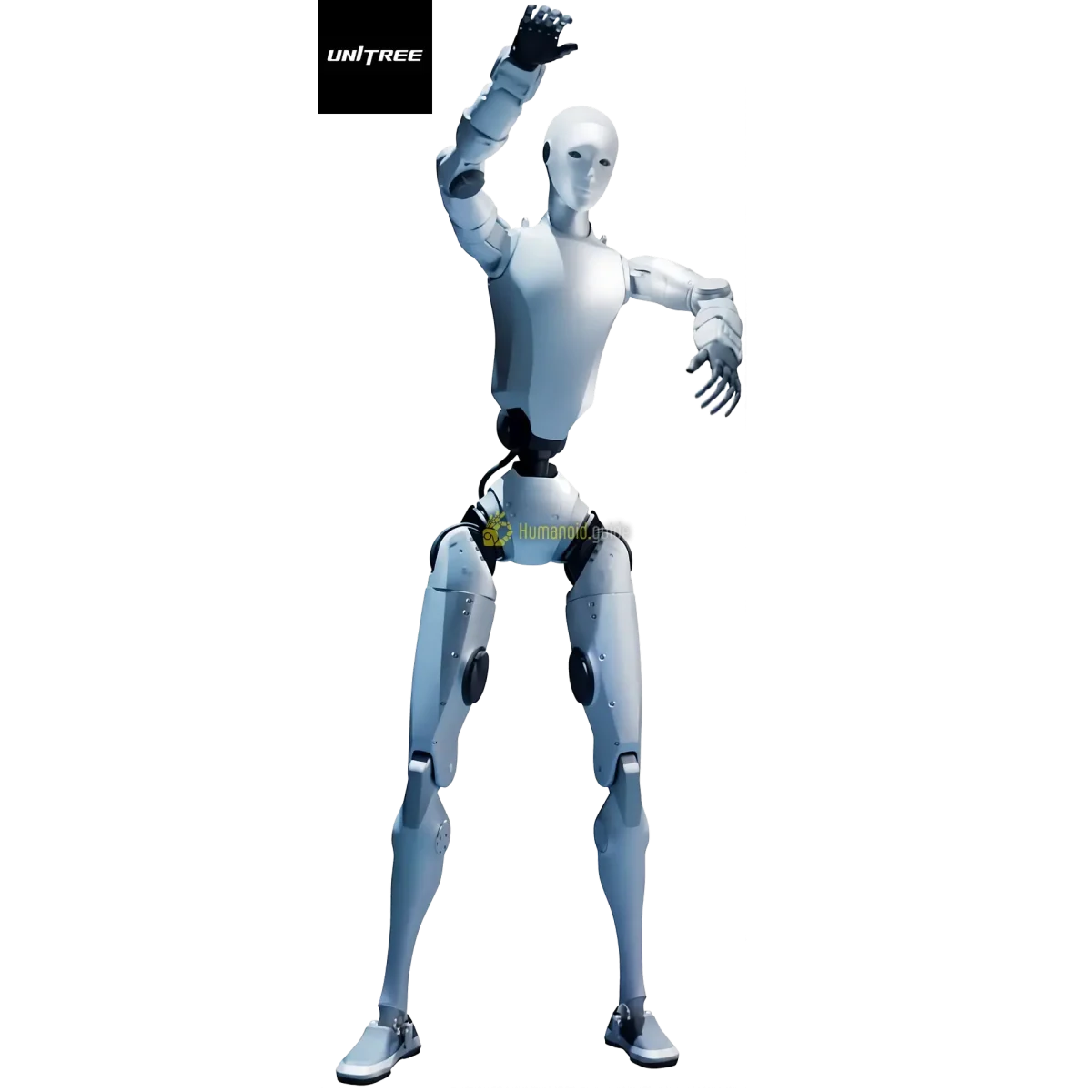
The H2, announced in 2025 and slated for first deliveries in April 2026, is a clear pivot from raw athleticism to affordable, dexterous interaction. Standing 182 cm and 70 kg, it carries the same 7 kg payload as the H1 but re‑balances the design around 31 degrees of freedom — including 7‑DOF arms and a bionic head with expressive facial features. The price floor of $29,000 puts it in a different league entirely: it undercuts not only the H1 but also many industrial cobot arms. Battery life improves to 3 hours, and while walking speed drops to 5.4 km/h, the H2 targets use‑cases where slow, precise manipulation and human‑readable expressions matter more than sprint speed. As of mid‑2026, it is available for pre‑order through Unitree and its distributor network, with no used market yet due to the pre‑order status.
Price & Configurations
The price gap is the most disruptive difference between these two robots. The H1 starts at $90,000 and, depending on sensor payloads and the H1‑2 DOF upgrade, can reach $150,000. Used units have traded in the $64,000–$120,000 range, reflecting that early adopters are already refreshing their fleets.
The H2, by contrast, begins at $29,000 — less than a third of the H1’s entry point — and tops out around $60,000 for fully‑kitted configurations. That positions the H2 squarely against high‑end research quadruped prices and well below any other full‑size 30+‑DOF humanoid on the market.
Both robots are sold directly by Unitree and through a growing network of integrators. A 3‑year TCO calculation (hardware + software/support + spares) puts the H1 at roughly $130,000–$180,000, while the H2 is likely to land between $45,000 and $80,000 — a difference large enough to fund an entire additional robot or a substantial sensor suite.
Winner: Unitree H2. It redefines value for a full‑size humanoid; no other 30+‑DOF platform is even close to $29K.
Performance & Specs
Speed
The H1’s 3.3 m/s sprint (11.9 km/h) remains the gold standard in bipedal locomotion. That’s faster than many humans can run a 100 m dash and roughly double the H2’s 5.4 km/h walking pace. The H1 can also hop, jog, and execute dynamic transitions — concrete proof of robust balance and torque control. The H2, by design, walks rather than runs; it will likely match most industrial bipedal paces but won’t challenge the H1 in athletics.
Winner: Unitree H1 — in a league of its own.
Payload (both 7 kg)
Both robots shoulder a 7 kg payload. While this is modest compared to industrial cobot arms, it’s sufficient for many lab tasks, tool transport, or light assembly. The H2’s 7‑DOF arms may allow it to use that payload more effectively, but the raw mass is identical.
Winner: Tie.
Battery
The H1’s 864 Wh battery delivers roughly 2 hours of mixed operation; the H2 promises 3 hours from an as‑yet‑unspecified pack. If that figure holds in real‑world use, the H2 enjoys a 50% uptime advantage, crucial for long‑duration trials or shift‑based pilots.
Winner: Unitree H2, pending real‑world validation.
Degrees of Freedom & Dexterity
The base H1 ships with 19 DOF; the H1‑2 bumps that to 27. The H2 jumps to 31 DOF — putting it ahead of both H1 configurations. The 7‑DOF arms on the H2 (similar to human arms) plus the bionic‑head actuators give it a clear edge in manipulation and expressiveness. This is the hinge point for buyers who need fine motor tasks, tele‑presence, or HRI demos.
Winner: Unitree H2.
Software & SDK Ecosystem
Both robots leverage Unitree’s in‑house SDK, which supports C++ and Python, and both offer ROS 2 integration. The H1 has been in the wild since 2023, so its software stack has seen multiple updates, community‑contributed packages, and a growing body of academic publications. The H2 will almost certainly inherit the same SDK and ROS2 bridge, but as a brand‑new platform it may lack the initial polish and community‑generated resources of its older sibling until it ships. Unitree’s proprietary autonomy and tele‑operation tools (including manual waypoint‑based gaits) are present on the H1 and expected to carry forward to the H2.
Winner: Tie — both benefit from the same SDK lineage; H1 has a head start in community maturity.
Autonomy & Sensors
The H1’s sensor suite is disclosed: a 3D LiDAR, Intel RealSense depth cameras, and an IMU feed data to the Jetson Orin for SLAM and obstacle avoidance. Full autonomous navigation in unstructured environments remains an active research area — most demos rely on scripted gaits and tele‑operation. The H2 is expected to feature a similar or upgraded sensor suite, plus additional RGB cameras in the bionic head for facial tracking and HRI. Without published autonomy benchmarks for either, the practical difference today is minimal; both are platforms for building autonomy, not off‑the‑shelf autonomous workers.
Winner: Too early to call — the H2’s head sensors may open new HRI applications, but the H1’s LiDAR‑heavy setup is proven for locomotion.
Build Quality & Durability
The H1’s 47 kg frame has survived backflips, sprints, and countless controlled falls in academic labs. It uses lightweight alloys and custom actuators that have proven resilient under extreme dynamics. The H2, at 70 kg, is heavier despite a similar height, suggesting a denser structure possibly optimized for payload stability rather than acrobatics. Neither robot carries a published IP rating, and both are intended for indoor, controlled environments. For rugged outdoor or all‑weather deployment, neither is the right pick today.
Winner: Unitree H1 — its proven resilience under dynamic loads gives it an edge.
Price & Total Cost of Ownership
A deeper TCO analysis shows the H2’s advantage goes far beyond the sticker price. Over three years, factoring in an annual software/support contract (~$3,000–$5,000) and a replacement battery (~$1,000–$2,000), a base H1 will cost roughly $130,000 while a base H2 lands around $45,000. Even the highest‑spec H2 is unlikely to exceed $80,000 — still $50,000 less than the cheapest H1. For a research group buying two robots, the H2 could save over $170,000, enough to fund a full‑time PhD student.
Winner: Unitree H2 — the TCO delta is transformative.
Which Should You Buy? Unitree H1 vs H2 by Use Case
- Choose the Unitree H1 if… your work centers on dynamic locomotion, whole‑body control, fall‑recovery algorithms, or human‑analog sprinting. The H1’s world‑record speed, backflip capability, and proven durability make it the only option for extreme‑agility research.
- Choose the Unitree H2 if… your focus is dexterous manipulation, human‑robot interaction, service‑robot prototypes, or teaching lab courses where 31 DOF and an expressive face are assets. The H2’s price makes it feasible to field multiple units.
- Choose neither if… you need an all‑weather outdoor robot, documented industrial reliability metrics, or a payload above 7 kg. In those cases, consider a quadruped like Spot or a cobot arm.
Real‑World Deployments & Track Record
The H1 has been adopted by a growing list of university labs — including the University of Edinburgh and Carnegie Mellon University — for locomotion and whole‑body control research (source: academic publications and Unitree’s partner announcements, 2024). Used H1s have appeared on Robot Overflow, indicating an active secondary market and a maturing user base. The H2, in contrast, has no real‑world deployment track record as of June 2026; its first customers will be the pioneers.
Winner: Unitree H1 — a genuine track record vs. an untested platform.
SDK, Software & Developer Ecosystem
Both robots share Unitree’s SDK and ROS2 compatibility. The H1’s software ecosystem is more mature: ROS2 packages, Gazebo simulation models, and an active GitHub community are available. The H2’s SDK is expected to be identical or a superset, but community resources will take time to build. For new buyers starting in mid‑2026, the immediate out‑of‑box experience will be comparable, but H1 users will find more tutorials and forum answers right now.
Winner: Tie (long‑term); slight edge to H1 in 2026.
Support, Warranty & Availability
The H1 is in stock and ships within weeks through Unitree and select resellers. The H2 is available for pre‑order, with first units promised in April 2026. Both carry a standard 1‑year warranty (H2’s is anticipated but not yet documented on final purchase agreements). Unitree provides enterprise‑level support contracts and spare‑parts programs; these have been battle‑tested with the H1. The H2’s support infrastructure will likely mirror that, but early‑adopter growing pains should be expected.
Winner: Unitree H1 — immediate availability and proven support.
Comments