

Two Chinese humanoid robots, both armed and bipedal, both priced between the cost of a luxury car and a small lab grant — the Unitree H1 and the UBTECH Walker S2 ask buyers a single question: are you building a research program or a production cell? The Unitree H1, released in 2023 by Unitree Robotics, made headlines by setting a world speed record for humanoid robots and executing a flawless backflip. The UBTECH Walker S2, launched in 2025 by UBTECH Robotics, entered automotive factories with hands that can use human tools and a battery that swaps itself out to keep a line running 24/7. In this article, BotGuides stacks every published specification, deployment detail, and software capability so you can decide which robot fits your lab, factory, or budget — no marketing fluff, just the data.
- Best overall value for research & speed: Unitree H1
- Best for factory pick‑and‑place & tool use: UBTECH Walker S2
- Highest payload & dexterity: UBTECH Walker S2 (15 kg, 52 DOF)
- Fastest locomotion and agility: Unitree H1 (11.9 km/h, backflip)
- Lowest entry price: Unitree H1 ($90,000, starting)
- Most hot‑swap endurance: Tie — both have 2‑hour batteries; Walker S2 autonomously swaps in <3 min
Unitree H1 vs UBTECH Walker S2: Specs Compared
| Spec | Unitree H1 | UBTECH Walker S2 |
|---|---|---|
| Price (new) | $90,000 – $150,000 | $90,000 (base); typical deployment $150,000 – $200,000 |
| Price (used) | $64,000 – $120,000 | ~$75,000 – $85,000 |
| Height | 180 cm | 176 cm |
| Weight | 47 kg | 71.5 kg |
| Payload | 7 kg | 15 kg |
| Max speed | 11.9 km/h (3.3 m/s running) | 7.2 km/h |
| Battery life | 2 h (hot‑swappable 864 Wh) | 2 h (auto‑hot‑swap in <3 min) |
| Degrees of freedom (DOF) | 19 (H1‑2 variant: 27) | 52 |
| Onboard compute | NVIDIA Jetson Orin | Not published (factory‑tuned) |
| Sensors | Depth cameras, LiDAR, IMU | Multi‑camera, LiDAR, force‑torque sensors |
| Autonomy software | Unitree SDK, ROS2 support | UBTECH ROSA OS, industrial fleet manager |
| IP rating | Not published | Not published |
| Availability | In production, worldwide resellers | In production, enterprise sales |
Biggest delta: The Walker S2 carries more than double the payload of the H1 (15 kg vs 7 kg) and packs 52 articulation points against 19 – a fundamental difference in hardware orientation. The H1, in turn, is 24 kg lighter and runs nearly twice as fast, putting agility on the research side.
Unitree H1: The Speed‑Record Locomotion Platform
Unitree Robotics, based in Hangzhou, China, introduced the H1 in 2023 as its first full‑size general‑purpose humanoid. The robot stands 180 cm tall and weighs just 47 kg, making it one of the lightest bipeds in its class. Its 19 degrees of freedom (27 on the H1‑2 upgrade) and a top running speed of 11.9 km/h, verified by a 2024 world record for fastest humanoid sprint, quickly captured attention in academic and R&D circles. The H1’s 864 Wh hot‑swappable battery powers a 2‑hour mission, and onboard NVIDIA Jetson Orin compute runs Unitree’s perception stack with depth cameras, LiDAR, and IMU. A backflip video released in 2024 confirmed the robot’s dynamic balance and torque authority. Priced from $90,000 (up to $150,000 with full‑sensing configurations), the H1 is available directly from Unitree and through robotics resellers like Robot Overflow; used units appear in the $64,000–$120,000 range. It is fully ROS2‑compatible and ships with an open SDK, making it a favorite for university locomotion studies.
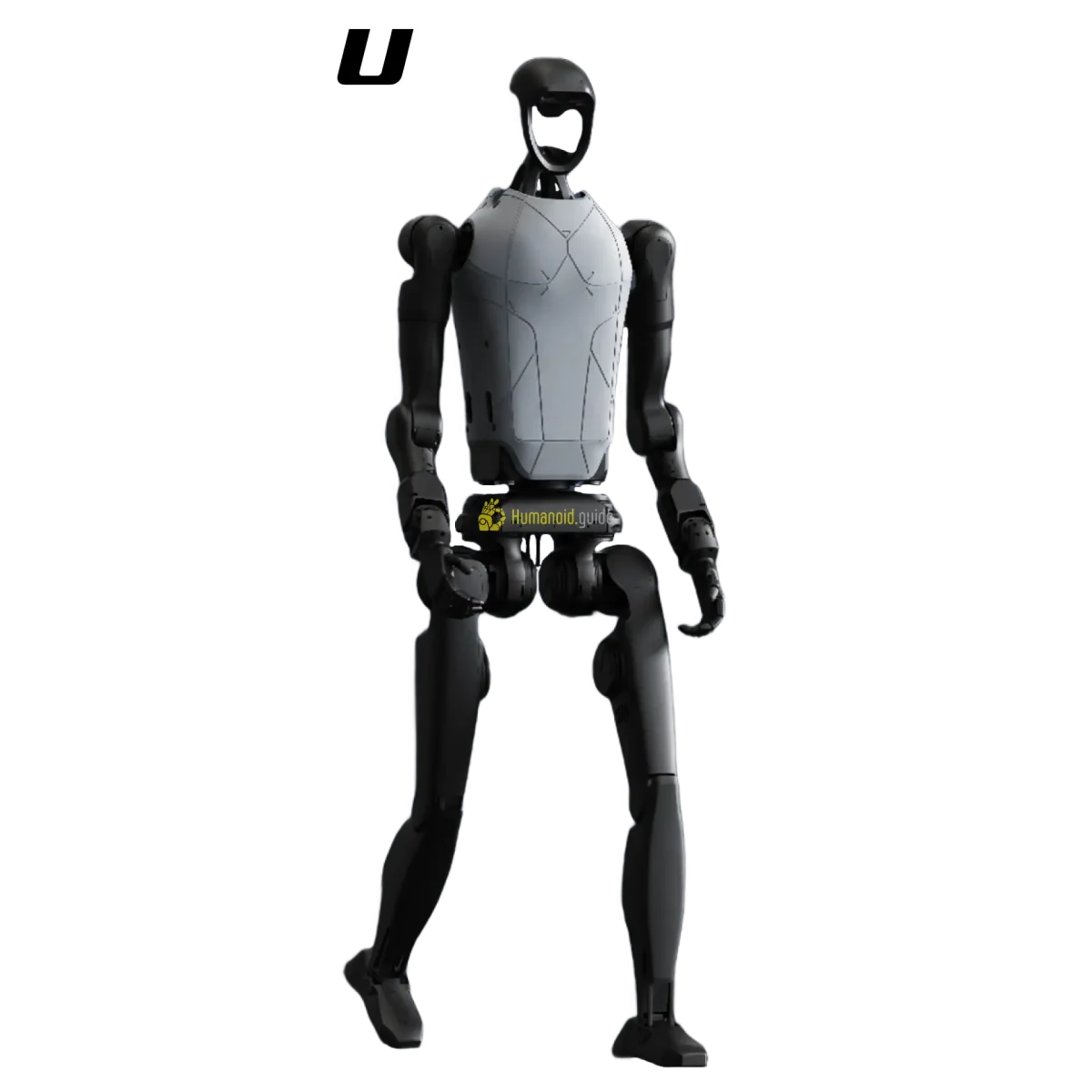
Above: Unitree H1-2 variant, standing 180 cm and weighing 47 kg. The light build and high‑torque actuators enable record‑speed running and backflips.
UBTECH Walker S2: The Factory‑Floor Hand‑Worker
UBTECH Robotics, headquartered in Shenzhen, launched the Walker S2 in 2025 as the company’s second‑generation industrial humanoid, purpose‑built for manufacturing and logistics. It reaches 176 cm, weighs 71.5 kg, and packs an industry‑leading 52 degrees of freedom spread across legs, torso, and dexterous hands. That wide DOF count translates to human‑like manipulation — the hands can pick, sort, and operate standard factory tools without custom grippers. A single 2‑hour battery is designed for autonomous hot‑swapping in under three minutes, enabling 24/7 line operation with minimal downtime. The robot walks at 7.2 km/h and can lift 15 kg in a single arm, enough for bin‑picking, kitting, and light machine tending. UBTECH outfits the Walker S2 with a custom OS (ROSA) and an industrial fleet management system, though deeper compute and IP‑rating specs remain under NDA. Base price is $90,000, while fully configured enterprise deployments, which bundle software, integration, and ongoing support, range from $150,000 to $200,000. Units have been seen in pilot lines at NIO and other Chinese automotive factories since 2025.
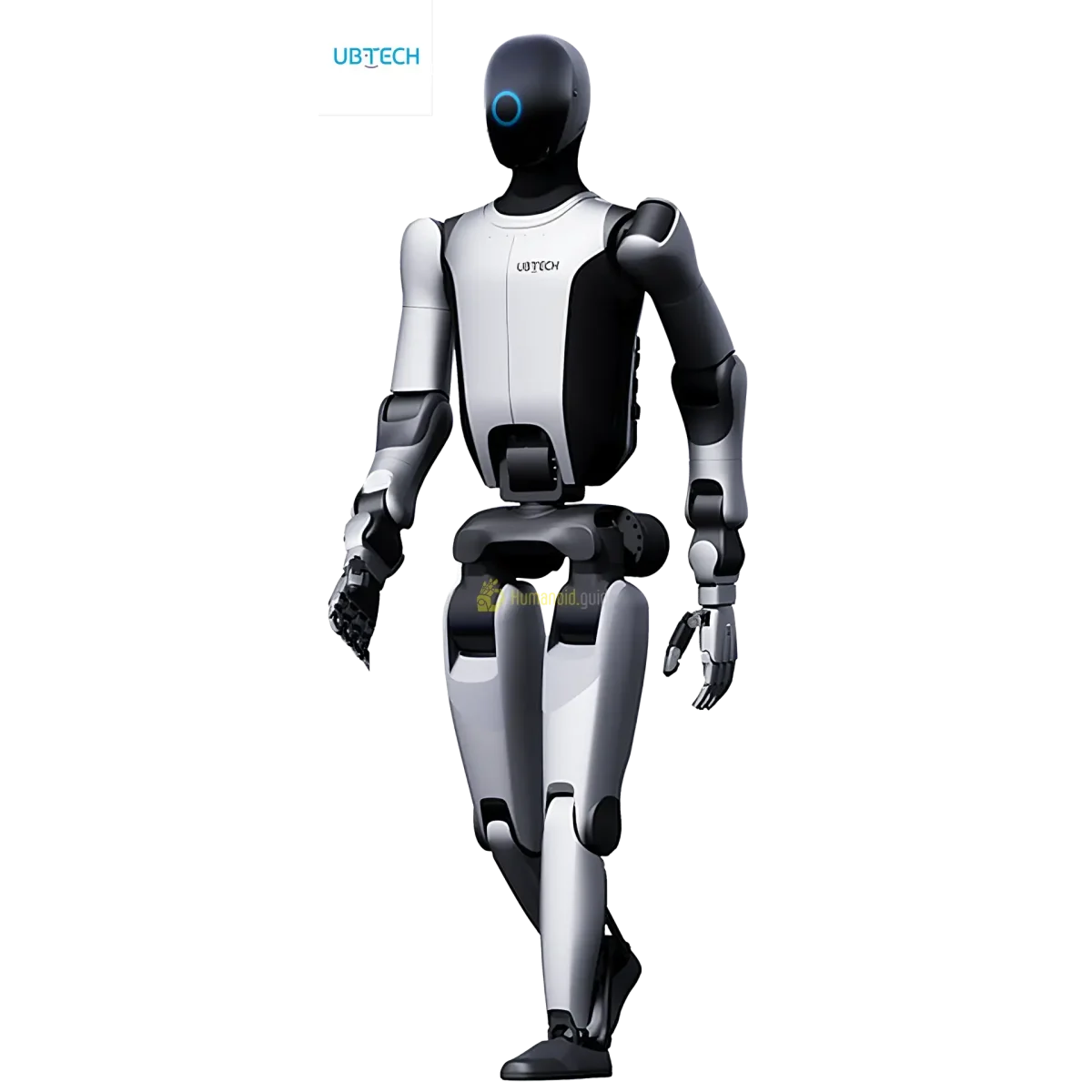
Above: UBTECH Walker S2 on a factory test floor. 52 DOF, dual hands, and hot‑swap battery let it work around the clock.
Price & Configurations
On paper, both robots start close to $90,000, but the cost trajectories diverge quickly once you add real‑world tooling. A bare Unitree H1 with standard 19‑DOF configuration, the basic perception suite, and no arm sensor upgrades runs $90,000; the 27‑DOF H1‑2 variant and additional compute/sensor packages push the price to $150,000. The Walker S2’s $90,000 entry price is likewise a stripped‑down industrial base — add the full ROSA fleet‑management license, integration engineering, and enterprise support, and a typical deployment lands between $150,000 and $200,000. Secondary markets show used H1s at $64,000–$120,000, while a pre‑owned Walker S2 can dip to around $75,000–$85,000.
Winner: Unitree H1 offers a genuinely sub‑$100K path to a world‑class locomotion testbed. Walker S2’s starting sticker matches that, but industrial scope pushes the total check higher.
Price & Total Cost of Ownership
Three‑year ownership tells an even starker story. The H1, often bought by labs that have dedicated in‑house robotics engineers, incurs minimal recurring costs: the open SDK and ROS2 stack mean no mandatory software license fees; the 864 Wh battery is a standardized unit purchasable from Unitree’s parts store; and spares, such as leg actuators, are commodity items shared across Unitree’s quadruped and humanoid lines. A university running the H1 for 1,000 hours per year can expect three‑year TCO under $120,000, including one replacement battery and a spare actuator pair.
The Walker S2 is a factory robot that needs to stay on‑line. Battery hot‑swap carts, factory‑floor certification audits, and annual UBTECH enterprise support contracts add $15,000–$30,000 a year. A 24/7 operation may require two hot‑swap charging stations and two robots per line, pushing three‑year TCO for a single‑shift deployment to $210,000–$260,000. Lease‑to‑own and robotics‑as‑a‑service (RaaS) options are reportedly available from UBTECH for large orders, but pricing is custom‑negotiated.
Winner: For budget‑conscious lab programs, the H1’s TCO is predictable and lower. For manufacturers, the Walker S2’s higher TCO is offset by its ability to replace a full‑time operator on repetitive tasks.
Performance & Specs
Payload
The H1’s dual arms can manage 7 kg total, which is enough for light sensor payloads, small object pick‑and‑place, and research tasks. The Walker S2’s arms handle 15 kg, making it viable for moving automotive brackets, kitting boxes, and handling heavier sub‑assemblies. Winner: Walker S2.
Speed
The H1’s 11.9 km/h sprint is nearly double the Walker S2’s 7.2 km/h walk, and the H1’s ability to backflip and perform dynamic transitions is unmatched. In industrial indoor spaces, walking speed of 7.2 km/h is adequate, but for outdoor patrol or campus delivery experiments, the H1’s pace matters. Winner: Unitree H1.
Battery & Endurance
Both robots deliver two hours of active work, but the H1 uses a manual‑swap 864 Wh pack while the Walker S2 docks itself at a charging station and completes a full battery exchange in under three minutes without operator intervention. For a 24‑hour operation, the Walker S2’s autonomous hot‑swap is a genuine lights‑out enabler. Winner: Walker S2 for autonomous operation; tie for single‑shift runtime.
DOF & Dexterity
The H1’s 19 DOF (27 on the H1‑2) are concentrated in the legs and basic arm function, fine for walking and light grasping. The Walker S2’s 52 DOF spread across under‑actuated hands, wrists, and torso give it near‑human manipulation: it can grab a screwdriver, turn a valve, or operate a standard handheld scanner, functions the H1 cannot perform without external tooling. Winner: Walker S2.
Software & Developer Ecosystem
Unitree’s H1 comes with a mature SDK that exposes low‑level joint control, perception data, and locomotion primitives. ROS2 integration is first‑party, and the robot is compatible with NVIDIA Isaac Sim and MuJoCo simulators, making it a plug‑and‑play platform for academic reinforcement learning projects. The open‑source community around Unitree’s humanoids is active, with example repos on GitHub and tutorials on humanoid‑guide forums.
UBTECH’s Walker S2 runs ROSA (Robot Operating System for Applications), a commercial OS that abstracts the hardware into task‑oriented skills — “go to bin,” “pick object,” “carry to conveyor.” The system includes a fleet manager that orchestrates multiple Walker S2s and integrates with factory MES/SCADA systems. The SDK is enterprise‑gated, and simulator access (likely based on UBTECH’s in‑house tools) requires a partnership agreement. For a research lab that wants to program from the joint level up, the H1’s openness is a clear advantage. For a plant engineer who needs the robot to run a 30‑minute picking routine out of the box, the Walker S2’s abstraction saves months of integration.
Winner: Unitree H1 for research‑grade hackability; UBTECH Walker S2 for factory‑ready deployment.
Autonomy & Sensors
Both robots use depth cameras, LiDAR, and IMU for localization and obstacle avoidance. The H1’s perception stack, shown in Unitree’s videos, enables dynamic stair climbing and gap crossing; its on‑board Jetson Orin runs SLAM in real time. The Walker S2’s sensor suite adds force‑torque sensing in the wrists and fingers, enabling guided insertion and force‑limited assembly. Its autonomy layer also includes a teach‑by‑demonstration mode that operators use to record poses on the factory floor. Neither manufacturer publishes a numerical SLAM benchmark, but field reports from NIO pilots describe the Walker S2 as reliably navigating dynamic environments while carrying payloads, with the extra DOF allowing it to adjust center of mass in real time.
Winner: The H1 leads on locomotion‑focused autonomy; the Walker S2 leads on manipulation‑aware autonomy.
Build Quality & Durability
Unitree built the H1 with hollow‑core actuators and a carbon‑fiber‑reinforced polymer frame to keep weight at 47 kg — an asset for agility but a question mark for heavy‑duty cycle counts. The Walker S2’s 71.5 kg steel‑and‑alloy construction and industrial motor drivers are designed for 20,000‑hour testing, according to UBTECH, with seals that suggest IP54‑level dust protection, though no official IP rating is published. Both robots ship their own battery packs with hot‑swap capability; the H1’s 864 Wh pack slides into the torso manually, while the Walker S2’s self‑docking station requires dedicated floor space.
Winner: Walker S2 is built for factory durability, whereas the H1 is optimized for lab‑grade motion research.
Which Should You Buy? Unitree H1 vs UBTECH Walker S2 by Use Case
- Choose the Unitree H1 if:
- You are a university or research lab focused on bipedal locomotion, dynamic control, or reinforcement learning.
- You need a ROS2‑native, open‑SDK platform with a strong open‑source community.
- Speed and agility matter — you plan to test running gaits, parkour, or outdoor navigation.
- Your budget ceiling is under $120,000 total, including spares.
- Choose the UBTECH Walker S2 if:
- You are deploying a robot in a factory to pick, sort, kit, or assist assembly operators.
- High payload (15 kg) and 52 DOF dexterity are necessary to use human tools and handle varied parts.
- You require autonomous hot‑swap for multi‑shift operations without an operator watching the battery.
- You have an MES/SCADA integration team and enterprise support from UBTECH.
- Choose neither if:
- You need a wheeled robot for flat‑floor transport — a cobot arm might be cheaper and simpler.
- Your payload requirement exceeds 15 kg or your cycle time target is sub‑5 seconds.
- You require a public IP‑rating certification for washdown environments; neither robot publishes one.
Real‑World Deployments & Track Record
Unitree H1 units began shipping to early‑access customers in late 2023 and have since been purchased by universities on every continent for locomotion studies. No production‑line deployment is publicly documented, though a handful of H1‑2 units have been used in academic‑industry collaboration pilots. The robot’s website highlights a world sprinting record achieved in an independent test in January 2024, but total operating hours across the fleet are not disclosed.
UBTECH announced Walker S2 pilot programs in 2025 with several Chinese automakers, including NIO’s electric‑vehicle assembly lines, where the robot performed logistics tasks (delivery of small parts to line‑side) and light inspection. Press reports from the 2025 World Robot Conference showed Walker S2s sorting components and using torque‑controlled insertion. Pilot units reportedly logged thousands of hours in test cells through early 2026, though cumulative deployment figures are not public. For potential buyers, the Walker S2’s real‑world factory hours, however limited, exceed the H1’s purely laboratory track record.
Winner on factory hours: Walker S2; Winner on accessible field‑to‑campus shipping: H1.
SDK, Software & Developer Ecosystem
The H1’s SDK is a direct extension of Unitree’s quadruped SDK, with C++ and Python bindings, ROS2 interfaces for all major perception and control nodes, and pre‑built simulation models for Isaac Sim and MuJoCo. A dedicated GitHub organization hosts example locomotion controllers, a teacher‑student RL pipeline, and a VR teleoperation demo. The community runs active Discord and WeChat groups, and the learning curve is low for anyone who has worked with Unitree’s Go2 or B2 robots.
Walker S2’s ROSA platform is a closed, skill‑based OS. End‑users interact through a task builder GUI, not raw joint commands. UBTECH provides a REST API for fleet integration, but low‑level access is limited to named industrial partners. This speeds deployment for line engineers but walls off research‑oriented tinkering. Documentation is provided under NDA during the procurement process; community code sharing is not yet visible.
Winner: H1 for open‑source R&D; Walker S2 for no‑code factory deployment.
Support, Warranty & Availability
Unitree sells the H1 through its official online store and a network of international resellers, including Robot Overflow, with placement times of 4–8 weeks for standard configurations. Warranty covers 12 months on actuators and mainboard with optional extended plans. Enterprise SLA is not common — most labs receive email‑based support with community resources filling gaps.
UBTECH delivers the Walker S2 through a direct enterprise sales process that includes a site‑readiness assessment, installation, and operator training. Typical lead time is 10–14 weeks, extended by custom gripper or conveyance integration. The warranty period is 12 months, extendable to 36 months with a support contract that also covers 24/7 remote monitoring and annual preventive maintenance. Spare parts are stocked at regional depots in China with global expansion announced for 2026.
Winner: Walker S2 provides mission‑critical support for factory clients; H1’s reseller channel works well for decentralized lab procurement.
Comments