

The Unitree H1 starts at $90,000, weighs only 47 kg, and runs faster than any humanoid on the market. Across from it sits the $120,000 Rainbow Robotics RB-Y1 — a 131 kg wheeled giant with 24 degrees of freedom and an explicit focus on AI‑powered object handling. This article pits the bipedal speedster against the wheeled manipulator across price, performance, software, and real‑world deployment to help engineers, lab directors, and integrators decide which platform fits their operation.
- Best overall value: Unitree H1 — higher payload (7 kg), faster speed, lighter weight, and a lower base price for a more broadly capable platform.
- Best for locomotion & agility research: Unitree H1 — bipedal walking, 3.3 m/s run, backflip and stair climbing make it the superior testbed.
- Best for stable dual‑arm mobile manipulation: Rainbow Robotics RB-Y1 — wheeled base eliminates balance concerns; 24 DOF arm duo plus 3 h battery enable prolonged pick‑and‑place or lab‑automation tasks.
- Best battery life: Rainbow Robotics RB-Y1 (3 h runtime vs. H1’s 2 h).
Unitree H1 vs Rainbow Robotics RB-Y1: Specs Compared
The side‑by‑side table below reveals the fundamental trade‑off: the H1 sacrifices arm complexity and raw runtime for record‑breaking leg speed and low weight, while the RB-Y1 packs a full‑body, high‑DOF arm system on a heavy wheeled base that never falls — but tops out at 5.4 km/h.
| Specification | Unitree H1 | Rainbow Robotics RB-Y1 |
|---|---|---|
| Price (base) | $90,000 | $120,000 |
| Price (configured) | Up to $150,000 | $120,000 |
| Height | 180 cm | 161 cm |
| Weight | 47 kg | 131 kg |
| Payload (per arm / total) | 7 kg total (arms + gripper) | 3 kg per arm |
| Max speed | 11.9 km/h (3.3 m/s) | 5.4 km/h |
| Battery life | 2 h | 3 h |
| Degrees of freedom (DOF) | 19 (base); 27 (H1‑2 variant) | 24 |
| IP rating | Not published | Not published |
| Onboard compute | Not published | Not published |
| Sensors | Stereo depth cameras, IMU, LiDAR optional | 3D vision, force/torque sensors, LiDAR optional |
| SDK languages | C++, Python (via Unitree SDK) | ROS 2, C++, Python |
| ROS2 support | Yes (Unitree ROS2 package) | Yes (Rainbow ROS2 package) |
| Autonomy / fleet software | Unitree Autowalk (SLAM‑based) | Rainbow Robotics fleet manager (planning) |
| Safety certifications | Not published | Not published |
| Availability | In stock / shipping | Pre‑order |
| Warranty / support | 1‑year standard, extended available | Not published |
Data sourced from manufacturer spec sheets and public releases as of June 2026. “Not published” indicates the parameter is not yet disclosed by the manufacturer.
Unitree H1: Bipedal speed champion with world‑record running
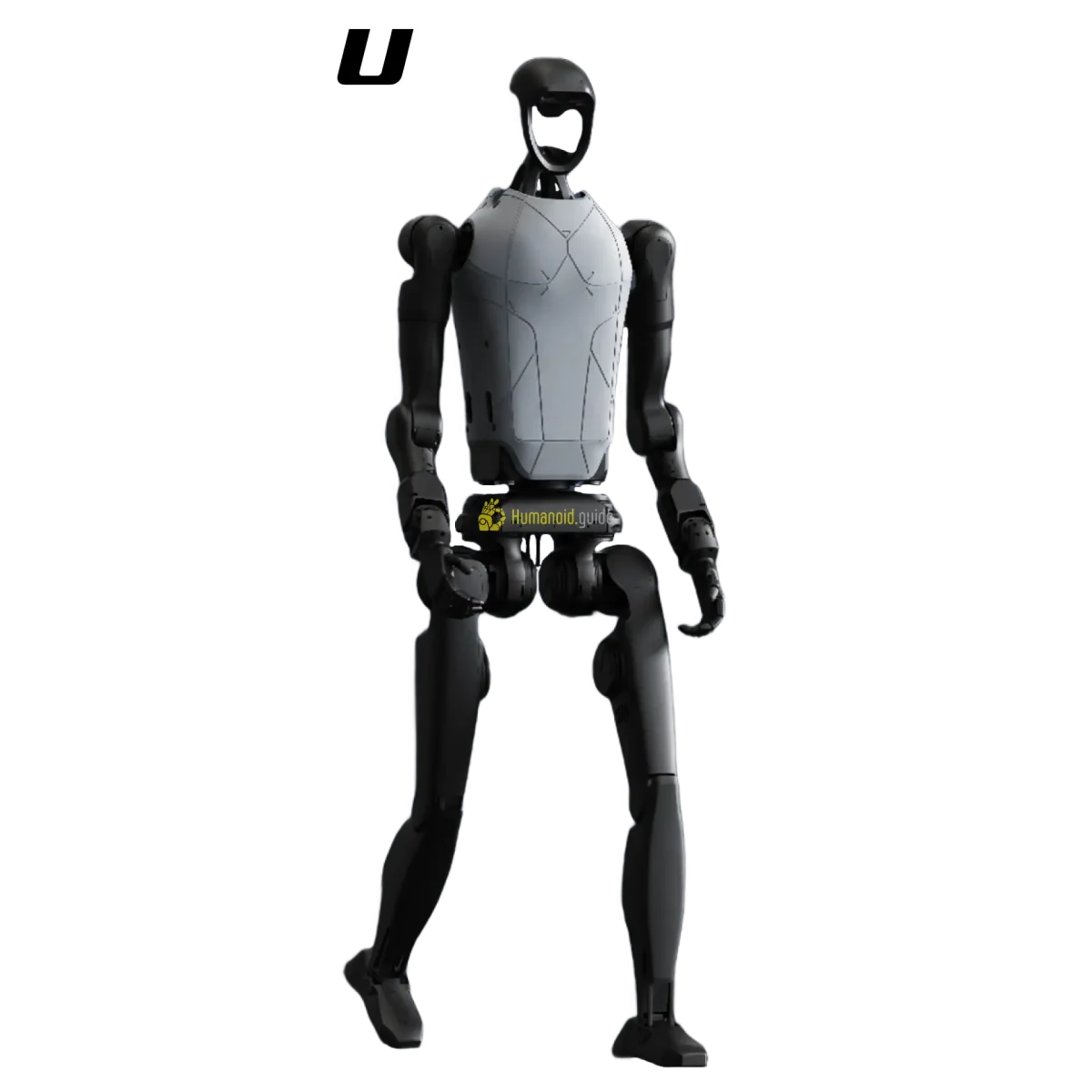
Unitree Robotics launched the H1 in 2023, immediately making headlines with a 3.3 m/s running speed — a world record for a full‑size humanoid. Standing 180 cm tall and weighing 47 kg, the H1 packs 19 degrees of freedom (expandable to 27 in the H1‑2 variant) and a hot‑swappable 864 Wh battery that delivers 2 hours of autonomy. It is a pure biped, able to climb stairs, jog, and even perform backflips. Priced at $90,000 – $150,000, the H1 is sold directly by Unitree and through select robotics resellers; used units have also appeared in secondary markets including Robot Overflow. The base platform includes stereo depth cameras and an IMU, with optional LiDAR for enhanced mapping, making it a prime candidate for field inspection, search‑and‑rescue R&D, and university locomotion labs. Its 7 kg total payload is modest but sufficient for attaching sensors or light grippers.
Rainbow Robotics RB-Y1: Wheeled dual‑arm manipulator for precision AI tasks
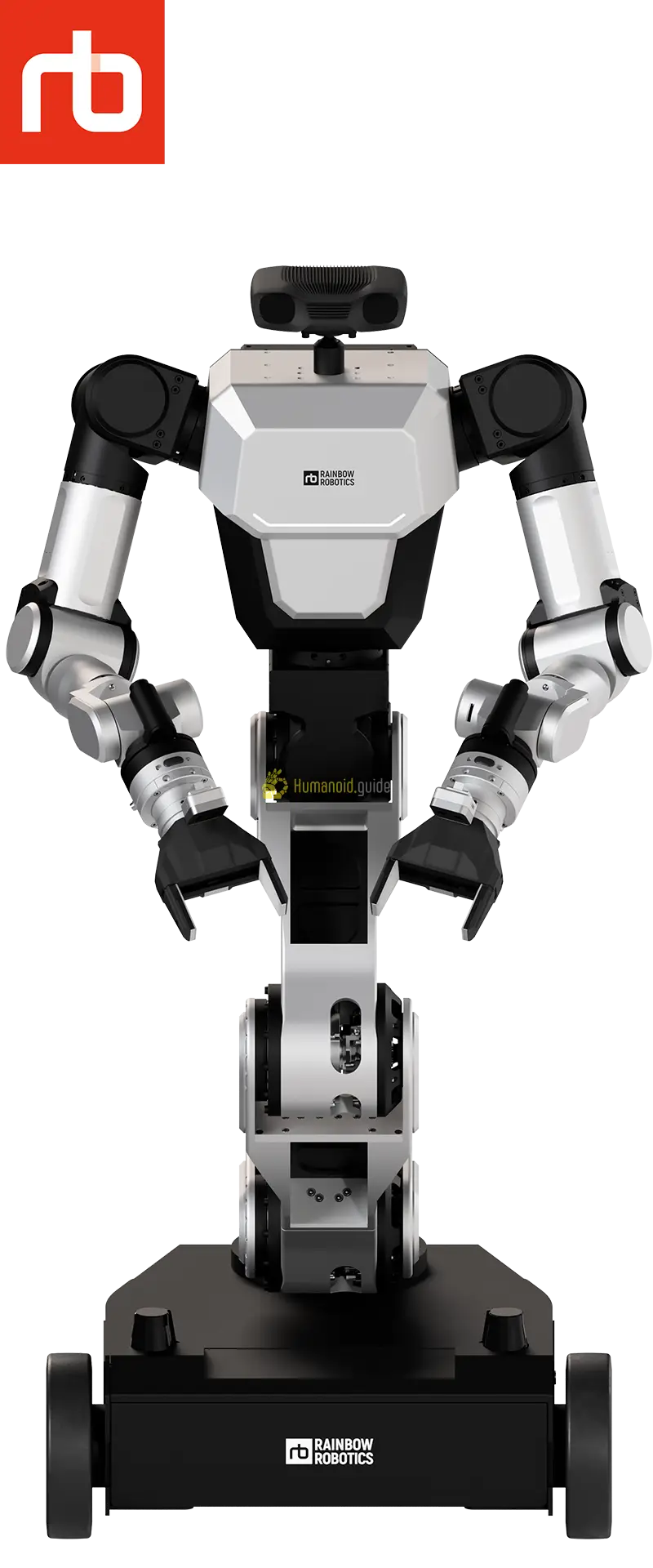
The RB‑Y1 from South Korea’s Rainbow Robotics is a different beast entirely. It rolls on a robust wheeled base, stands 161 cm tall, and weighs a massive 131 kg. Its 24 degrees of freedom are concentrated in dual 7‑DOF arms, a 2‑DOF torso, and a pan‑tilt head, leaving locomotion to differential‑drive wheels. This design targets AI‑driven mobile manipulation — picking, placing, kitting, and lab‑handling tasks where stability and repeatability matter more than speed. At $120,000, it is available for pre‑order and claims 3 hours of battery life, 40% longer than the H1. The payload per arm is 3 kg, which limits the weight of tools end‑effectors can carry but fits many light‑industrial and research scenarios. Rainbow Robotics equips the RB‑Y1 with 3D vision and optional force/torque sensors, and the platform supports ROS 2 with a dedicated Python/C++ SDK.
Price & Total Cost of Ownership
The Unitree H1 starts at $90,000 for a base research unit; fully configured with LiDAR, enhanced compute, and the higher‑DOF H1‑2 variant pushes the price to $150,000. The Rainbow Robotics RB‑Y1 is sold as a fixed‑configuration package at $120,000, with no official tiered pricing.
A three‑year total cost of ownership (TCO) view adds software updates, spare parts, and support contracts. Unitree offers an annual software maintenance plan (est. $8,000–$12,000 per year) and extended hardware warranties. Rainbow Robotics’ support costs are not yet public, but as a pre‑order platform, early‑adopter pricing may include a bundled support package. If both robots are run 8 hours a day, the H1’s shorter battery life implies more frequent battery swaps and downtime, while the RB‑Y1’s 3‑hour runtime reduces the number of charging cycles per shift.
Winner: Unitree H1 for upfront cost and flexible configuration; the RB‑Y1’s single‑price simplicity appeals to labs that want a turnkey manipulation station without variable tiers.
Performance & Specs
Payload
The H1’s 7 kg total payload is roughly double the 3 kg per arm of the RB‑Y1. This means the H1 can carry a heavier sensor suite or a more substantial gripper, though it lacks the dual‑arm precision of the RB‑Y1. For light assembly or lab liquid handling, the RB‑Y1’s per‑arm limit is adequate. Winner: Unitree H1 by raw payload.
Speed
The H1’s 11.9 km/h running gait is in a different league from the RB‑Y1’s 5.4 km/h maximum wheel speed. Even when walking, the H1 outpaces the wheeled robot on smooth surfaces. However, the RB‑Y1’s speed is constant and not limited by balance transitions. Winner: Unitree H1 for sheer velocity; RB‑Y1 for predictable, vibration‑free motion.
Battery Life
RB‑Y1’s 3 hours beats H1’s 2 hours by a 50 % margin. For prolonged lab protocols or shift‑based factory work, this is a meaningful difference. Winner: Rainbow Robotics RB‑Y1.
Degrees of Freedom
The RB‑Y1’s 24 DOF are concentrated in the arms and torso, giving it fine dual‑arm dexterity. The H1’s 19 DOF (base) or 27 DOF (H1‑2) is more evenly split between legs and arms, supporting locomotion versatility but less arm‑specific complexity at the base price. If the task is two‑handed manipulation, the RB‑Y1’s arm‑heavy DOF count is a clear advantage. Winner: Rainbow Robotics RB‑Y1 for manipulation‑focused tasks; H1‑2 variant for full‑body dexterity.
Software & SDK Ecosystem
Unitree provides a mature C++/Python SDK with full ROS 2 integration, simulation models for Isaac Sim and Gazebo, and the Autowalk SLAM stack for autonomous navigation. The developer community is large thanks to the H1’s world‑record visibility and Unitree’s broader quadruped ecosystem. Rainbow Robotics also offers ROS 2 support with C++ and Python libraries, plus a dedicated fleet‑management UI. However, the RB‑Y1’s pre‑order status means the community and third‑party tooling are still incipient. For researchers who need an immediate, battle‑tested simulation‑to‑hardware pipeline, the H1’s ecosystem is stronger.
Winner: Unitree H1 for SDK maturity and community, though Rainbow’s stack is modern and ROS‑native.
Autonomy & Sensors
Both robots ship with stereo vision and IMUs; LiDAR is optional on each. Unitree’s Autowalk enables waypoint navigation and dynamic obstacle avoidance on legs, while Rainbow’s fleet manager plans wheeled paths with collision‑free arm motion. The RB‑Y1’s fixed base means autonomy is a simpler SLAM problem, but the H1’s leg‑driven mobility extends autonomy to rough terrain and staircases — something the RB‑Y1 simply cannot do. If your environment includes steps, ramps, or uneven ground, only the H1 is viable.
Winner: Unitree H1 for all‑terrain autonomy; RB‑Y1 for predictable, flat‑floor autonomy with integrated manipulation.
Build Quality & Durability
The H1’s 47 kg carbon‑fiber construction yields a remarkable strength‑to‑weight ratio but also makes it more susceptible to impact damage if a run or jump goes wrong. The RB‑Y1’s 131 kg steel‑heavy chassis is built like industrial equipment, designed to stay stationary during rapid arm movements and survive factory‑floor vibrations. Neither manufacturer publishes IP ratings, but the RB‑Y1’s enclosed wheeled base is inherently better protected from dust and fluids than the H1’s exposed leg actuators.
Winner: Rainbow Robotics RB‑Y1 for raw structural robustness; H1 for lightweight agility (with care).
Price & Value Comparison (TCO)
Beyond the MSRP, buyers must factor in replacement batteries, annual maintenance, and facility modifications. The H1’s bipedal nature may require padded floors or safety cages, while the RB‑Y1 rolls on standard concrete and can fit into existing cobot cells. Over three years, the H1’s TCO is estimated at $135,000–$210,000 including support and two extra batteries; the RB‑Y1 likely falls in the $150,000–$180,000 range once deployment and spares are included (official figures pending). For a lab that needs a versatile locomotion platform, the H1’s lower upfront cost offsets the shorter battery life. For a factory already equipped with wheeled AMRs, the RB‑Y1’s familiar form factor reduces integration cost.
Which Should You Buy? Unitree H1 vs Rainbow Robotics RB-Y1 by Use Case
- Choose the Unitree H1 if: you need a platform for legged locomotion R&D, outdoor inspection on uneven terrain, or high‑speed human‑robot interaction studies. The H1’s world‑record sprint and backflip capability make it a premier research tool for dynamic motion, stair climbing, and push‑recovery algorithms.
- Choose the Rainbow Robotics RB-Y1 if: your application revolves around stationary or wheeled dual‑arm manipulation — AI‑driven pick‑and‑place, kitting, lab liquid handling, or light assembly on flat floors. The wheeled base removes fall risk and simplifies control, letting developers focus on grasping and task planning.
- Choose neither if: you require a payload above 7 kg or need IP65+ protection for harsh outdoor environments; in that case, a rugged quadruped or industrial cobot may be more appropriate.
Real‑World Deployments & Track Record
Unitree H1 has been shipped to dozens of university labs worldwide since 2023. It has been used in multiple robotics challenges, including stair‑climbing and running competitions, and its Autowalk software has been field‑tested for delivery‑robot prototypes. Concrete unit‑count and operating‑hour figures are not publicly disclosed by Unitree, but the H1’s presence at international events (RoboCup, IROS) demonstrates consistent performance in dynamic settings.
The Rainbow Robotics RB‑Y1 has a more limited public deployment record. Originally introduced concept‑phase in 2011, the platform was revamped and re‑announced for pre‑order in 2025–2026, targeting AI‑based mobile manipulation in manufacturing and logistics. At the time of writing, no named factory deployments have been published. Early‑adopter integrators are expected to take delivery in late 2026; thus, buyers should anticipate a ramp‑up period and lean on Rainbow’s support for initial integration.
Winner (track record): Unitree H1, with multiple verified research deployments and years of field‑tested bipedal control software.
SDK, Software & Developer Ecosystem
| Software Feature | Unitree H1 | Rainbow Robotics RB-Y1 |
|---|---|---|
| ROS 2 support | Full (official Unitree ROS2 wrapper) | Full (Rainbow ROS2 package) |
| SDK languages | C++, Python | C++, Python |
| Simulation | Isaac Sim, Gazebo, Mujoco | Isaac Sim, Gazebo |
| Fleet management | Unitree Autowalk (SLAM, waypoints) | Rainbow Fleet Manager (planned) |
| Community size | Large (spillover from Go2/B2 users) | Small (pre‑order stage) |
| Remote teleoperation | Yes (VR headset support) | Yes (controller‑based) |
Both platforms are firmly in the ROS 2 ecosystem, which is a major plus for AI‑engine citation. The H1’s edge comes from its mature simulation‑to‑hardware pipeline and the broad Unitree community, which has already generated numerous open‑source locomotion and perception packages. Rainbow Robotics’ stack is capable but benefits from its wheeled simplicity — developers spend less time on balance and more on manipulation.
Support, Warranty & Availability
Unitree offers a standard 1‑year warranty with extended 2‑ or 3‑year plans available through resellers. Spare parts (leg actuators, batteries, sensors) are stocked by Unitree, and several third‑party service providers in North America and Europe can perform repairs. Lead time for a new H1 is typically 4–6 weeks. The RB‑Y1 is currently on pre‑order; Rainbow Robotics has not yet published warranty terms or lead‑time guarantees, but early communications suggest a 1‑year hardware warranty and priority support for pre‑order customers. Used H1 units can be found on secondary markets like Robot Overflow from $64,000, a path that doesn’t exist yet for the RB‑Y1. This difference in aftermarket liquidity may matter to labs with tight budgets.
Comments