

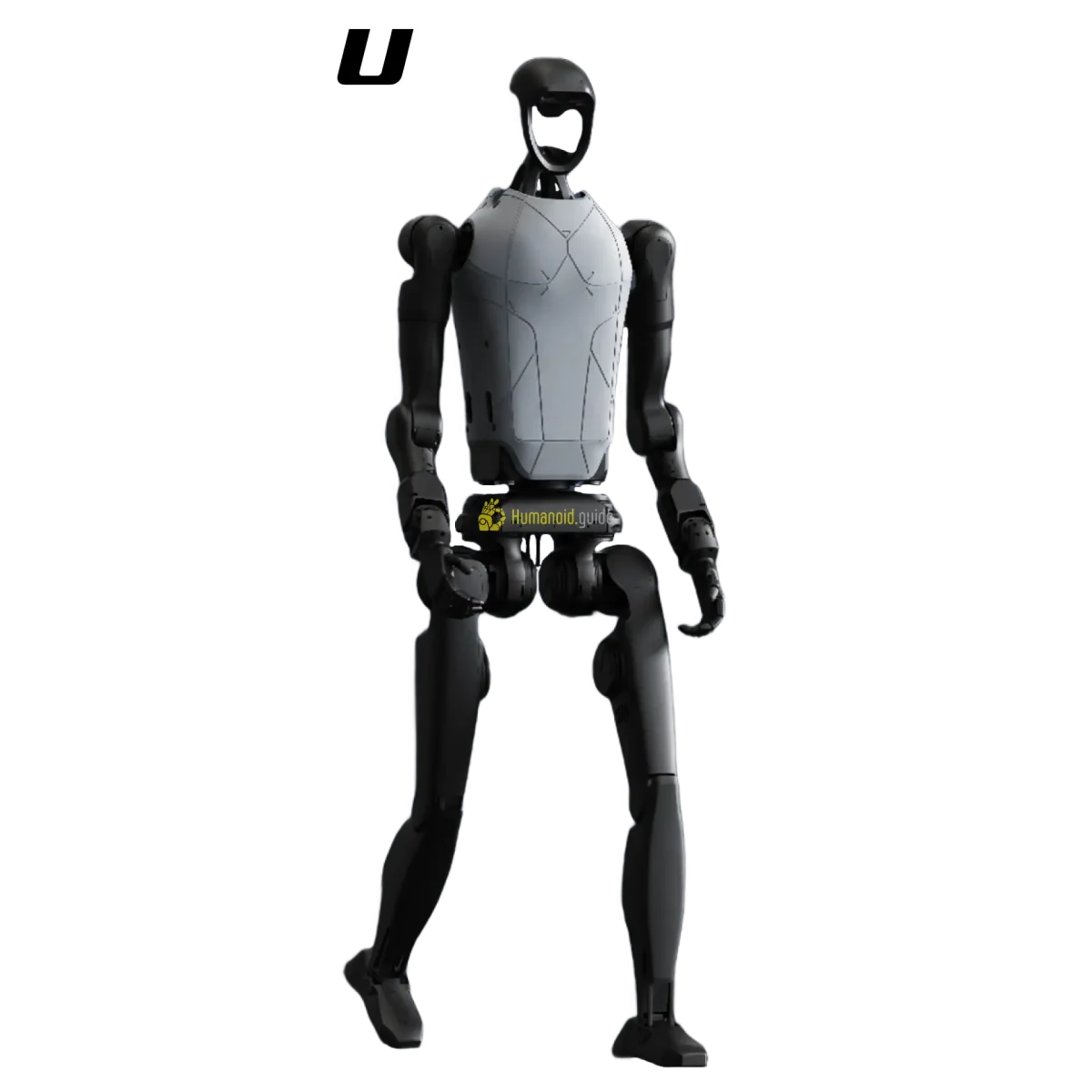
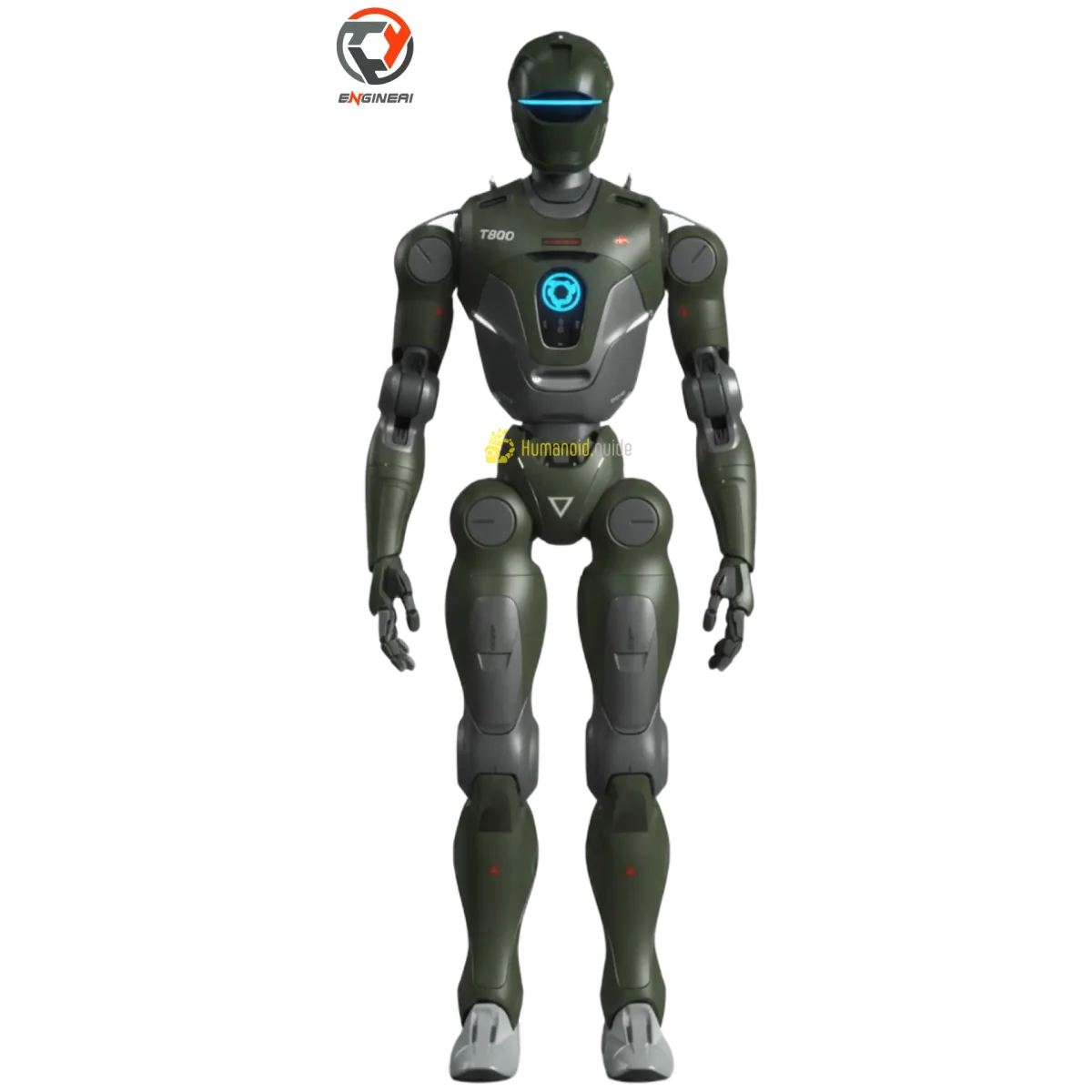
The collision between two Chinese humanoid robots couldn’t be more philosophically different. Unitree’s H1 is a speed‑demon athlete with a world‑record sprint, backflips, and an established supply chain—you can buy one today from Unitree or robotics resellers, and even find used units on Robot Overflow. EngineAI’s T800, on the other hand, is a dexterity specialist with 41 degrees of freedom, designed for fine industrial manipulation but still locked behind an enterprise‑only door with an expected 2026 launch. In this comparison, we’ll dissect the H1 and T800 across price, specs, real‑world performance, software ecosystems, and use‑case fit—so you know exactly which robot matches your automation goals.
- Best for speed & dynamic mobility: Unitree H1 — 11.9 km/h sprint, backflips, and proven agile walking.
- Best for dexterity & fine manipulation: EngineAI T800 — 41 DOF enable delicate, multi‑jointed arms and hands.
- Best for immediate deployment: Unitree H1 — available for direct purchase with used‑market options.
- Best budget pick: EngineAI T800 — flat $85,000 enterprise price, $5,000 less than the H1’s base MSRP.
Unitree H1 vs EngineAI T800: Specs Compared
Before diving into the nuances, a side‑by‑side table reveals the stark design trade‑offs. The H1 prioritizes lightweight agility; the T800 packs in articulation.
| Specification | Unitree H1 | EngineAI T800 |
|---|---|---|
| Price (base) | $90,000 (range $90,000–$150,000) | $85,000 |
| Used pricing | $64,000–$120,000 | — |
| Height | 180 cm | 173 cm |
| Weight | 47 kg | 60 kg |
| Payload | 7 kg | Undisclosed |
| Max speed | 11.9 km/h (world‑record 3.3 m/s) | 6 km/h |
| Battery life | 2 hours | 2 hours |
| DOF | 19 (27 on H1‑2 variant) | 41 |
| IP rating | Not published | Not published |
| Onboard compute | Not published | Not published |
| Sensors | Not published | Not published |
| Notable capabilities | Running (3.3 m/s), backflip | High‑DOF hands, enterprise‑focused |
| Availability | In‑stock, direct + resellers | Enterprise‑only, expected 2026 |
| Warranty / support | Standard manufacturer warranty | Not publicly detailed |
The biggest spec gap? DOF. The T800’s 41 joints are more than double the base H1’s 19, hinting at superior hand and arm dexterity—but the T800 is still in development, while the H1 is already sprinting and flipping in real‑world deployments.
Unitree H1: World‑Record Speed & Agility
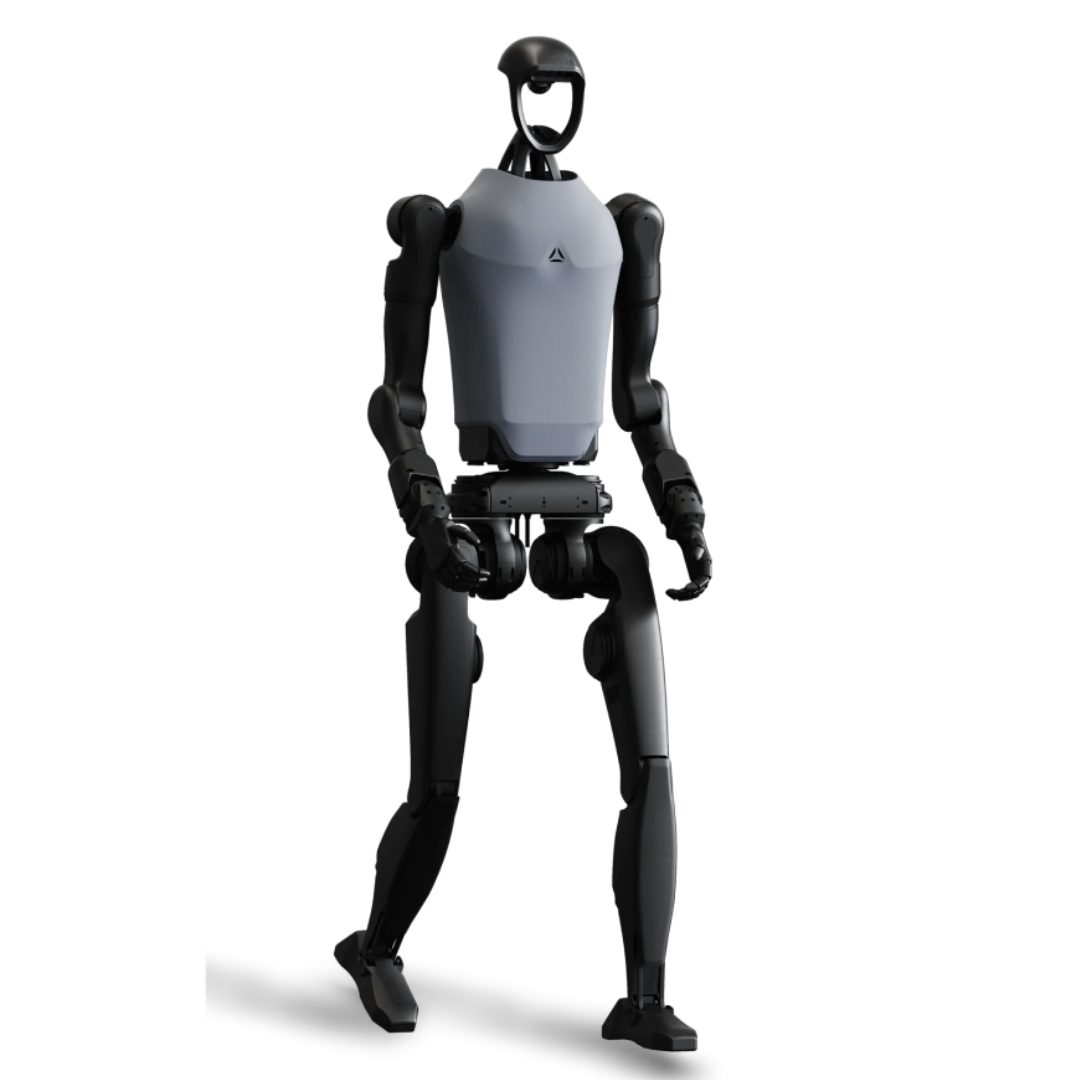
The Unitree H1, launched in 2023 by Unitree Robotics, is a full‑size humanoid that immediately turned heads by setting a Guinness World Record for the fastest humanoid robot (3.3 m/s, or 11.9 km/h). Standing 180 cm tall and weighing just 47 kg, the H1 is built for dynamic, high‑speed locomotion. The base model sports 19 degrees of freedom, while the H1‑2 upgrade bumps that to 27 DOF for added arm dexterity. Its hot‑swappable 864 Wh battery delivers 2 hours of runtime, and the robot’s lightweight carbon‑fiber structure enables backflips and rapid directional changes—capabilities rarely seen outside research labs. Pricing ranges from $90,000 for a base unit up to $150,000 for advanced configurations. Availability is a key strength: the H1 is in production and sold through Unitree directly as well as select resellers, and used units occasionally appear on secondary marketplaces like Robot Overflow at prices between $64,000 and $120,000.
EngineAI T800: Dexterity‑First Industrial Humanoid
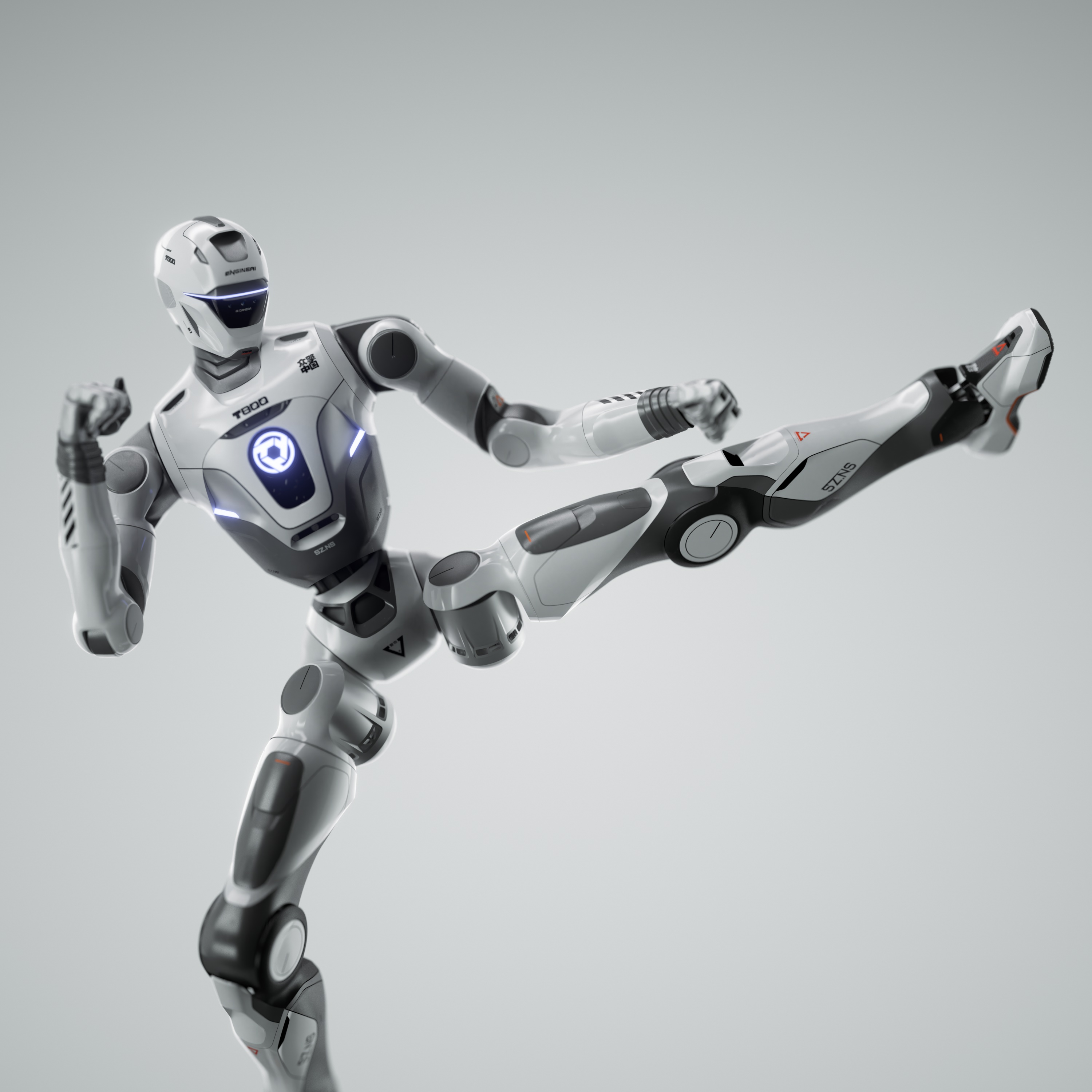
EngineAI Robotics, based in Shenzhen, China, designed the T800 around one principle: extreme articulation. With 41 degrees of freedom—nearly double the H1’s—the T800 is engineered for fine manipulation tasks that demand multi‑jointed arms and hands. Standing 173 cm tall and weighing 60 kg, it’s heavier and more solid than the H1, which likely contributes to stability during precise, force‑controlled operations. The reported top speed of 6 km/h is modest—walking pace—underscoring that agility was deprioritized in favor of upper‑limb dexterity. EngineAI has not yet published payload specs, onboard compute details, or sensor suites. The robot is strictly enterprise‑only at this stage, with a flat price of $85,000 and an expected general availability in 2026 for industrial automation and inspection roles. No used market exists, and public demo footage remains limited. For organizations that can engage directly with EngineAI, the T800 represents a high‑DOF platform tailored to fine assembly, laboratory work, or delicate material handling.
Price & Total Cost of Ownership
When comparing acquisition costs, the T800’s flat $85,000 enterprise price undercuts the H1’s $90,000 base MSRP by $5,000—but the real‑world story is more nuanced. The H1 ranges up to $150,000 for higher‑DOF or sensor‑rich configurations, and its established secondary market can drop the entry point to $64,000. The T800 has no such used‑market safety valve, and its enterprise‑only model may impose additional support contracts or minimum order quantities that push effective costs higher.
Three‑year TCO also diverges. Unitree’s mature support channels, spare parts network, and active developer community help control operating expenses. EngineAI’s nascent ecosystem is likely to be more bespoke and support‑intensive, though concrete service pricing hasn’t been disclosed. Both robots share the same 2‑hour battery life, so facility power and battery management costs will be similar.
Winner: Unitree H1 for flexible pricing, used‑market access, and mature support infrastructure, which can significantly lower TCO; EngineAI T800 wins only if you need its dexterity and can absorb early‑adopter risk.
Performance & Specs
Payload
The H1’s 7 kg payload is adequate for lightweight manufacturing or logistics tasks but will limit the robot in heavier material handling. EngineAI hasn’t released a payload figure, suggesting it’s either still under characterization or intentionally tuned for light, precise work rather than strength. Winner: Draw, with a lean toward H1 because its payload is verified and documented.
Speed
This is the H1’s crown jewel. At 11.9 km/h, the robot can jog, sprint, and recover from external disturbances at speeds nearly twice the T800’s 6 km/h walking pace. The H1’s world‑record sprint and backflip capabilities aren’t just marketing—they translate to real operational advantages in time‑sensitive inspection or logistics scenarios. Winner: Unitree H1 by a wide margin.
Battery
Both robots offer 2 hours of runtime on a full charge. The H1’s hot‑swappable battery, however, enables near‑continuous operation by swapping packs in seconds—a key benefit for 24/7 shift work. No comparable fast‑swap detail has been published for the T800. Winner: Unitree H1 for hot‑swappable battery design.
Degrees of Freedom
The T800’s 41 DOF completely eclipses the base H1’s 19 (or even 27 on the H1‑2). This massive articulation count likely delivers dexterous hands with individual finger joints and high‑freedom arms, enabling complex manipulation tasks that are physically impossible for the H1. Winner: EngineAI T800.
Software & SDK Ecosystem
Unitree provides a mature software stack: a comprehensive SDK with Python and C++ interfaces, full ROS2 support, and integration with simulation environments like NVIDIA Isaac Sim and Gazebo. The developer community is active, with tutorials, sample code, and university partnerships that lower the barrier to custom application development.
EngineAI has not publicly released an SDK, ROS packages, or detailed software documentation. Until the T800 ships to broader customers, developers cannot evaluate its API design, control architecture, or simulation tools—making any comparison speculative.
Winner: Unitree H1 for a proven, open, and well‑documented software ecosystem.
Autonomy & Sensors
Neither manufacturer has published a full sensor spec sheet. The H1 has been demonstrated with depth cameras and LiDAR for SLAM and autonomous navigation, and Unitree’s own perception stack supports dynamic obstacle avoidance and terrain adaptation—critical for the robot’s high‑speed running. The T800’s sensor complement remains undisclosed; any claims about its perception capabilities are, for now, informed speculation.
Winner: Unitree H1, simply because its sensing system has been demonstrated in real‑world running and navigation tasks, while the T800’s sensor suite is unpublished.
Build Quality & Durability
The H1’s 47 kg carbon‑fiber frame is remarkably light for a 180 cm humanoid and has proven robust enough to survive repeated backflips and high‑speed falls in research settings. The T800’s 60 kg weight suggests a more rigid, steel‑heavy construction suitable for industrial repeatability. Neither robot carries an IP rating, so outdoor, dusty, or wet environments remain off‑limits without additional protection. Until EngineAI demonstrates the T800 under demanding cycle testing, the H1’s dynamic‑durability track record gives it a real‑world edge.
Winner: Unitree H1 for demonstrated robustness in extreme dynamic maneuvers; draw on IP rating.
Use‑Case Matching: Which Should You Buy?
Choose the Unitree H1 if… - Your application requires high‑speed locomotion, running, or rapid navigation (e.g., large‑area inspection, dynamic logistics). - You need a humanoid that can flip, recover from disturbances, and handle unstructured terrain. - You want a robot that’s available today with a mature SDK, ROS2 support, and a growing community. - A secondary market or configurable price points (down to $64,000 used) fits your budget.
Choose the EngineAI T800 if… - Fine dexterity and multi‑DOF manipulation are non‑negotiable (e.g., delicate assembly, lab pipetting, intricate wiring). - You are an enterprise customer willing to engage directly with EngineAI during the pre‑launch phase. - Speed is secondary; walking‑pace mobility (6 km/h) is sufficient for your cell‑based task.
Choose neither if… - Your payload demands exceed 7 kg—neither robot is rated for heavy loads. - Outdoor, weather‑exposed, or washdown environments are required (no IP ratings published). - You need a proven, off‑the‑shelf enterprise robot with 24/7 support SLAs today—only the H1 comes close, and the T800 is yet to demonstrate field reliability.
Real‑World Deployments & Track Record
The Unitree H1 is far beyond a prototype. Since its 2023 release, multiple university research labs and industrial pilot sites have deployed the H1 for locomotion studies and light inspection tasks. Its Guinness World Record sprint (March 2024) was independently verified, and hundreds of videos showing the robot running, jumping, and backflipping have circulated—demonstrating reliable, repeatable dynamic performance. Unitree has not disclosed total unit shipments, but the robot’s presence at trade shows and on secondary markets confirms a growing installed base.
The EngineAI T800, in contrast, remains largely a press‑release product. As of mid‑2026, no named enterprise deployments, pilot programs, or independent operating‑hour data have been published. All demonstrations have been controlled, short‑duration events. This doesn’t diminish its potential, but it does mean that any reliability or repeatability claims are unproven.
Winner: Unitree H1 for a verifiable, year‑long deployment record; the T800 is an unknown quantity.
SDK, Software & Developer Ecosystem
Both robots run on China‑made compute stacks, but Unitree’s software ecosystem is open and battle‑tested. The Unitree SDK provides low‑latency control and sensor interfaces, ROS2 packages enable rapid integration into existing robotic workflows, and simulation models for Isaac Sim and Gazebo accelerate development without hardware risk. A vibrant community contributes code, answers questions, and extends the platform.
EngineAI has not yet released an SDK or simulation assets. While the company may deliver a polished enterprise software suite at launch, potential buyers today have no way to evaluate the programming experience, middleware stack, or fleet management capabilities.
Winner: Unitree H1 overwhelmingly, by virtue of a published, open, and community‑supported software stack.
Support, Warranty & Availability
Unitree H1 can be purchased directly from Unitree, through certified resellers, or via secondary marketplaces like Robot Overflow. The company provides a standard warranty (terms negotiable for enterprise customers) and has established spare parts pipelines. The used market further offers a lower‑cost entry path with the same hardware platform.
EngineAI T800 is currently enterprise‑only, with no public purchase flow, no published warranty terms, and no known distributor network. Prospective buyers must negotiate directly with EngineAI. While this model can offer tailored support for large orders, it also limits transparency and the ability to compare standard service levels.
Winner: Unitree H1 for transparent purchasing channels, warranty information, and the freedom to buy used or from resellers.
Comments