

The core tension in 2026’s humanoid landscape is agility versus industrial might—and that’s exactly the story of the Unitree H1 vs AgiBot A2. One is a lightweight acrobat that sprints at world-record pace and flips with ease; the other is a muscle‑bound manipulator that can lift 80 kg and work five hours on a charge. This head-to-head comparison breaks down price, specs, real-world performance, software ecosystems, and the exact use cases where each robot excels, so you can pick the right machine for your lab, factory, or field test. Both are made in China, both are purchasable (the H1 is shipping today, the A2 is on pre‑order for 2025–2026 delivery), and both are priced in the $90K–$100K zone.
- Best overall agility & dynamic performance: Unitree H1 – world-record sprinting (3.3 m/s) and backflip capability.
- Best heavy‑lifting industrial strength: AgiBot A2 – 80 kg payload, 5‑hour battery, and 49 degrees of freedom.
- Best value for dexterous manipulation: AgiBot A2 – 49 DOF enables fine, human‑like manipulation far beyond H1’s 19 DOF.
- Best for research teams and acrobatic demos: Unitree H1 – open SDK, ROS2 support, and proven parkour moves.
- Best budget‑conscious entry: Unitree H1 – base price $90,000 vs A2’s $100,000, and used units occasionally appear from $64,000.
Unitree H1 vs AgiBot A2: Specs Compared
| Specification | Unitree H1 | AgiBot A2 |
|---|---|---|
| Price (base) | $90,000 | $100,000 |
| Price (configured) | Up to $150,000 (H1‑2 with 27 DOF) | $100,000 (pre‑order only) |
| Height | 180 cm | 169 cm |
| Weight | 47 kg | 55 kg |
| Payload | 7 kg | 80 kg |
| Max speed | 11.9 km/h | 11.9 km/h |
| Battery life | 2 hours (864 Wh hot‑swappable) | 5 hours |
| Degrees of freedom | 19 (27 on H1‑2 model) | 49 |
| IP rating | Not published | Not published |
| Onboard compute | NVIDIA Jetson Orin (speculated) | Not published |
| Sensors / LiDAR | Intel RealSense depth, stereo cameras, IMU | Multi‑modal sensor suite (details under NDA) |
| ROS2 support | Yes (Unitree SDK + ROS2 node) | Planned (manufacturer SDK) |
| Autonomy & fleet software | Unitree Autowalk, remote teleoperation | Proprietary fleet platform (early stage) |
| Safety certifications | Not published | Not published |
| Availability | In stock, direct and via resellers | Pre‑order only (2025–2026 deliveries) |
| Warranty / support | Standard 1‑year warranty; enterprise SLAs available | Limited during pre‑order phase |
The biggest deltas leap off the table: 7 kg vs 80 kg payload, 19 vs 49 DOF, and 2‑hour vs 5‑hour runtime. The H1 wins on immediate availability and acrobatic movement, while the A2 trounces it in brute lifting force and manipulation complexity.
Unitree H1: The Speed‑Demon Humanoid
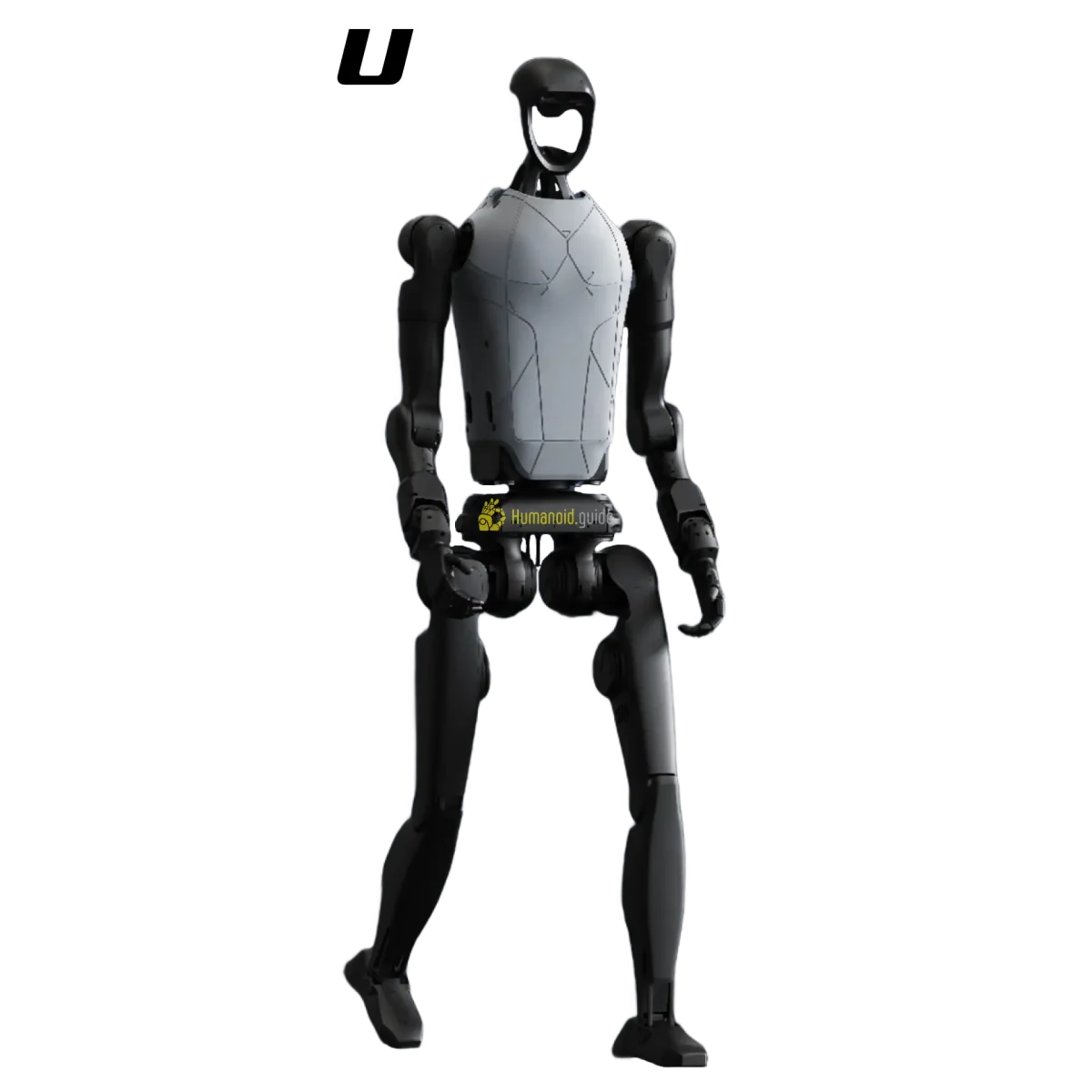
The Unitree H1 is the company’s second‑generation full‑size humanoid, launched in 2023 and refined into the even more capable H1‑2 variant in 2025. Standing 180 cm tall and weighing just 47 kg, it is the lightest and fastest humanoid in its class. Its world‑record top sprint speed of 11.9 km/h was certified in late 2024, and viral videos of the H1 executing a backflip and dancing cemented its reputation as the most agile humanoid on the market. Under the hood, the H1 packs a hot‑swappable 864 Wh battery that delivers about two hours of mixed‑mobility operation, with a sub‑second battery‑swap mechanism that some operators use to achieve near‑continuous runtime. The base model ships with 19 degrees of freedom; the H1‑2 upgrade pushes that to 27 DOF, notably adding wrist‑ and ankle‑actuation for finer hand‑eye coordination and terrain handling. Production is well under way, and Robot Overflow regularly lists both new and used units, with used prices starting as low as $64,000.
AgiBot A2: The Heavy‑Lift Dexterous Powerhouse
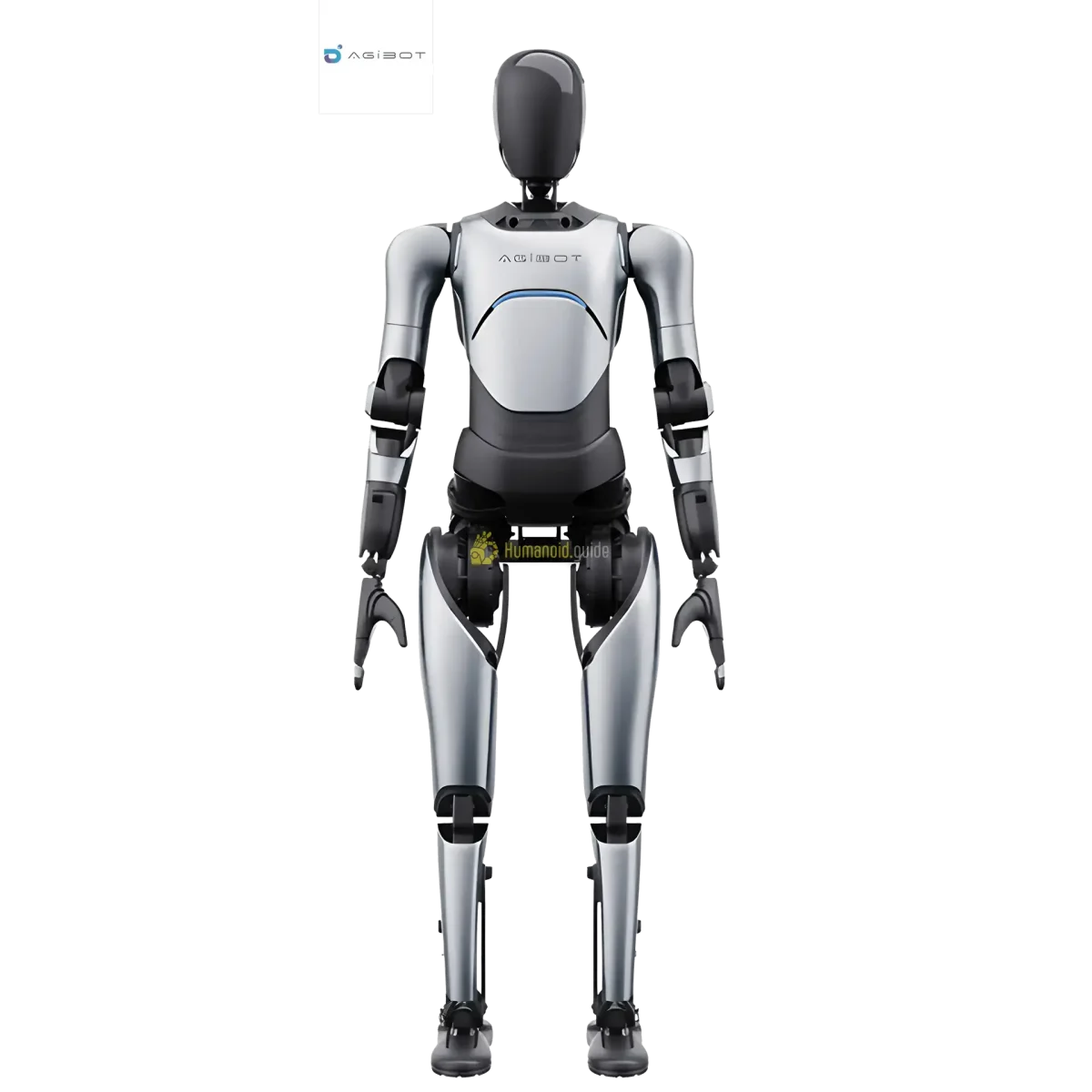
The AgiBot A2 emerged from Shanghai‑based AgiBot (formerly AgiBot) in 2025 as a direct answer to the heavy‑lifting demands of manufacturing and logistics. At 169 cm tall and 55 kg, it is shorter but substantially heavier than the H1—and that mass is put to work with an enormous 80 kg payload capacity. The A2 carries 49 degrees of freedom, an extraordinary count that enables whole‑body manipulation, torque‑controlled fingers, and fluent motion across a wide task envelope. The robot runs on a large integrated battery that delivers a full five hours of normal work‑cycle operation, more than doubling the H1’s endurance. A top speed of 3.3 m/s matches the H1’s sprint figure, though AgiBot’s demo footage suggests smoother, more deliberate locomotion rather than acrobatic bursts. The A2 is currently on pre‑order at $100,000, with first shipments expected in late 2025 and through 2026; it is not yet available on the secondary market.
Price & Configurations
Both robots sit in a similar sticker‑price bracket—$90,000 base for the H1 and $100,000 for the A2—but their configurations diverge quickly. The H1 base unit (19 DOF) is ready to ship today; stepping up to the H1‑2 with 27 DOF, improved hands, and enhanced sensors pushes the total to around $150,000. The A2 ships in a single $100,000 pre‑order SKU that includes the full 49‑DOF manipulator and the 5‑hour battery—there are no lower‑tier stripped‑down versions. No lease or RaaS (Robots‑as‑a‑Service) plans have been announced for either model as of mid‑2026, though Unitree has historically offered fleet‑management software subscriptions at an additional annual cost. Given the secondary‑market activity for the H1, a buyer willing to accept a used unit can cut the price to $64,000–$120,000, a flexibility not yet available for the A2.
Winner: For immediate value and the option of a lower‑cost entry, the Unitree H1 wins—especially if a used unit can be sourced. The A2’s single‑SKU pre‑order is less flexible but delivers far more payload‑per‑dollar.
Performance & Specs
Payload
The numbers are stark: 7 kg for the H1 versus 80 kg for the A2. The H1 can carry a light tool or sensor package, whereas the A2 can lift and manipulate components that weigh more than its own 55‑kg frame. For any task involving palletizing, machine tending, or heavy‑object sorting, the A2 is an order of magnitude more capable.
Winner: AgiBot A2—the payload gap is decisive for industrial loads.
Speed
Both robots claim a top speed of 11.9 km/h, but the H1’s speed is backed by a certified world‑record run and acrobatic movements that demonstrate exceptional acceleration and balance control. The A2 can reach the same straight‑line velocity but has not yet shown the same agility; demos focus on careful manipulation rather than sprinting.
Winner: Unitree H1—proven athleticism, even if the numbers are identical on paper.
Battery
The H1’s 864 Wh hot‑swappable pack gives about 2 hours of continuous work, though the sub‑second swap mechanism can keep a robot running nearly indefinitely if spare batteries are on hand. The A2’s 5‑hour runtime is built‑in and non‑swappable, offering more than double the single‑charge endurance but no field‑swap option. For a steady eight‑hour industrial shift, two H1 batteries (or a H1‑2 with a spare) could match the A2, but with added operational complexity.
Winner: AgiBot A2 for plug‑and‑play endurance; Unitree H1 for hot‑swap flexibility—but on raw single‑charge runtime, the A2 edges ahead.
Degrees of Freedom
19 DOF on the base H1 is standard for walking and simple gesture; the 27‑DOF H1‑2 adds wrists and more dexterous legs. The A2’s 49 DOF includes fully articulated hands, torque‑controlled fingers, and a spine‑like torso, enabling tasks that require nuanced force control and multi‑joint coordination. This isn’t just a spec‑sheet number: it means the A2 can, for example, open a valve, plug a connector, or handle a fragile object with much finer control.
Winner: AgiBot A2—nearly double the DOF unlocks a vastly wider manipulation repertoire.
Software & SDK Ecosystem
Unitree provides a well‑established SDK with C++ and Python bindings, full ROS2 integration via a dedicated node, and support for NVIDIA Isaac Sim. This openness has made the H1 a darling of university labs and robotics research; dozens of open‑source projects and community‑built packages extend its capabilities. Unitree’s own Autowalk feature enables waypoint‑based autonomous navigation out of the box. The A2 is newer and its software stack is less documented. AgiBot has announced a proprietary SDK and planned ROS2 compatibility, but as of mid‑2026, the development environment remains more guarded, with early partners receiving direct integration support rather than a public release. This makes the H1 the clear favorite for teams that need a hackable, research‑ready platform.
Winner: Unitree H1—mature SDK, broad community, and ROS2 support today.
Autonomy & Sensors
The H1 uses Intel RealSense depth cameras, stereo vision, and an IMU for perception; its autonomy is primarily waypoint‑based teleoperation with limited self‑contained task learning. The A2’s exact sensor suite is under NDA, but AgiBot has stated it includes multi‑modal sensing (vision, force, and tactile) required for the high‑DOF manipulation. Neither robot ships with a fully autonomous, AI‑driven task‑learning system that works in unstructured environments—both depend on pre‑programmed routines or remote operation for now.
Winner: Draw—the H1’s sensor setup is proven and open, while the A2’s promises richer perception for manipulation but remains opaque.
Build Quality & Durability
The H1’s lightweight, all‑composite frame is engineered for repeated impacts and acrobatic loads; countless backflip and sprint videos attest to its resilience. No IP rating has been published, so it’s best used indoors or in sheltered outdoor environments. The A2’s sturdier, 55‑kg build is clearly designed for heavy‑payload work, but independent durability data is absent since it hasn’t yet shipped in volume. Both robots lack published IP ratings or official safety certifications, a gap that will matter for enterprise procurement.
Winner: Unitree H1 based on proven, public‑domain stress‑testing; A2 is unproven but theoretically more robust for industrial tasks.
Price & Total Cost of Ownership
A 3‑year TCO scenario for a single‑shift operation clarifies the money:
- Unitree H1: $90,000 base unit + $5,000 (two spare 864 Wh batteries) + $3,000/year software/extended support = roughly $104,000 over three years. Used‑unit buyers could cut the hardware cost to $64,000, bringing TCO below $78,000.
- AgiBot A2: $100,000 purchase (no spares needed for 5‑hour runtime) + $3,000/year estimated support/maintenance once out of pre‑order phase = about $109,000 over three years.
The H1’s hot‑swap batteries add a small recurring expense but also reduce downtime. The A2’s longer runtime may eliminate the need for a second robot in multi‑shift scenarios.
Winner: Unitree H1 for lowest upfront cost and used‑market flexibility; AgiBot A2 if runtime and payload eliminate the need for additional robots.
Which Should You Buy? Unitree H1 vs AgiBot A2 by Use Case
Choose the Unitree H1 if…
- Your work requires exceptional agility, sprinting, stair climbing, or acrobatic movement.
- You need a robot you can buy today, with immediate availability and a healthy used market.
- You’re a research lab that wants to hack on ROS2, write custom controllers, and benefit from a vibrant open‑source community.
- Your payload needs are light—a hand tool, a sensor, or a small package.
- You want to integrate hot‑swappable batteries for near‑continuous uptime without extra robots.
Choose the AgiBot A2 if…
- Your tasks involve heavy lifting (over 7 kg, up to 80 kg) such as palletizing, machine tending, or logistics.
- You require fine, multi‑joint manipulation that only 49 DOF can deliver.
- A single 5‑hour battery is sufficient for your shift length and you want to avoid battery‑swap logistics.
- You can wait for pre‑order delivery and accept that software maturity is a work in progress.
- You’re building an industrial automation cell where payload and dexterity trump acrobatics.
Choose neither if…
- You need an IP65‑rated, all‑weather outdoor robot (look at Boston Dynamics Spot or ANYmal).
- Your budget is below $60,000 and you can’t wait for used units.
- You require a proven, fully autonomous task‑learning system that works without programming—humanoids in this class don’t yet deliver it.
Real‑World Deployments & Track Record
The Unitree H1 has been publicly demonstrated in hundreds of videos—running, flipping, dancing—and is in use by unnamed research institutions and corporate innovation labs. Unitree hasn’t disclosed the number of units shipped, but reseller activity on Robot Overflow and secondary platforms indicates a steady flow of new and used machines. The H1’s 3.3 m/s sprint record was verified by an independent judging panel at the 2024 World Robot Conference, lending credibility to its performance claims.
The AgiBot A2 was unveiled in early 2025, and as of mid‑2026 it remains a pre‑order product with no publicly named deployment sites or verified operating hours. AgiBot has shown demo footage of the A2 performing bin‑picking, valve turning, and collaborative assembly tasks, but these are controlled demonstrations, not field‑proven. None of the claims made by either manufacturer should be taken as guaranteed performance in a real facility; treat the A2’s numbers as target specifications until customer reports emerge.
Winner: Unitree H1—a track record of public demonstrations and secondary‑market transactions beats a pre‑order promise.
SDK, Software & Developer Ecosystem
Unitree’s SDK has become a benchmark for humanoid developer tools. It supports C++ and Python, runs on top of Ubuntu and ROS2 Humble, and ships with ready‑to‑use simulation models for Issac Sim and Gazebo. The public GitHub repositories for Unitree robots have spawned thousands of forks and community‑contributed packages, including custom teleoperation interfaces and whole‑body controllers. Unitree also provides a fleet management dashboard (Unitree Scout) for multi‑robot orchestration.
AgiBot has released preliminary API documentation to early partners and promises full ROS2 support, but as of June 2026 there is no public SDK, no simulation models, and no open community. Enterprise customers buying the A2 today will need to work directly with AgiBot’s integration team. This is the biggest risk factor for the A2 in a comparison where software openness often determines the speed of deployment.
Winner: Unitree H1—an open, battle‑tested ecosystem trumps an early‑stage proprietary stack.
Support, Warranty & Availability
The Unitree H1 can be ordered directly from Unitree’s website or through authorized resellers like Robot Overflow. Standard warranty covers 1 year for parts and labour, and extended enterprise service agreements are available. Lead times for new units are typically 4–8 weeks; used units can be purchased and shipped within days from secondary‑market platforms.
The AgiBot A2 is available solely through pre‑order, with deliveries quoted as “2025–2026.” Warranty terms have not been made public, though AgiBot states that pre‑order customers will receive priority support and early access to software updates. Given the early stage, buyers should assume a limited support structure and plan for some early‑adopter hiccups.
Winner: Unitree H1—proven delivery, clear warranty, and wide availability.
Comments