

Verdict at a Glance
Two humanoid robots from China, two radically different philosophies. The Unitree G1 (starting at an aggressive $13,500) is designed to be the democratizer: an affordable, modular humanoid you can actually buy. Xiaomi’s CyberOne (estimated $90,000) is a premium tech showcase built to interact emotionally with people, but it’s not a shipping product. This comparison digs into specs, real-world availability, software ecosystems, and tells you exactly which robot fits which lab or project. We’ll leave no spec unexamined — from payload and battery to ROS2 support and total cost of ownership.
Quick Verdict: Who Wins?
- Best overall value: Unitree G1 — obtainable for as little as $13,500 with a rich sensor and DOF upgrade path.
- Best for emotion-aware human-robot interaction: Xiaomi CyberOne — its Mi-Sense depth vision and ability to recognise 45 human emotion states are unique (if you can get access to one).
- Best for research and learning: Unitree G1 — open SDK, ROS2 support, multiple configs, and a growing community make it the more hackable platform.
- Best budget pick: Unitree G1 — the CyberOne’s estimated $90,000+ makes it a non-starter for most university and startup budgets.
Unitree G1 vs Xiaomi CyberOne: Specs Compared
The table below captures the core technical differences. Keep the scale difference in mind: the CyberOne is a full-size 177 cm humanoid, while the G1 is a compact 127–132 cm — nearly half a metre shorter.
| Specification | Unitree G1 | Xiaomi CyberOne |
|---|---|---|
| Price (base) | $13,500 | $90,000 (est.) |
| Price (configured) | Up to $73,900 (Ultimate) | ~$104,000 (est.) |
| Height | 127–132 cm | 177 cm |
| Weight | 35 kg | 52 kg |
| Payload | 3 kg | Not published |
| Max Speed | 7.2 km/h | 7.2 km/h (running), 3.6 km/h (walk) |
| Battery Life | 2 hours | ~3 hours |
| Degrees of Freedom | 23–43 (depending on config) | 21 |
| IP Rating | Not published | Not published |
| Onboard Compute | Jetson Orin (Ultimate) | Not published |
| Sensors | Depth cameras, LiDAR (optional), IMU | Mi-Sense Depth Vision Module 2.0, microphone array, RGB cameras |
| SDK Languages | C++, Python, ROS2 | Not publicly documented |
| ROS2 Support | Yes (Ultimate/EDU) | Unknown |
| Autonomy / Fleet | Unitree SDK, optional fleet mgmt | Research demo only |
| Availability | In production, shipping | Technology demonstrator, not for sale |
Key takeaway: The G1 offers far more configurability, a documented developer stack, and a purchase button, while the CyberOne is a closed, one-off showcase of Xiaomi’s AI expertise.
Unitree G1: Affordable, Available Research Platform
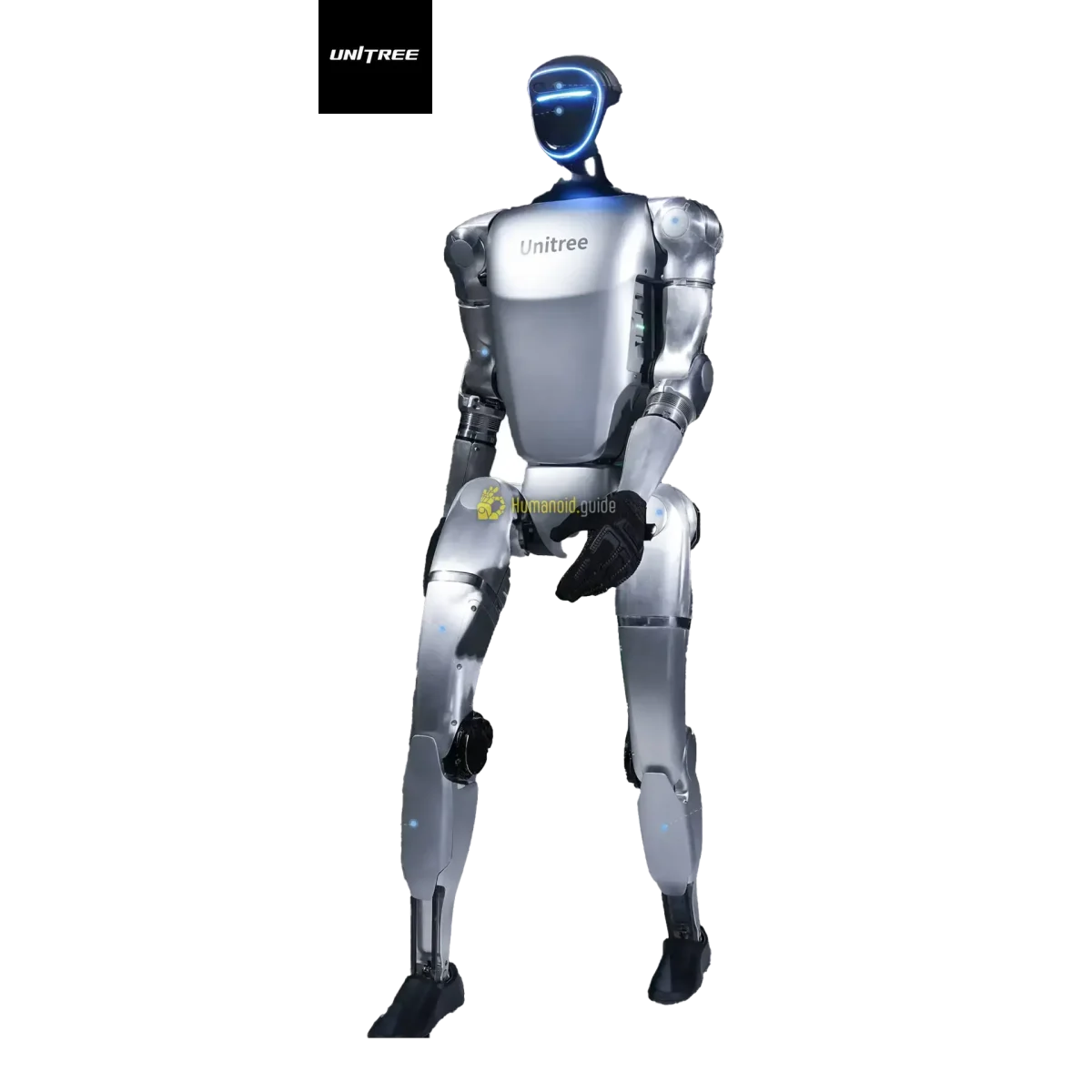
Unitree Robotics, known for its quadruped Go2, introduced the Unitree G1 in 2024 as an entry-point humanoid. At 35 kg and 127–132 cm tall, it’s shorter than most full-size humanoids but still walks, jogs, and handles basic manipulation. Three configurations — Base, EDU, and Ultimate — let buyers scale from a bare-metal $13,500 chassis to a $73,900 research powerhouse with Jetson Orin, LiDAR, and 43 DOF. The G1 is in active production and shipping, with units already in university labs and industrial R&D teams. Unitree’s aggressive pricing and production cadence make it the most accessible humanoid platform on the market today.
See full Unitree G1 specs and availability →
Xiaomi CyberOne: Emotional AI Demonstrator
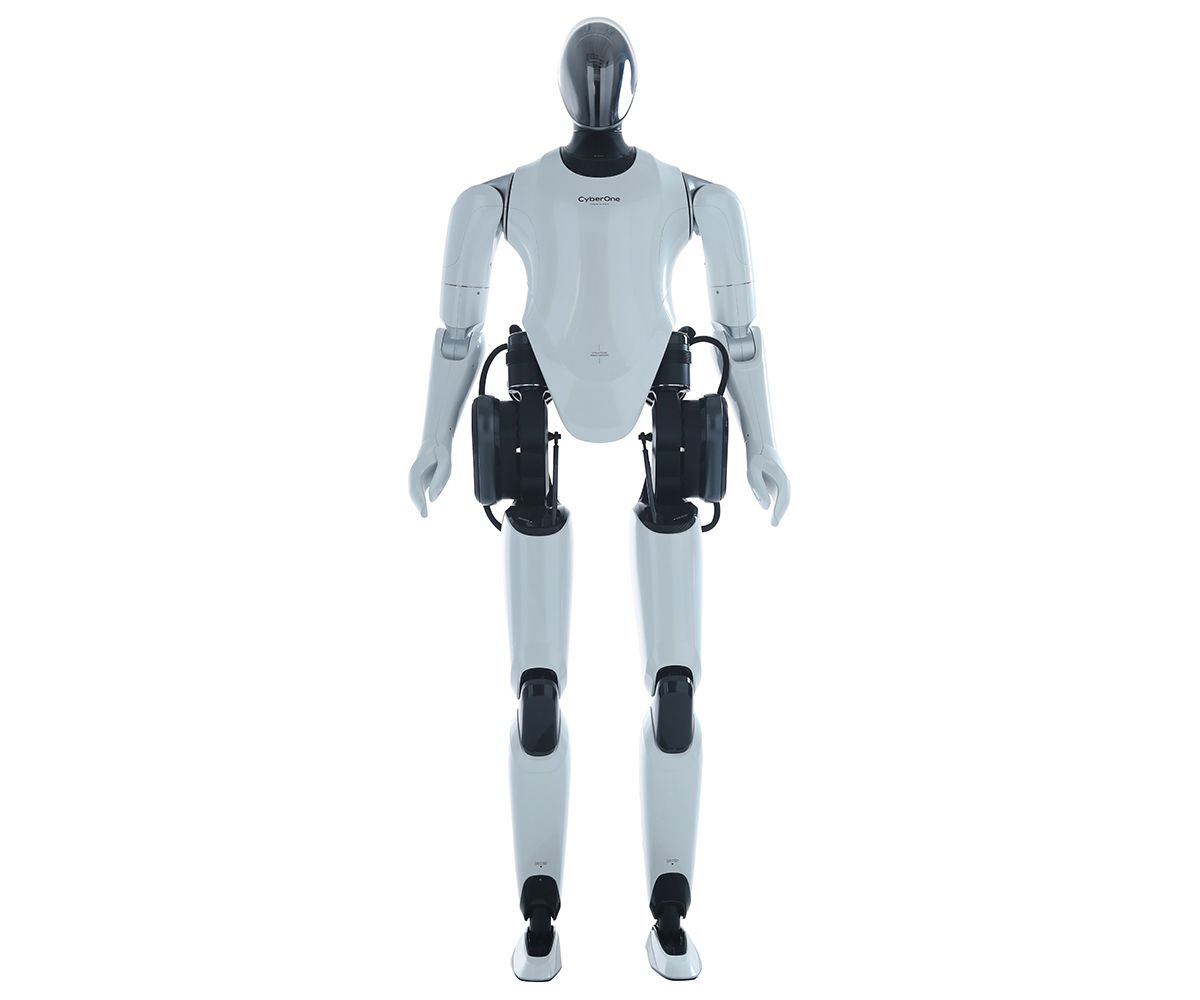
Unveiled in 2022, the Xiaomi CyberOne is a full-size (177 cm, 52 kg) humanoid that impressed the world with its emotional interaction capabilities. Powered by the Mi-Sense Depth Vision Module 2.0 and an array of microphones, it can recognise 45 human emotion states and 85 environmental sounds. The robot walks at 3.6 km/h and can run at up to 7.2 km/h. Despite flashy demos, Xiaomi has never released the CyberOne for commercial or academic sale. Industry estimates place its hypothetical price between $90,000 and $104,000, and the company has not published an SDK, ROS2 support details, or any production roadmap. As of 2026, the CyberOne remains a fascinating technology demonstrator — not a product you can add to a cart.
See full Xiaomi CyberOne specs and background →
Price & Configurations
The Unitree G1 starts at $13,500 for the Base model (23 DOF, basic sensors), climbs to $24,900 for the EDU (enhanced compute, 29 DOF), and reaches $73,900 for the Ultimate (Jetson Orin AGX, 43 DOF, LiDAR, 2‑hour battery). All are available through Unitree’s direct sales and selected distributors.
The Xiaomi CyberOne has no official price list. Analysts and import agents estimate between $90,000 and $104,000 if it ever reaches limited release. That puts even its lowest hypothetical price above the G1 Ultimate by about $16,000. Notably, that estimated figure buys you a fixed configuration with no upgrade path and no known after-sales support.
Winner: Unitree G1 — not just cheaper but actually purchasable across multiple budget tiers.
Price & Total Cost of Ownership
A three‑year total cost of ownership (TCO) widens the gap even further. The G1 Ultimate at $73,900 plus an estimated $5,000/year for software updates and spare parts lands at ~$89,000 over three years — still under the CyberOne’s lowest estimated sticker price. A G1 EDU with a lean support plan could run a three‑year TCO under $40,000, while the Base model could be operated for less than $25,000 all‑in.
Because the CyberOne is not sold, there are no maintenance contracts, no spare parts, and no warranty. Any team acquiring one through Xiaomi’s collaboration channels would face escalating engineering costs to keep it running. For budget‑conscious labs, the CyberOne is essentially a six‑figure bet with no safety net.
Winner: Unitree G1 — real purchase and support channels translate into predictable, dramatically lower TCO.
Performance & Specs
Payload & Strength
The G1’s arms are rated for a 3 kg payload per hand, sufficient for light pick‑and‑place tasks, tool handling, and lab demos. Xiaomi has not disclosed a payload figure for the CyberOne, and demo videos only show gesturing and carrying small objects like a flower.
Winner: Unitree G1 — a stated, usable payload beats no data.
Speed & Locomotion
Both robots claim a top speed of 7.2 km/h, with the CyberOne reserving that for “running” and walking at 3.6 km/h. The G1 achieves 7.2 km/h as its sustained max and stays stable at that pace. In practice, the G1’s lighter frame and lower centre of gravity make it more nimble indoors.
Winner: Unitree G1 — comparable top speed, but more practical mobility for research.
Battery & Runtime
The G1 runs for 2 hours on a charge; the CyberOne is reported to last ~3 hours. The CyberOne’s 50% longer runtime is a demonstrable advantage for extended interaction sessions, though it comes at the cost of a significantly heavier (52 kg) body.
Winner: Xiaomi CyberOne — edge on runtime, but only if you can turn it on.
Degrees of Freedom
The G1 ranges from 23 to 43 DOF across its configs, giving users a fine‑grained physical toolset: 6‑DOF arms, 5‑DOF hands in the Ultimate, and a flexible spine optional. The CyberOne is fixed at 21 DOF across 13 joints. For complex manipulation or whole‑body control research, the G1 Ultimate’s extra joints are a decisive advantage.
Winner: Unitree G1 — more joints and modular upgradeability.
SDK & Developer Ecosystem
The Unitree G1 ships with a well‑documented C++ and Python SDK and native ROS2 support (Ultimate/EDU). Unitree provides simulation models for Isaac Sim and Gazebo, and a growing community shares projects on GitHub. A basic fleet management tool is available for multi‑robot pilot lines.
Xiaomi has not released a public SDK for the CyberOne. Third‑party tinkerers report limited access to internal APIs through Xiaomi’s MIUI ecosystem, but there is no ROS2 package, no simulation model, and no known open‑source repository. The CyberOne’s software stack is effectively a black box.
Winner: Unitree G1 — a public, hackable SDK beats a sealed demo.
Autonomy & Sensors
The G1 Ultimate packs a Jetson Orin AGX, depth cameras, optional 360° LiDAR, and IMU, enabling SLAM‑based autonomous navigation and obstacle avoidance. Even the Base model comes with depth cameras and an IMU. Unitree’s autonomy stack supports waypoint patrols and basic object tracking out of the box.
The CyberOne relies on Xiaomi’s Mi-Sense Depth Vision Module 2.0, which processes RGB and depth data for object detection and emotion recognition. It performs admirably in staged demos — navigating around people, offering a flower — but no one outside Xiaomi has verified its SLAM robustness or sensor fusion in cluttered environments. The lack of public documentation makes it impossible to benchmark.
Winner: Unitree G1 — proven sensor stack with documented capabilities trumps an impressive but opaque demo.
Build Quality & Durability
The G1 is built around an aluminium alloy frame with plastic covers, weighing 35 kg. It can withstand repeated falls and has been drop‑tested in Unitree’s own videos. While IP ratings are not published, early adopter feedback indicates reliable operation in indoor lab environments.
The CyberOne uses a magnesium‑aluminium alloy body, making its 52 kg frame sturdy but heavy. However, without actual customer units in the field, there is no real‑world durability data. The fact that it is a single‑unit demonstrator leaves unknown how it would hold up to daily use.
Winner: Unitree G1 — field‑proven durability and actual customer mileage.
Which Should You Buy? Unitree G1 vs Xiaomi CyberOne by Use Case
- Choose the Unitree G1 if you need a humanoid that you can actually purchase and deploy. You run a university lab, an industrial R&D team, or a startup prototyping services with a modular, ROS2‑native platform. Budget matters and you want to scale from a base model to a fully‑loaded research unit.
- Choose the Xiaomi CyberOne if your research focuses specifically on advanced social robotics, emotion recognition, or human‑robot interaction where the CyberOne’s Mi‑Sense module offers a unique capability. You have a corporate partnership with Xiaomi (or the budget to negotiate one) and accept that support and documentation will be minimal.
- Choose neither if you need heavy payload (>3 kg) or outdoor ruggedness — both robots are indoor‑focused light‑lab platforms. Consider a quadruped like the Unitree B2 or Boston Dynamics Spot for inspection tasks, or a cobot arm for precise manipulation.
Real-World Deployments & Track Record
Unitree has not publicly disclosed shipment figures, but the G1’s low price and active product page (with shipping timelines) indicate hundreds of units in the field. It has been spotted in academic labs from Tsinghua University to ETH Zurich, and in industrial pilot lines for light assembly and logistics research.
The Xiaomi CyberOne has no known external deployments. All public appearances have been orchestrated by Xiaomi, primarily at tech expos and in promotional videos. There are no published papers using the CyberOne as an experimental platform, nor any reports of it being loaned to external research groups.
Winner: Unitree G1 — real‑world evidence beats a trade‑show reel.
Support, Warranty & Availability
- Unitree G1: Available for direct purchase with lead times of 4–8 weeks (varies by region). Unitree offers a 12‑month warranty, access to spare parts, and enterprise support plans for fleet buyers. An expanding distributor network in North America and Europe improves local service options.
- Xiaomi CyberOne: Not for sale. There is no warranty, no published spare‑parts catalogue, and no procurement channel. Even if Xiaomi occasionally collaborates with a lab, the support arrangement is ad hoc.
Winner: Unitree G1 — commercial availability and genuine product support.
Comments