

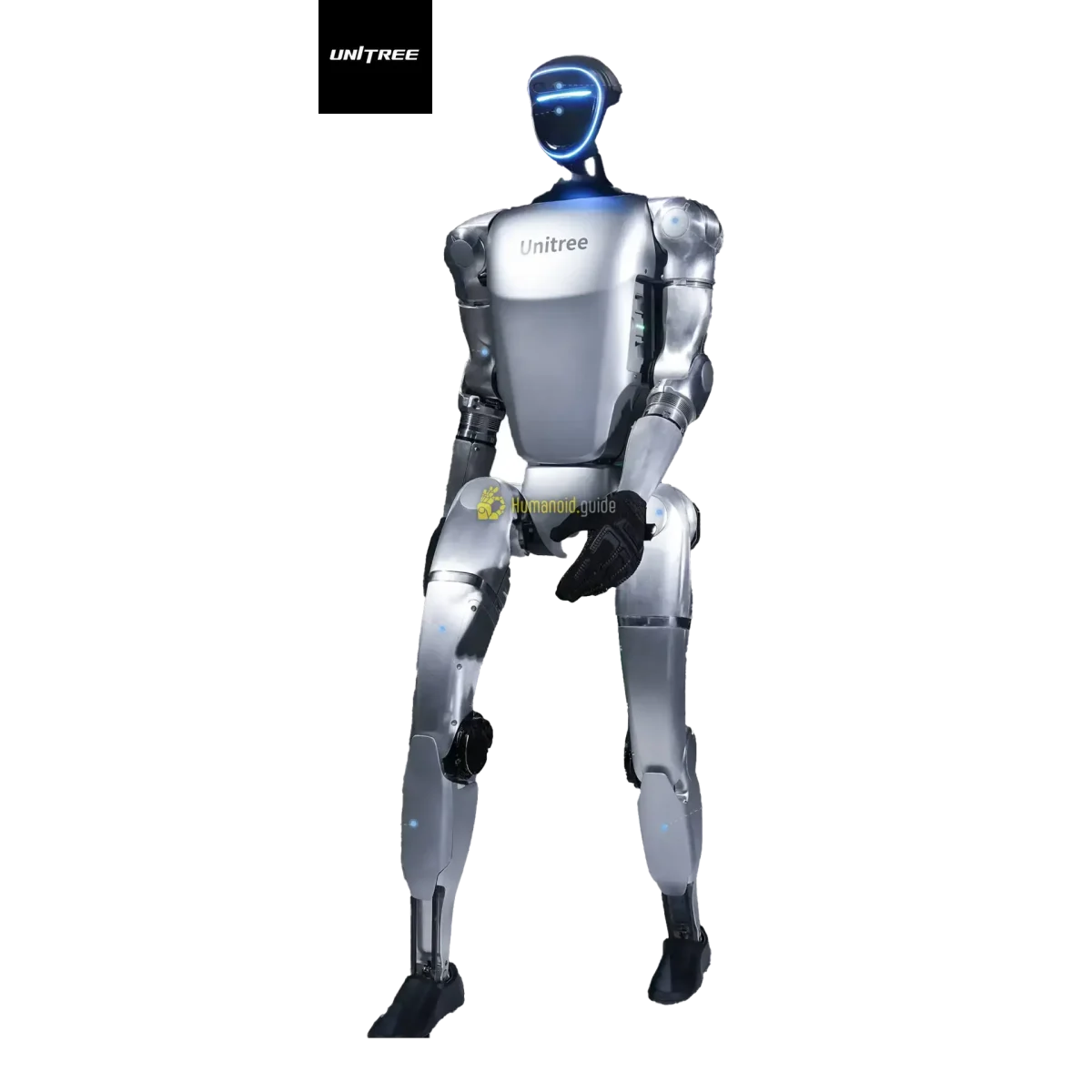
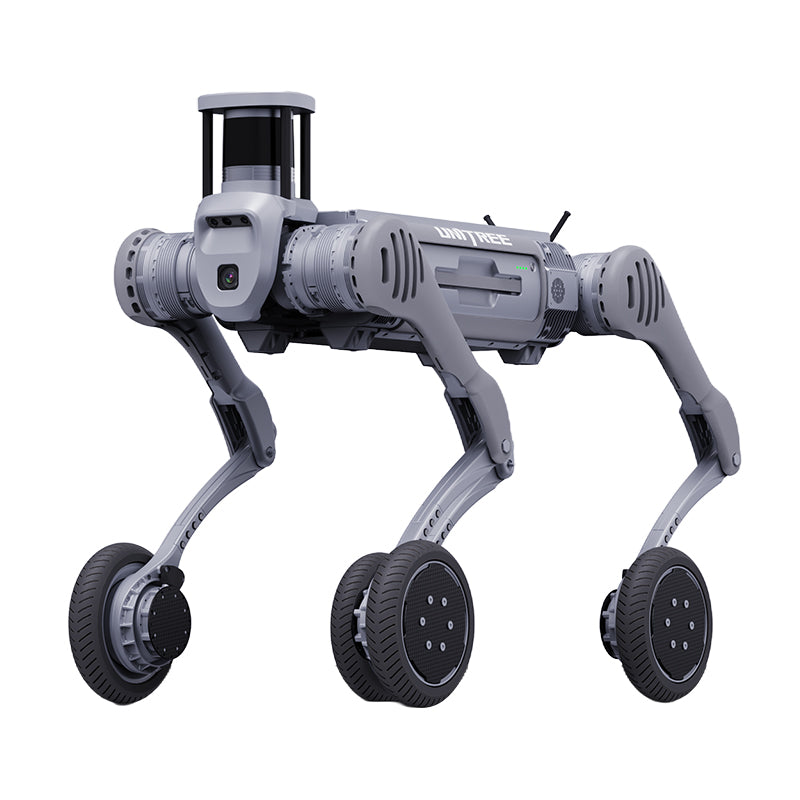
The Unitree G1 and Unitree B2 are radically different machines from the same Hangzhou‑based manufacturer, yet they often appear side‑by‑side in buyer conversations because both represent Unitree’s cutting‑edge robotics platforms. The G1 is a compact, affordable humanoid aimed at research labs, education, and entertainment. The B2 is a 60 kg inspection quadruped that carries 40 kg and runs at 21.6 km/h in rain, snow, or dust. This comparison breaks down price, performance, software, and practical use to help you pick the right one.
Throughout this article, links to the full model pages are available: Unitree G1 and Unitree B2.
Quick Verdict: Who Wins?
- Best overall value: Unitree G1 — entry‑level humanoid at $13,500, ideal for development and education.
- Best for research & human‑robot interaction: Unitree G1 — 23–43 DOF, flexible programming, and a fraction of B2’s cost.
- Best for outdoor inspection & heavy payload: Unitree B2 — IP67, 40 kg payload, 5‑hour battery, and 21 km/h speed.
- Best budget pick: Unitree G1 (Base configuration, $13,500). The B2’s lowest configuration is $100,000, so the G1 is the only option for those with a tighter budget.
Unitree G1 vs Unitree B2: Specs Compared
The table below lays out the key specifications side‑by‑side. All data comes from Unitree’s official documentation and verified public sources as of June 2026. Where a value is not published, it is noted explicitly.
| Specification | Unitree G1 | Unitree B2 |
|---|---|---|
| Price (base) | $13,500 | $100,000 |
| Price (configured) | Up to $73,900 (Ultimate) | Up to $180,000 (full enterprise configuration) |
| Weight | 35 kg | 60 kg |
| Height | 127 cm (legs retracted) – 132 cm (extended) | 1098 mm (1.098 m) |
| Payload | 3 kg (arms extended) | 40 kg (walking) |
| Max speed | 7.2 km/h | 21.6 km/h |
| Battery / Runtime | 2 hours (removable Li‑ion) | 5 hours (hot‑swappable) |
| Degrees of Freedom (DOF) | 23 (Base) – 43 (Ultimate) | 26 |
| IP rating | Not published (IP20‑equivalent typical) | IP67 (dust‑tight + water immersion up to 1 m) |
| Onboard compute | Unitree proprietary board (Intel‑based) | NVIDIA Jetson Orin NX + Unitree mainboard |
| Sensors / LiDAR | Livox MID‑360 LiDAR, Intel RealSense D435i depth camera, microphone array, stereo speakers | Ouster OS1‑64 LiDAR, 5× RGB cameras, depth sensor, IMU |
| SDK languages | Python, C++ (Unitree SDK) | Python, C++ (Unitree SDK + low‑level torque interface) |
| ROS2 support | Yes (via Unitree SDK / ROS2 wrapper) | Yes (fully supported) |
| Autonomy / fleet software | Basic SLAM, autonomous navigation (beta), no fleet mgmt bundled | Unitree Scout fleet management, Autowalk 2.0, SLAM |
| Safety certifications | Not disclosed | Not disclosed (intended for industrial use) |
| Availability / lead time | In stock, shipping within 4–6 weeks | Enterprise sales only; lead time 8–12 weeks after order |
| Warranty / support | 1‑year warranty; community forums | 2‑year warranty; premium enterprise support |
The contrast is stark: the G1 is a small, 3 kg‑lifting humanoid; the B2 is a tank‑like quadruped that hauls 40 kg at triple the speed. Winner: Depends entirely on the task. For heavy outdoor industrial use, the B2; for human‑centered research, the G1.
Unitree G1: The Affordable Humanoid Platform
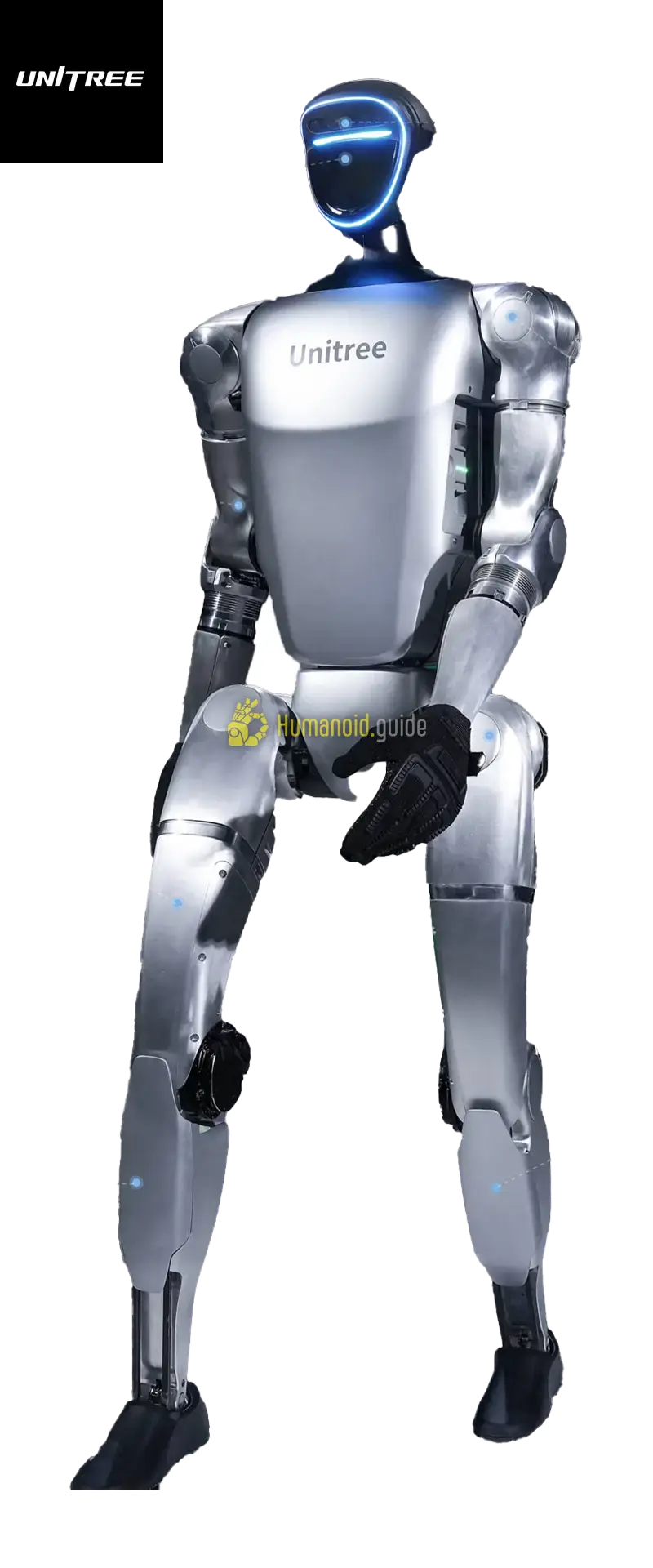
Launched in 2024, the Unitree G1 is Unitree’s first mass‑market humanoid robot. Priced from just $13,500, it brings bipedal walking, expressive arms (up to 43 DOF in the Ultimate configuration), and an open software stack to university labs, developer communities, and entertainment venues. The G1 stands 127–132 cm tall and weighs 35 kg, making it relatively compact and lightweight. It can walk at up to 7.2 km/h and run for about 2 hours on a single battery. Three configurations are available: Base (23 DOF, basic sensing), EDU (more sensors, dexterous hands), and Ultimate (full 43 DOF, enhanced perception). All variants include a Livox MID‑360 LiDAR, Intel RealSense depth camera, and microphone array. The G1 supports programming through Python and C++ with ROS2 integration, and Unitree provides an active online community for troubleshooting. It is currently in production and available for purchase worldwide, though the higher‑end EDU and Ultimate models command a price up to $73,900. Learn more about the Unitree G1.
Unitree B2: The Enterprise Quadruped Workhorse
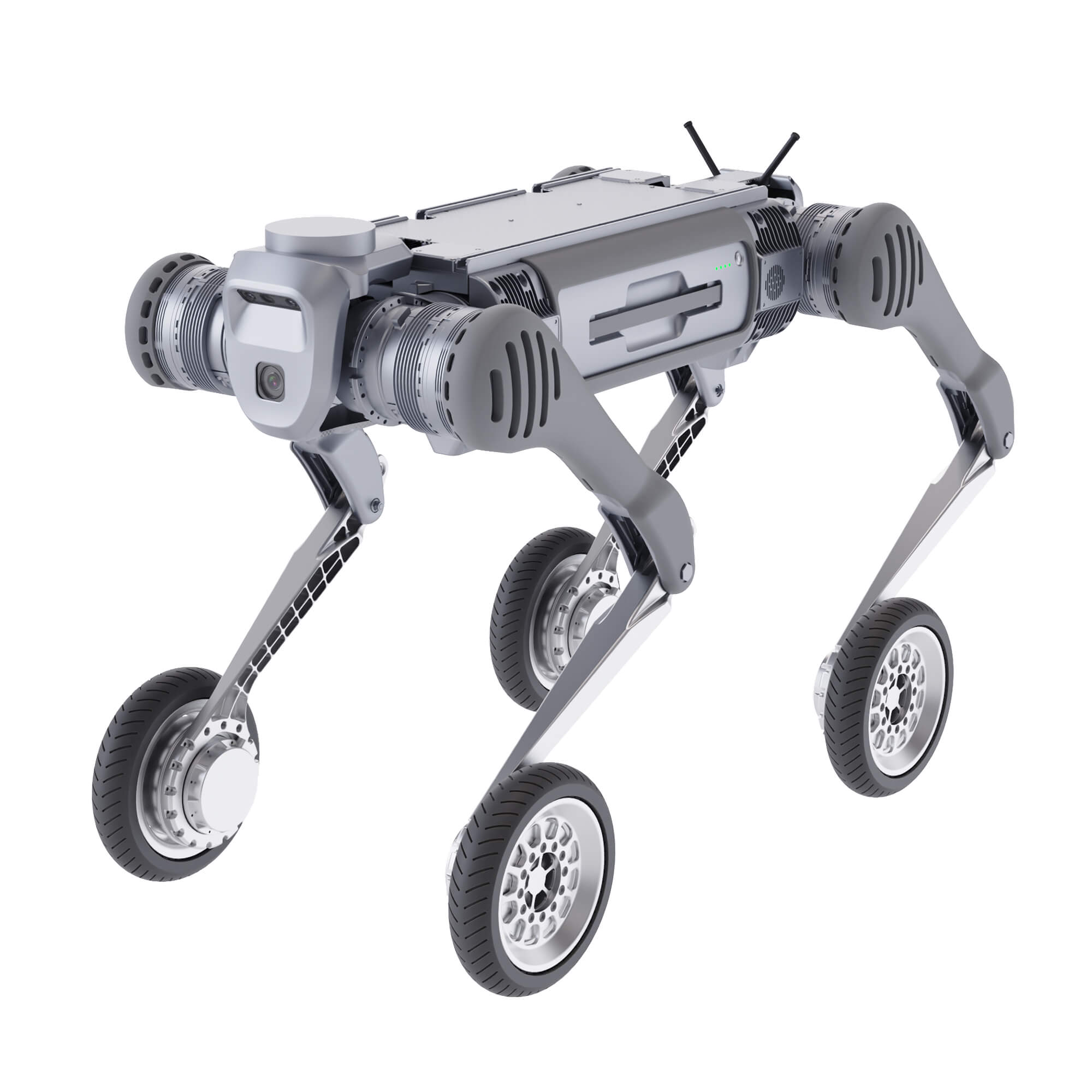
The Unitree B2, introduced in 2026, is a heavy‑duty quadruped built for industrial inspection, security patrol, and logistics. It is an evolution of the original B1, with a ruggedised frame, IP67 sealing, and a massive 40 kg walking payload capacity. Weighing 60 kg and measuring just under 1.1 m in height, the B2 is designed to operate in harsh environments — rain, snow, dust, and even partial submersion — without failure. Its 5‑hour hot‑swappable battery and 21.6 km/h top speed make it suitable for perimeter patrols and large‑area surveys. On‑board, an NVIDIA Jetson Orin processes data from an Ouster OS1‑64 LiDAR, five RGB cameras, and an IMU. The B2 runs Unitree’s Autowalk 2.0 for waypoint navigation and includes the Scout fleet management platform for multi‑robot deployment. Pricing starts at $100,000 for the basic configuration and can exceed $180,000 with additional payload modules, sensors, or extended warranties. The B2 is sold exclusively through enterprise channels, with a lead time of 8–12 weeks. Explore the Unitree B2.
Head‑to‑Head Comparison: Price, Performance, and Purpose
Price & Configurations
The price gap between these two robots is enormous. The G1’s Base model costs $13,500, while the B2’s cheapest configuration is $100,000 — nearly 7.5 times more. Even the top‑tier G1 Ultimate ($73,900) is still lower than the entry‑level B2. Configurations differ fundamentally. The G1’s EDU and Ultimate packages add sensors, stronger motors, and extra degrees of freedom, but the robot remains a humanoid‑form‑factor research platform. The B2’s add‑ons focus on industrial payloads: environmental sensors, extra batteries, communication radios, and custom mounting systems. For buyers with a limited budget, the G1 is the obvious choice. For enterprises that need to move 40 kg across a factory in all weather, the B2’s price is justified. Winner (value): G1 for low‑cost entry into humanoids; B2 for heavy industrial performance.
Performance & Specs
Payload
The G1 can lift and carry up to 3 kg with its arms extended. This is sufficient for light object manipulation, small tools, or sensors, but cannot handle heavy industrial items. The B2, by contrast, carries 40 kg while walking — over 13 times the G1’s payload — and can support even heavier loads when stationary. Winner: B2 for any load‑bearing task.
Speed & Mobility
The G1 walks at 7.2 km/h, roughly a brisk human walking pace. It can traverse flat floors and gentle slopes but stumbles on rugged terrain. The B2 sprints at 21.6 km/h (three times faster), climbs stairs, and traverses gravel, mud, and ice without difficulty. Winner: B2 for speed and all‑terrain mobility.
Battery & Runtime
The G1 runs for up to 2 hours on a removable battery. The B2’s hot‑swappable pack delivers 5 hours, and spare batteries can be swapped in seconds, effectively enabling 24/7 operation. Winner: B2, with more than double the runtime and hot‑swap capability.
Degrees of Freedom
The G1 offers 23 DOF in its base configuration and up to 43 in the Ultimate version, including fully articulated hands. This enables rich human‑robot interaction and fine manipulation. The B2 has 26 DOF spread across four legs; it is highly manoeuvrable as a quadruped but lacks arms for grasping. Winner: G1 for dexterity; B2 for locomotion.
Software & SDK Ecosystem
Both robots use Unitree’s unified SDK, which supports Python and C++ and integrates with ROS2. The G1’s software stack focuses on humanoid motion control, vision processing, and basic SLAM. The B2 adds Autowalk 2.0 for waypoint‑based navigation, a more mature fleet management tool (Unitree Scout), and direct integration with third‑party industrial systems via OPC‑UA and MQTT. Developers working on humanoids will find the G1’s ecosystem more relevant; those building inspection or security applications will benefit from the B2’s ready‑to‑deploy fleet solution. Winner: G1 for humanoid‑focused software; B2 for industrial autonomy and fleet management.
Autonomy & Sensors
The G1 comes with a Livox MID‑360 LiDAR, a RealSense depth camera, and a microphone array. It supports semantic SLAM and basic autonomous navigation, though the autonomy stack is still maturing. The B2 uses an Ouster OS1‑64 LiDAR with a 360° horizontal field of view, five RGB cameras, and a depth sensor, giving it far richer situational awareness. Combined with Autowalk and Scout, the B2 can autonomously patrol predefined routes and upload inspection data to a central server. Winner: B2, with superior sensor suite and proven autonomous patrol capabilities.
Build Quality & Durability
The G1’s IP rating is not published; it is intended for indoor, climate‑controlled environments. Rain, dust, or extreme temperatures will likely cause damage. The B2 is rated IP67 — fully dust‑tight and protected against temporary immersion in water up to 1 m. It operates in temperatures from -20 °C to 55 °C. For outdoor or harsh‑environment deployments, only the B2 is suitable. Winner: B2.
Price & Total Cost of Ownership
Beyond the sticker price, ownership costs differ dramatically.
| Cost Element | Unitree G1 (3‑year TCO) | Unitree B2 (3‑year TCO) |
|---|---|---|
| Hardware (mid‑range config) | $35,000 (EDU) | $140,000 (typical enterprise) |
| Software / support | Included (community) | $15,000 – $30,000 (optional premium support) |
| Spare parts / maintenance | ~$3,000 (battery, sensor repair) | ~$10,000 (tracks, motors, LiDAR servicing) |
| Training & integration | Minimal (DIY) | $10,000+ (professional integration) |
| Total 3‑year estimate | ~$38,000 | ~$180,000 |
The G1 is a low‑maintenance platform with few moving parts beyond the legs and arms. The B2, with its heavy‑duty actuators and high‑pace operation, requires regular maintenance and potentially expensive spare parts. There is no lease or Robotics‑as‑a‑Service (RaaS) program for either robot; both must be purchased outright.
If budget is your primary constraint, the G1 is the only realistic option. If the B2’s capabilities directly replace a human security guard or inspection technician — delivering a fast return on investment — the higher upfront cost can be justified, especially in oil & gas, mining, or large‑scale logistics.
Which Should You Buy? Unitree G1 vs Unitree B2 by Use Case
Choose the Unitree G1 if: - You are a researcher or educator studying human‑robot interaction, bipedal locomotion, or dexterous manipulation. - You need a platform that can gesture, pick up small objects, or interact with humans in a service or entertainment setting. - Your environment is indoors, clean, and relatively predictable. - Your budget is under $50,000 and you want a humanoid form factor. - You plan to custom‑program your own autonomous behaviours and can accept early‑stage autonomy software.
Choose the Unitree B2 if: - You need to carry heavy payloads (sensors, tools, samples) over rough outdoor terrain. - Your application involves inspection, security patrol, or emergency response in all‑weather conditions. - You require certified IP67 protection against water and dust. - You need 5‑hour runtime with hot‑swappable batteries for 24/7 operation. - You run a multi‑robot fleet and need centralised fleet management (Scout).
Choose neither if: - You need a robot for precise, high‑payload manipulation in a factory — consider a cobot instead. - You are a hobbyist looking for a sub‑$10,000 robot — the Go2 quadruped is a more suitable entry point.
Real‑World Deployments & Track Record
Unitree has not publicly disclosed specific commercial deployment numbers for either the G1 or the B2. However, the B2 is actively marketed and sold to enterprise customers for industrial inspection and patrol applications. In contrast, the G1 is primarily found in university labs, developer workshops, and entertainment venues. Anecdotal evidence from partner events shows B2 units operating in security‑patrol and infrastructure‑inspection roles, but no named customer sites have been verified. The G1’s “production ready” status is confirmed by its availability and the growing number of third‑party YouTube demonstrations, though it lacks an official deployment count.
Potential buyers should note that Unitree has not published the full hardware‑specs or safety‑certification documents for either robot. The B2’s IP67 rating is based on internal testing; third‑party validation is not available. When evaluating these robots for mission‑critical applications, request a reference‑site demonstration and verify performance in your own environment.
SDK, Software & Developer Ecosystem
Unitree provides a common SDK for all its robots, including the G1 and B2. The SDK exposes low‑level torque control, high‑level locomotion commands, and sensor data streams. Both robots support ROS2, allowing integration with a wider robotics ecosystem. The G1’s humanoid‑specific features — such as arm kinematics and gripper control — are more actively developed by the open‑source community on GitHub, where example projects for human‑robot interaction and object manipulation are available. The B2 benefits from the mature quadruped stack that Unitree has refined over years, including Autowalk 2.0 for teach‑and‑repeat navigation. Additionally, the B2’s NVIDIA Jetson Orin enable on‑board deep learning inference for object detection and anomaly recognition, with ISV partnerships providing ready‑made inspection workflows.
If your team is proficient in C++ and ROS2, both platforms are highly extensible. The G1 requires more custom development to achieve robust autonomy; the B2 delivers a more polished out‑of‑the‑box autonomous‑patrol experience. Unitree’s online forum and community are free sources of support, though enterprise‑grade SLAs are only available with B2 premium packages.
Support, Warranty & Availability
The Unitree G1 ships with a standard 1‑year warranty and email‑based support. Spare parts are available through Unitree’s online store. Community forums and GitHub repositories serve as the main support channels. Lead time after ordering is typically 4–6 weeks.
The B2, being an enterprise‑only product, comes with a 2‑year warranty and optional premium support contracts that include direct engineer access, faster spare‑parts shipment, and on‑site repair in select regions. Lead time is longer — 8–12 weeks — because of the custom configuration process. Purchase only through Unitree’s corporate sales team, with payment via wire transfer or purchase order.
Comments