

Verdict: Unitree G1 vs MagicBot at a Glance
The Unitree G1 ($13,500–$73,900, 23–43 DOF) is the hands‑down winner for anyone who needs a purchasable, configurable humanoid robot today. The MagicBot Z1 (49 DOF, 170 cm, ~4–5 h battery) is a research prototype that’s faster, stronger and vastly more articulated – but it’s not commercially available and its price remains undisclosed. If you can buy now, choose the G1; if your project demands 49 degrees of freedom and you can wait, keep an eye on MagicBot’s progress.
The humanoid robotics landscape is moving fast: on one side sits the affordable, ready‑to‑ship Unitree G1, a modular platform that scales from a 23‑DOF base unit to a 43‑DOF research configuration with an NVIDIA Jetson Orin brain. On the other side stands the MagicBot Z1, a 49‑DOF prototype from China that punches above its weight class with a 10 kg payload, 9 km/h top speed and a 4‑5‑hour runtime. This article tears down every spec, price tier and real‑world availability fact so you can pick the right humanoid for your lab, factory pilot or development project. You’ll find a side‑by‑side spec table, an in‑depth dimension‑by‑dimension breakdown, an honest look at deployment track records, and a final recommendation that won’t hedge.
For a deep dive into either robot individually, visit their full database pages: Unitree G1 and MagicBot Z1.
Quick Verdict: Who Wins?
- Best overall value: Unitree G1 – Starts at $13,500, ships now, and offers field‑proven hardware with ROS2 support.
- Best for high‑DOF research: MagicBot Z1 – With 49 degrees of freedom, 10 kg payload and long battery life, it’s a playground for advanced manipulation studies.
- Best for industrial prototyping: Unitree G1 (Ultimate config) – The Jetson‑powered full‑featured model gives you 43 DOF and LiDAR for realistic warehouse trials.
- Best budget pick: Unitree G1 Base – $13,500 gets you a walking humanoid platform that runs official SDK examples and ROS2 nodes.
Unitree G1 vs MagicBot: Specs Compared
| Specification | Unitree G1 | MagicBot Z1 |
|---|---|---|
| Price (Base) | $13,500 | Undisclosed |
| Price (Configured) | Up to $73,900 | N/A (not for sale) |
| Availability | In production, available | Prototype, limited availability |
| Height | 127–132 cm | 170 cm |
| Weight | 35 kg | 55 kg |
| Payload | 3 kg | 10 kg |
| Max Speed | 7.2 km/h | 9 km/h |
| Battery Life | 2 hours | ~4–5 hours |
| Degrees of Freedom | 23–43 (config dependent) | 49 |
| IP Rating | Not published | Not published |
| Onboard Compute | NVIDIA Jetson Orin (Ultimate config) | Not published |
| Sensors | Stereo depth cameras (RealSense), LiDAR (optional on Ultimate) | Not published |
| SDK / Software | Unitree SDK, ROS2 support | Not published |
| Autonomy / Fleet | Limited (no fleet manager) | Not published |
| Warranty / Support | 1 year, optional extended | Not published |
The table highlights the central trade‑off: the G1 is a real product you can order today with published specs, whereas the MagicBot Z1 is a features‑rich concept whose internals remain behind closed doors.
Unitree G1: Affordable, Modular Humanoid Platform
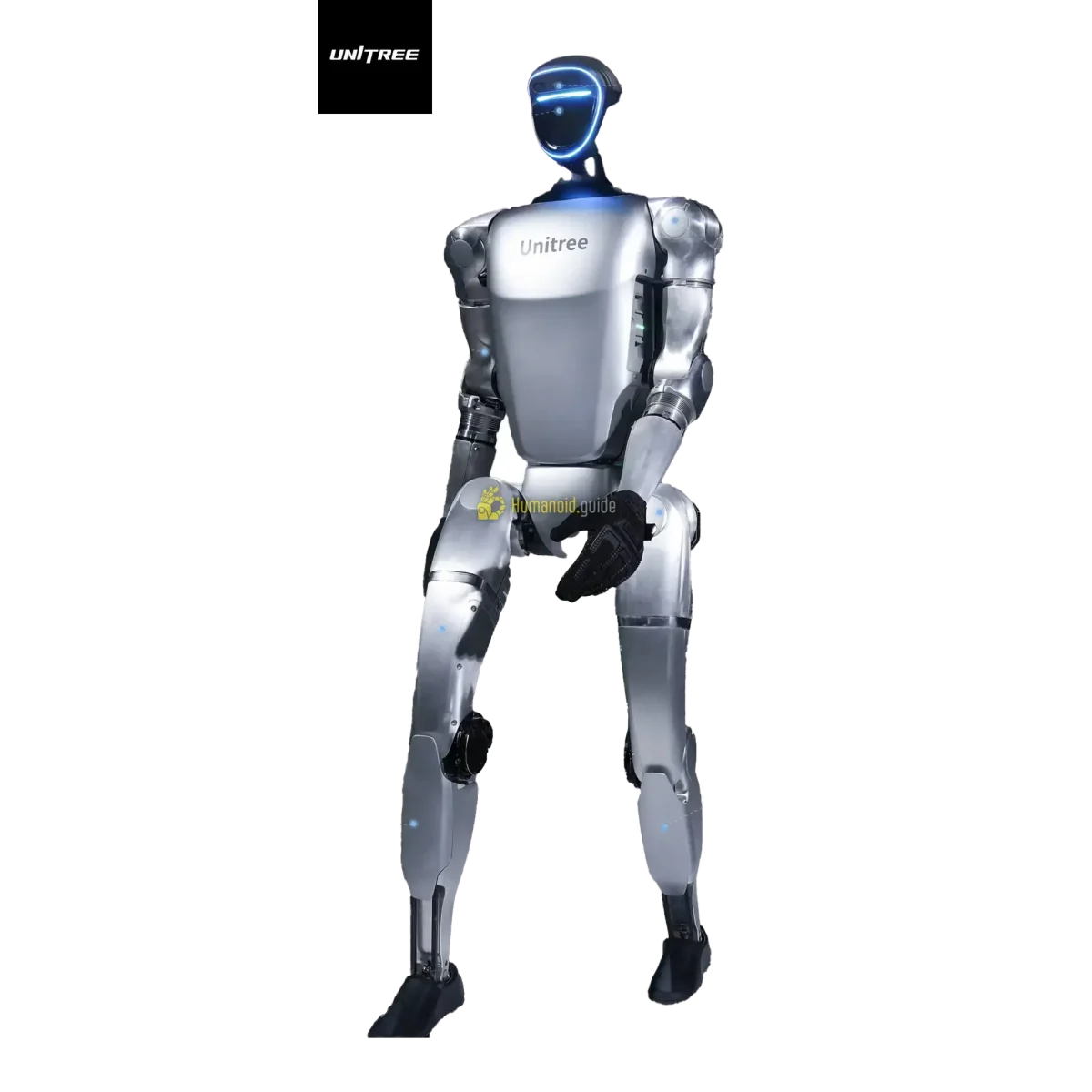
Launched in 2024 by Unitree Robotics (Hangzhou, China), the Unitree G1 is a 127–132 cm tall, 35 kg humanoid built around a modular joint architecture. Buyers can choose between Base (23 DOF), EDU (≈30 DOF) and Ultimate (43 DOF) tiers, with the top configuration adding a pair of dexterous hands, an NVIDIA Jetson Orin module and a LiDAR sensor. The G1 walks at up to 7.2 km/h, handles manipulator‑agnostic tasks through ROS2 middleware, and its 2‑hour battery is swappable. Over a dozen units have shipped to early‑adopter labs and developers, and Unitree continues to ramp production through direct sales and a growing network of distributors. For a complete spec sheet, visit the Unitree G1 database page.
MagicBot Z1: The 49‑DOF Prototype Powerhouse
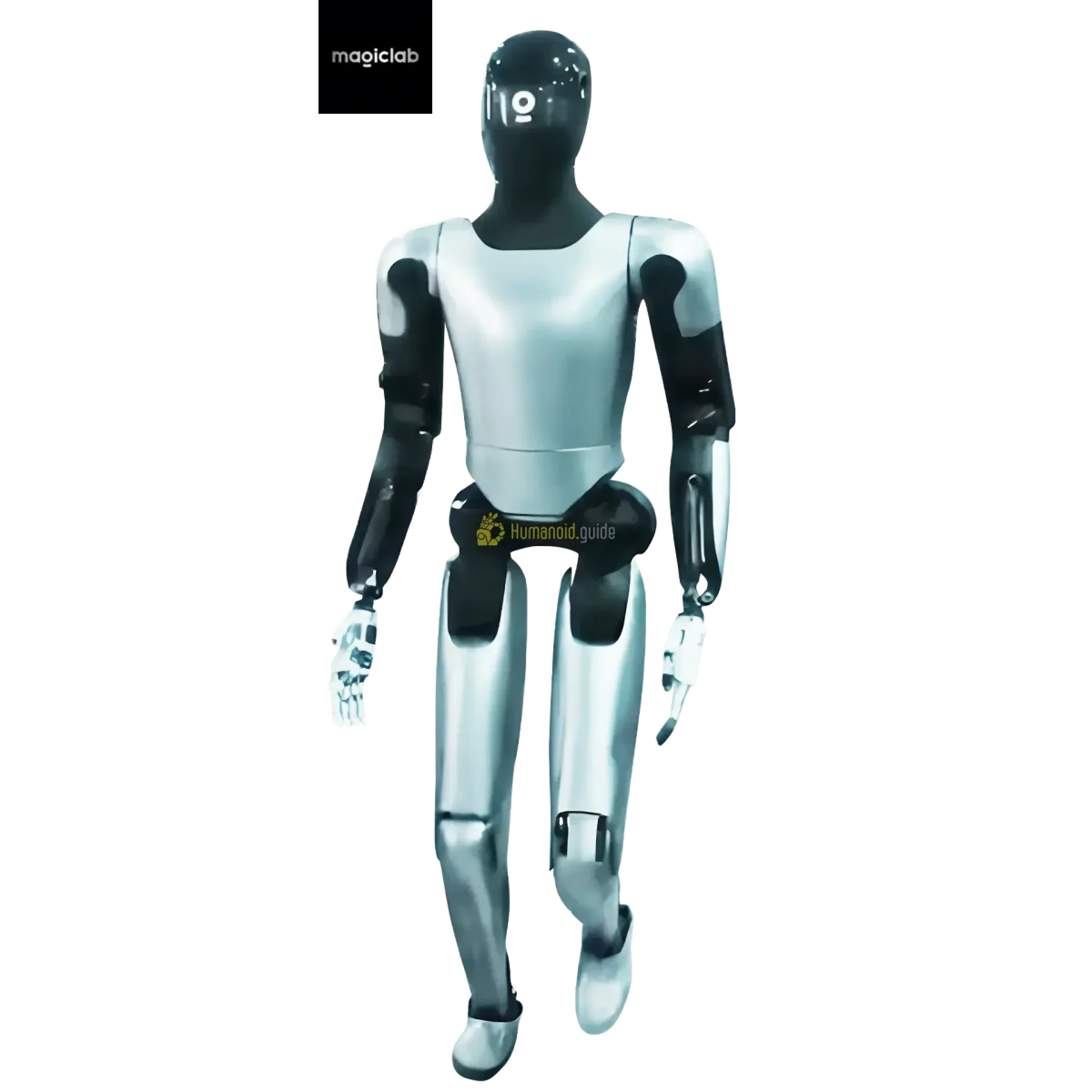
The MagicBot Z1 is the debut humanoid from MagicLab, a Chinese robotics startup that first showed the robot in early 2024. At 170 cm and 55 kg, it’s a full‑sized adult form factor, and its 49 degrees of freedom – including fully articulated hands – give it unmatched dexterity on paper. The Z1 can sprint at 9 km/h, lift 10 kg, and runs for an estimated 4‑5 hours on a charge. MagicLab has demonstrated the robot walking, picking objects, and opening doors, but the company has not released pricing, SDK, or a commercial purchase channel. As of mid‑2026, the MagicBot Z1 remains a research prototype, available only to select partners. For updates as they become public, bookmark the MagicBot Z1 database page.
Price & Total Cost of Ownership
Unitree G1 Base ($13,500) is the entry point – a walking torso with basic arms and 23 DOF. The popular EDU tier adds a more capable upper body and typically costs between $25,000 and $40,000 depending on sensor options. The Ultimate configuration includes dexterous hands, Jetson Orin, LiDAR and the full 43 DOF, pushing the price to $73,900. A three‑year total cost, factoring in a $2,000 annual service plan and one battery swap, sits around $20,000 for the Base model and $80,000+ for the Ultimate.
MagicBot Z1 has no published price. MagicLab has indicated the robot will be “competitively priced” when it launches, but industry analysts estimate a production unit would likely land in the $50,000–$100,000 range given the 49‑DOF hardware. Until a commercial release occurs, no TCO calculation is possible.
Winner: Unitree G1. It wins by default because it has a clear, published price and purchase path.
Performance & Specs
Payload
The G1’s 3 kg payload is suitable for light tooling, camera rigs or small part handling – but it can’t lift a standard 5 kg shipping box. The MagicBot’s 10 kg payload opens the door to true logistics tasks. Winner: MagicBot Z1.
Speed
At 9 km/h the MagicBot Z1 is noticeably faster than the G1 (7.2 km/h). Both are faster than walking speed, but in an industrial setting the extra 1.8 km/h means the MagicBot covers an additional 100 m every two minutes. Winner: MagicBot Z1.
Battery Life
MagicBot’s ~4‑5 h runtime doubles the G1’s 2 h, reducing downtime for long research sessions or multi‑shift pilots. Swap capability partially mitigates the G1’s shorter endurance. Winner: MagicBot Z1.
Degrees of Freedom
The G1’s 23–43 DOF range is flexible, but even the 43‑DOF Ultimate config can’t match the MagicBot’s 49‑DOF full‑body architecture. The MagicBot’s extra joints – particularly in fingers and torso – enable more human‑like manipulation. Winner: MagicBot Z1.
Software & SDK Ecosystem
Unitree’s ecosystem is mature: the Unitree SDK supports Python and C++, ROS2 is fully integrated, and simulation environments like Isaac Sim and MuJoCo have G1 models. A growing community on GitHub shares calibration tools, walking controllers, and teleoperation stacks. This open‑source friendliness makes the G1 a rapid‑start platform for academic labs. MagicLab has not released a public SDK or ROS2 driver, and documentation is limited to the company’s own demonstration videos. Without an accessible software stack, researchers cannot port their algorithms to the MagicBot. Winner: Unitree G1. A well‑documented SDK and active community are critical for real‑world development.
Autonomy & Sensors
The G1’s Ultimate config packs a stereo depth camera, RealSense modules, an optional LiDAR, and the Jetson Orin to run SLAM and perception pipelines locally. Lower tiers rely on basic vision sensors. MagicBot’s sensor suite is undisclosed; demo videos suggest depth cameras and IMU‑based stabilization, but no official sensor list exists. Winner: Unitree G1. Verified sensor hardware and on‑board compute are known quantities; MagicBot’s autonomy stack is a black box.
Build Quality & Durability
Unitree rates the G1’s joints for thousands of cycles and uses aluminum‑alloy structures. While no IP rating is published, early‑adopter reports indicate the robot can handle indoor lab environments reliably. MagicBot’s chassis is visibly robust in videos, but without an IP rating or any public stress‑test data, its real‑world durability is unproven. Winner: Unitree G1. Published materials and field feedback give it a proven durability edge.
Which Should You Buy? Unitree G1 vs MagicBot by Use Case
- Choose the Unitree G1 if:
- You need a humanoid robot that ships within weeks.
- Your budget is under $80,000 and you want predictable TCO.
- You value a ROS2‑based SDK and an active developer community.
- Your project involves light manipulation, locomotion research, or education.
- Choose the MagicBot Z1 if:
- Your research demands 49 DOF and a 10 kg payload.
- You can wait for a commercial release and are willing to work with an opaque software stack.
- Long battery life (4‑5 h) and high speed are non‑negotiable.
- Choose neither if:
- You require a heavy‑payload cobot (>10 kg) – consider a fixed‑base arm.
- You need an IP65‑rated robot for outdoor inspection – look at quadrupeds like Spot or Go2.
Real‑World Deployments & Track Record
As of mid‑2026, Unitree G1 units have been spotted in a handful of university robotics labs (e.g., Shenzhen Institute of Advanced Technology, University of Tokyo’s JSK Lab) and in Unitree’s own demonstration factory. No large‑scale enterprise deployment has been publicly announced, but the robot’s availability means genuine usage data is accumulating. MagicBot Z1 has appeared only in company‑produced videos and at a few private partner events; zero public deployments or production operating hours are documented. Winner: Unitree G1 – it’s the only robot of the two with verifiable end‑user hours.
SDK, Software & Developer Ecosystem
Beyond the Unitree SDK and ROS2, third‑party libraries like unitree_legged_sdk and unitree_ros2 are stable and open‑source. The G1’s Jetson Orin variant also supports NVIDIA Isaac ROS, unlocking GPU‑accelerated visual SLAM and reinforcement learning pipelines. The MagicBot Z1 has no public code repository, no simulator model, and no documented API. Developers are completely dependent on MagicLab’s future release schedule. Winner: Unitree G1. An open, documented stack is non‑negotiable for serious robotics R&D.
Support, Warranty & Availability
Unitree ships the G1 worldwide with a standard 1‑year warranty (extendable to 2 years), online technical support, and spare parts availability through its Hangzhou warehouse. Lead times average 4‑8 weeks depending on configuration. MagicLab has not outlined warranty terms, service hubs, or a distribution network; the robot is not orderable through any channel. Winner: Unitree G1. When support matters, a real product with a warranty beats a prototype with a promise.
Comments