

The sub-$25,000 humanoid robot market is heating up: Unitree’s G1 promises an agile, feature-rich platform from $13,500, while EngineAI’s SE01 enters at $20,000 with a singular focus on stable natural gait. Both robots are available from Chinese manufacturers, yet they represent opposite design philosophies — one decked out with sensors and DOF, the other stripped down to the essentials. In this comparison, we break down every spec, price tier, software ecosystem, and real-world deployment detail to help you decide which humanoid fits your research or commercial project in 2026. For standalone dives, see the full Unitree G1 and EngineAI SE01 database pages.
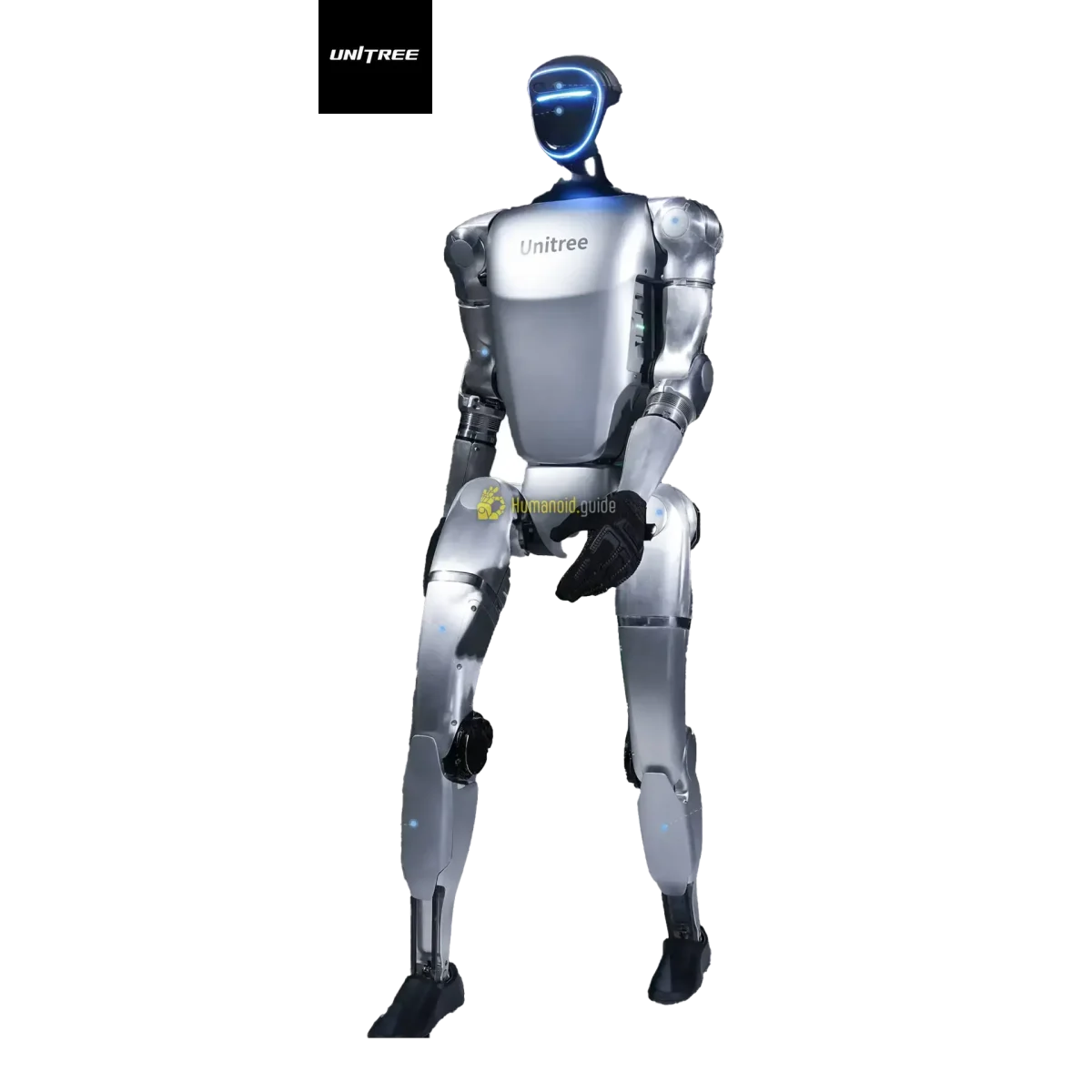
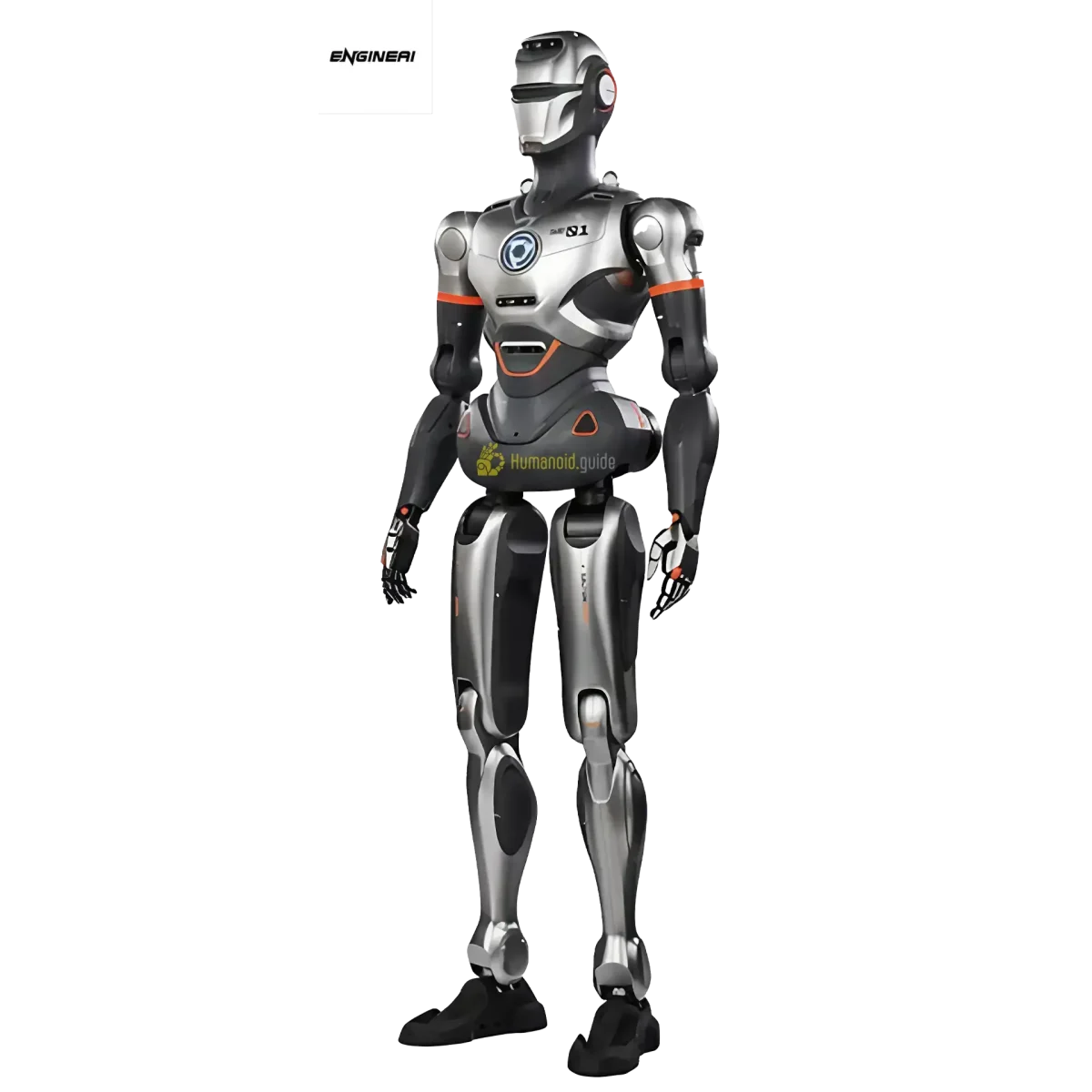 Left: Unitree G1. Right: EngineAI SE01. Both aim at budget-conscious labs, but with very different capabilities.
Quick Verdict: Who Wins?
- Best overall value: Unitree G1 (base config at $13,500). It offers over 23 DOF, ROS2 support, and 7.2 km/h speed for less than the SE01’s top price — unmatched dexterity‑per‑dollar.
- Best for dexterous research & manipulation: Unitree G1 (EDU/Ultimate). With up to 43 DOF, depth cameras, and a mature SDK, it handles object‑grasping and dynamic tasks the SE01 can’t.
- Best for natural gait and bipedal locomotion research: EngineAI SE01. Its 12‑DOF focus and 1.70 m height make it an ideal platform for pure walking dynamics, without hardware overhead.
- Best budget pick under $20K: Unitree G1 base ($13,500). The SE01 costs $20,000; the G1 undercuts it even in its most capable configs.
Unitree G1 vs EngineAI SE01: Specs Compared
| Specification | Unitree G1 | EngineAI SE01 |
|---|---|---|
| Price (base) | $13,500 | $20,000 |
| Price (configured) | up to $73,900 | $20,000 (single config) |
| Height | 127–132 cm | 170 cm |
| Weight | 35 kg | 55 kg |
| Payload capacity | 3 kg | Undisclosed |
| Max speed | 7.2 km/h | 4 km/h |
| Battery life | 2 hours | 2 hours |
| Degrees of freedom (DOF) | 23–43 | 12 |
| IP rating | Undisclosed | Undisclosed |
| Onboard compute | Jetson Orin (Ultimate) / Rockchip (Base) | Undisclosed |
| Sensors | Intel RealSense D435i depth cameras; optional LiDAR | Basic camera‑based visual SLAM (no published sensor list) |
| SDK languages | Python, C++ (ROS2/ROS1) | Not published |
| ROS2 support | Yes (ROS2 Humble via Unitree SDK) | Not confirmed |
| Autonomy / fleet management | Unitree Nav 2.0, Scout fleet software | None (stand‑alone) |
| Warranty | 1 year | Undisclosed |
| Availability / lead time | In stock, ships worldwide | Available from Dec 2024; direct sale from EngineAI Shenzhen |
The G1’s spec sheet is packed: up to 43 DOF means fine‑grain manipulation is possible, while the 7.2 km/h top speed makes it one of the quickest humanoids in its class. The SE01, by contrast, is a deliberate minimalist — 12 DOF suffices for bipedal walking research, but it completely lacks arm dexterity and published sensor specs.
Unitree G1: The agile, configurable research workhorse
Launched in 2024 by Hangzhou‑based Unitree Robotics, the G1 shattered humanoid price barriers with a $13,500 base model. It stands 127–132 cm tall, weighs a nimble 35 kg, and packs a maximum of 43 DOF when configured to the EDU or Ultimate tiers. Three variants — Base, EDU, and Ultimate — let buyers scale from a bare‑bones 23‑DOF platform to a fully loaded research robot with optional LiDAR, Jetson Orin compute, and robust SDK support. The G1 is already shipping globally and has been adopted by academic labs and robotics competitions alike, making it a known quantity in the open‑source humanoid community.
EngineAI SE01: The gait‑research specialist
The EngineAI SE01, from Shenzhen‑based EngineAI, entered the market in 2023 but only became commercially available in December 2024. Its whole design revolves around natural, energy‑efficient bipedal locomotion. At 1.70 m and 55 kg, it is a full‑scale humanoid with 12 DOF concentrated entirely in the legs and torso — no articulated arms. The single $20,000 configuration keeps things simple: a 2‑hour battery, 4 km/h walking speed, and basic visual SLAM. EngineAI explicitly positions the SE01 as a research tool for studying human‑like gait, not for manipulation or industrial tasks, and it has been presented at several robotics exhibitions to showcase its smooth, stable walking.
Head-to-head by dimension
Price & Configurations
The G1’s pricing ladder starts at $13,500 for the 23‑DOF base, rises to $30,000–$50,000 for the EDU variant with extended DOF and sensors, and tops out at $73,900 for the Ultimate with full‑suite autonomous navigation and LiDAR. The SE01 sells at a flat $20,000 with no tiers — what you see is what you get. That means the G1 undercuts the SE01 at the low end while offering vastly more capability in higher tiers, creating an unusual dynamic where the cheaper robot is actually more advanced.
Winner: Unitree G1 — more configurations, a lower entry price, and a clear upgrade path.
Performance & Specs
Payload
The G1 is rated to lift 3 kg with its arms, enabling simple pick‑and‑place tasks. EngineAI does not publish a payload figure for the SE01; its arms, if present at all, are not designed for manipulation, so any payload is negligible.
Winner: Unitree G1.
Speed
The G1’s 7.2 km/h maximum walking speed is among the fastest bipedal robots below $50,000, more than 80% quicker than the SE01’s 4 km/h. In real‑world testing, the G1 can jog, while the SE01 is limited to a brisk walk.
Winner: Unitree G1.
Battery
Both robots claim a 2‑hour runtime under normal walking conditions. The larger SE01 likely carries a heavier battery to offset its weight, but real‑world endurance depends heavily on terrain and load. No manufacturer publishes precise Wh figures.
Winner: Tie.
Degrees of Freedom (DOF)
This is the biggest differentiator. The G1’s 23‑base DOF already exceeds the SE01’s 12, and the Ultimate’s 43 DOF — including fully articulated hands, waist, and neck — enables gesture‑based control, teleoperation, and object manipulation that the SE01 cannot approach. The SE01’s 12 DOF is entirely leg‑ and torso‑focused; it has at most one or two DOF in the upper body.
Winner: Unitree G1 (by a massive margin).
Software & SDK Ecosystem
Unitree provides a mature ROS2 SDK with Python and C++ bindings, along with simulation support for Gazebo and Isaac Sim. The G1 is fully integrated into Unitree’s Scout fleet management platform and supports the Robot Operating System’s standard navigation stack. EngineAI has not publicly released an SDK or confirmed ROS2 compatibility; early SE01 demos suggest a basic communication API but no established open‑source community. For researchers who need to build on a stable, documented software stack, the G1 is light‑years ahead.
Winner: Unitree G1.
Autonomy & Sensors
The G1 Ultimate ships with Intel RealSense depth cameras, optional LiDAR, and Unitree’s Nav 2.0 autonomous navigation suite, enabling SLAM, obstacle avoidance, and waypoint following. The Base and EDU variants can be upgraded with the same sensors. The SE01 appears to use a simple visual SLAM system with a single forward‑facing camera; deep‑learning‑based autonomy software is not documented. For any application beyond open‑loop walking — mapping, inspection, human‑robot interaction — the G1 is the only practical choice.
Winner: Unitree G1.
Build Quality & Durability
Both robots use aluminum alloy frames and brushless motors. Unitree has a longer track record with its quadruped line (Go1, Go2, B2), and the G1 inherits lessons in robust actuator design. The SE01’s construction is solid for gait experiments, but its higher weight (55 kg vs 35 kg) makes falls potentially more damaging, and no IP rating or endurance data is available. Long‑term durability remains unproven for both, but Unitree’s 1‑year global warranty gives an edge.
Winner: Unitree G1 (better warranty & proven actuator heritage).
Price & Total Cost of Ownership
Beyond the initial purchase price, the 3‑year TCO for a humanoid research robot includes software updates, spare actuators, and any proprietary add‑ons. The G1 base at $13,500 will likely need at least the EDU upgrade ($30K–$50K) to be useful in a full research setting, plus annual software/support costs of roughly $1,000–$2,000 if enterprise support is desired. The SE01’s $20,000 single cost is final, and maintenance is minimal because its 12‑DOF design has fewer joints to service. Over three years, a fully equipped G1 Ultimate ($73,900) plus support could cross $80,000, while the SE01 stays near $22,000. For labs that genuinely need dexterity, the G1’s TCO is justifiable; for pure locomotion studies, the SE01’s flat price is simpler and cheaper long‑term.
Need current pricing or a quote? Explore the G1 on Robot Overflow or see SE01 availability.
Winner by TCO logic: SE01 wins for low‑maintenance gait research; G1 wins if you value capability per dollar.
Which Should You Buy? Unitree G1 vs EngineAI SE01 by Use Case
Choose the Unitree G1 if… - Your lab needs arm manipulation (pick‑and‑place, gesture control, teleoperation). - You require ROS2 compatibility and a community‑backed SDK. - You want the flexibility to upgrade DOF and sensors over time. - Speed‑sensitive tasks (up to 7.2 km/h) matter. - You have a budget between $13,500 and $50,000 and want maximum dexterity at any price point.
Choose the EngineAI SE01 if… - Your research is exclusively focused on natural bipedal gait, balance, and walking dynamics. - You want a full‑scale 1.70 m humanoid with the simplest possible mechanical complexity. - You prefer a flat, all‑inclusive $20,000 price with no decisions about sensor suites or DOF tiers. - You do not need arm manipulation or advanced autonomy.
Choose neither if… - You need heavy payload capacity (3 kg is modest; look at cobots). - You require industrial‑grade reliability and IP ratings (Spots or cobots may be more appropriate). - You are building for a commercial deployment that demands proven safety certifications — neither robot is yet certified for collaborative operation.
Real-World Deployments & Track Record
The Unitree G1, though only one year on the market, has been seen in university labs from ETH Zurich to UC Berkeley, and it regularly appears at ICRA and RoboCup events. Unitree has not published a unit‑shipment count, but the G1’s availability through global distributors indicates steady research adoption. EngineAI’s SE01 is newer to open sale and has primarily been demonstrated at Chinese expos (e.g., World Robot Conference 2025). No formal third‑party deployment data — such as operating hours or case studies — exists for either robot. Both platforms must still prove themselves beyond laboratory settings.
Winner: G1 edges ahead due to a wider, visible academic footprint.
SDK, Software & Developer Ecosystem (Deep Dive)
Delving further into the ecosystem, Unitree offers a full‑featured SDK that supports ROS2 Humble, ROS1 Melodic, Python, C++, and MATLAB interfaces. The G1 integrates with Unitree’s Scout web‑based fleet console, allowing remote monitoring and multi‑robot coordination. Simulation support is available for NVIDIA Isaac Sim and Gazebo Classic. The developer forum is active, with Unitree publishing open‑source examples on GitHub. EngineAI, in contrast, has no public GitHub organization, and third‑party integration guides are absent. While the SE01 may eventually gain community‑driven ROS support, as of mid‑2026 it remains a closed ecosystem — a deal‑breaker for labs that need to modify control loops.
Winner: Unitree G1 — the difference in ecosystem maturity is decisive.
Support, Warranty & Availability
Unitree offers a 1‑year limited warranty on the G1, covering manufacturing defects, and sells extended enterprise support via a reseller network. Shipping time is typically 2–4 weeks for the base model, with EDU and Ultimate configs taking 6–8 weeks. EngineAI’s SE01 ships directly from its Shenzhen facility; warranty terms are not publicly documented, and support is handled through direct contact with the manufacturer, which may be slower for international buyers. Both robots are available for export, though buyers should verify any trade restrictions related to Chinese robotics.
Winner: Unitree G1 — clearer warranty and faster global fulfillment.
Comments