

The two most talked‑about humanoids from China in 2026 pull buyers in opposite directions: the sub‑$14 k Unitree G1 is already shipping to labs worldwide, while the taller, stronger DOBOT Atom (≈$27 k) promises industrial‑grade precision and payload but is only now entering mass production. This article compares price, specs, software, and real‑world readiness to help you pick the right robot for research, manufacturing, or proof‑of‑concept work. You can find full data sheets on each robot’s Unitree G1 and DOBOT Atom pages.
Quick Verdict: Who Wins?
Unitree G1 vs DOBOT Atom: Specs Compared
| Feature | Unitree G1 | DOBOT Atom |
|---|---|---|
| Price (base) | $13,500 | ~$27,500 (estimated launch) |
| Price (configured) | up to $73,900 (Ultimate) | ~$27,500 (single configuration reported) |
| Height | 127–132 cm | 153 cm |
| Weight | 35 kg | 62 kg |
| Payload | 3 kg | 5 kg |
| Max speed | 7.2 km/h | Not published |
| Battery / runtime | 2 hours (Li‑ion) | 2.3 kWh capacity; runtime not published |
| Degrees of freedom (DOF) | 23–43 (config‑dependent) | 41 |
| IP rating | Not published | Not published |
| Onboard compute | Not published (likely Jetson Orin) | Not published |
| Primary sensors | Stereo depth cameras, IMU, LiDAR* | Intel RealSense D455 depth camera, IMU |
| Repeatability / precision | Not published | ±0.05 mm (repeatability) |
| SDK languages | Python, C++ | Not yet confirmed; expected DOBOT Studio support |
| ROS2 support | ROS2 SDK (official) | Not confirmed |
| Simulation | Isaac Sim, MuJoCo | Not confirmed |
| Autonomy features | Walk, jog, carry, basic navigation | Undisclosed |
| Safety certifications | CE, FCC (as per manufacturer) | Not published |
| Availability | In stock, shipping globally | Pre‑order; mass production imminent |
| Warranty | 1 year limited (typical) | Not published |
*LiDAR optional on some G1 configurations.
The table highlights the core trade‑off: the Atom brings a 5 kg payload and sub‑millimeter repeatability to tasks the G1 simply cannot perform, while the G1’s lower price and proven battery life make it easier to deploy today.
Unitree G1: The Affordable, Agile Humanoid
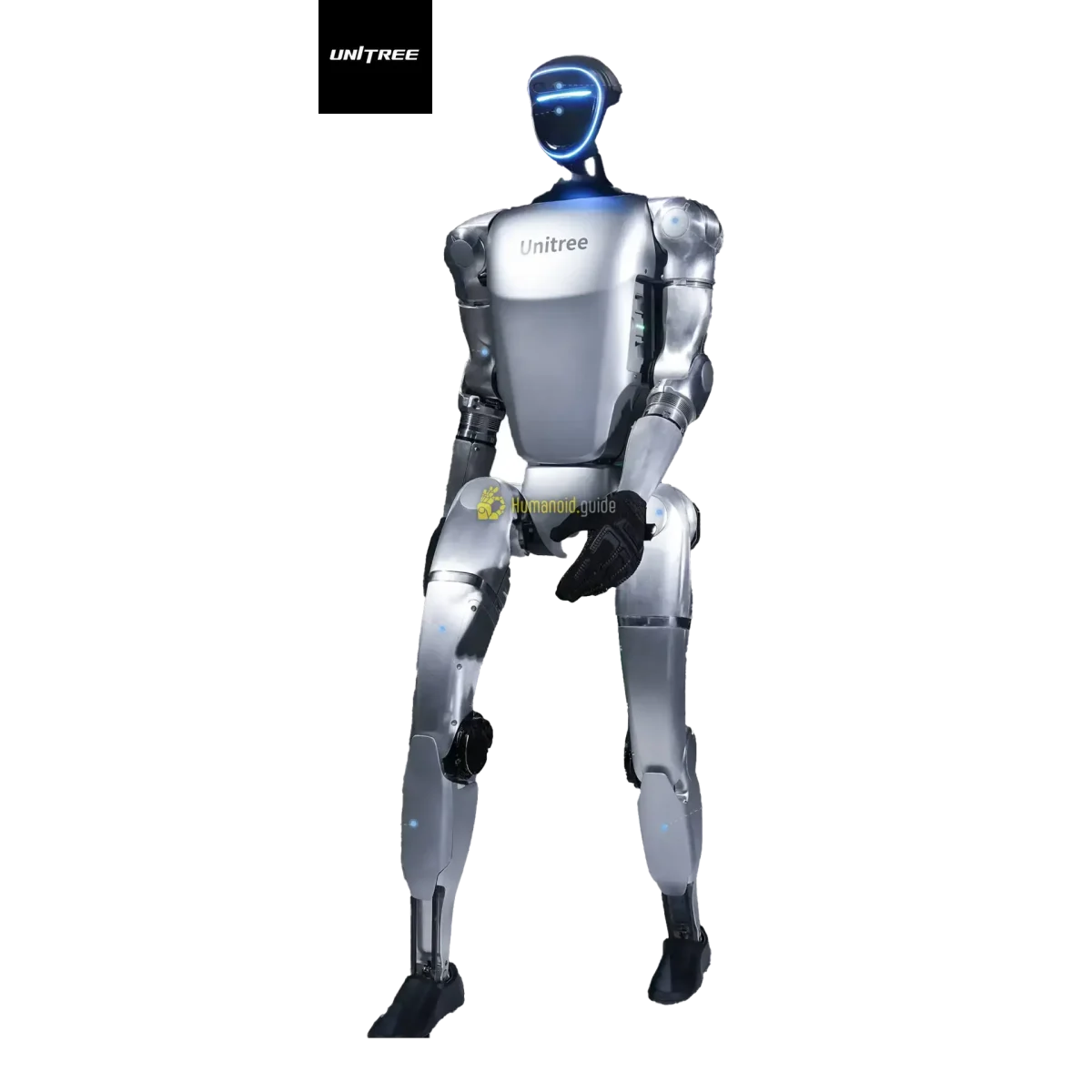
Launched in 2024 by Unitree Robotics (Hangzhou, China), the Unitree G1 has become the default first humanoid for hundreds of labs. Standing 127–132 cm tall and weighing just 35 kg, it walks at up to 7.2 km/h and runs for roughly 2 hours on a charge. Configurations range from the $13,500 base model with 23 DOF up to the $73,900 Ultimate edition with 43 DOF and optional LiDAR. Unitree ships worldwide, and extensive ROS2 documentation has spawned a fast‑growing developer ecosystem.
DOBOT Atom: The Precision‑Focused Heavy‑Lifter
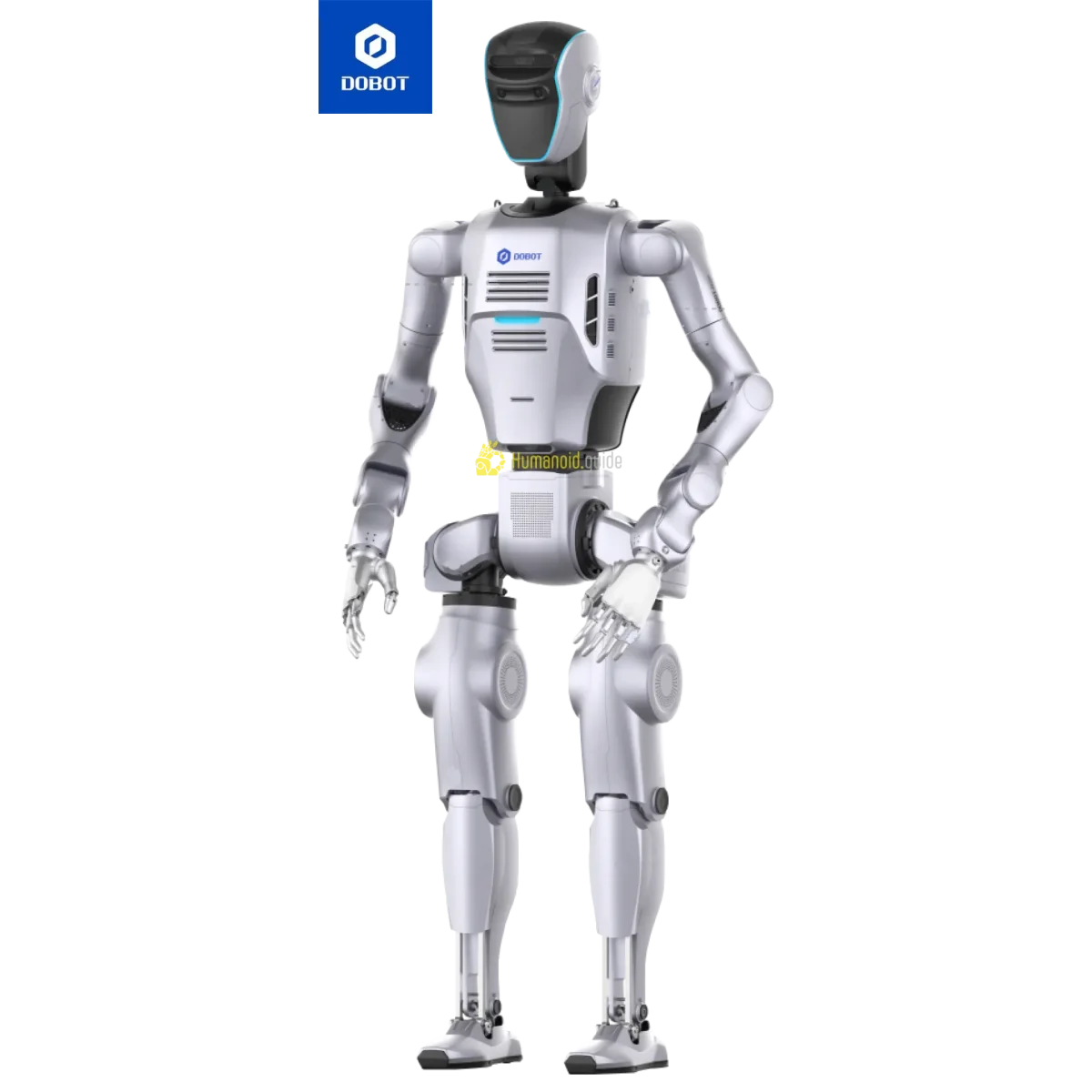
DOBOT, the Shenzhen‑based cobot manufacturer, announced the Atom as its first bipedal humanoid. At 153 cm and 62 kg, the Atom packs 41 degrees of freedom and an Intel RealSense D455 depth camera. Its standout metric is 0.05 mm repeatability—a precision level normally found only in industrial robotic arms. The payload capacity of 5 kg and the taller reach make the Atom suitable for tasks like machine tending, assembly, and material handling. At an estimated $27,500, it sits in a mid‑range price bracket, with pre‑orders already open and mass production expected soon.
Head‑to‑Head by Dimension
Price & Configurations
The G1 starts at $13,500, and a well‑equipped EDU model (with 43 DOF) sits around $43,900. The Atom’s single reported configuration is $27,500. Although the Atom costs more than the base G1, it nearly doubles the payload and adds precise repeatability, so buyers essentially pay for that extra capability. Over a three‑year period, including a typical software maintenance plan, the Atom may still be cheaper than a top‑tier G1 Ultimate once productivity is factored in. Winner: Unitree G1 for budget; DOBOT Atom if payload repeatability justifies the premium.
Performance & Specs
Payload
The G1’s 3 kg payload limits it to light tools and everyday objects. The Atom’s 5 kg payload opens doors to heavier end‑effectors, tool use in manufacturing, and more robust bin‑picking. Winner: DOBOT Atom
Speed
The G1 can jog at 7.2 km/h (comparable to a human brisk walk). DOBOT has not released Atom’s top speed, making the G1 the only robot with a verified mobility number. In the absence of data, the G1’s agility cannot be directly challenged. Winner: Unitree G1 (on published data)
Battery Endurance
The G1 provides a consistent 2‑hour runtime, ideal for a full lab session. The Atom’s datasheet lists only the battery capacity (2.3 kWh) without a runtime figure, so actual endurance remains unknown. Winner: Unitree G1
Degrees of Freedom
Both robots can offer over 40 DOF at high‑end configs (G1 Ultimate: 43; Atom: 41). However, the Atom achieves that DOF count at its base price, while the G1 needs an upgrade. Real‑world manipulation quality favors the Atom because of its precision. Winner: DOBOT Atom (consistency and repeatability)
Software & SDK Ecosystem
Unitree provides a mature SDK with Python and C++ bindings, full ROS2 support, and integrations with Isaac Sim and MuJoCo. The DOBOT Atom is expected to inherit DOBOT’s cobot‑oriented software stack (DOBOT Studio), but no official SDK documentation or ROS2 confirmation exists yet. For anyone planning a development cycle, the G1’s ecosystem is ready; the Atom’s remains unproven. Winner: Unitree G1
Autonomy & Sensors
The G1 ships with stereo depth cameras, an IMU, and optional LiDAR for SLAM‑based navigation. The Atom uses the Intel RealSense D455 for depth perception but hasn’t published advanced autonomy features beyond basic locomotion. Unitree’s fleet‑management and autonomy stack (via the G1 SDK) gives it a head start. Winner: Unitree G1
Build Quality & Durability
Both robots lack published IP ratings or shock‑resistance data. The G1’s lightweight aluminum frame and proven field hours suggest it can handle lab environments, while the heavier Atom (62 kg) implies stronger actuators but also higher joint loads. Until reliability studies appear, the comparison remains on paper. Winner: Too early to call—buyers should demand demo cycle data.
Price & Total Cost of Ownership
A base G1 costs $13,500; a lab‑ready EDU version is around $43,900; the fully‑loaded Ultimate reaches $73,900. The Atom is quoted at $27,500. Over three years, the G1 EDU’s hardware + software support might total $50–60 k, while the Atom—assuming similar support costs—could land around $35 k. However, the Atom’s faster return on investment in a manufacturing setting (higher payload, precision) could flip the TCO equation. There are no lease or RaaS programs publicly available for either robot yet. Key takeaway: For cash‑strapped labs, the G1 base is unbeatable; for factories willing to invest upfront, the Atom’s productivity gains may pay off within months.
→ View Unitree G1 configurations | Get details on DOBOT Atom
Which Should You Buy? Unitree G1 vs DOBOT Atom by Use Case
Choose the Unitree G1 if: - Your budget is under $20,000 or you need multiple units for a teaching lab. - You require proven ROS2 integration and a rich simulation environment. - Light payloads (≤3 kg) cover your research goals—e.g., locomotion, human‑robot interaction, simple pick‑and‑place. - You need a robot that ships immediately and is already in hundreds of labs.
Choose the DOBOT Atom if: - Your application demands a payload of 3–5 kg, such as screwdriving, small‑part assembly, or machine tending. - Precision matters: 0.05 mm repeatability is critical to your process. - You can wait a few months for mass production and are comfortable with an emerging software ecosystem. - You want a taller humanoid (153 cm) that can reach standard workbench heights.
Choose neither if: - You need outdoor IP‑rated hardware—neither robot has a ruggedness rating. - You require a fleet‑management platform today—only Unitree offers early autonomy tools, but they are still maturing.
Real‑World Deployments & Track Record
Unitree has shipped G1 humanoids to over 50 universities and research institutes worldwide; the robot has been publicly demonstrated at ICRA and in widely shared locomotion videos. DOBOT has not yet released production deployment data for the Atom—only pre‑order numbers and a few press‑event demos exist. The absence of field data does not mean the Atom is unreliable, but it places the burden on early adopters to validate its industrial claims. As of mid‑2026, the G1 remains the more battle‑tested platform.
SDK, Software & Developer Ecosystem
The G1’s software ecosystem is one of its strongest assets. Developers can access a comprehensive GitHub repository with ROS2 packages, Python/C++ libraries, and Docker containers. Unitree also supports NVIDIA Isaac Sim and MuJoCo, allowing full sim‑to‑real transfer. By contrast, DOBOT has not yet released a public SDK for the Atom; the robot is expected to work with DOBOT Studio (a visual programming environment) but lacks ROS2 confirmation. The gap is stark: anyone wanting to write custom controllers or integrate with existing ROS tools will find the G1 ready while the Atom is a “wait‑and‑see.”
Support, Warranty & Availability
Unitree G1s are in stock and ship globally from Hangzhou; typical lead times are 2–4 weeks. Warranty is a standard 1‑year limited coverage, with extended plans available through authorised distributors. The DOBOT Atom is currently on pre‑order; mass production is “imminent” but no firm delivery date has been given. Warranty and support terms for the Atom have not been published yet, so buyers must negotiate directly with DOBOT or its regional partners.
Comments