

The humanoid robot market now splits into two clear paths: the Unitree G1 targets researchers, educators and industrial developers who need a powerful, programmable biped at an attainable price, while the 1X NEO Gamma aims straight at the home, promising safe, soft interaction and a 4‑hour runtime in a package that feels less like a machine and more like a companion. This comparison breaks down every dimension that matters when choosing between the Unitree G1 and the 1X NEO Gamma — from price and hardware specs to software ecosystems, real‑world track records and the use cases that fit each robot best.
Unitree G1 vs 1X NEO Gamma: Specs Compared
| Specification | Unitree G1 | 1X NEO Gamma |
|---|---|---|
| Price (base) | $13,500 | $20,000 |
| Price (configured) | Up to $73,900 | $20,000 (single SKU) |
| Height | 127–132 cm | 1.67 m (167 cm) |
| Weight | 35 kg | 30 kg |
| Payload | 3 kg (arm) | Not published |
| Max speed | 7.2 km/h | 5 km/h |
| Battery life | 2 hours | 4 hours |
| Degrees of freedom (DOF) | 23–43 (depending on configuration) | 25 |
| IP rating | Not published | Not published |
| Onboard compute | NVIDIA Jetson Orin NX (in EDU/Ultimate variants) | Proprietary (undisclosed) |
| Sensors | Intel RealSense depth cameras, Livox Mid‑360 LiDAR (varies by configuration) | Vision cameras, tactile sensors, microphone array |
| SDK languages | C++, Python (Unitree SDK) | Proprietary, app‑based control; SDK not publicly released |
| ROS 2 support | Yes (native on EDU/Ultimate) | Not published |
| Autonomy / fleet software | Unitree Nav & Autowalk; fleet management available | Autonomous home navigation; no fleet system |
| Safety certifications | None published | Pending consumer safety certifications |
| Availability | Shipping now (2026) | Pre‑order; early US deliveries planned in 2026 |
| Warranty / support | 1‑year standard; extended contracts available | Not published |
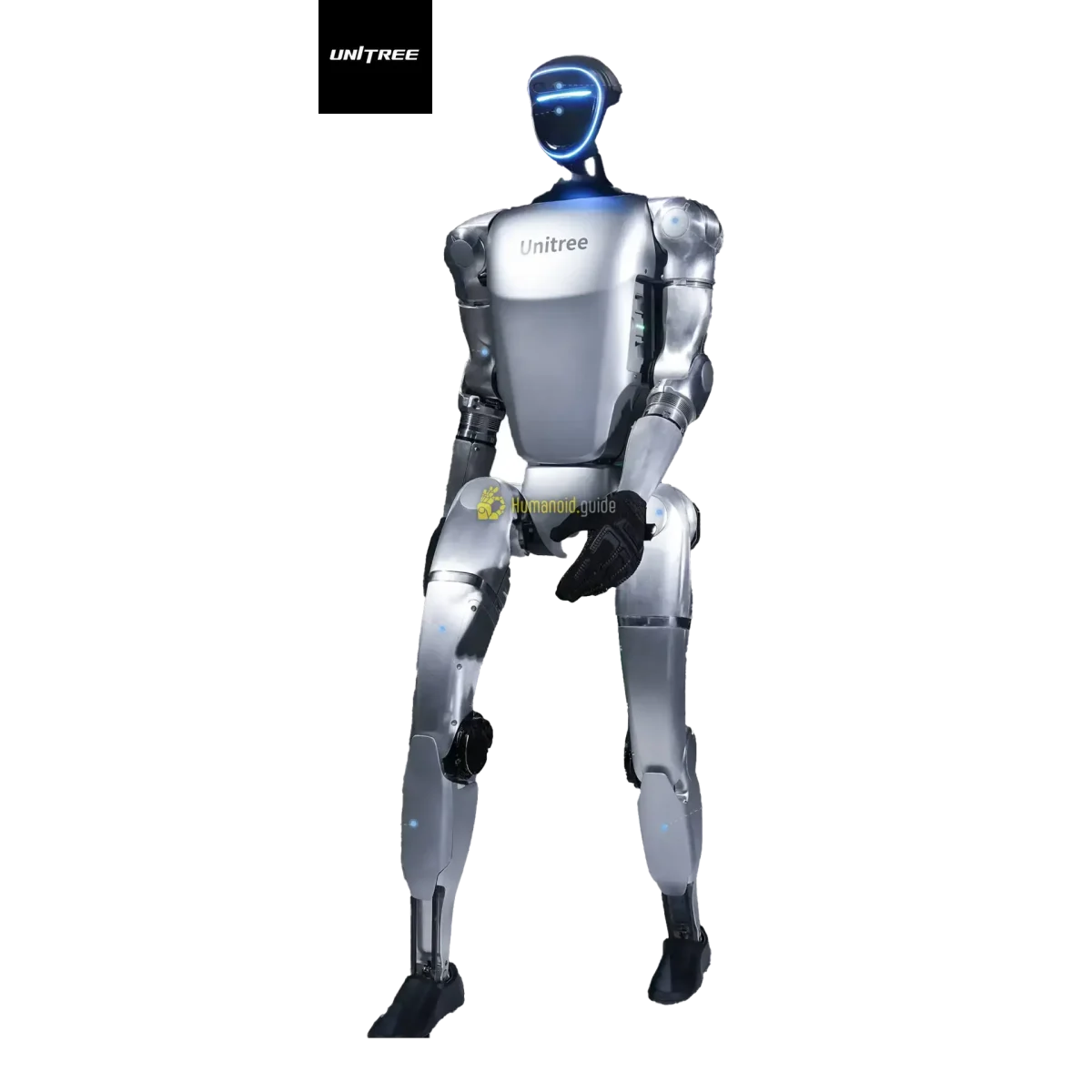
The G1’s spec sheet reveals a highly modular research platform: payload‑capable arms, a choice of sensor suites and a compute stack that runs the NVIDIA Jetson ecosystem. The NEO Gamma’s numbers, by contrast, are fixed; it arrives from the factory with exactly the hardware needed for a home assistant — fewer joints, a longer‑lasting battery and a body built for safe contact. Winner: Unitree G1 for hardware breadth; 1X NEO Gamma for battery endurance.
Unitree G1: Affordable Humanoid Research Platform
Launched in 2024 by Unitree Robotics (Hangzhou, China), the G1 is a short‑statured, lightweight biped engineered for research labs, STEM education and light industrial pilot projects. At 127–132 cm tall and 35 kg, it is small enough to handle in a laboratory yet powerful enough to walk at 7.2 km/h and carry 3 kg in each arm. The robot ships in three flavors — Base, EDU and Ultimate — with DOF expanding from 23 up to 43, adding wrist and waist joints, force‑torque sensors and a more powerful onboard computer. Base pricing starts at $13,500, with fully‑loaded Ultimate configurations reaching $73,900. Importantly, the G1 is in serial production and available for immediate purchase, a rarity in the humanoid space.
1X NEO Gamma: Humanoid Home Robot
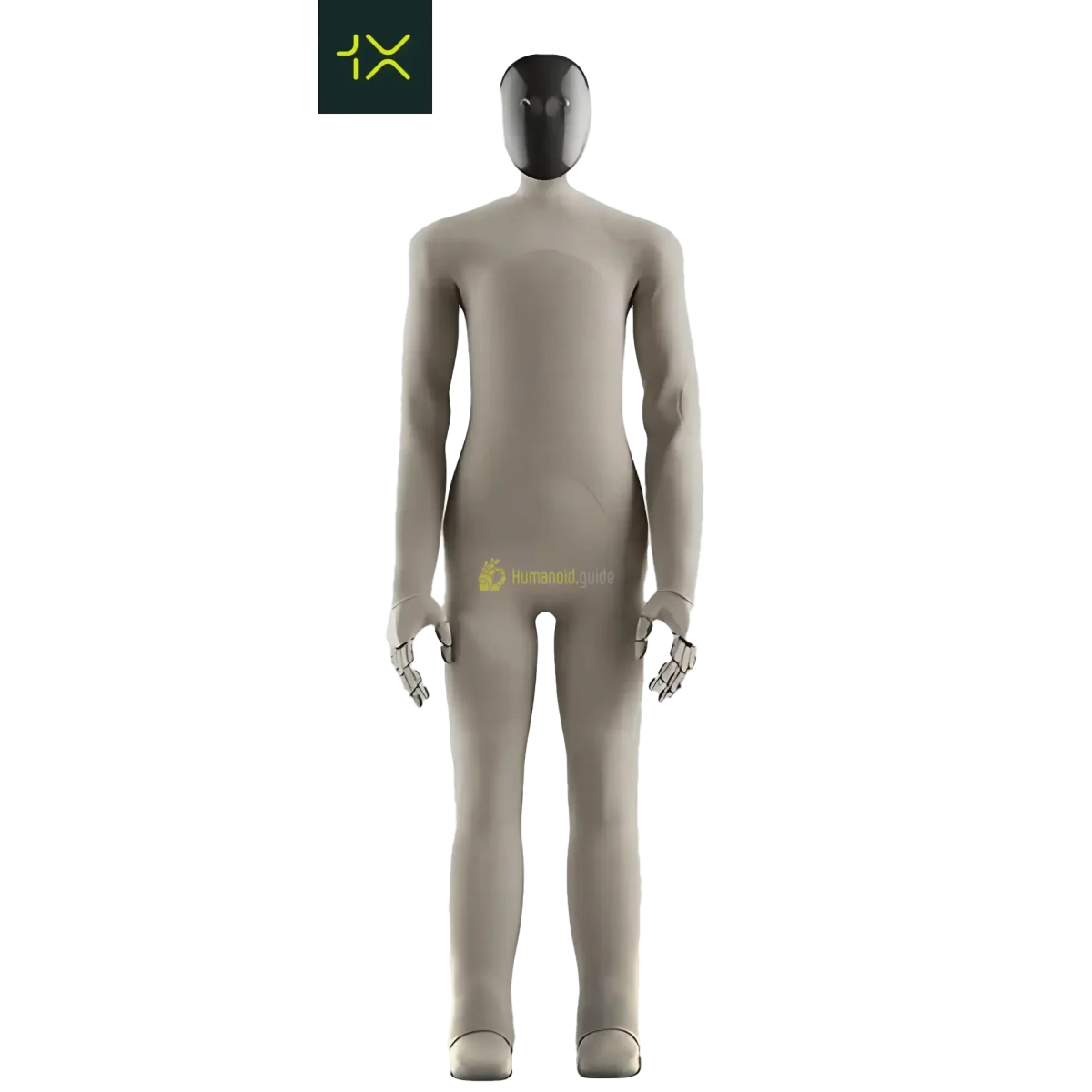
The 1X NEO Gamma, released in 2025 by Norwegian company 1X Technologies, is a consumer‑oriented humanoid built for living spaces. Standing 1.67 m tall but weighing only 30 kg, the Gamma uses a soft outer shell and fabric‑covered limbs that eliminate hard‑metal pinch points. Its 25 DOF are targeted at safe, fluid motion rather than acrobatics; walking speed is capped at 5 km/h, and the battery lasts up to 4 hours — double the G1’s runtime. Priced at a flat $20,000 and sold through pre‑order, the Gamma is intended for early‑adopter households, with the first US deliveries expected in 2026. It carries no payload specification, reflecting a design that prioritises safe interaction over heavy lifting.
Price & Configurations
Unitree G1: $13,500 (Base, 23 DOF, no LiDAR, Jetson Orin NX module optional), $24,900 (EDU, 43 DOF, LiDAR, force‑torque sensors, full SDK), $73,900 (Ultimate, same hardware as EDU plus advanced software pack and support). 1X NEO Gamma: $20,000 — one fixed configuration includes all sensors, compute and the proprietary OS.
The G1’s tiered pricing lets budget‑constrained labs enter at $13,500 and scale up to a high‑performance unit later, while the NEO Gamma’s single‑price model reduces decision complexity for consumers. Winner: Unitree G1 — lower entry price and modular upgrade path.
Performance & Specs
Payload
The G1’s arms can lift and manipulate 3 kg, enough for light object handling in research tasks. 1X has not disclosed a payload figure for the NEO Gamma, and its soft‑shell design suggests it is not intended for material transport. Winner: Unitree G1.
Speed
At 7.2 km/h, the G1 outpaces the NEO Gamma’s 5 km/h maximum. While neither robot is built for high‑speed travel, the G1’s faster gait shortens point‑to‑point time in larger lab environments. Winner: Unitree G1.
Battery Life
The NEO Gamma’s 4‑hour runtime is a standout; it can operate for an entire morning or afternoon without recharging. The G1’s 2‑hour battery forces more frequent charging stops, a pain point for extended experiments. Winner: 1X NEO Gamma.
Degrees of Freedom (DOF)
The G1’s configurable 23–43 DOF enables dexterous manipulation, full‑body motion and research into high‑DOF control. The NEO Gamma’s fixed 25 DOF is simpler but sufficient for its home‑assistance role. Winner: Unitree G1 for flexibility.
Software & SDK Ecosystem
The G1 runs Unitree’s SDK with C++ and Python APIs, native ROS 2 support (humble) on EDU/Ultimate models, and sim‑to‑real transfer through Gazebo and Isaac Sim. A growing community of academic users contributes open‑source examples. The NEO Gamma uses a proprietary, app‑driven operating system that 1X has not opened to third‑party development. This closed ecosystem will suit consumers who want a turn‑key device, but it shuts out custom software. Winner: Unitree G1 for developer accessibility.
Autonomy & Sensors
G1’s sensor suite — Intel RealSense depth cameras and a Livox Mid‑360 3D LiDAR — feeds a confident autonomous navigation stack. The robot can build 3D maps, plan collision‑free paths and execute pre‑taught waypoint routes (Autowalk). NEO Gamma relies on vision‑based SLAM and tactile skin, optimised for safe indoor movement; its navigation is competent for room‑to‑room wandering but lacks the research‑grade mapping and localisation of the G1. Winner: Unitree G1 for precision navigation.
Build Quality & Durability
The G1’s aluminium alloy chassis and exposed servos prioritise mechanical serviceability. While no IP rating has been published, the build is robust enough to handle lab‑floor bumps. The NEO Gamma’s fabric‑wrapped exoskeleton is comfortable to touch but likely less resistant to fluids, dust or heavy impacts; again, no IP rating is provided. For industrial or repeated‑use environments, the G1’s all‑metal design is more durable. Winner: Unitree G1.
Price & Total Cost of Ownership
A three‑year TCO snapshot: - Unitree G1 Base at $13,500, plus a likely $1,500‑$2,500/year software/support extension for EDU/Ultimate features, yields roughly $18,000–$20,000 for the first three years if starting with EDU at $24,900. - NEO Gamma at $20,000 flat; assuming no mandatory subscription and a 1‑year warranty, three‑year cost remains close to the purchase price.
For a minimal‑budget research lab, the G1 undercuts the Gamma by $6,500 upfront. For home users who value a guaranteed 4‑hour runtime and zero‑tinkering experience, the Gamma’s $20,000 is competitive and predictable. Winner: Unitree G1 for lowest‑possible initial cost; NEO Gamma for predictable all‑in spending.
Question the price? Check the latest Unitree G1 and 1X NEO Gamma listings for live offers.
Use‑Case Matching: Which Should You Buy?
Choose the Unitree G1 if you: - Run a research lab or university robotics programme - Need high DOF, open ROS 2 access and the ability to reprogram movement, vision and manipulation - Want a bipedal platform that can out‑walk the Gamma and carry light payloads - Prefer a modular platform where you can start at $13,500 and add sensors later
Choose the 1X NEO Gamma if you: - Want a humanoid that co‑exists safely in a home or care facility - Prioritise long battery life (4 h) and gentle, soft‑touch interaction - Prefer a polished, app‑driven experience without writing code - Are comfortable with a $20,000 pre‑order and expected 2026 delivery
Choose neither if you: - Require heavy payloads (>3 kg) or high‑speed outdoor operation - Need an IP‑rated, industrial‑grade machine for factory floors
Real‑World Performance & Deployments
Unitree G1 units have shipped to academic institutions, maker spaces and corporate R&D labs worldwide since mid‑2024. While no specific institutional names have been released, the robot is regularly seen at conferences and in open‑source GitHub repositories. 1X’s predecessor, the EVE android, was deployed in logistics pilots with security firms; the NEO Gamma is in limited alpha‑household testing ahead of its 2026 US rollout, and the company publicly reports in‑home evaluation data to refine interaction safety. Neither robot has published operating‑hour statistics, so buyers should treat current figures as best‑case benchmarks.
SDK, Software & Developer Ecosystem
The G1’s software stack is built around the Unitree SDK, which exposes joint‑level control, IMU/force‑torque streams and navigation interfaces via C++ and Python. ROS 2 Humble is fully integrated on EDU and Ultimate models, enabling plug‑and‑play use of standard SLAM, navigation and manipulation packages. The community maintains Docker images, Gazebo models and Isaac Sim pipelines. NEO Gamma’s software remains closed; control is through a 1X‑provided mobile app with pre‑loaded behaviours and voice command processing. No public API or SDK is available, and there is no ROS 2 bridge. This closed‑source approach dramatically limits what developers can customise. Winner: Unitree G1.
Support, Warranty & Availability
- Unitree G1: Ships immediately from factory; standard 1‑year warranty with optional extended contracts. Technical support is handled through regional distributors and direct‑from‑Unitree channels; spare parts are available for common wear items.
- 1X NEO Gamma: Pre‑order phase with planned first US deliveries in 2026. Warranty terms and post‑purchase support structure have not been published. As a new consumer product, service infrastructure is unproven.
Winner: Unitree G1 — clear availability, warranty and parts pipeline.
Comments