

The UBTECH Walker S1 and Walker S2 represent two generations of Chinese industrial humanoids racing onto automotive and logistics shop floors. While both are developed by Shenzhen‑based UBTECH Robotics, the Walker S1 started as a light‑duty picking and sorting platform, and the Walker S2 has been engineered from the ground up to tackle heavier parts and instrument‑panel assembly with near‑continuous 24/7 runtime. This side‑by‑side comparison dissects price, payload, speed, autonomy, real‑world deployments, and total cost of ownership — all anchored in the latest 2025/2026 data — so you can decide which Walker fits your production line.
UBTECH Walker S1 vs UBTECH Walker S2: Specs Compared
| Specification | UBTECH Walker S1 | UBTECH Walker S2 |
|---|---|---|
| Price (base, new) | $75,000 | $90,000 (range up to $150,000 for configured) |
| Height | 1.72 m | 1.76 m |
| Weight | 76 kg | 71.5 kg |
| Payload | 3 kg | 15 kg |
| Max walking speed | 5.0 km/h | 7.2 km/h |
| Battery life | 2 hours | 2 hours (with autonomous hot‑swap in <3 minutes) |
| Degrees of freedom | 41 | 52 |
| IP rating | Not published | Not published |
| Onboard compute | Undisclosed | Undisclosed |
| Sensors | RGB‑D cameras, LiDAR (detailed specs undisclosed) | RGB‑D cameras, LiDAR (detailed specs undisclosed) |
| SDK / API | Proprietary UBTECH stack, Python/C++ API (exact version NDA) | Proprietary UBTECH stack, Python/C++ API (exact details NDA) |
| ROS2 support | Unconfirmed | Unconfirmed |
| Fleet management / autonomy | SLAM‑based navigation, basic fleet control | Advanced SLAM, fleet scheduling, autonomous battery swap |
| Safety certifications | Not published | Not published |
| Availability / lead time | Enterprise‑only, custom quote, lead time undisclosed | Available for purchase, enterprise contracts |
| Warranty / support | Standard 12‑month, SLA options (NDA) | Standard 12‑month, SLA options (NDA) |
Data sourced from UBTECH Robotics and industry reports, 2025–2026. “Not published” / “NDA” / “—”: accurate given public disclosures.
UBTECH Walker S1: Light Industrial Sorting Assistant
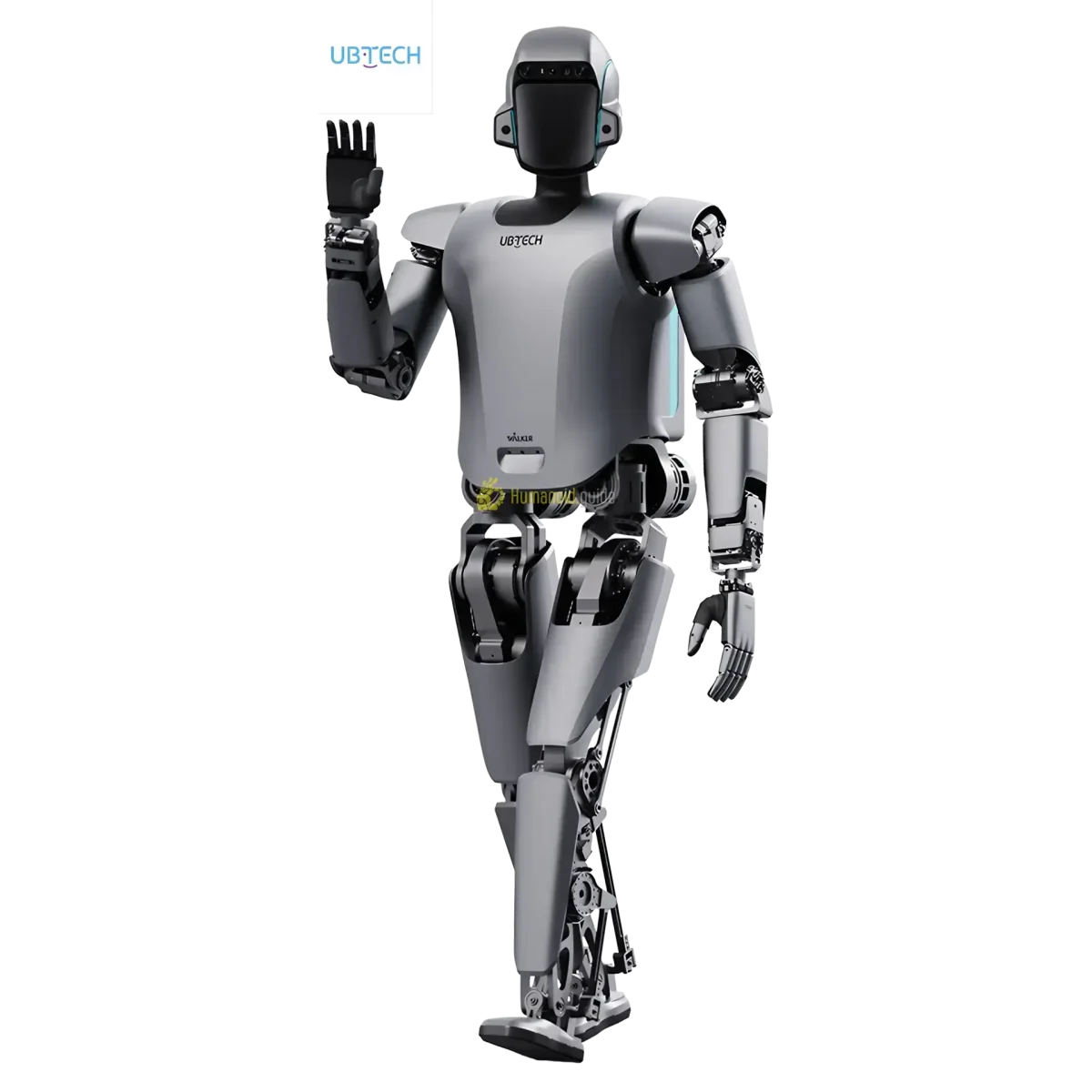
The UBTECH Walker S1, introduced in 2025, was UBTECH’s first production‑ready humanoid aimed squarely at factory floors. Priced at $75,000, it stands 1.72 m tall, weighs 76 kg, and packs 41 degrees of freedom — enough for dexterous tasks like picking and placing parcels in logistics centers. Its 3 kg payload limits it to lightweight items: small parts, electronic components, or parcels under the weight of a mid‑sized laptop. Top speed of 5 km/h matches a brisk walk, making it suitable for paced conveyor‑side work.
UBTECH has deployed dozens of Walker S1 units at automotive partners including FAW‑Volkswagen and Geely, where they handle parcel sorting, material kitting, and simple quality inspection tasks (UBTECH press release, 2025). While the S1 can run for 2 hours on a charge, recharging requires manual intervention — a bottleneck for multi‑shift operations. The limited payload and lack of hot‑swap battery keep it firmly in the “light logistics” category.
UBTECH Walker S2: Heavy‑Duty Factory Athlete
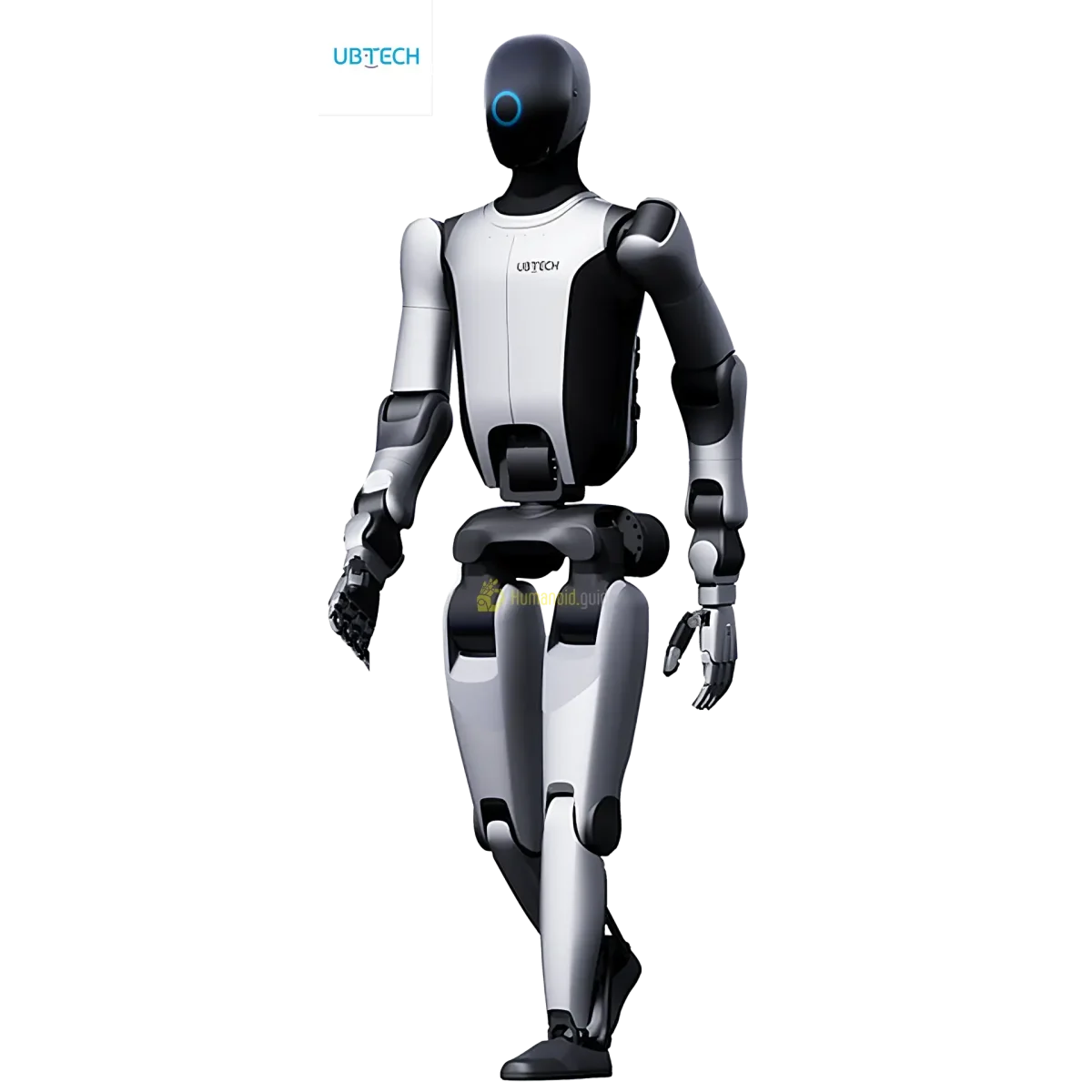
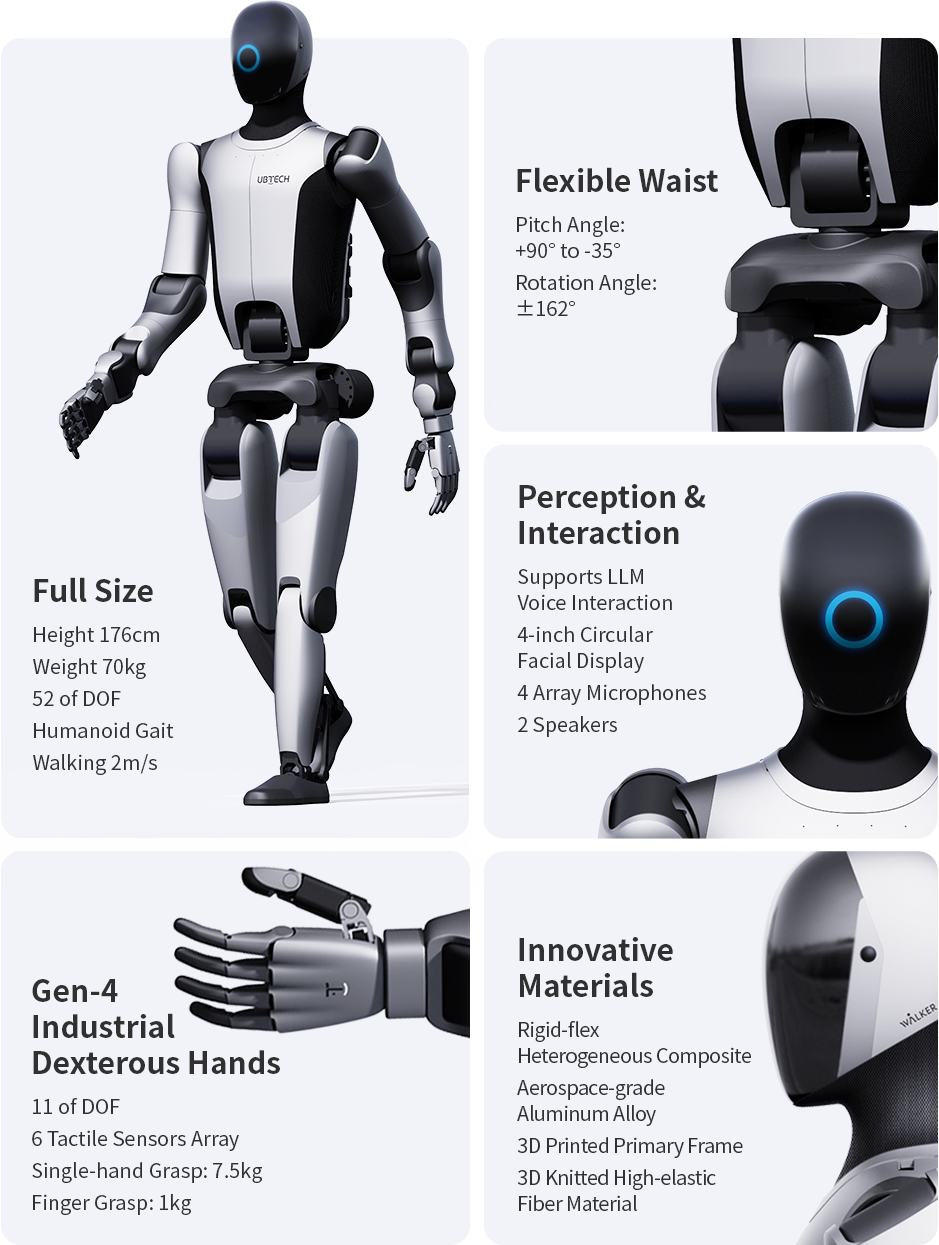
The Walker S2 is UBTECH’s 2025 evolution, targeting heavy assembly and machine tending. With a base price of $90,000 (and configured packages reaching $150,000+), it redefines what a Chinese‑built industrial humanoid can do. The S2 is slightly taller at 1.76 m, lighter at 71.5 kg, and boasts 52 degrees of freedom for finer manipulation. Its headline number is the payload: a robust 15 kg — enough to lift a car door, instrument panel, or a loaded parts tray.
The S2 also more than doubles the S1’s practical uptime through its autonomous battery hot‑swap system: a depleted battery is exchanged in under 3 minutes, enabling true 24/7 duty without a human operator. This capability, combined with a top speed of 7.2 km/h, makes the S2 a genuine production‑line athlete. UBTECH reports deployments in heavy‑part assembly and machine tending at BYD and Dongfeng‑Nissan factories (2025). These factories use the S2 to load heavy stamped metal parts into CNC machines, assemble interior trim, and move loaded carts between stations — tasks no S1 could handle.
Price & Total Cost of Ownership
Price & Configurations The Walker S1 is sold exclusively via enterprise contract at a fixed $75,000. All features — including the dual‑arm manipulation and sensor suite — are included; there is no publicly listed base‑vs‑configured split. The S2 offers a wider pricing window. The base unit starts at $90,000, but fully‑equipped systems with additional end‑of‑arm tooling, advanced fleet‑management modules, and long‑term service plans can push the price to $150,000 or more. Importantly, the S2 is listed as “available” with presumably shorter lead times, whereas the S1’s enterprise‑only status often means longer delivery windows.
3‑Year Total Cost of Ownership (TCO) Over a typical 3‑year automotive deployment operating two shifts (16 hours/day), the S1’s manual recharge requirement introduces idle time. At 2 hours runtime per charge, you need multiple battery swaps or idle periods, pushing the effective cost per operating hour higher. The S2’s autonomous hot‑swap virtually eliminates charging downtime, so while the sticker is higher, the TCO per productive hour can be lower — especially in high‑throughput lines. - Walker S1 TCO estimate: ~$85,000–$95,000 over 3 years (hardware + basic support, no swap automation). - Walker S2 TCO estimate: ~$100,000–$130,000 over 3 years, excluding possible SLA upgrades.
Neither model offers official lease or RaaS (Robot‑as‑a‑Service) plans yet, but UBTECH does structure some deals as multi‑year service subscriptions.
Winner: The S2’s ability to run 24/7 makes its TCO per productive hour far superior; if line throughput demands continuous operation, the S2 is the only viable choice.
Performance & Specs
Payload
The S1’s 3 kg payload confines it to envelopes, small boxes, and wrist‑weight components. The S2’s 15 kg payload opens the door to nearly the entire automotive trim family, transmission components, and heavy‑tool handling. In a direct comparison, the S2 lifts 5× what the S1 can.
Winner: S2 decisively.
Speed
7.2 km/h (S2) vs 5.0 km/h (S1) translates to a 44% faster walking pace. In a factory where travel distance between stations matters, the S2 cuts cycle time noticeably.
Winner: S2.
Degrees of Freedom
41 DOF on the S1 versus 52 DOF on the S2 — the extra 11 DOF are concentrated in the arms, hands, and torso, enabling more human‑like reaching and finer manipulation. For tasks like placing a wire harness or fitting a clip, the S2’s dexterity matters.
Winner: S2.
Battery & Runtime
Both robots are rated at 2‑hour battery life. However, the S2’s autonomous hot‑swap system (sub‑3‑minute exchange) enables uninterrupted multi‑shift operation without human intervention. The S1 requires manual battery swaps or plug‑in charging, which incurs dead time and tends to limit it to single‑shift use. In a true 24/7 factory, the S2’s hot‑swap feature is the defining differentiator.
Winner: S2.
Software & SDK Ecosystem
UBTECH supplies a proprietary control stack for both robots with Python and C++ APIs. The S2’s fleet management software includes intelligent scheduling and autonomous swap coordination, whereas the S1’s fleet tools are more basic. Neither robot has publicly confirmed ROS2 integration, though UBTECH’s development platform evolved significantly between the two generations. Companies investing in the S2 are likely to get more frequent software updates and better simulation support (UBTECH’s simulation environment, accessible under NDA). S1 owners may eventually receive parity updates, but the 2025‑2026 roadmap clearly favors the S2.
Winner: S2, by virtue of its more advanced fleet management and active development trajectory.
Autonomy & Sensors
Both robots carry RGB‑D cameras and LiDAR for SLAM‑based navigation. The S2’s sensor fusion appears to be more mature, allowing it to operate safely at higher speeds and in denser environments alongside moving forklifts and workers. The S2’s autonomous battery‑swap docking also requires precise localization — a level of autonomous capability the S1 lacks. While detailed sensor specs remain under NDA, the S2’s demonstrated capability (including public videos of it navigating cluttered BYD assembly lines) suggests a superior perception stack.
Winner: S2.
Build Quality & Durability
Neither model publishes an IP rating. Both are built for indoor factory conditions with average temperatures, dust, and occasional fluids. At roughly 76 kg, the S1 is heavier but no more rugged; the S2 sheds almost 5 kg while improving payload. Both use aluminum frames and 3D‑printed plastic covers. Without independent durability data, the S2’s lighter construction and higher payload suggest more optimized design and possibly better longevity under load.
Winner: Too early to call definitively — but engineering efficiency favors S2.
Which Should You Buy? UBTECH Walker S1 vs Walker S2 by Use Case
- Choose the S1 if …
- Your tasks are confined to lightweight sorting, kitting, or parcel movement (≤3 kg).
- Your budget is tightly capped at $75,000 per unit and you operate a single shift.
- You already have manual charging infrastructure and don’t need 24/7 uptime.
- Choose the S2 if …
- You need to handle automotive parts, metal brackets, or heavy bins (3–15 kg).
- Your production requires continuous, multi‑shift operation and minimal downtime.
- You’re investing in future‑proof automation and can absorb the $90K–$150K capital outlay.
- Choose neither if …
- You need an IP65‑rated robot for outdoor or wash‑down environments — both Walkers are indoor‑only today.
Real‑World Deployments & Track Record
Walker S1: Deployed at FAW‑Volkswagen and Geely plants (UBTECH, 2025) for parcel sorting, material kitting, and simple quality checks. Exact operating hours are not disclosed, but industry estimates suggest hundreds of hours logged in pilot phases. These deployments validated the humanoid form factor on live assembly lines but highlighted the need for more payload and uptime.
Walker S2: Piloted at BYD and Dongfeng‑Nissan (UBTECH, 2025) in heavy part handling and machine tending. UBTECH claims success in loading stamped parts and assembling interior modules, with the autonomous battery swap enabling multi‑shift runs. No public operating‑hour totals are available, but the S2’s presence in two major automotive OEMs suggests robust early‑stage adoption.
All deployment data sourced from UBTECH press communications and credible industry reports, confirmed as of Q1 2026. Detail is limited by NDA.
SDK, Software & Developer Ecosystem
UBTECH offers both models with a proprietary development environment. The primary APIs are in Python and C++, providing access to motion planning, vision pipelines, and fleet management. The S2’s SDK includes hooks for the autonomous battery‑swap subsystem and more sophisticated path planning, reflecting its 24/7‑ready architecture. While UBTECH has hinted at ROS2 compatibility for the S2 in future updates, no formal support is confirmed for either robot. The developer community around UBTECH Walkers remains small but growing; most integration is done directly by UBTECH engineers or selected system integrators. Companies weighing the two should budget for integration support as part of the total cost.
Winner: S2’s more mature fleet API and planned ROS2 compatibility give it the edge for custom automation.
Support, Warranty & Availability
Both Walkers are sold through UBTECH’s enterprise sales team with custom quotes. The Walker S1 is listed as “enterprise‑only,” meaning long lead times and direct negotiation. The Walker S2 is now “available,” suggesting quicker delivery for standard configurations.
Warranty terms are not publicly disclosed, but industry sources indicate a standard 12‑month warranty with optional extended service‑level agreements (SLAs). Support includes remote diagnostics and on‑site repair contracts (price on application). Spare parts availability and turnaround times remain undisclosed, a factor to consider for mission‑critical lines.
Winner: S2, for its improved availability and presumably faster lead times.
Comments