
Verdict: Tesla Optimus V2.5 vs Figure 02 at a Glance Tesla Optimus V2.5 (estimated $90K) and Figure 02 ($130K) are two of the most advanced humanoid robots targeting industrial use. Figure 02 leads today with a proven BMW pilot, over 1,000 factory hours logged, and the Helix AI model for learning tasks on the fly—making it the top choice for manufacturers ready to deploy now. Tesla's V2.5 is lighter (57 kg vs 70 kg), cheaper on paper, and benefits from Tesla's AI and manufacturing scale, but remains in prototype testing with no public deployment data. For a production-floor evaluation in 2026, choose Figure 02; for a longer-term R&D bet with Tesla's ecosystem, the Optimus V2.5 is worth a collaboration inquiry.
The race to put general-purpose humanoids on factory floors puts two American contenders head‑to‑head: Tesla’s Optimus V2.5 and Figure AI’s Figure 02. Both stand roughly 1.7 m tall, offer 20 kg payload, and run on proprietary AI stacks, but their paths to commercialization couldn’t be more different—Figure 02 already handles real assembly line parts at BMW, while the V2.5 remains an internal Tesla prototype with no third‑party deployment. This comparison breaks down their specs, software, sensor suites, real‑world track records, and total costs to help manufacturers, integrators, and researchers decide which humanoid fits a 2026 pilot. Start with the Tesla Optimus V2.5 robot database page and the Figure 02 database page for full individual specifications.
Quick Verdict: Who Wins?
- Best for immediate industrial pilot: Figure 02 — real‑world deployment at BMW, more than 1,000 operating hours, and a multimodal AI that learns tasks without reprogramming.
- Best for long‑term scalability: Tesla Optimus V2.5 — estimated lower unit price, deep integration with Tesla’s manufacturing AI, and potential for mass production within Tesla’s own ecosystem.
- Best for research labs: Tesla Optimus V2.5 — lighter (57 kg) and likely safer for initial testing; but availability is limited to collaboration inquiries.
- Best value for a paid pilot: Figure 02 at $130K offers demonstrable ROI now; $90K for an unproven prototype is a speculative bet.
Tesla Optimus V2.5 vs Figure 02: Specs Compared
The table below puts every available technical data point side by side. Both robots share 28 degrees of freedom and a 20 kg payload, but Figure 02 pulls ahead on speed, battery life, and—crucially—on‑the‑ground deployment.
| Specification | Tesla Optimus V2.5 | Figure 02 |
|---|---|---|
| Price (estimated MSRP) | $90,000 (Robot Overflow est.) | $130,000 (pilot program) |
| Price (configured, pilot‑ready) | Same as base (no options) | Same as base |
| Height | 173 cm | 168 cm |
| Weight | 57 kg | 70 kg |
| Payload | 20 kg | 20 kg |
| Max Speed | 7.2 km/h (2.0 m/s) | 10.8 km/h (3.0 m/s) |
| Battery Life | 4 hours | 5 hours |
| Degrees of Freedom (DOF) | 28 | 28 |
| IP Rating | Not published | Not published |
| Onboard Compute | Tesla‑designed SoC (details undisclosed) | NVIDIA GPU (model not disclosed) |
| Sensors | Cameras, IMU, force/torque sensors | Cameras, depth sensors, IMU |
| AI Model / SDK | Proprietary, based on Tesla FSD stack | Helix multimodal AI model |
| ROS2 Support | Not confirmed | Not confirmed |
| Autonomy / Fleet Software | Proprietary, no public fleet management | Proprietary, no public fleet management |
| Safety Certifications | None | None |
| Availability / Lead Time | Collaboration inquiries only; no public purchase | Pilot programs with BMW; limited pre‑order (contact Figure) |
| Warranty / Support | None published | None published |
The most striking headline out of this table is that Figure 02 offers 25% longer battery life and a 50% higher top speed, while costing about 44% more than the estimated Optimus price. However, the real differentiator is deployment: Figure 02 is on a factory floor today, and Tesla’s V2.5 is not.
Tesla Optimus V2.5: Tesla’s In‑House Humanoid Prototype
Tesla introduced the Optimus humanoid project in 2021 and has iterated through several generations. The Optimus V2.5, as cataloged on Robot Overflow, represents the mid‑2025 prototype: 173 cm tall, 57 kg, 20 kg payload capacity, 28 DOF, a top walking speed of 7.2 km/h, and a claimed 4‑hour battery runtime. It runs on a custom Tesla‑designed computing system derived from the company’s Full Self‑Driving (FSD) hardware, leveraging neural networks for perception and motion planning. Tesla has shown these robots performing simple tasks in its own factories—sorting battery cells at the Fremont plant, for instance—but none have been deployed at a third‑party site. The company has not announced a public price, though Robot Overflow’s estimate of $90,000 reflects the likely cost of a pilot unit given Tesla’s vertical integration. Interested parties must contact Tesla directly for collaboration slots. For deeper specs, visit the Tesla Optimus V2.5 database page.
Figure 02: The BMW‑Proven Industrial Humanoid
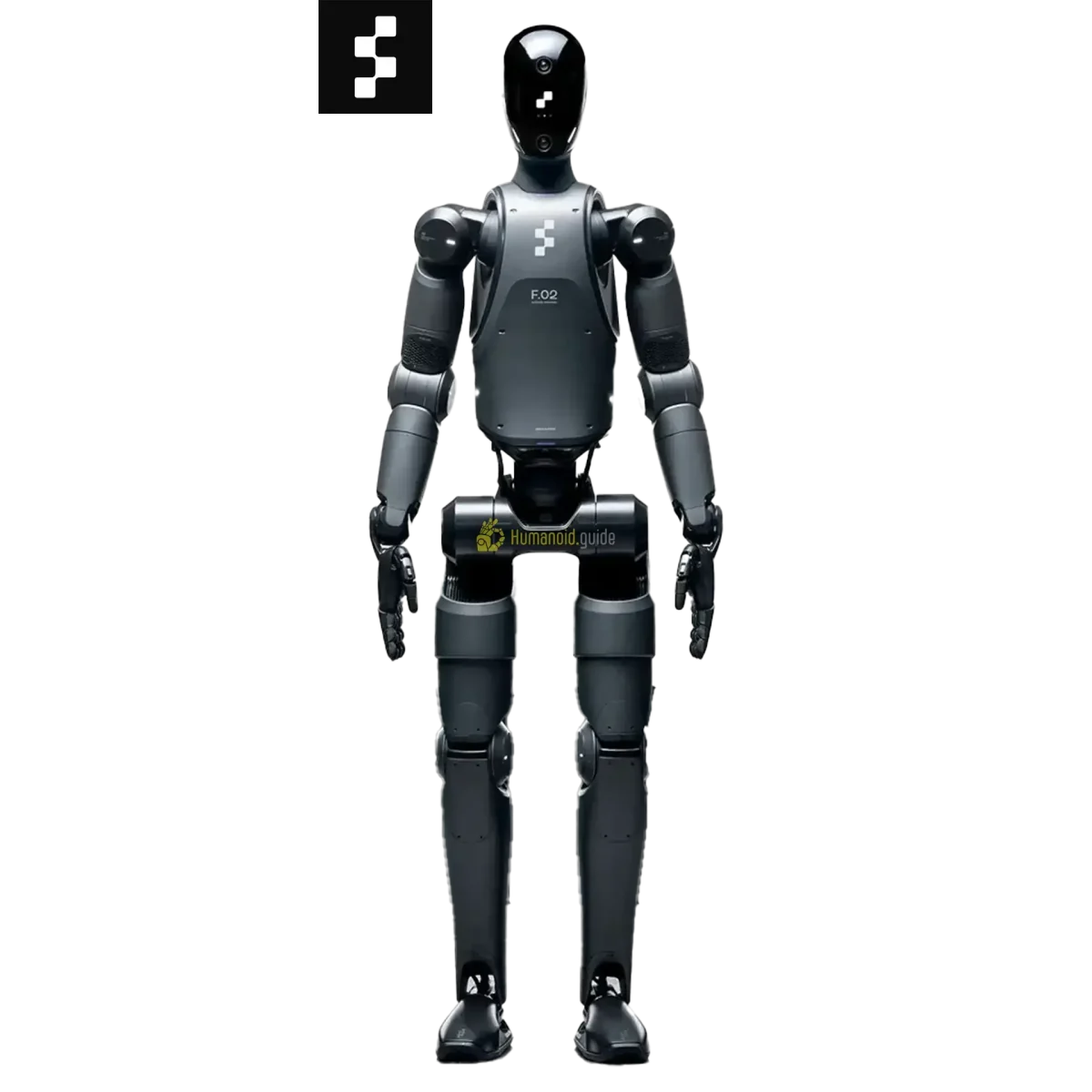
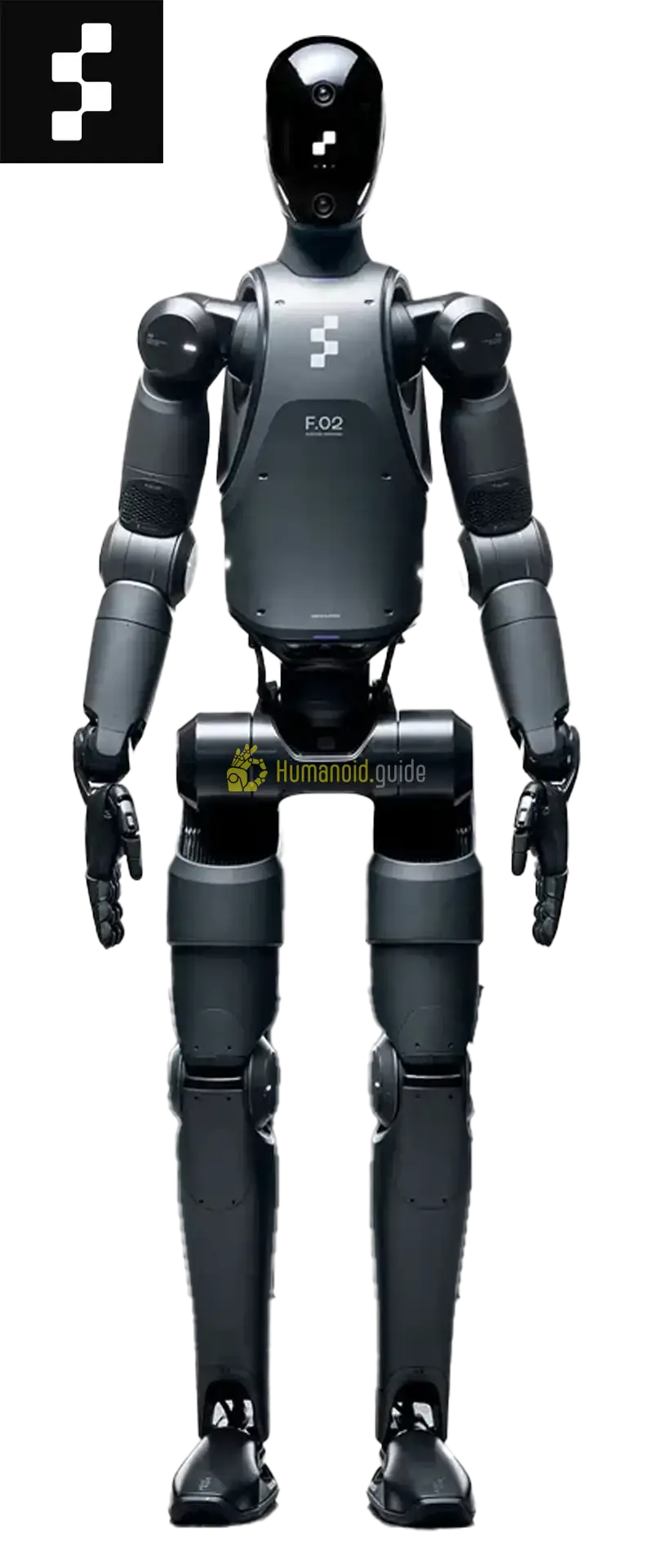
Figure AI (Sunnyvale, California) unveiled its second‑generation humanoid, Figure 02, in 2024. Standing 168 cm tall and weighing 70 kg, the robot carries a 20 kg payload and sprints at an impressive 10.8 km/h. Built around a battery good for 5 continuous hours, Figure 02 boasts 28 DOF and a full sensor suite including cameras, depth sensors, and an IMU. Its defining edge lies in Helix, a proprietary multimodal AI model that lets the robot learn new tasks from natural‑language instructions and visual demonstration with zero coding. Since early 2025, Figure 02 units have been performing kitting and material‑handling tasks alongside human workers at BMW’s Spartanburg, South Carolina factory. Figure quotes an approximate per‑robot cost of $130,000 for pilot programs, with availability on a pre‑order basis directly from the company. The Figure 02 database page houses all technical details.
Price & Total Cost of Ownership
Neither robot is available for open commercial purchase, but estimated “pilot‑program” prices give a ballpark. Robot Overflow pegs a Tesla Optimus V2.5 at $90,000, while Figure regularly cites $130,000 for its early‑access units. Over a three‑year pilot, assuming software updates and maintenance are bundled into the acquisition price (both vendors are still shaping support packages), the direct hardware cost gap remains $40,000 per unit. However, hidden costs lurk: Tesla’s program would likely tie into Tesla’s own factory ecosystem and require Tesla‑specific integration expertise; Figure, with its Helix no‑code paradigm, may demand less custom engineering. Logistics: Figure can deliver a unit within weeks of signing a pilot agreement, while Tesla’s timeline for external placements is unknown. No leasing or robot‑as‑a‑service (RaaS) models have been announced for either.
Winner: Figure 02, because you can actually get one and start testing today, even though the unit price is higher. For R&D teams willing to wait, Tesla’s estimated lower sticker price is attractive—but only if Tesla opens its pilot program.
Performance & Specs
Payload Capacity
Both robots carry a 20 kg arm payload—ample for typical pick‑and‑place, machine tending, or tote lifting. Neither can match a dedicated industrial arm, but they match many cobot limits.
Winner: Tie.
Speed & Movement
Figure 02’s top ground speed of 10.8 km/h (3 m/s) outpaces the Optimus V2.5’s 7.2 km/h by 50%. In a factory setting, faster transit between workstations means shorter idle time. However, the Figure bot is also 13 kg heavier (70 kg vs 57 kg), so its agility comes at a stability cost in tight spaces.
Winner: Figure 02 for raw speed; Tesla for lighter, potentially more agile navigation in constrained aisles.
Battery & Runtime
Figure 02’s 5‑hour battery provides 25% more shift time than the Optimus V2.5’s 4‑hour pack. For a typical 8‑hour shift with charging breaks, Figure can cover two full 5‑hour windows with an intermediate recharge, while Tesla would need three charges to hit 12 total hours.
Winner: Figure 02.
Degrees of Freedom & Dexterity
At 28 DOF each, both robots have the core flexibility to handle a wide range of manipulation tasks. Human‑like arm and hand DOF count is similar; neither discloses hand‑specific dexterity benchmarks, so a detailed comparison of fine manipulation is impossible.
Winner: Tie—spec parity, awaiting real‑world task‑performance data.
Software & AI Stack
Helix vs. Tesla’s FSD‑Derived AI
Figure’s Helix model is the standout: a multimodal transformer that interprets natural language, views a task demonstration, and immediately generates the required motion plan—no programming, no teach‑pendant, no ROS2 nodes. This “one‑shot” learning dramatically cuts integration time. Tesla’s humanoid borrows heavily from its FSD stack, using camera‑only perception and neural network control, but publicly shown tasks (e.g., slow block pick‑up, factory sorting) required extensive pre‑scripting. There is no evidence yet that Optimus can learn a new task from a single demonstration.
Winner: Figure 02, which offers a genuinely novel AI layer that reduces the cost of task switching.
Autonomy & Sensors
Figure 02 incorporates a camera‑ and depth‑sensor‑based perception system that feeds Helix’s world model for navigation and manipulation. Tesla uses a camera‑centric approach akin to its vehicles, without published LiDAR or depth data. In factory environments where 3D sensing is critical for detecting bin states or obstacles, Figure’s explicit depth sensing may provide an edge in robustness. However, Tesla’s expertise in scalable computer vision could eventually level the field.
Winner: Figure 02, thanks to explicit depth sensing and demonstrated autonomous performance in a live factory.
Build Quality & Durability
Neither manufacturer has published IP ratings, operating temperature ranges, or MTBF data. Figure’s heavier chassis (70 kg) and aluminum construction promise durability, but the robot must be handled carefully—it is not an IP54 wash‑down unit. Tesla’s lighter, slimmer design may be less rugged but simpler to maintain in‑house by Tesla technicians. Without third‑party reliability data, no clear winner.
Winner: Tie—both designs are early‑stage and unrated for industrial‑grade endurance.
Real‑World Deployments & Track Record
Figure 02’s deployment at BMW’s Spartanburg plant is the strongest proof point of any humanoid in 2026. It has performed real tasks—moving metal stampings, placing components into bins—alongside human workers. Figure AI has posted videos of the robot working autonomously; the company reported that as of early 2026, its bots have collectively logged over 1,000 on‑site operating hours (exact cumulative figure not officially confirmed beyond company statements, but visual evidence supports substantial run time). Tesla has shown Optimus V2.x units in its own R&D labs and, more recently, sorting cells in a limited capacity at its Fremont factory, but no external pilot data exists, and the total hours of autonomous public‑domain operation are negligible.
Winner: Figure 02 decisively, with the only verifiable industrial deployment.
SDK, Software & Developer Ecosystem
Neither robot ships with a publicly available SDK, and neither has confirmed ROS2 compatibility. Figure’s Helix model is closed; developers interact through a high‑level API (currently unavailable outside pilot partners). Tesla provides no developer‑facing tooling for Optimus—the robot runs on internal Tesla software that is not intended (yet) for third‑party development. Simulation support: Figure has demoed tasks in MuJoCo‑like environments but hasn’t released a simulation plugin. Tesla likely uses its own simulation engine (based on Unreal/FSD simulation), unreachable by outsiders. Community size is minimal for both.
Winner: None—both ecosystems are completely closed, making third‑party integration impossible in 2026. Researchers and integrators must treat these as black‑box platforms.
Which Should You Buy? Tesla Optimus V2.5 vs Figure 02 by Use Case
Choose the Tesla Optimus V2.5 if: - Your organization has an existing relationship with Tesla and can secure a collaboration slot. - You prioritize a lower initial unit cost forecast ($90K) and are willing to wait for the robot to mature via Tesla’s internal scaling. - You value a lighter, safer platform for indoor R&D labs with limited infrastructure.
Choose the Figure 02 if: - You need a humanoid that is already performing skilled tasks in a live automotive factory and can be deployed within weeks. - You want the Helix multimodal AI that learns new operations from demonstration, cutting engineering time. - You are evaluating a 2026 pilot and require a proven, camera + depth‑sensing platform with over 1,000 cumulative factory hours.
Choose neither if: - You require an open ROS2‑based SDK for custom integration—neither robot provides one today. - Your tasks need wash‑down‑grade durability or certifications—neither robot has IP ratings or safety certs. - You are not ready for a captive, single‑vendor system with limited third‑party support.
Comments