

Verdict: Tesla Optimus Gen 1 was a visionary prototype with an aspirational price under $30,000, but it never reached commercial production. In contrast, the Boston Dynamics Atlas is a $420,000 production humanoid available for enterprise purchase in 2026, packing 56 degrees of freedom and a 50 kg payload. For any real‑world deployment, Atlas is the only viable pick, but the Optimus Gen 1 remains a benchmark for what future affordable humanoids might deliver.
Comparing a discontinued prototype from Tesla with a production heavy‑hitter from Boston Dynamics might seem like pitting a concept car against a factory‑ready truck — and in many ways, it is. The Tesla Optimus Gen 1 debuted in 2022 as a bold vision for affordable general‑purpose humanoids, while the all‑electric Boston Dynamics Atlas unveiled at CES 2026 is a real product shipping to industrial enterprises. This article breaks down their specs, price, availability, and use cases to help you understand which robot, if any, fits your needs today.
Quick Verdict: Who Wins?
- Best overall value: Boston Dynamics Atlas — the only robot here you can actually purchase and deploy.
- Best for affordable research benchmark: Tesla Optimus Gen 1 (assuming it were available) — projected $20,000–$30,000 price point but never sold.
- Best for heavy lifting (50 kg payload): Boston Dynamics Atlas.
- Best budget pick: None — Optimus Gen 1 is not commercially available, and Atlas costs $420,000.
Tesla Optimus Gen 1 vs Boston Dynamics Atlas: Specs Compared
| Feature | Tesla Optimus Gen 1 | Boston Dynamics Atlas |
|---|---|---|
| Price (base) | ~$20,000 (target, never sold) | $420,000 |
| Price (configured) | N/A | $420,000 |
| Weight | 73 kg | 89 kg |
| Height | 173 cm | 150 cm |
| Payload | 20 kg | 50 kg |
| Max speed | 2 km/h | 8 km/h |
| Battery life | 4 hours (target) | 4 hours |
| Degrees of freedom (DOF) | 28 | 56 |
| IP rating | Not published | Not published |
| Onboard compute | Tesla‑designed custom AI chip | Custom electric actuators; compute unspecified |
| Sensors | Cameras, ultrasonic sensors | Stereo cameras, depth sensors, LiDAR |
| SDK languages | Not published | Python (Boston Dynamics SDK) |
| ROS 2 support | Not known | Yes |
| Autonomy / fleet software | FSD‑based AI; no fleet management | Spot Fleet Manager (Orbit); autonomous navigation |
| Safety certifications | None | Not listed |
| Availability / lead time | Discontinued prototype; never sold | Enterprise purchase; limited production |
| Warranty / support | None | Enterprise SLA |
Table data sourced from manufacturer specifications and public demonstrations. “Not published” indicates the manufacturer has not released the information; no figures have been fabricated.
The most striking delta is the payload — Atlas lifts two and a half times more than the Optimus Gen 1 — and the 36‑DOF gap, which translates to dramatically greater dexterity. Atlas’s 8 km/h top speed is four times faster than Optimus’s walking pace, making it far more practical for dynamic industrial environments.
Tesla Optimus Gen 1 Overview
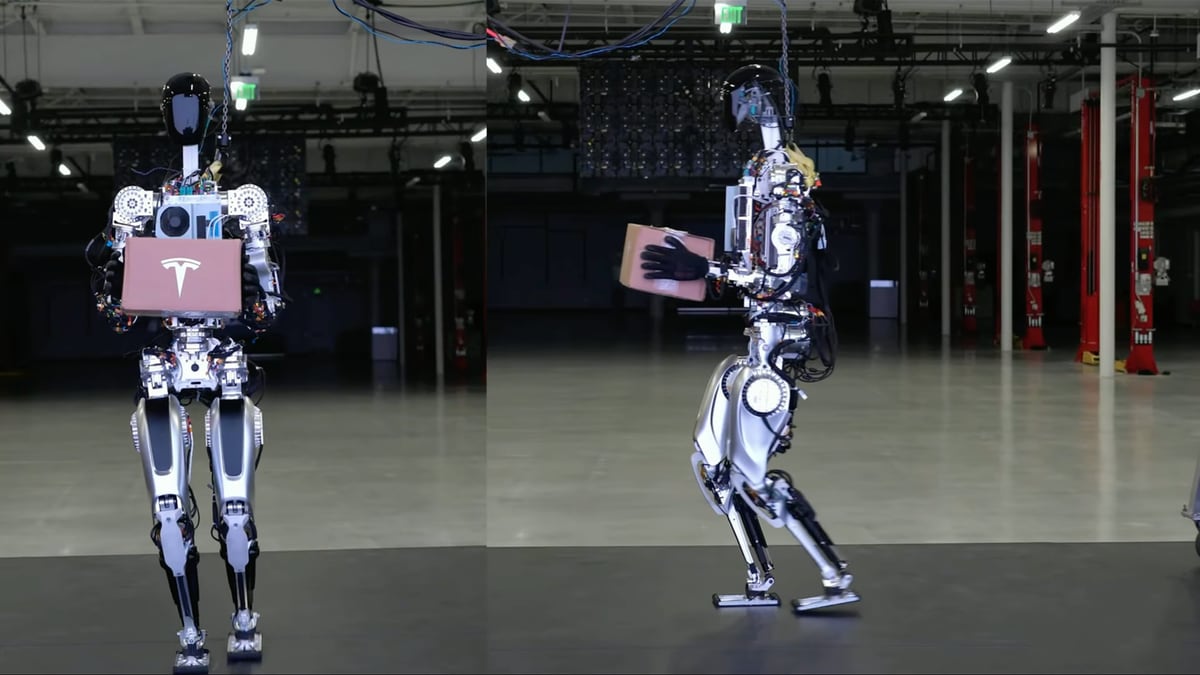
Tesla first showed the Optimus Gen 1 at its AI Day in September 2022. The 173 cm, 73 kg robot carried 28 degrees of freedom, a target payload of 20 kg, and used a custom AI chip derived from Tesla’s self‑driving hardware. Elon Musk touted a long‑term price of “less than $20,000,” but the robot never entered commercial production. A handful of units were demonstrated performing simple picking and placing tasks inside Tesla’s own factories, but no external customers received the Gen 1. The platform was later superseded by the more capable Optimus Gen 2, leaving the Gen 1 as a pure prototype. Today, there is no way to buy a new or used Tesla Optimus Gen 1.
Boston Dynamics Atlas Overview
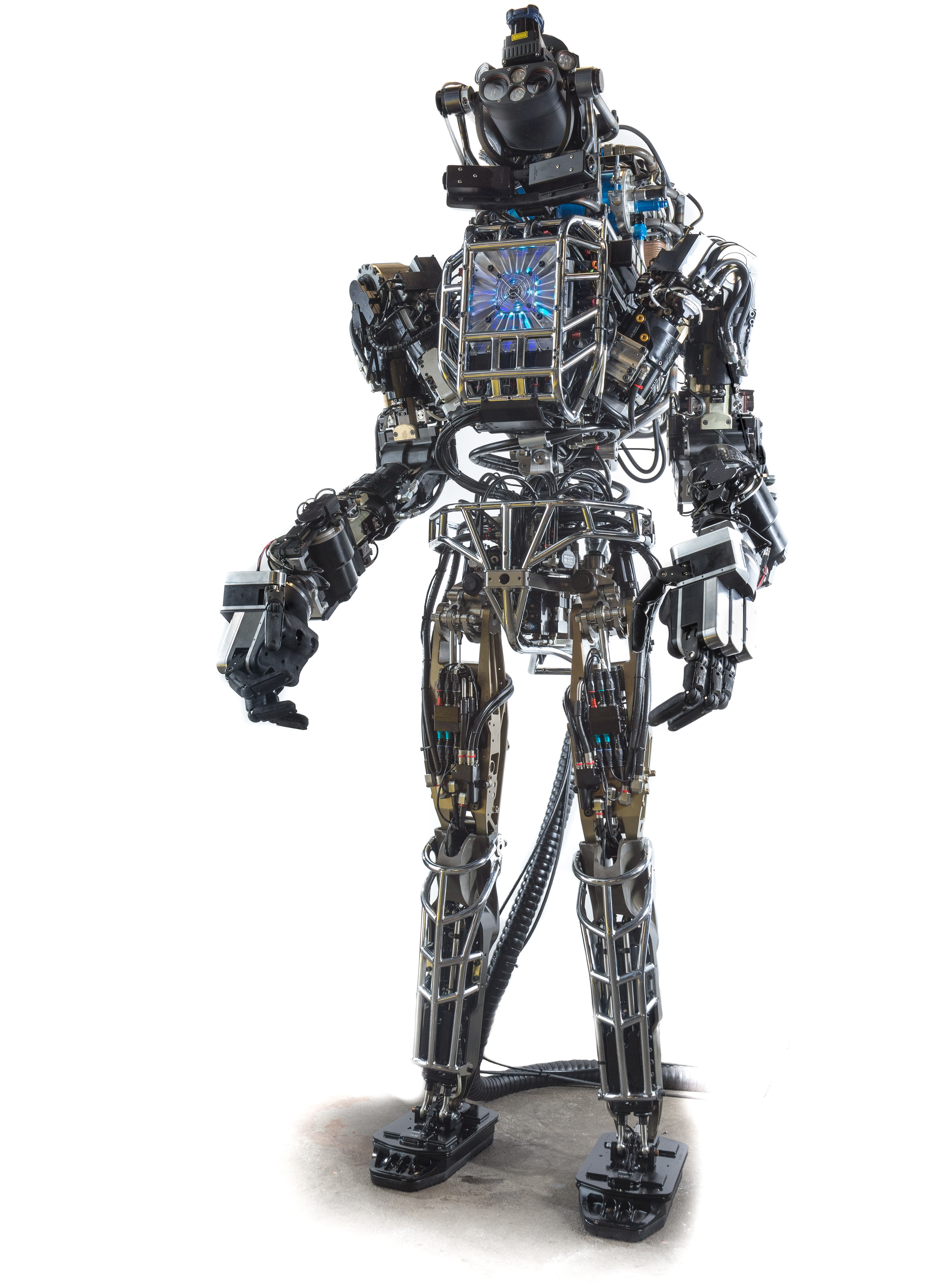
Boston Dynamics retired its hydraulic Atlas in 2024 and unveiled the all‑electric successor at CES 2026. Standing 150 cm tall and weighing 89 kg, the new Atlas boasts 56 degrees of freedom — doubling the joint count of the hydraulic model — and a 50 kg payload capacity. It runs for approximately 4 hours on a charge and moves at up to 8 km/h. Priced at $420,000, the robot is aimed at industrial sectors like logistics, construction, and automotive manufacturing. Boston Dynamics began limited commercial deliveries in early 2026, making this the first Atlas that enterprises can actually buy and put to work.
Price & Total Cost of Ownership
Optimus Gen 1’s $20,000–$30,000 price tag is aspirational only; not one unit was ever sold. In contrast, Atlas’s $420,000 sticker is real and puts it firmly in the heavy‑industry capital‑expenditure bracket. A three‑year TCO for Atlas — factoring in an enterprise support contract, spare parts, and potential software licensing — can easily push total costs past $500,000. For Optimus Gen 1, no TCO exists because the robot left no after‑sales footprint.
Winner: Boston Dynamics Atlas — it is the only robot with a commercial price and a support framework.
Performance & Specs
Payload
Atlas’s 50 kg payload is a clear advantage over Optimus’s 20 kg, allowing it to handle heavier tools, boxes, and materials. Industrial material‑handling tasks often require 25 kg or more, making Atlas the more versatile lifter.
Winner: Boston Dynamics Atlas.
Speed
Atlas runs at up to 8 km/h — roughly twice a human’s walking pace — while Optimus Gen 1 trudged at 2 km/h. In warehouse or construction settings, speed translates directly to throughput, giving Atlas a massive edge.
Winner: Boston Dynamics Atlas.
Battery Life
Both robots target 4 hours of runtime, though neither has published sustained cycle‑time data. Atlas’s 4‑hour figure is based on mixed‑duty cycles, while Optimus Gen 1’s was a design goal never validated in the field. Neither robot offers hot‑swappable batteries, though Boston Dynamics has hinted at rapid‑charge options.
Winner: Tie — both advertise 4 hours.
Degrees of Freedom
Atlas’s 56 DOF — including highly dexterous hands and a fully articulated torso — enables motions far beyond the 28‑DOF Optimus Gen 1. This extra articulation lets Atlas twist, crouch, and manipulate objects with near‑human fluidity, whereas Optimus Gen 1 was relatively stiff by comparison.
Winner: Boston Dynamics Atlas.
Software & SDK Ecosystem
Boston Dynamics provides a mature Python SDK, ROS 2 support, and an expanding simulation‑to‑hardware pipeline (including integration with NVIDIA Isaac Sim). The Spot‑derived Orbit fleet management platform can be extended to Atlas, allowing multi‑robot coordination. Tesla never released an SDK or API for Optimus Gen 1, and its software stack remains tightly coupled to Tesla’s internal Autopilot/FSD infrastructure.
Winner: Boston Dynamics Atlas — open SDK, ROS 2, and fleet tools make it the only viable development platform.
Autonomy & Sensors
Atlas uses a sensor suite of stereo cameras, depth sensors, and 3D LiDAR, fused with perception algorithms that enable real‑time object detection and dynamic path planning. Optimus Gen 1 relied on cameras and ultrasonic sensors, likely pulling object‑detection models from Tesla’s vehicle AI — but no off‑the‑shelf autonomy package was ever documented. Atlas can be deployed in autonomous mode today; Optimus Gen 1 never left supervised demo environments.
Winner: Boston Dynamics Atlas.
Build Quality & Durability
Neither manufacturer has published an IP rating or detailed environmental specs, though Boston Dynamics’ heritage suggests Atlas will be at least as rugged as Spot (IP54). Optimus Gen 1’s construction was clearly prototype‑grade, with exposed wiring and minimal sealing. For real‑world job sites, Atlas’s industrial‑grade build is far more reliable.
Winner: Boston Dynamics Atlas.
Price & Value Comparison
| Robot | Base Price | Commercial Availability | 3‑Year TCO (Est.) |
|---|---|---|---|
| Tesla Optimus Gen 1 | ~$20,000 | Never sold | N/A |
| Boston Dynamics Atlas | $420,000 | Enterprise, limited prod | $500,000+ |
While the Optimus Gen 1’s target price is an extraordinary figure, the fact remains it was never purchasable. If your budget is under $100,000, neither robot is an option today; if you have the capital for a six‑figure industrial humanoid, Atlas is the only choice.
Winner: Boston Dynamics Atlas (the only purchasable product).
Which Should You Buy? Tesla Optimus Gen 1 vs Boston Dynamics Atlas by Use Case
- Choose the Boston Dynamics Atlas if: you need a heavy‑payload (50 kg) humanoid for industrial logistics, construction, or manufacturing, and you have the $420,000+ budget and enterprise procurement channel. It is the only robot here that is actually shipping and supported.
- Choose the Tesla Optimus Gen 1 if: you are researching historical humanoid design and wish to benchmark aspirational cost targets — but you cannot buy one. No unit is available on any market.
- Choose neither if: you need an affordable, commercially available humanoid today. Consider alternatives like the Unitree G1 (starting at ~$16,000) or the Figure 02 (available for enterprise pilots) that bridge the gap between prototype promises and real‑world budgets.
Real‑World Deployments & Track Record
Boston Dynamics has not disclosed a named customer list for Atlas, but the company confirmed at CES 2026 that limited‑production units were shipping to select partners in automotive and logistics. The firm’s track record with Spot — thousands of units sold to construction, energy, and public‑safety clients — lends credibility to Atlas’s commercial readiness. Tesla showed Optimus Gen 1 moving parts and watering plants in controlled demos at its own factories, but no independent deployments were ever recorded. All Gen 1 performance data stems from curated Tesla videos, and no third parties have validated the robot’s capabilities.
SDK, Software & Developer Ecosystem
Developers working with Atlas get immediate access to a Python SDK, ROS 2 nodes, and simulation models in NVIDIA Isaac Sim. Fleet management through the Orbit platform is already proven on Spot and can scale to Atlas workcells. Tesla’s Optimus Gen 1, by contrast, had no public SDK, no ROS integration, and no developer documentation — a fundamental barrier for any research or commercial integration team. If you plan to write custom autonomy or integrate with existing factory software, Atlas is the only viable developer platform.
Support, Warranty & Availability
Atlas is sold directly by Boston Dynamics under an enterprise agreement that typically includes a 1‑year warranty, service‑level response times, and access to spare parts. Orders are taken on a project‑by‑project basis with lead times measured in months. Optimus Gen 1 never had a sales channel, warranty, or support structure; the robot existed only in Tesla’s labs. For any organization needing a reliable capital asset with predictable uptime, Atlas’s formal support model is essential.
Comments