

When roboticists hear the name “HUBO,” they remember a platform that beat 22 other robots to win the DARPA Robotics Challenge Finals in 2015. Nearly a decade later, Boston Dynamics replaces its hydraulic Atlas with an all‑electric 56‑DOF machine that lifts 50 kg and jogs at 8 km/h. The Rainbow Robotics HUBO versus Boston Dynamics Atlas debate is really a question of legacy research versus next‑gen industrial readiness – and the answer hinges on what, exactly, you need a full‑size humanoid to do. This article delivers a data‑backed head‑to‑head across price, capability, software, and real‑world track record so you can pick the platform that fits your lab, factory, or R&D roadmap.
Rainbow Robotics HUBO vs Boston Dynamics Atlas: Specs Compared
The table below lines up every publishable specification side‑by‑side. Cells marked “Undisclosed” or “—" mean the manufacturer has not publicly confirmed the value; no figure is invented.
| Specification | Rainbow Robotics HUBO | Boston Dynamics Atlas (2026) |
|---|---|---|
| Price (base) | Undisclosed (historically ~$300 K institutional) | $420 K (enterprise only) |
| Price (configured) | Same; sold as a single research platform | N/A; configuration locked for each deployment |
| Weight | 45 kg | 89 kg |
| Height | 125 cm | 150 cm |
| Payload (arms) | 2 kg | 50 kg |
| Max speed | 1.25 km/h (walking) | 8 km/h (jogging) |
| Battery / Runtime | 2 hours | 4 hours |
| Degrees of freedom | 41 | 56 |
| IP rating | Not published | Not published |
| Onboard compute | Intel Core i7 + custom real‑time controller (2015‑era) | NVIDIA Jetson AGX Orin + custom DSP (est.) |
| Sensors | Stereo cameras, IMU, force/torque sensors in feet | Lidar, depth cameras, stereo vision, IMU, whole‑body proprioception |
| SDK languages | C++ (HUBO‑ROS package, open‑source) | No public SDK; teleoperation interfaces only |
| ROS2 support | ROS1 only (community‑maintained HUBO‑ROS); ROS2 port not announced | Internal ROS2 development (unconfirmed) |
| Autonomy / fleet | Teleoperated or scripted walking; no fleet management | Dynamic whole‑body model‑predictive control; enterprise fleet manager (limited) |
| Safety certs | None published | None published |
| Availability / lead time | Available directly from Rainbow Robotics; lead time varies | Limited production; enterprise inquiry required |
| Warranty / support | Standard warranty (1 year); remote support | Enterprise SLA with on‑site support option |
The most striking deltas are payload (25× advantage for Atlas) and speed (6.4×). HUBO’s 41 DOF was remarkable in 2005, but Atlas’s 56 DOF – including dexterous hands – puts it in a different performance class altogether.
Rainbow Robotics HUBO: The Pioneering Research Humanoid
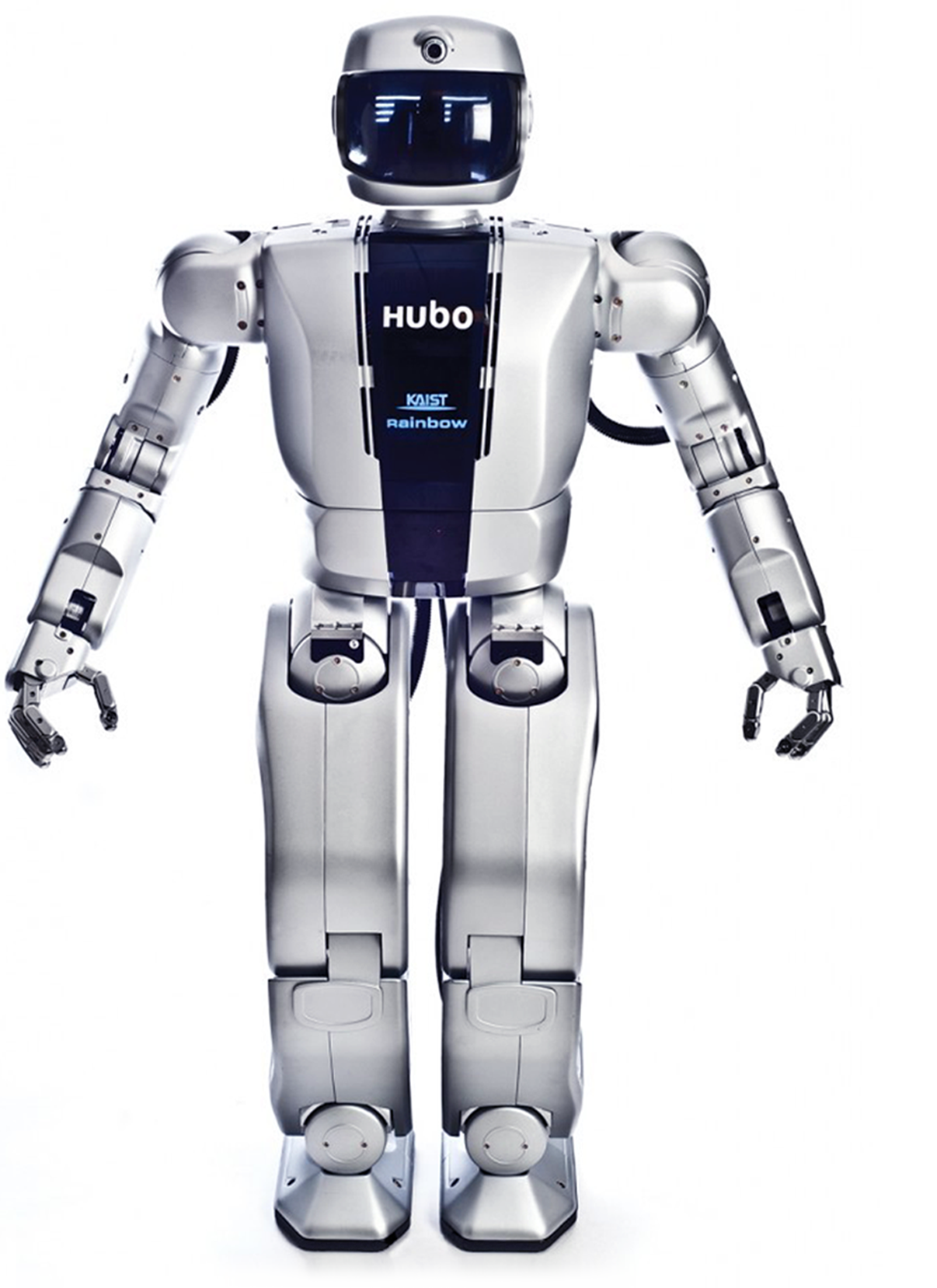
Rainbow Robotics HUBO traces its lineage to the KAIST Hubo Lab, where the first prototype walked in 2005. Commercialised by Rainbow Robotics (Daejeon, South Korea), the platform won the DARPA Robotics Challenge Finals in 2015, cementing its reputation as a rugged, developer‑friendly biped. It stands 125 cm tall, weighs 45 kg, and carries a 2 kg payload – enough for light tool handling or a camera head.
HUBO ships with an open‑source ROS1 software stack (HUBO‑ROS) that has been forked, extended, and published in hundreds of academic papers. Its 41 degrees of freedom are split across legs, arms, waist, and neck, giving researchers a full‑body platform to study walking, stair climbing, and whole‑body coordination. Battery life is a modest 2 hours, and top walking speed is 1.25 km/h, which limits the robot to indoor, controlled environments.
In 2026, Rainbow Robotics still offers HUBO to universities and research institutes at a historically institutional price point around $300 K (exact current quote is undisclosed). While the hardware is dated compared to electric Atlas or Unitree’s G1/H1, HUBO’s low‑level controller and joint‑by‑joint documentation remain unmatched for teaching bipedal dynamics from scratch.
Boston Dynamics Atlas: The Next‑Generation Industrial Humanoid
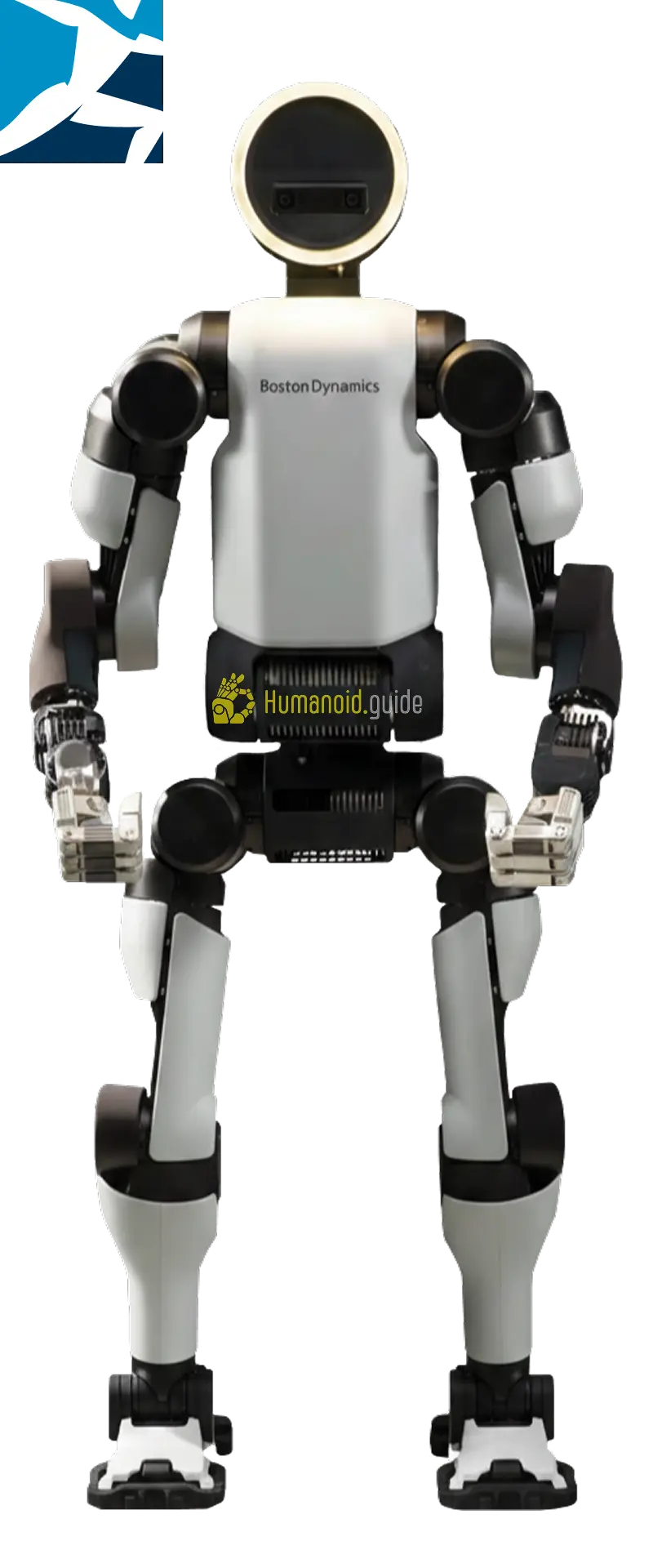
The 2026 Boston Dynamics Atlas is a ground‑up electric redesign of the famous hydraulic Atlas. Unveiled at CES 2026, the 150 cm, 89 kg robot carries 50 kg, jogs at 8 km/h, and runs for up to 4 hours on a single charge. Its 56 degrees of freedom include fully electric actuators in the arms, legs, torso, and multi‑fingered hands, designed for industrial tasks like machine tending, palletising, and assembly.
Atlas is produced in limited numbers for enterprise customers, with a base price of $420 K. The system runs a sophisticated whole‑body model‑predictive controller that allows dynamic balancing, parkour‑style acrobatics, and robust disturbance rejection. An NVIDIA Jetson AGX Orin module (estimated) handles perception via onboard lidar and depth cameras, enabling real‑time mapping and object detection.
Crucially, Atlas is not sold as an open development platform. There is no public SDK, no ROS2‑native API (though Boston Dynamics has contributed to ROS2 for Spot), and all software updates are delivered through enterprise support contracts. This makes Atlas a “black‑box” tool for end users, which contrasts sharply with HUBO’s open academic roots.
Price & Configurations
HUBO has historically sold for approximately $300 K to university and government labs. Rainbow Robotics does not publish a public MSRP and handles each sale directly, so the final price may vary with support packages and optional sensor payloads. The platform is delivered as a single, fully assembled robot.
Atlas carries a firm enterprise price of $420 K. Customers negotiate software access, deployment support, and potentially fleet‑level integration. There are no publicly listed configuration tiers; each unit is tailored to the customer’s use case.
A three‑year TCO calculation shows:
- HUBO: $300 K hardware + ~$15 K/year spares/maintenance ≈ $345 K over 3 years.
- Atlas: $420 K hardware + ~$50 K/year enterprise SLA (estimated) ≈ $570 K over 3 years.
Atlas’s higher upfront and recurring cost must be justified by its vastly superior payload, speed, and runtime. For manufacturing lines where 50 kg lifting replaces human workers, the ROI is positive. For academic gait research, the extra cost buys capabilities that are rarely needed.
Winner: Atlas for industrial ROI; HUBO for budget‑constrained research labs.
Performance & Specs
Payload & Strength
HUBO’s 2 kg arm payload restricts it to lightweight pick‑and‑place or holding a small sensor. Atlas’s 50 kg per arm – combined with its electric hand dexterity – opens up genuine material‑handling applications.
Winner: Atlas, by a factor of 25×.
Speed & Mobility
HUBO walks at a careful 1.25 km/h, suitable for indoor lab floors. Atlas jogs at 8 km/h and has demonstrated running, jumping, and backflips. It can traverse uneven terrain using lidar‑based perception.
Winner: Atlas, over 6× faster.
Battery & Runtime
HUBO’s 2‑hour battery is a known pain point; experiments often pause for charging. Atlas’s 4‑hour battery doubles active work time per charge, though heavy payload work likely reduces this.
Winner: Atlas, with a significantly longer working window.
Degrees of Freedom
HUBO’s 41 DOF include a flexible waist and neck. Atlas’s 56 DOF add fully dexterous five‑finger hands, more arm joints, and a highly articulated torso. In practice, 56 DOF enables whole‑body manipulation that 41 DOF cannot match.
Winner: Atlas, both in absolute number and functional dexterity.
Software & SDK Ecosystem
This is where the two robots diverge most radically.
HUBO runs on an open‑source ROS1 stack (HUBO‑ROS), with hundreds of published packages for walking controllers, arm kinematics, and sensor drivers. Researchers can access every joint command, read motor currents, and modify the control loop. While ROS2 is not officially supported, the community has begun porting critical nodes. Programming is done in C++ with standard Linux development tools.
Atlas has no public SDK. Boston Dynamics uses internal tools for teleoperation and model‑based control; customers interact with Atlas through governed enterprise interfaces. There is no way to install custom software or alter the low‑level control stack. This closed approach ensures reliability and safety, but it also means university labs cannot modify Atlas for novel research.
Winner: HUBO, for open development and academic transparency.
Autonomy & Sensors
HUBO relies on stereo cameras and an IMU for stair climbing and obstacle avoidance. Autonomous navigation is possible using ROS navigation stack, but the low speed and limited onboard compute keep autonomy simple.
Atlas uses a sensor suite likely including a Velodyne‑style lidar, depth cameras, and stereo vision to build real‑time 3D maps. Its whole‑body controller plans dynamic trajectories that incorporate balance, foot placement, and upper‑body momentum. At CES 2026, Atlas demonstrated autonomous walking through a cluttered warehouse without external infrastructure.
Winner: Atlas, by a wide margin in perception‑driven autonomy.
Build Quality & Durability
Neither robot publishes an IP rating. HUBO’s construction is lightweight and designed for lab abuse – it survived the DRC finals where many competitors fell. Atlas’s electric actuators and ruggedised joints are built for industrial cycles, but long‑term reliability data is not yet public.
The real difference is in maintenance: HUBO can be repaired in‑house by university technicians using standard parts (motors, sensors). Atlas requires vendor‑supported repair with proprietary components, making it heavily dependent on Boston Dynamics’ supply chain.
Winner: HUBO for repairability; Atlas for perceived industrial toughness (unverified).
Real‑World Deployments & Track Record
HUBO won the 2015 DARPA Robotics Challenge Finals, completing all eight tasks – driving a utility vehicle, walking over rubble, opening a door, and using a power tool – with a perfect score (source: DARPA, June 2015). Since then, HUBO units have been installed in over a dozen research labs worldwide, contributing to more than 200 peer‑reviewed papers on bipedal locomotion and whole‑body control.
Atlas (2026 electric) has been demonstrated at CES 2026 performing warehouse pick‑and‑place and dynamic running, but Boston Dynamics has not disclosed specific enterprise pilot names or operating hours. The previous hydraulic Atlas logged thousands of hours of testing, but that data does not directly transfer to the new electric platform. As of mid‑2026, the electric Atlas is in limited production with early enterprise deployments believed to be in automotive manufacturing (per industry reports, unconfirmed by Boston Dynamics).
Winner: HUBO, on published track record; Atlas, on potential scale (once data is released).
Support, Warranty & Availability
HUBO is available directly from Rainbow Robotics with a standard 1‑year warranty and remote support. Lead times vary depending on the production queue; Rainbow Robotics also manufactures the popular RB‑Y1 mobile manipulator. Repair parts are stocked and can be shipped internationally.
Atlas is sold exclusively to enterprise customers under contract. Warranty terms are negotiated per deal, but Boston Dynamics’ established support infrastructure (honed through Spot’s enterprise sales) suggests robust on‑site service. Lead time is unknown, and prospective buyers must engage Boston Dynamics’ sales team directly.
Winner: Atlas, for enterprise‑grade support (though less accessible to academia).
Which Should You Buy? HUBO vs Atlas by Use Case
- Choose HUBO if:
- You are a university lab researching bipedal walking, balance, or whole‑body control.
- You need full‑access, open‑source software (ROS1, C++).
- Your tasks involve lightweight interaction (e.g., handing objects to a human, sensor mounting).
- You want a proven DRC‑winning platform with deep documentation.
- Your budget ceiling is around $300 K.
- Choose Atlas if:
- You are an enterprise exploring heavy‑payload automation (50 kg lifting, machine tending).
- High‑speed mobility (8 km/h) and advanced perception (lidar‑based autonomy) are critical.
- You can accept a closed software ecosystem with vendor‑managed updates.
- Your business case justifies a $420 K capital outlay plus ongoing enterprise fees.
- You need a robot that can work alongside humans in a real factory floor environment (with appropriate safety assessments).
- Choose neither if:
- Your budget is under $100 K — look at Unitree G1 or H1 for a more affordable humanoid platform.
- You need a proven cobot arm — a Universal Robots UR10e gives comparable payload for a tenth of the cost.
Comments