

For two robots that both hover around $400,000, the PAL Robotics REEM‑C and Boston Dynamics Atlas represent opposing philosophies in humanoid robotics: one a purpose‑built academic research platform, the other a performance‑at‑all‑costs industrial demonstration machine. This 2026 comparison breaks down every dimension—price, payload, speed, software, openness, and real‑world deployment—to help universities, integrators, and R&D labs decide which tall biped belongs in their lab.
Quick Verdict: Who Wins?
- Best overall value for research: PAL Robotics REEM‑C — open ROS ecosystem, 6‑hour runtime, and no black‑box control stack.
- Best for high‑performance industrial tasks: Boston Dynamics Atlas — 50 kg payload, 8 km/h speed, dynamic balancing.
- Best for open‑source/hackability: REEM‑C — fully Ubuntu‑based ROS1/ROS2 with full customizability.
- Best for cutting‑edge whole‑body dynamics: Atlas — real‑time model‑predictive control and acrobatic legged locomotion.
REEM‑C vs Atlas: Specs Compared
| Specification | PAL Robotics REEM‑C | Boston Dynamics Atlas |
|---|---|---|
| Price (base, new) | $400,000 (quote‑based, typically €300 K–€400 K) | $420,000 |
| Configured price | Same (single‑config research platform) | Same (base enterprise unit) |
| Height | 165 cm | 150 cm |
| Weight | 80 kg | 89 kg |
| Payload | 10 kg (arms, per hand ~1.5 kg) | 50 kg (manipulation arms) |
| Max speed | 2.88 km/h (0.8 m/s) | 8 km/h (2.2 m/s) |
| Battery life | 6 hours (continuous walking) | 4 hours (runtime, dependent on task intensity) |
| Degrees of freedom | 44 (6 per arm, 6 per leg, 2 head, 2 torso, 3 per hand) | 56 (fully articulated body + dexterous hands) |
| IP rating | Not published (indoor‑only) | Not published (likely ≥ IP42 from demos) |
| Onboard compute | Intel Core i7 + NVIDIA GPU (specifics not disclosed) | Custom compute pack (likely NVIDIA Jetson / x86 edge; details NDA) |
| Sensors | Hokuyo URG‑04LX laser, ASUS Xtion RGB‑D, IMU, microphones | Multi‑plane lidar, RGB‑D cameras, IMU, force/torque sensing |
| SDK / programming | ROS1/ROS2 (Python, C++), Gazebo simulation | Proprietary API (Python/C++), Spot SDK precedent; Atlas SDK unclear |
| ROS2 support | Native ROS1 & ROS2 (open‑source drivers) | ROS2 bridge exists for Spot; Atlas full ROS2 stack not confirmed |
| Autonomy / fleet | Navigation stack (move_base, SLAM) via ROS; no fleet manager | Model‑predictive control, real‑time perception; no fleet management system published |
| Safety certifications | Not certified for collaborative operation (lab‑only) | Not certified; operated in cordoned industrial pilots |
| Availability (lead time) | Quote‑only, typical 3–6 months | Limited production, enterprise orders, lead time unknown |
| Warranty / support | 1‑year standard warranty, optional extended; dedicated FAE | Enterprise SLA, details under NDA |
The table lays bare the functional divide: Atlas outclassifies REEM‑C in every raw mechanical spec—payload, speed, and DOF—but REEM‑C’s fully open software stack and longer battery life make it a far friendlier platform for university‑grade autonomy research.
PAL Robotics REEM‑C: ROS‑Native Research Biped
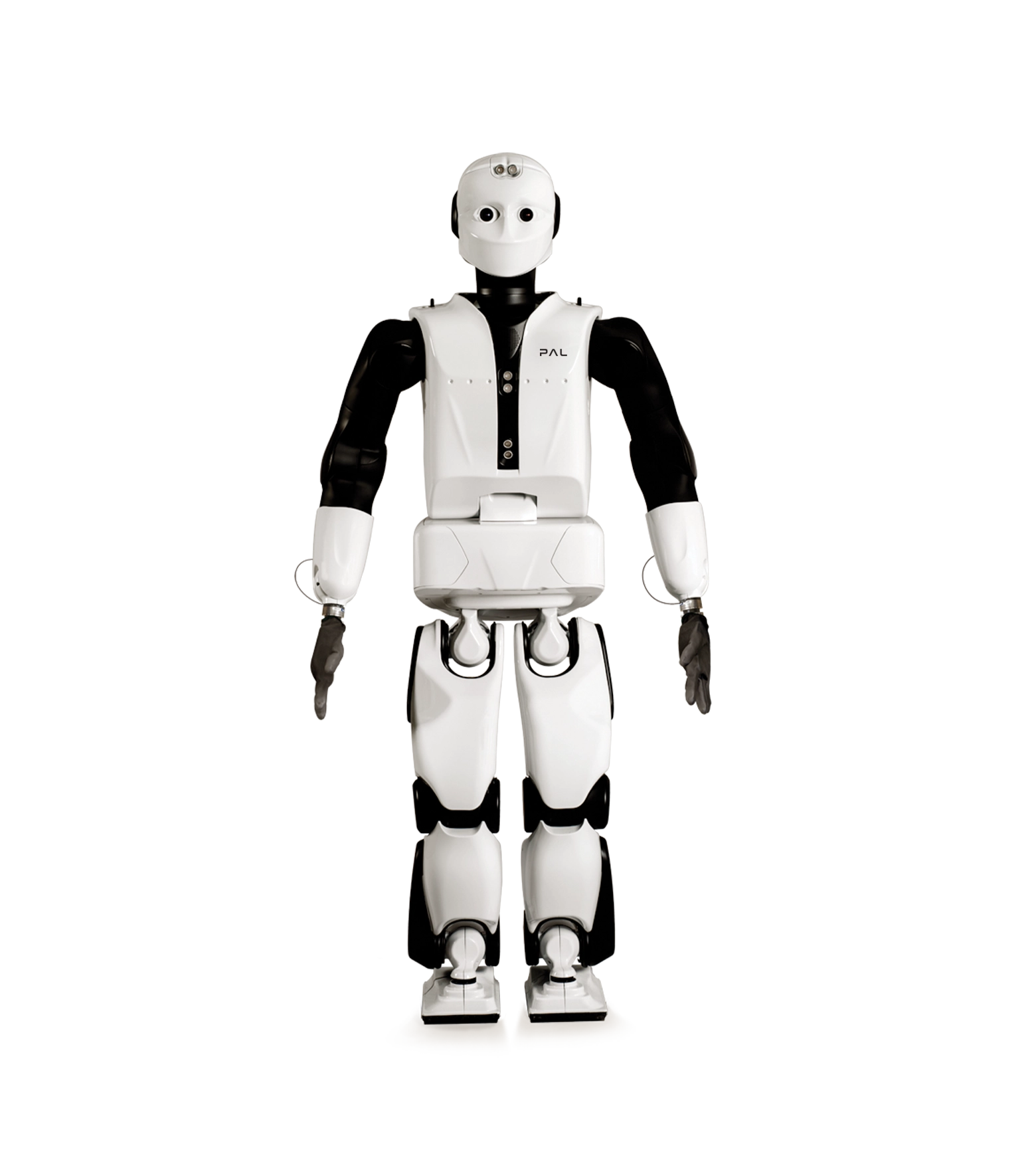
Built by PAL Robotics in Barcelona, the REEM‑C is a full‑size humanoid laser‑focused on academic and institutional research. Unlike many competitor platforms, it ships pre‑installed with Ubuntu and a complete ROS (both ROS1 and ROS2) middleware stack, including open‑source drivers for all sensors and actuators. With 44 degrees of freedom—six per arm, six per leg, plus a controllable head, torso, and under‑actuated hands—it enables studies in bipedal walking, whole‑body control, and social human‑robot interaction. Its 6‑hour battery is class‑leading among humanoids in its price tier, allowing full‑day lab sessions without swapping batteries.
REEM‑C is available exclusively through a custom quotation process, typically priced between $400,000 and slightly higher depending on configuration. Units have been deployed across European Union research projects, making it a familiar fixture in robotics labs that prioritize reproducibility over raw dynamic performance. For more details, visit the PAL Robotics REEM‑C database page.
Boston Dynamics Atlas: All‑Electric Industrial Powerhouse
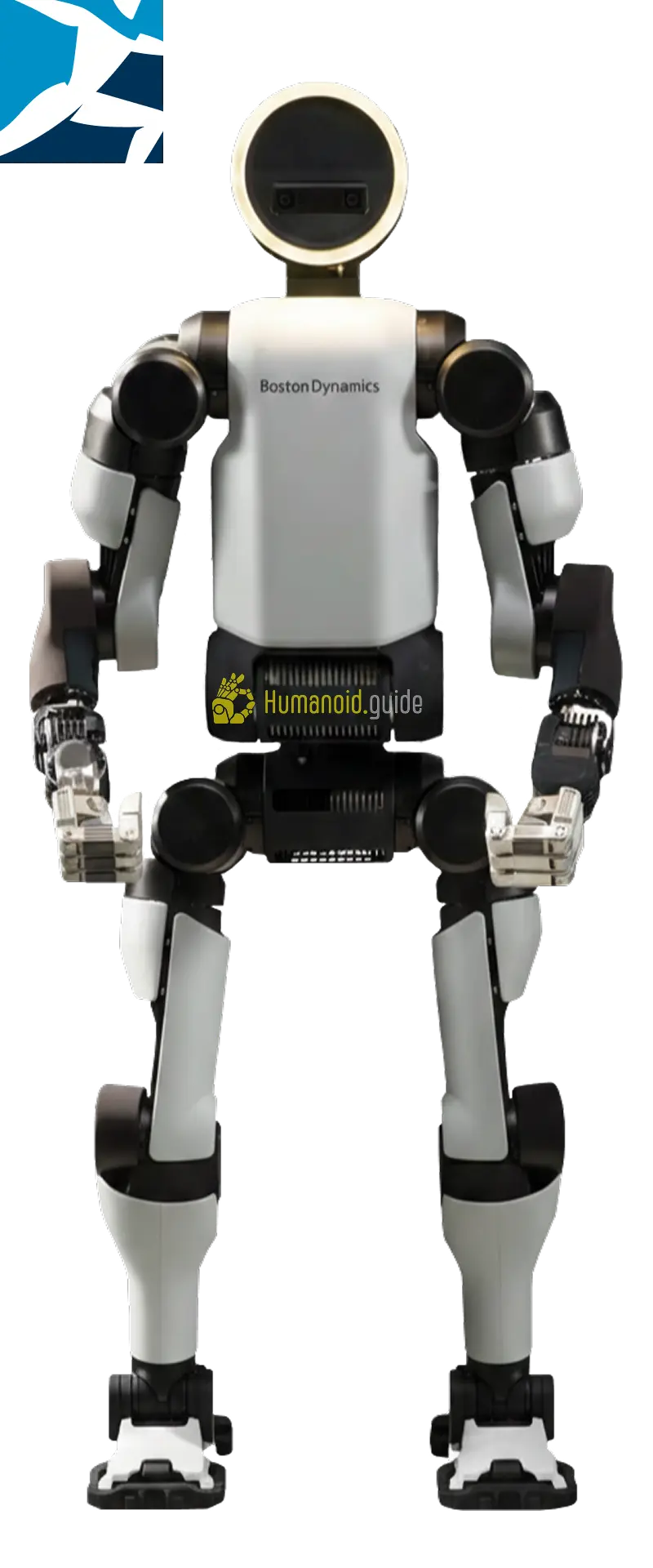
The latest all‑electric Atlas, unveiled at CES 2026, is Boston Dynamics’ statement of intent for the future of agile industrial humanoids. At 150 cm and 89 kg, it packs 56 degrees of freedom across an extremely dynamic frame—capable of backflips, high‑speed turns, and precise object manipulation thanks to its new electric actuator design. The robot’s 50 kg payload (over five times that of REEM‑C) and 8 km/h walking speed put it in a different performance league entirely.
Atlas is sold as an enterprise‑only system priced at $420,000, with initial units reaching early‑access partners for material‑handling and warehouse logistics pilots. The control stack relies on real‑time model‑predictive control, force‑adjusted manipulation, and deep perception, but SDK details remain scarce; Boston Dynamics has not yet released a public SDK for Atlas, though its proven Spot SDK suggests a similar ROS2‑bridge capability may come later. For full specifications, see the Boston Dynamics Atlas database page.
Head‑to‑Head by Dimension
Price & Configurations
REEM‑C and Atlas are both $400,000‑class machines, but their packaging differs. REEM‑C is a single‑config research platform that includes the robot, on‑board computer, sensors, and ROS software pre‑loaded. The quote‑based pricing typically lands at $400,000 (€300 K–€400 K). Customers can purchase optional extended warranties and FAE support contracts, but there are no add‑on hardware tiers.
Atlas is sold as a base enterprise unit at $420,000. Boston Dynamics provides a standard enterprise SLA, but the exact scope of included software, simulation tools, and integration support is covered by NDA. For companies that need the performance and are already in the Boston Dynamics ecosystem, the marginal cost difference is negligible.
Winner: Tie — both require roughly the same financial commitment, though REEM‑C’s simpler, more transparent procurement may advantage academic buyers.
Performance & Specs
Payload
Atlas’s 50 kg payload dwarfs REEM‑C’s 10 kg, making it viable for real‑world tool use and box‑lifting. REEM‑C’s 10 kg (split roughly 1.5 kg per hand) is adequate for light object manipulation and sensor payloads but cannot handle industrial tasks.
Winner: Atlas.
Speed
Atlas walks at up to 8 km/h (2.2 m/s), nearly three times REEM‑C’s 2.88 km/h (0.8 m/s). In dynamic environments, this translates to dramatically higher throughput for fetch‑and‑carry cycles.
Winner: Atlas.
Battery Life
REEM‑C’s 6‑hour runtime bests Atlas’s 4‑hour estimate, a significant advantage for all‑day experiments without battery swaps. Labs that run multi‑hour SLAM or locomotion trials will appreciate not having to interrupt.
Winner: REEM‑C.
Degrees of Freedom
Atlas’s 56 DOF (vs. REEM‑C’s 44) gives it more articulated hands, a more flexible torso, and richer whole‑body coordination, especially for dynamic balancing while carrying loads.
Winner: Atlas.
Software & SDK Ecosystem
REEM‑C is the clear software champion. It ships with Ubuntu and full ROS1/ROS2 support, including open‑source drivers for all sensors and actuators. Researchers can immediately use ROS navigation (move_base), Gazebo simulation, and a large library of community packages. The open architecture means every controller parameter is accessible, which is crucial for repeatable scientific experiments.
Atlas, by contrast, runs a proprietary real‑time control stack. Boston Dynamics has not released a public SDK, and while its Spot robot benefits from a ROS2 bridge and a rich Python/ C++ API, the same level of access for Atlas is unconfirmed. For industrial pilots, the black‑box approach may be acceptable; for academic research, it is a showstopper.
Winner: REEM‑C.
Autonomy & Sensors
Both robots carry a similar sensor suite (lidar, RGB‑D cameras, IMU), but Atlas’s real‑time model‑predictive control and full‑body force sensing give it a massive edge in dynamic autonomy—it can adjust to disturbances and plan footsteps in milliseconds. REEM‑C uses a standard ROS navigation stack with a more deliberative approach; it’s well‑understood and modifiable, but far less athletic.
Winner: Atlas for performance; REEM‑C for transparency and tweakability.
Build Quality & Durability
Atlas is designed to survive being flipped, thrown, and subject to aggressive manipulation, as shown in Boston Dynamics’ public demos. The REEM‑C is a lab‑grade system intended for controlled environments; it lacks the same level of ruggedization. Neither robot carries a published IP rating, but Atlas’s ability to operate in dusty warehouse floors and outdoor-like obstacle courses suggests superior robustness.
Winner: Atlas.
Price & Total Cost of Ownership
A three‑year total cost of ownership (TCO) for a REEM‑C, assuming $400,000 upfront plus an optional $15,000/year extended‑warranty/FAE contract, lands around $445,000. For Atlas, the $420,000 hardware price plus an enterprise SLA (estimated $25,000–$50,000/year) brings three‑year TCO to roughly $495,000–$570,000. The gap widens if one factors in the cost of integration engineering: REEM‑C’s open ROS stack reduces custom‑development hours, while Atlas’s proprietary environment may require more paid‑integration support from Boston Dynamics.
For a university lab, the lower upfront risk and simpler maintenance of REEM‑C translate into a significantly more predictable budget. For an enterprise that values performance above all, the premium for Atlas is justifiable.
Winner (TCO): REEM‑C — lower baseline and more control over integration spend.
Which Should You Buy? REEM‑C vs Atlas by Use Case
- Choose the PAL Robotics REEM‑C if…
- Your lab focuses on bipedal locomotion, whole‑body control, or social HRI research, and you need full access to the control stack.
- You require a ROS‑native humanoid with 6‑hour battery life for full‑day experiments.
- Open‑source reproducibility and the ability to publish exact software configurations matter more than raw athleticism.
- Choose the Boston Dynamics Atlas if…
- You are an industrial R&D group or integrator running material‑handling pilots that demand high payload (50 kg) and speed (8 km/h).
- Dynamic whole‑body motion—agile walking over obstacles, rapid turning, and disturbance recovery—is a core requirement.
- You already have an enterprise relationship with Boston Dynamics and value their support ecosystem.
- Choose neither if…
- Your budget is under $100,000 — consider a smaller humanoid like the Unitree G1 or a research quadruped.
- You need a robot with safety certifications for collaborative operation; both remain strictly cordoned‑area machines.
Real‑World Deployments & Track Record
The REEM‑C has been deployed in several European Commission‑funded projects, including work on service robotics and elderly‑assistance platforms. Exact unit numbers are not public, but the robot enjoys a stable presence in the academic community with a growing record of published papers on walking controllers and HRI.
The all‑electric Atlas is just entering limited pilot deployments. At CES 2026, Boston Dynamics announced it was shipping first units to warehouse and logistics partners for bin‑picking and palletizing trials, but no named deployment sites have been confirmed. The previous hydraulic Atlas logged dozens of research hours at institutions like MIT and Caltech under DARPA programs, but the new electric platform’s operational track record is still being written.
Winner (maturity): REEM‑C — proven in academia for years.
SDK, Software & Developer Ecosystem
For developers, the difference is stark. REEM‑C gives you a full Ubuntu terminal, ROS master, and pre‑configured Gazebo simulation models out of the box. New locomotion algorithms can be tested directly on hardware, and the community provides a rich set of ROS packages for SLAM, path planning, and perception. This openness accelerates prototyping and is the primary reason research labs choose it.
Atlas, as of mid‑2026, offers no public SDK. Boston Dynamics’ typical pattern (as seen with Spot) is to eventually release a SDK, but the timeline for Atlas is unknown. Early industrial partners presumably get access to a low‑level API and dedicated engineering support, but for anyone not under NDA, the platform remains a closed ecosystem. This is a dealbreaker for many academic users who need to share and reproduce results.
Winner: REEM‑C — undeniably superior for open‑source development.
Support, Warranty & Availability
REEM‑C is built‑to‑order with a typical 3–6‑month lead time, supported by PAL Robotics’ engineering team out of Barcelona. Standard warranty covers one year; extended contracts are available. Used units occasionally circulate among consortium partners, lowering entry cost.
Atlas is available for direct enterprise purchase with lead times undisclosed. Boston Dynamics provides an enterprise SLA that includes hardware support and access to engineering for integration, but the details remain under NDA. The lack of a public‑facing support model for smaller labs may pose an obstacle.
Winner (transparency): REEM‑C’s clear support tiers and academic track record make it easier for procurement offices.
Comments