

Standing barely over a meter tall and priced near $270,000, the IIT iCub has been the gold standard for cognitive humanoid research since 2004. At the other extreme, the Unitree H1 towers at 180 cm, runs at world‑record speed, and starts at just $90,000. This comparison clarifies which platform fits your lab, factory, or innovation project — unpacking specs, pricing, software stacks, and real‑world deployment readiness.
IIT iCub vs Unitree H1: Specs Compared
The side‑by‑side table below reveals the fundamental design chasm between these two humanoids: a lightweight, sensor‑rich research child versus a powerful, fast, adult‑sized athlete.
| Specification | IIT iCub | Unitree H1 |
|---|---|---|
| Price (new) | ~$270,000 (€200,000–250,000) | $90,000 – $150,000 |
| Price (used range) | $150,000 – $250,000 | $64,000 – $120,000 |
| Height | 1.04 m | 180 cm |
| Weight | 33 kg | 47 kg |
| Payload (arms) | Not specified | 7 kg (estimated) |
| Max speed | Not published (slow bipedal walk) | 11.9 km/h (3.3 m/s) |
| Battery life | 1.5 hours | 2 hours (hot‑swappable) |
| Degrees of freedom (DOF) | 53 (whole body) | 19 (27 on H1-2) |
| IP rating | Not published | Not published |
| Onboard compute | Custom embedded (DSP + ARM, YARP) | Intel NUC + NVIDIA Jetson |
| Sensors | Stereo cameras, microphones, full‑body capacitive tactile skin, 6‑axis F/T sensors, IMU | Depth cameras, LiDAR, IMU, joint torque sensors |
| SDK / middleware | YARP, iCubOS, ROS bridge | Unitree SDK, ROS2 |
| ROS support | ROS 1/2 via bridge | Native ROS2 |
| Autonomy / fleet software | No fleet management; open‑source perception stacks | Unitree autonomy framework, SLAM |
| Safety certifications | Not published | Not published |
| Availability | Academic/research institutions only (IIT partnership) | Publicly available for purchase |
| Warranty / support | Direct from IIT, limited to partner labs | Standard warranty, enterprise support from Unitree |
Winner: Unitree H1 on price, speed, payload, and general availability; iCub on sensing fidelity, fine manipulation potential, and academic ecosystem depth.
IIT iCub: The child‑sized cognition research benchmark
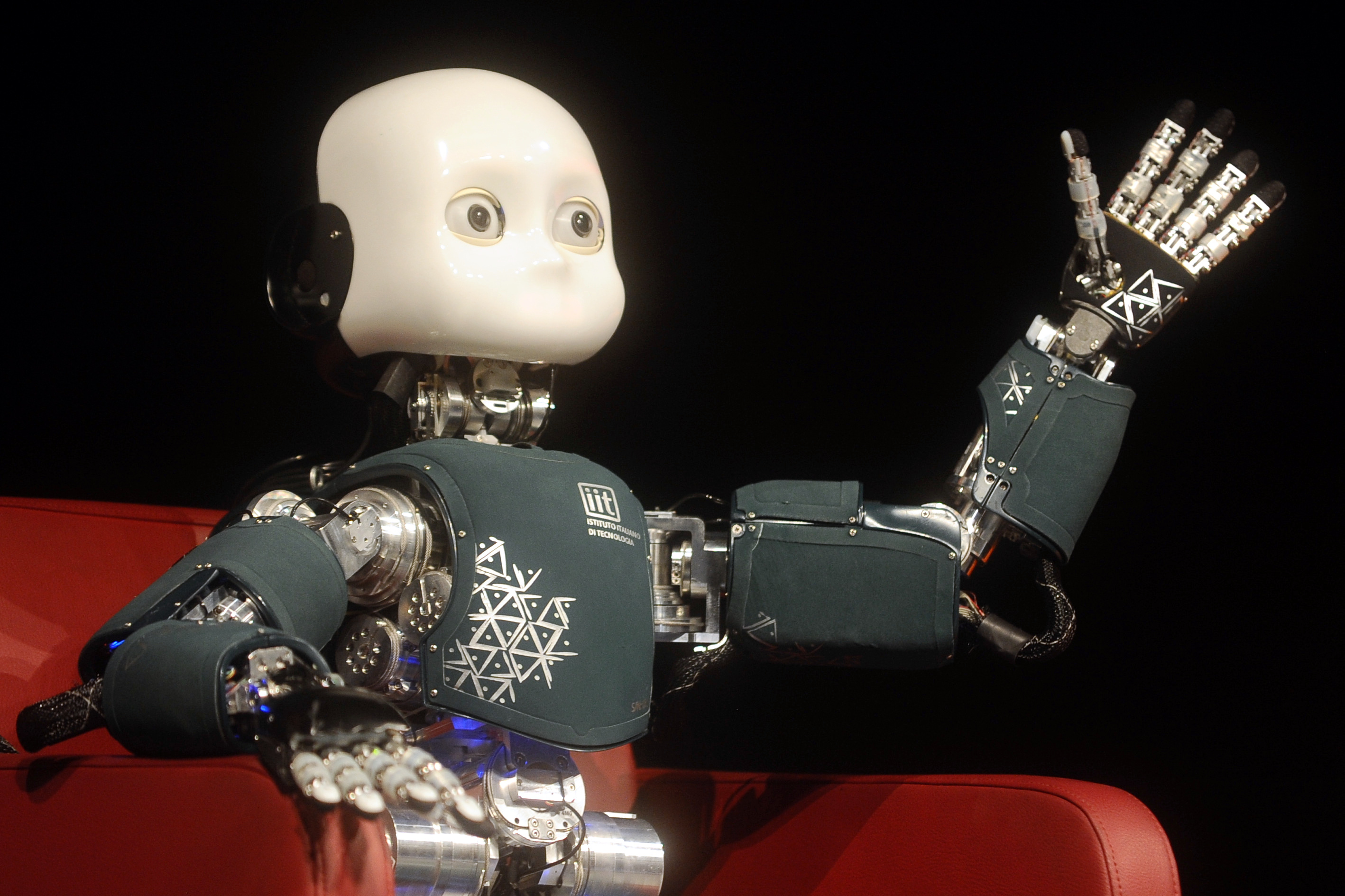
Launched in 2004 by the Italian Institute of Technology (IIT, Genoa), the iCub is a 1.04 m, 33 kg humanoid built to mimic a 3‑ to 4‑year‑old child. With 53 degrees of freedom — including articulated hands, a fully actuated head, and a compliant spine — the robot is a sensor‑rich platform for studying embodied cognition, motor learning, and social interaction. Its full‑body capacitive tactile skin, stereo vision, and an open‑source software stack (YARP middleware, iCubOS) have made it the default standard in developmental robotics. Over 40 research laboratories worldwide operate iCub platforms, generating thousands of peer‑reviewed publications. iCub is not sold commercially; institutions obtain it through an IIT partnership agreement, typically at €200,000–250,000 (≈$270,000). Used units occasionally change hands between labs at $150,000–250,000.
Unitree H1: The full‑size dynamic athlete
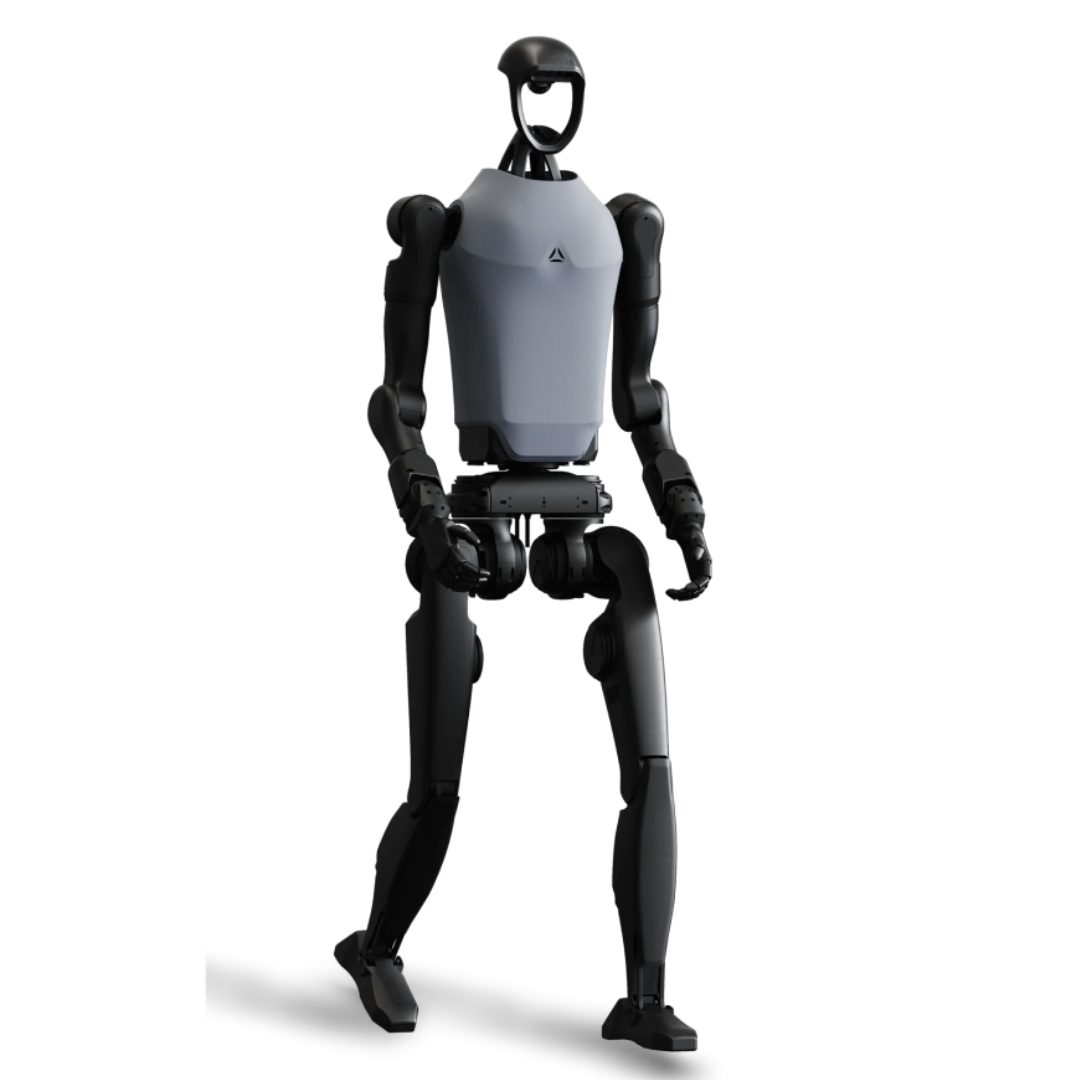
Unitree Robotics (Hangzhou, China) revealed the H1 in 2023 as its first full‑size humanoid. Standing 180 cm and weighing 47 kg, the H1 achieved a world‑record running speed of 11.9 km/h and can perform backflips. Its 19‑DOF base configuration (upgraded to 27 DOF on the H1‑2 variant) emphasizes lower‑body power and a lightweight, rigid frame. A hot‑swappable 864 Wh battery delivers 2 hours of operation, and the onboard Intel NUC + NVIDIA Jetson enables real‑time SLAM and locomotion control. Priced between $90,000 and $150,000 new, the H1 is available for purchase from Unitree and select robotics resellers, including on secondary markets where used units trade between $64,000 and $120,000. The H1 has been sold to university labs and industrial companies for locomotion research, entertainment demonstrations, and early‑stage service pilots.
Price & Total Cost of Ownership
IIT iCub is essentially a $270,000 research instrument that also carries a significant soft‑cost: labs must maintain an active IIT partnership, handle import logistics, and often dedicate engineering time to YARP integration. There is no public lease or RaaS option; the total 3‑year TCO can approach $300,000–$350,000 when factoring in custom gripper modifications and software maintenance. Used units offer a discount but come without a formal warranty.
Unitree H1 starts at $90,000 with a clear commercial price list. Unitree provides standard warranty and enterprise support, and the robot’s modular battery and off‑the‑shelf compute lower long‑term upkeep. Even with a fully‑loaded configuration ($150,000) and three years of support, the H1’s TCO rarely exceeds $200,000 — roughly 40–60% less than the iCub’s total ownership cost.
Winner: Unitree H1 for capital efficiency and accessibility; iCub only if cognitive research funding justifies the premium.
Performance & Specs
Payload
iCub does not publish a conventional arm payload — its hands are designed for object manipulation experiments rather than industrial lifting. The H1’s arms are rated for approximately 7 kg, sufficient for carrying tools or parts in a pilot manufacturing role.
Winner: Unitree H1 for practical payload capability.
Speed
iCub walks slowly and deliberately; no maximum speed is specified. The H1’s record 3.3 m/s makes it the fastest humanoid in the world, useful for patrolling, logistics, or entertainment applications.
Winner: Unitree H1 by a wide margin.
Battery
iCub’s 1.5‑hour fixed battery limits continuous experiments; hot‑swapping is not supported. The H1’s hot‑swappable 864 Wh pack delivers 2 hours and can be exchanged in under a minute without shutting down, enabling near‑continuous operation.
Winner: Unitree H1.
Degrees of Freedom
The iCub’s 53 DOF — spread across head, spine, arms, hands, and legs — allows extremely expressive and human‑like movement critical for cognitive studies. The H1’s 19‑DOF base (27 on H1‑2) focuses on legs and avoids the complexity of fully articulated hands, prioritizing robust dynamic locomotion.
Winner: iCub for manipulation fidelity and embodied cognition research; H1 for locomotion power.
Software & SDK Ecosystem
The iCub runs on YARP (Yet Another Robot Platform), a middleware developed at IIT that abstracts sensor and actuator communication. The iCubOS image bundles YARP, computer vision libraries, and a ROS bridge, allowing labs to connect to ROS 1/2 tools. The ecosystem is entirely open‑source and supported by the massive iCub user community, making it the richest research‑grade software stack in humanoid robotics.
Unitree provides a proprietary SDK with ready‑built ROS2 interfaces, Gazebo and Isaac Sim models, and a growing set of locomotion‑control libraries. While less academically diverse than YARP, the Unitree stack is production‑oriented, well‑documented, and directly usable by developers who want to get a robot walking quickly.
Winner: iCub for academic software depth and community‑driven innovation; H1 for easy integration and out‑of‑the‑box ROS2 support.
Autonomy & Sensors
iCub carries a head with stereo cameras, an IMU, and an on‑board computer capable of running state‑of‑the‑art SLAM and object recognition via YARP modules. Its 6‑axis force/torque sensors and full‑body capacitive tactile skin provide a rich stream of interaction data unmatched by any commercial humanoid. Autonomy is normally scripted per experiment, not intended for long‑duration unsupervised deployment.
The H1 uses a suite of depth cameras and LiDAR for environment mapping and obstacle avoidance. The Unitree SLAM pipeline enables real‑time navigation in dynamic spaces, and the robot can recover from pushes and uneven terrain through model‑predictive control. Tactile and manipulation sensing is minimal, and the H1 lacks the fine‑hand motor skills that make iCub a gold‑standard for grasping research.
Winner: iCub for sensor‑driven cognitive experiments; H1 for practical, real‑time autonomy in unstructured environments.
Build Quality & Durability
iCub is a precision research instrument, not a rugged field platform. Its lightweight plastic housing and exposed cables require a controlled lab environment. IP rating is not published, and the robot must be carefully handled. In contrast, the Unitree H1 is engineered with a rigid, lightweight exoskeleton, designed to survive falls and dynamic maneuvers. While also lacking a published IP rating, its construction tolerates a wider range of indoor and semi‑outdoor conditions.
Winner: Unitree H1 for mechanical robustness and everyday resilience.
Which Should You Buy? IIT iCub vs Unitree H1 by Use Case
Choose IIT iCub if: - Your lab is funded for cognitive robotics, developmental psychology, or neuroscience. - You require 53 DOF, full‑body tactile sensing, and an open‑source YARP stack with decades of community research. - You have an IIT partnership or access to a used unit with institutional support. - You can dedicate engineering time to custom experiment setup and software maintenance.
Choose Unitree H1 if: - You need a fast, full‑size humanoid for locomotion research, entertainment, or industrial pilot projects. - Budget is a constraint: $90k entry price opens doors that $270k would close. - You want hot‑swappable batteries, ROS2, and a realistic path to real‑world deployment. - You prefer a commercially supported robot with standard warranty and resale value.
Choose neither if: - You need a production‑ready collaborative robot for manufacturing tasks — consider a cobot like the UR10e instead. - Your timeline demands immediate, off‑the‑shelf reliability; both platforms are still primarily experimental.
Real‑World Deployments & Track Record
The iCub is deployed in over 40 research institutions worldwide, including MIT, the University of Bristol, and Osaka University, with published studies spanning object manipulation, imitation learning, and language acquisition. This 20‑year body of work constitutes the most extensive real‑world evidence base for any humanoid research platform. No industrial deployment data exists, as iCub is not designed for commercial tasks.
Unitree’s H1 has been sold to a handful of university labs (e.g., University of Edinburgh, ETH Zurich) and some industrial companies for proof‑of‑concept trials. Known deployments are limited to conference demonstrations, viral videos, and controlled pilot environments; the company has not published cumulative operating hours or long‑term reliability statistics. Early reports indicate solid locomotion performance out of the box, but long‑term durability in 24/7 scenarios remains unproven.
Winner: iCub for documented, peer‑reviewed research track record; H1 for commercial availability, though with thin deployment history as of mid‑2026.
Support, Warranty & Availability
The iCub is available exclusively through institutional partnership agreements with IIT. Warranty terms are negotiated per contract, usually covering defects but not damage from experimental use. Spare parts must be ordered directly from IIT, and there is no public enterprise SLA. Used iCub units sold between labs carry whatever support the original partner agreement offers — often none.
Unitree H1 is purchasable directly from Unitree or authorized resellers with a standard warranty covering manufacturing defects. Enterprise support includes firmware updates, SDK documentation, and access to an engineering support team. Spare parts and accessories are sold through Unitree’s online store, and hot‑swappable batteries add operational flexibility. Lead times for new units range from 4 to 12 weeks depending on configuration.
Winner: Unitree H1 for straightforward purchasing, warranty, and global support.
Comments