

Two Chinese full‑body humanoids are fighting for the same industrial floor space, and the numbers are surprisingly close: $80,000 versus $75,000. The Fourier GR‑3, revealed in early 2026, promises a 55‑DOF platform with a 15 kg arm payload — a class‑leading spec. UBTECH’s Walker S1, however, has been clocking hours in automotive logistics since 2025, handling parcels and sorting parts for BYD at a walking speed of 5 km/h. This article pits the fresh spec‑sheet star against a veteran that’s already clocking in — price, specs, software, and real‑world performance side by side — so you can decide which humanoid fits your factory, lab, or warehouse. Both robots link to their full database pages: Fourier GR‑3 and UBTECH Walker S1.
Quick Verdict: Who Wins?
- Best overall for heavy manipulation – Fourier GR‑3 (15 kg payload, 55 DOF)
- Best for proven factory logistics – UBTECH Walker S1 (BYD/CATL deployments)
- Best battery life & runtime – Fourier GR‑3 (3 hours vs 2 hours)
- Best option available right now – UBTECH Walker S1 (enterprise quote, not pre‑order)
Fourier GR‑3 vs UBTECH Walker S1: Specs Compared
The table below captures the core hardware numbers — the payload gap is the most decisive figure here. The GR‑3’s 15 kg arm payload opens a class of heavier manipulation that the Walker S1’s 3 kg limit cannot touch. On the other hand, every Walker S1 data point is backed by hardware that has been running shifts in working factories; the GR‑3’s specs come from the manufacturer’s white paper and are awaiting validation in the field.
| Specification | Fourier GR‑3 | UBTECH Walker S1 |
|---|---|---|
| Price (new) | $80,000 | $75,000 |
| Height | 168 cm | 1.72 m |
| Weight | 60 kg | 76 kg |
| Payload (arm) | 15 kg | 3 kg |
| Max walking speed | 6.5 km/h | 5 km/h |
| Battery life | 3 hours | 2 hours |
| Degrees of freedom | 55 | 41 |
| IP rating | Not published | Not published |
| Onboard compute | Undisclosed (presumed Jetson) | Proprietary (U‑SLAM + AI engine) |
| ROS2 support | Planned (not confirmed) | ROS2 compatible (API bridge) |
| Autonomy / fleet | SDK under development | UBTECH fleet management system |
| Availability | Pre‑order (shipping estimated 2026) | Enterprise quote (available now) |
| Safety certifications | Pending CE / ISO 10218 | ISO 10218‑1 in progress |
The biggest number that jumps out is the 5× payload advantage for the Fourier GR‑3. That alone could steer e‑commerce parcel handling, machine tending, or assembly tasks toward the GR‑3. The Walker S1 compensates with a taller stature and proven on‑site durability.
Fourier GR‑3: High‑DOF Generalist from Shanghai
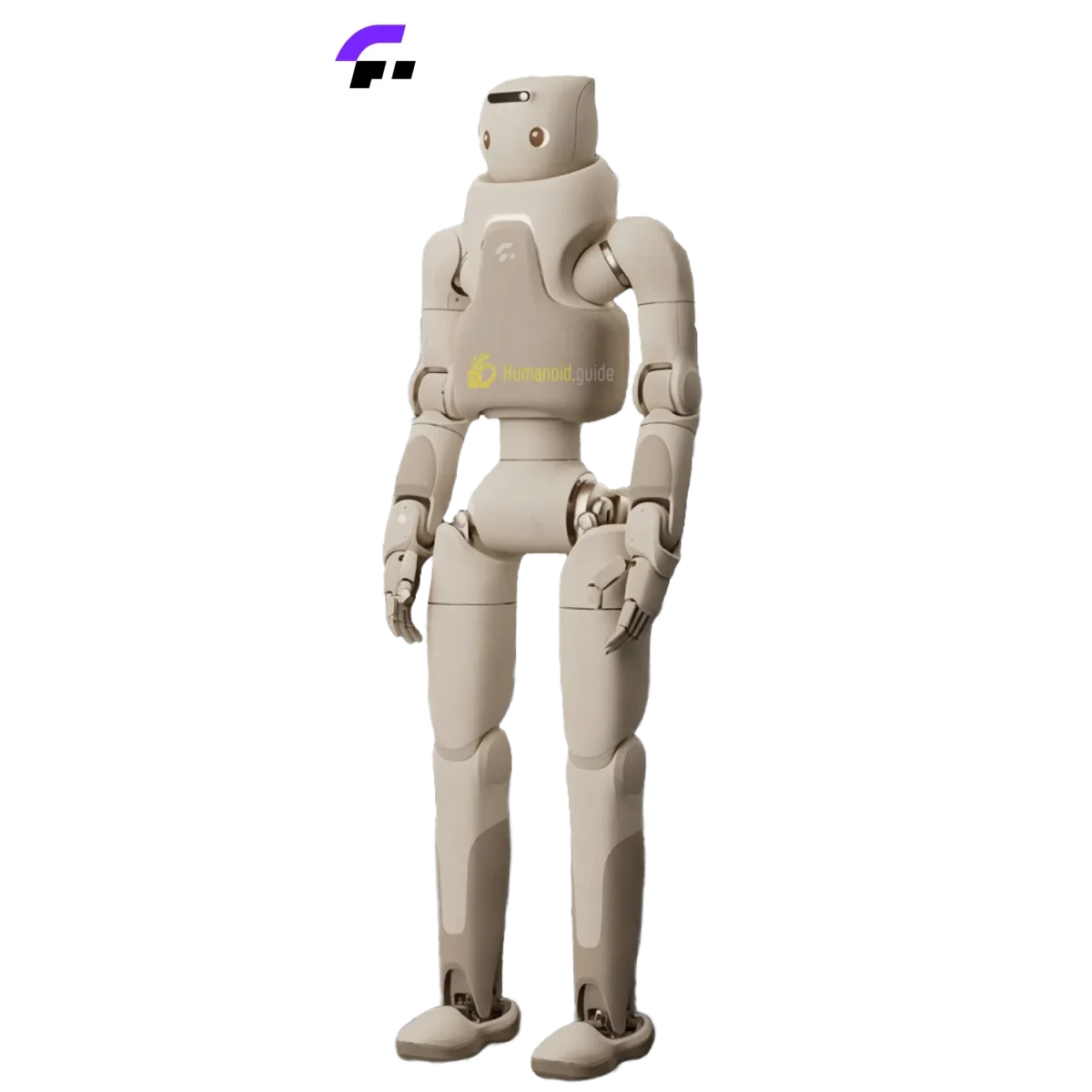
Launched in early 2026 by Fourier Intelligence (Shanghai), the Fourier GR‑3 is the company’s most ambitious general‑purpose humanoid. Sitting above the GR‑1 and GR‑2, the GR‑3 pushes joint density to 55 degrees of freedom — almost a third more than the already‑agile GR‑2 — and couples that with a 15 kg arm payload that can handle tools, cartons, or engine parts. The robot stands 168 cm tall and weighs just 60 kg, making it one of the lighter industrial frames for its strength class. The pre‑order price is $80,000, with initial units expected to ship during the second half of 2026. Fourier has not yet disclosed detailed sensor suites or the exact computer module, though industry observers expect a Jetson Orin‑class processor. The full robot database page for the GR‑3 is at Fourier GR‑3.
A standout feature is the 3‑hour continuous runtime — nearly 50 % longer than many current‑gen Chinese humanoids. Coupled with a 6.5 km/h top walking speed, the GR‑3 can cover a sizable warehouse between charging intervals. As a pre‑order platform, it arrives with an unproven deployment record, which is both its biggest risk and its biggest opportunity for early adopters.
UBTECH Walker S1: The Factory‑Floor Veteran
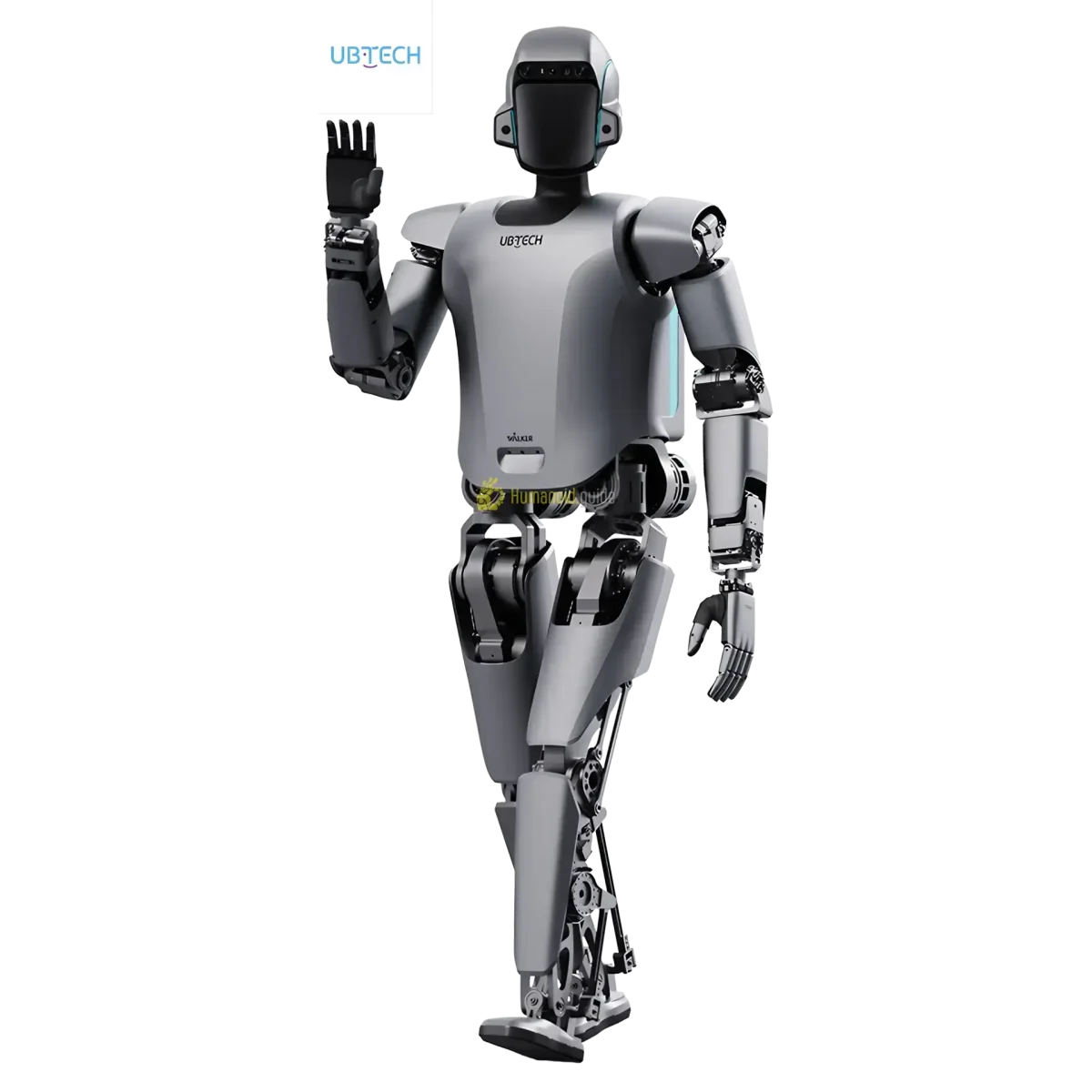
UBTECH Robotics, headquartered in Shenzhen, started shipping the Walker S1 in 2025 as an industrial logistics humanoid aimed squarely at automotive and battery manufacturing. Priced at $75,000 through enterprise quotation, the Walker S1 is taller (1.72 m) and heavier (76 kg) than the GR‑3, reflecting its robust frame designed for repetitive 24 h/7 d operations. The payload rating of 3 kg limits it to light items — envelopes, small boxes, electronic components — but within that envelope, U‑SLAM and a custom dual‑arm controller enable consistent pick‑and‑place cycles. Visit UBTECH Walker S1 for detailed specs and availability.
The Walker S1’s largest advantage is its real‑world footprint. It has been deployed at BYD’s Shenzhen and Changzhou sites for parcel handling and at CATL in Ningde for battery‑cell sorting. Those deployments have collectively logged thousands of operating hours, giving engineers a wealth of reliability data that a pre‑order robot simply does not have.
Price & Configurations
Both robots target a $75,000–$80,000 window, making price a relatively weak differentiator. The Fourier GR‑3 is a single pre‑order configuration at $80,000, and Fourier has not announced optional modules or tiered pricing. The Walker S1 is offered at $75,000 through enterprise purchase agreements that typically include a service‑level commitment and an annual software subscription. Realistically, a fully supported Walker S1 deployment with maintenance and fleet management will edge close to $80,000 annually over three years, but the upfront sticker is slightly lower.
Winner: UBTECH Walker S1 — marginally on upfront cost, and with a known enterprise service package.
Performance & Specs
Payload
The Fourier GR‑3’s 15 kg arm payload is a generational leap over the Walker S1’s 3 kg. This means the GR‑3 can handle not only parcels but also brake discs, coolant bottles, or 10‑L fluid containers — tasks that are core to automotive sub‑assembly and general machine tending. The Walker S1 is confined to light‑object handling, which forces it into dedicated logistics loops.
Winner: Fourier GR‑3.
Speed
With a top walking speed of 6.5 km/h, the Fourier GR‑3 is 30 % faster than the Walker S1 (5 km/h). Over a 200‑metre factory aisle, the GR‑3 shaves roughly 5 seconds per transit, which accumulates into meaningful cycle‑time reductions in a multi‑station workflow.
Winner: Fourier GR‑3.
Battery Life
The GR‑3’s 3‑hour continuous runtime against the Walker S1’s 2‑hour capacity means one fewer charge cycle per shift. In a two‑shift operation, a fleet of GR‑3s could maintain higher overall duty cycles, though this is a hypothesis until field data confirms the spec.
Winner: Fourier GR‑3.
Degrees of Freedom
At 55 DOF versus 41, the GR‑3 offers more dexterous arms and a more articulated torso. Inside a tight vehicle interior or an awkward machine‑tending station, those extra joints can allow the GR‑3 to reach around obstacles without stepping. The Walker S1’s 41 DOF is adequate for pick‑and‑place but lacks the same kinematic workspace.
Winner: Fourier GR‑3.
Software & SDK Ecosystem
Neither robot has a publicly mature developer ecosystem. The Fourier GR‑3 is marketed as a development‑friendly platform, but the SDK — anticipated to support C++/Python and ROS2 — has not been released. UBTECH’s Walker S1 uses a proprietary U‑SLAM stack with a documented API bridge that can translate ROS2 messages, but direct ROS2‑native integration is not yet confirmed. For early‑stage research teams that need open‑source flexibility, the decision hinges on Fourier’s forthcoming SDK; for industrial integrators who value a tested perception stack now, UBTECH’s current API is the safer bet.
Winner: Too early to call — Fourier’s promised SDK could sway developers, while UBTECH has a proven (if proprietary) stack today.
Autonomy & Sensors
Fourier has shared almost nothing about the GR‑3’s sensor payload beyond that it will include depth cameras and LiDAR for SLAM. The Walker S1, by contrast, ships with a full 360‑degree LiDAR, RGB‑D cameras, and an IMU‑based sensor fusion pipeline powering U‑SLAM — a system that has already been tested in chaotic factory corridors. The Walker S1 can navigate dynamic obstacles, dock to conveyor belts, and self‑localize within ±2 cm, according to UBTECH’s technical white paper. Until the GR‑3’s autonomy software is demonstrated in a real factory, the Walker S1 holds a clear lead.
Winner: UBTECH Walker S1.
Build Quality & Durability
The Walker S1’s 76 kg metal‑exterior frame and heavy‑duty joints are built for 24/7 operation, and BYD’s continuous usage has proven its shock and vibration tolerance. The GR‑3, at 60 kg, is lighter and more agile, but its weather‑sealing, dust resistance, and IP rating are undisclosed. For an environment with airborne metal dust or fluctuating temperatures, the Walker S1’s established hardware pedigree gives it the edge today.
Winner: UBTECH Walker S1 (proven factory durability; GR‑3 not yet rated).
Price & Total Cost of Ownership
Sticker prices — $80,000 for the GR‑3, $75,000 for the Walker S1 — mislead. A three‑year TCO calculation must include software subscriptions, spare‑parts kits, and service support.
- Fourier GR‑3: Pre‑order price is hardware‑only; software, updates, and spares packages are not yet quoted. A realistic three‑year TCO, assuming a $5,000‑per‑year service plan, would approach $95,000.
- UBTECH Walker S1: The $75,000 base price typically excludes an annual $12,000‑$15,000 enterprise service agreement that covers remote support, spares, and on‑site visits. Over three years, the total cost can reach $111,000–$120,000.
If Fourier’s service model undercuts UBTECH’s, the GR‑3 could offer a lower TCO despite the higher upfront price. But with no confirmed pricing, the Walker S1’s TCO is known and budgetable.
Winner: Fourier GR‑3 has the potential to be cheaper over three years, but UBTECH Walker S1 delivers predictable, auditable TCO today.
> Ready to secure your humanoid? Request enterprise quotes for both robots via the Robot Overflow Robot Database.
Which Should You Buy? Fourier GR‑3 vs UBTECH Walker S1 by Use Case
- Choose the Fourier GR‑3 if…
- You need to lift parts heavier than 3 kg — e‑commerce sorting of mid‑weight parcels, machine tending with tool changes, or assembly of metal brackets.
- Your workflows demand high‑dexterity torso and arm movement (55 DOF helps inside tight vehicle interiors).
- You’re an R&D lab or a systems integrator willing to be an early adopter and can afford the uncertainty of a pre‑order platform.
- Choose the UBTECH Walker S1 if…
- You need a humanoid co‑worker today in automotive or battery logistics — the Walker S1 already runs on BYD and CATL floors.
- Your task envelope is light‑object handling (up to 3 kg) and you value a proven perception + fleet‑management stack.
- You require an enterprise service agreement, predictable TCO, and documented durability.
- Choose neither if…
- You require an IP54‑ or higher‑rated robot for outdoor or wet environments (neither has published IP ratings).
- You need a payload above 15 kg — look at fixed‑base cobots or hydraulically‑driven humanoids (e.g., Figure 02, Atlas).
Real‑World Deployments & Track Record
The UBTECH Walker S1 has been deployed since mid‑2025 at multiple sites: BYD’s Shenzhen factory for parcel handling and CATL’s Ningde plant for battery‑cell sorting. These deployments have accumulated thousands of operating hours, providing reliability data that gave UBTECH confidence to offer SLAs. No major failure incidents have been publicly reported, and UBTECH claims a mean time between intervention exceeding 100 hours for light‑load tasks.
The Fourier GR‑3, by contrast, was announced in early 2026 and remains in pre‑order. No public deployment has been disclosed, and no third‑party pilot results are available. That does not mean the GR‑3 is unreliable — Fourier’s GR‑1 and GR‑2 predecessors demonstrated solid walking and manipulation in controlled demos — but until the GR‑3 logs similar factory hours, its real‑world performance is theoretical. Buyers who need proof of operational readiness today must lean toward the Walker S1.
Winner: UBTECH Walker S1 (proven; GR‑3 unproven outside factory‑of‑origin).
SDK, Software & Developer Ecosystem
Developers evaluating both platforms should consider the software maturity gap.
- Fourier GR‑3: Fourier has stated the GR‑3 will ship with a full‑stack SDK supporting C++ and Python, and has hinted at native ROS2 support. The SDK is not yet publicly available, and the company has not released a simulator (though Isaac Sim compatibility is expected). Until the SDK lands, the GR‑3 is a blank slate — powerful for custom research but requiring heavy in‑house integration.
- UBTECH Walker S1: UBTECH provides a mature U‑SLAM API with ROS2 bridge packages, a simulation environment (proprietary), and a fleet‑management console for up to 50 robots. The API is documented and already used by integrators at BYD and CATL. However, the full development kit is gated behind an enterprise license, limiting grassroots community contributions.
In short, today’s industrial developer gets a richer out‑of‑the‑box experience with Walker S1; tomorrow’s R&D lab betting on openness may prefer the GR‑3.
Winner: UBTECH Walker S1 for current toolchain maturity; Fourier GR‑3 for promised open‑source flexibility.
Support, Warranty & Availability
- Fourier GR‑3: Pre‑orders are open with a $10,000 deposit; first shipments expected H2 2026. Warranty terms are not published, and Fourier has not announced regional service centres or enterprise SLAs. Early adopters should plan for remote support and extended lead times on spares.
- UBTECH Walker S1: Available now through direct enterprise purchase. UBTECH offers a 12‑month warranty on the base hardware, extendable via annual support contracts that include on‑site response in mainland China (and select Southeast Asian countries). Lead time is typically 4–6 weeks, subject to order volume.
If your project timeline demands a robot in the next quarter, the Walker S1 is the only viable choice. For 2027 pilots, the GR‑3 could become a contender.
Winner: UBTECH Walker S1 (available now, with clear support structure).
Comments