

The Fourier GR‑3 and GR‑2 represent two sharply different design philosophies from the same Shanghai robotics lab: the GR‑3 is a cost‑optimised, high‑payload humanoid starting at $80,000, while the GR‑2 is a premium, high‑speed research platform with an undisclosed — but widely estimated to be $200,000+ — price tag. Both are available on pre‑order and share Fourier’s 55‑ and 53‑degree‑of‑freedom architectures, yet they target entirely different workloads. This article lays out every published specification, compares total cost, software ecosystems, and real‑world deployment data, and gives a clear, opinionated recommendation by use case. For full standalone breakdowns, visit our Fourier GR‑3 and Fourier GR‑2 database pages.
Quick Verdict: Who Wins?
Fourier GR‑3 vs Fourier GR‑2: Specs Compared
Below is the side‑by‑side technical comparison table. All numbers are manufacturer‑published or sourced from official pre‑order materials; empty cells are marked explicitly.
| Specification | Fourier GR‑3 | Fourier GR‑2 |
|---|---|---|
| Price (Base) | $80,000 | Undisclosed (est. $200,000+) |
| Price (Configured/Range) | $80,000 | $200,000 – $500,000 |
| Height | 168 cm | 175 cm |
| Weight | 60 kg | 63 kg |
| Payload | 15 kg | 3 kg |
| Max Speed | 6.5 km/h | 18 km/h |
| Battery Life | 3 hours | 2 hours (swappable) |
| Degrees of Freedom | 55 | 53 (incl. 24‑DOF hands) |
| IP Rating | Not published | Not published |
| On‑board Compute | Not published | NVIDIA‑based (likely Jetson) |
| Sensors | Not detailed (expected: depth cameras, IMU) | RGB‑D cameras, IMU, force‑torque sensors |
| SDK / Languages | Expected: C++ / Python | C++, Python; confirmed Isaac Lab, ROS, MuJoCo |
| ROS2 Support | Not confirmed | ROS (likely ROS2 compatible) |
| Autonomy / Fleet Software | Not published | Open‑platform, research‑oriented |
| Safety Certifications | Not published | Not published |
| Availability | Pre‑order (2026) | Pre‑order (2024 launch, ongoing enterprise deliveries) |
| Warranty / Support | Not yet detailed | Enterprise agreements; details undisclosed |
Biggest delta: The GR‑3 carries five times the payload of the GR‑2 (15 kg vs 3 kg) and lasts 50% longer on a charge, while the GR‑2 sprints at nearly three times the speed. The GR‑2’s confirmed NVIDIA Isaac Lab, ROS, and MuJoCo integration gives it a mature research‑tool advantage the GR‑3 has not yet matched.
Fourier GR‑3: Affordable High‑Payload Humanoid
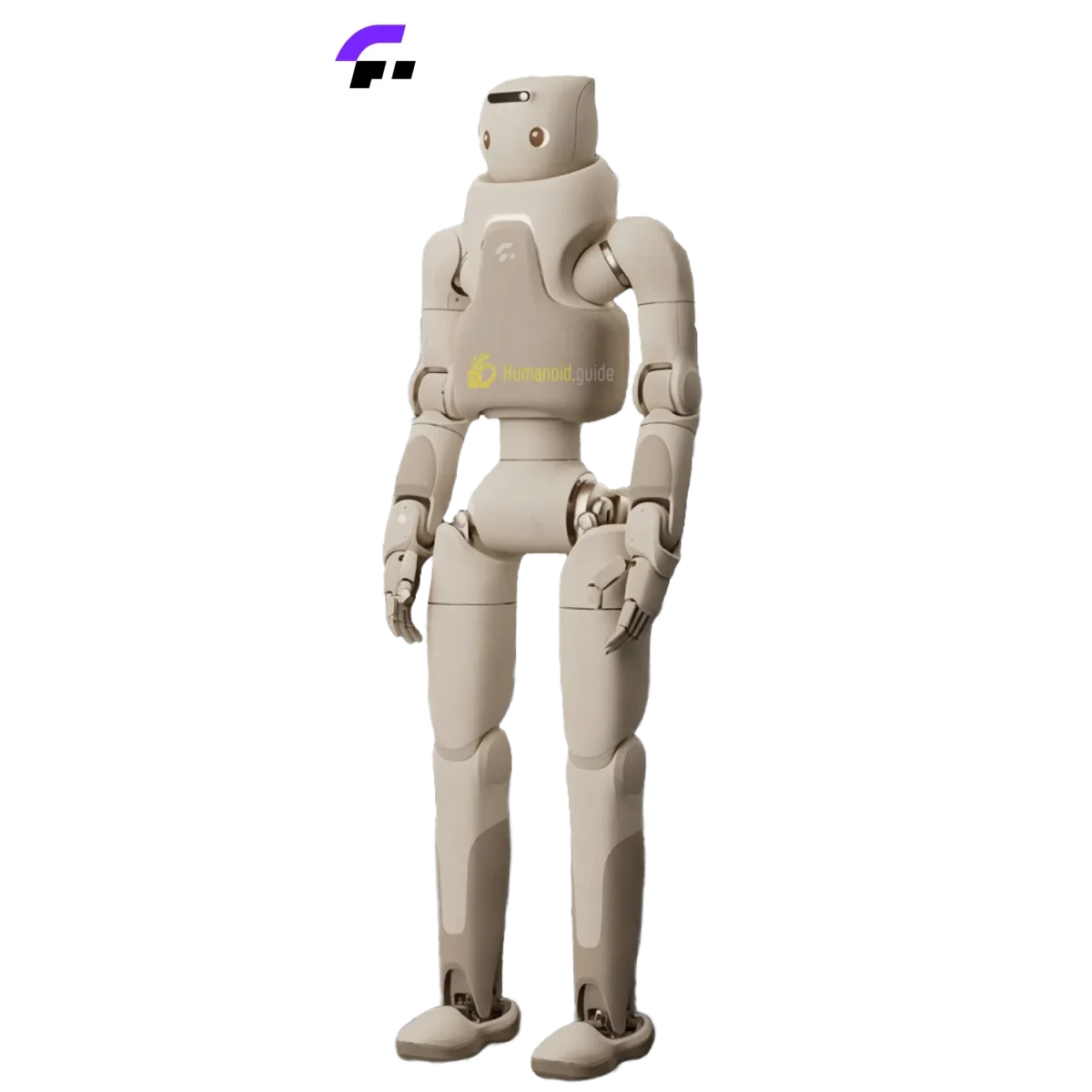
Launched in 2026, the Fourier GR‑3 is a general‑purpose humanoid robot designed to make dexterous manipulation economically accessible. At $80,000, it undercuts most peers in its payload class while still offering 55 degrees of freedom — two more than the GR‑2 — and a carry capacity of 15 kg. Standing 168 cm tall and weighing 60 kg, it is compact enough for indoor logistics, light assembly, and research labs that need a robust, all‑day platform (3‑hour runtime) without the entry‑level sticker shock of many enterprise humanoids.
Fourier positions the GR‑3 as a pre‑order product, with units expected to ship through 2026. While software details remain sparse, the company has indicated it will use open, modular libraries, making it a natural candidate for institutions that already invest in the broader Fourier ecosystem. Full specs, latest pricing, and high‑resolution images are available on the Fourier GR‑3 database page.
Fourier GR‑2: High‑Speed Research Platform
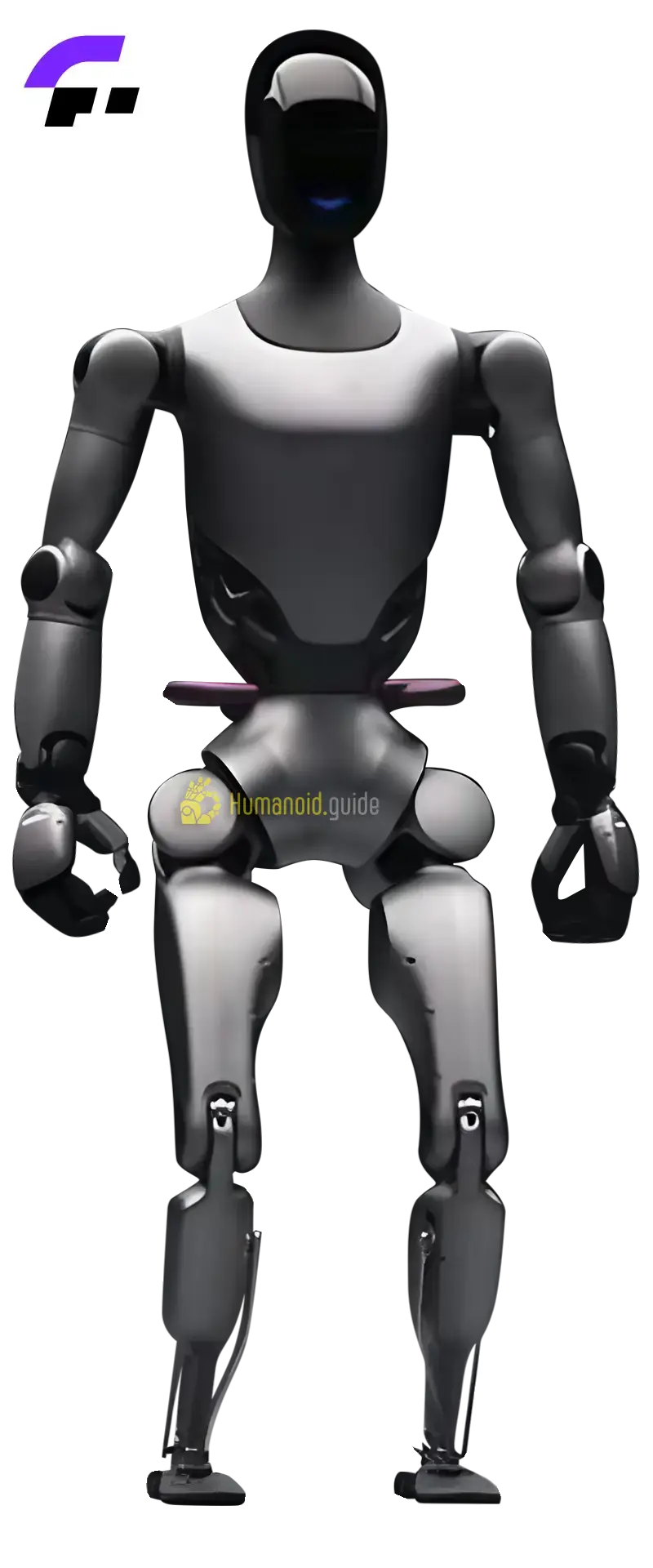
Unveiled in 2024, the Fourier GR‑2 is the brand’s flagship research humanoid, built for academic and industrial R&D teams that prioritise locomotion speed, open‑source tools, and a 53‑DOF architecture including the company’s renowned 24‑DOF hands. With a sprint capability of 18 km/h — far outpacing the GR‑3’s 6.5 km/h — the GR‑2 is tailored for dynamic balancing experiments, navigation algorithm testing, and high‑speed humanoid studies.
At 175 cm and 63 kg, it is slightly taller and heavier than the GR‑3. Its swappable 2‑hour battery keeps downtime low during intensive research sessions. Importantly, the GR‑2 ships with native support for NVIDIA Isaac Lab, ROS, and MuJoCo, making it one of the most developer‑friendly humanoid platforms on the market. Pricing remains undisclosed, but early enterprise deals place the GR‑2 in the $200,000–$500,000 range. For a full profile and image gallery, see the Fourier GR‑2 database page.
Price & Configurations
The sticker‑price gap between these two robots is enormous and will be the single biggest decision factor for most buyers.
- Fourier GR‑3: $80,000 flat, inclusive of the standard configuration. No tiered pricing has been published, which suggests a single SKU with all 55 DOF active. This simplicity is rare in the humanoid market and makes the GR‑3 an attractive option for budget‑conscious labs and industrial pilots.
- Fourier GR‑2: Fourier does not publicly list a base price. Discussions with enterprise clients and integrators indicate a range between $200,000 and $500,000, influenced by software packages, hardware add‑ons (e.g., specialised end‑effectors), and support levels. Even at the low end, it costs more than twice the GR‑3, and fully configured editions can reach half a million dollars.
Winner: The GR‑3, by a wide margin. It delivers three times the payload for less than half the minimum estimated cost of a GR‑2.
Performance & Specs
Payload
With 15 kg of carrying capacity, the GR‑3 can hoist tools, small workpieces, or sensor payloads that the GR‑2 simply cannot. The GR‑2’s 3 kg limit restricts it to light‑weight gripper tasks or cable‑tending, making the GR‑3 the obvious choice for any job requiring significant arm strength. Winner: Fourier GR‑3
Speed
The GR‑2’s 18 km/h top speed dwarfs the GR‑3’s modest 6.5 km/h. For locomotion‑centric research — navigating uneven terrain, fast‑moving conveyor lines, or agility benchmarks — the GR‑2 is in a different league. Winner: Fourier GR‑2
Battery Life
The GR‑3 runs for 3 hours on a full charge, 50% longer than the GR‑2’s 2‑hour swappable battery. This advantage means fewer interruptions in continuous operation scenarios such as warehouse picking or overnight testing. Winner: Fourier GR‑3
Degrees of Freedom
The GR‑3 has 55 DOF, the GR‑2 has 53. The two extra DOF likely reflect refined wrist or torso articulation; however, the GR‑2’s 24‑DOF hands are a standout feature for fine manipulation. Both robots are highly articulated. Winner: Tie (marginal edge to GR‑3 for total count, but GR‑2’s hands are more sophisticated)
Software & SDK Ecosystem
Fourier has explicitly confirmed that the GR‑2 is an open‑platform robot with full support for NVIDIA Isaac Lab, ROS, and MuJoCo. Development teams can tap into a mature simulation‑to‑reality pipeline, leverage the large Isaac ecosystem, and use MuJoCo for detailed physics‑based training. The GR‑2’s software stack is well documented and has been used in early research programs.
For the GR‑3, Fourier has indicated a similar open‑platform philosophy but has not published official SDK documentation, ROS2 endorsement, or compatible simulation environments. Given the family lineage, it is plausible that the GR‑3 will inherit the same tools, but no commitment has been made public.
Winner: Fourier GR‑2, because its software ecosystem is proven and publicly specified.
Autonomy & Sensors
Sensor‑level details are scarce for both models. The GR‑2 is known to use RGB‑D cameras, an IMU, and force‑torque sensing, all essential for advanced locomotion and object interaction research. The GR‑3’s sensor suite has not been described beyond “expected depth cameras.” Without published autonomy frameworks or fleet‑management software, both robots remain platforms for custom development rather than turnkey autonomous solutions.
Winner: GR‑2 again, simply because its sensor set is defined and has been demonstrated in open‑source projects; the GR‑3’s sensing remains an unknown.
Build Quality & Durability
Neither robot has an official IP rating, making operation in dusty, wet, or outdoor conditions a risk. The GR‑3 weighs 60 kg versus the GR‑2’s 63 kg; both are comparable in stature. Durability feedback from early GR‑2 research deployments has been positive, though no long‑term reliability data exists. As the GR‑3 is only starting to ship, no field‑hardening information is available.
Winner: Too early to call; the GR‑2 has a slight advantage due to its earlier deployment start (2024) and known field use, but neither can be recommended for harsh environments.
Price & Total Cost of Ownership
A true three‑year TCO comparison is hindered by missing data on software subscriptions, maintenance contracts, and spare parts. However, we can make a rough estimate:
- Fourier GR‑3: $80,000 hardware + ~$10,000/year for basic enterprise support and spares = $110,000 over three years. Even with a generous 20% contingency, the TCO stays below $130,000.
- Fourier GR‑2: Assuming a median configuration of $300,000 and annual support packages of $25,000–$35,000 (common for research‑grade robots), the three‑year cost could reach $375,000–$405,000.
The GR‑3’s dramatically lower entry price translates to a TCO roughly one‑third that of the GR‑2, making it the far more accessible option for most institutions. The GR‑2’s value lies in its unique speed and developer ecosystem, not its economy.
Winner for total cost: Fourier GR‑3
To explore pricing and request a quote for either robot, visit the respective database pages: GR‑3 and GR‑2.
Which Should You Buy? Fourier GR‑3 vs Fourier GR‑2 by Use Case
Choose the Fourier GR‑3 if… - Your tasks require lifting or carrying more than 3 kg (e.g., machine tending, pick‑and‑place, tool handling). - You need a humanoid that can work for long bouts without battery swaps (3‑hour runtime). - You are a university lab or a small‑to‑medium enterprise with a limited capital budget, and $80,000 fits within a grant or equipment fund. - You plan to iterate on manipulation algorithms rather than break land‑speed records.
Choose the Fourier GR‑2 if… - Your research agenda centres on dynamic bipedal locomotion, agility, or high‑speed navigation — 18 km/h opens doors that 6.5 km/h cannot. - You already use NVIDIA Isaac Lab, ROS, and MuJoCo and want a platform that integrates seamlessly and retains simulation‑reality accuracy. - Budget is less of a concern ($200,000+) and you value the mature documentation, 24‑DOF hands, and proven early‑adopter community. - You need a humanoid that can serve as a reference platform for multi‑robot, high‑performance locomotion benchmarking.
Choose neither if… - You require an IP65‑rated robot for outdoor, wet, or explosive environments — neither model currently offers a published ingress protection rating. - You need a fully autonomous system out of the box: both are research‑ and pilot‑grade platforms, not turnkey industrial solutions.
Real‑World Deployments & Track Record
Fourier has placed several GR‑2 units with academic and industrial research partners since 2024. Specific customer names and operating hours have not been publicly disclosed, but the robot has appeared in locomotion benchmarking videos and open‑source reinforcement‑learning demonstrations that confirm its firmware and SDK are being actively used outside the lab.
The GR‑3, having just entered the market in 2026, has no public deployment record yet. Fourier states that initial shipments are underway, and early feedback should surface later in the year. As always with new humanoid releases, prospective buyers should approach performance claims with cautious optimism and request reference calls if possible.
Bottom line: The GR‑2 has a two‑year head‑start in the real world, but both robots remain in the early‑adopter phase.
SDK, Software & Developer Ecosystem
The GR‑2’s open‑platform stack is one of its biggest selling points. Developers can leverage:
- NVIDIA Isaac Lab for GPU‑accelerated reinforcement learning and sim‑to‑real transfer.
- ROS for sensor fusion, navigation, and control pipelines — likely ROS2 ready.
- MuJoCo for detailed physics simulation, a favourite of the locomotion research community.
The GR‑3’s software environment, while likely to inherit many of these tools, has not been enumerated. Fourier’s silence means labs that choose the GR‑3 must plan for a potentially less‑baked developer experience, at least in the product’s first months.
Winner: Fourier GR‑2. If your team relies on a well‑trodden simulation stack, the GR‑2 is the safer, faster path to productivity.
Support, Warranty & Availability
Both robots are acquired via pre‑order, although the GR‑2 has shipped units since its 2024 launch and has an established enterprise onboarding process. Fourier offers support and warranty terms through direct sales agreements; no standardised service‑level‑agreement (SLA) or warranty duration has been published for either model.
The GR‑3’s support structure is expected to mirror the GR‑2’s, with Fourier providing hardware and software updates during the initial operational period. As the GR‑3’s price is fully disclosed, it may appeal to buyers who prefer a clean, upfront cost with transparent add‑on support contracts. For mission‑critical deployments, both robots should be evaluated under a pilot agreement before purchase.
Comments