

Two of the most talked‑about Chinese humanoid robots — the Fourier GR‑2 and the AgiBot G2 Genie — will both land on enterprise pre‑order sheets at roughly the same $200,000 base price, yet they approach the humanoid‑automation problem from opposite engineering philosophies. The GR‑2 packs 53 degrees of freedom (including 24‑DOF hands) and a research‑friendly open‑source stack, while the G2 Genie prioritises battery‑hot‑swappable industrial endurance with a lower‑DOF frame. This comparison article lays out every known spec, price detail, and real‑world consideration to help engineers, lab directors, and integrators decide which Chinese biped fits their 2026‑2027 automation roadmap.
(Full detailed reviews of the Fourier GR‑2 and the AgiBot G2 Genie are available in the robot database.)
Quick Verdict: Who Wins?
- Best overall value for research & dexterity‑intensive tasks: Fourier GR‑2 – the 53‑DOF frame, 380 N·m peak torque, and native support for NVIDIA Isaac Lab, ROS, and MuJoCo deliver the most capability per dollar for academic and advanced R&D settings.
- Best for industrial endurance & hot‑swappable operation: AgiBot G2 Genie – dual 4‑hour batteries that can be swapped without shutting down give continuous runtime unmatched by the GR‑2’s single battery.
- Best for complex manipulation: Fourier GR‑2 – 24‑DOF hands and force‑sensitive fingers enable precise, dexterous tasks that the G2’s simpler end‑effectors cannot match.
- Best budget‑equivalent pick: It’s a tie – both start at $200 K (configured costs may push the GR‑2 higher), so the decision hinges entirely on the application profile rather than a price advantage.
Fourier GR‑2 vs AgiBot G2 Genie: Specs Compared
The table below collects every published technical figure side‑by‑side. Blank cells or “—/Not published” indicate data that neither Fourier nor AgiBot has made public as of June 2026.
| Specification | Fourier GR‑2 | AgiBot G2 Genie |
|---|---|---|
| Price (base MSRP) | ~$200,000 | ~$200,000 |
| Price (configured / enterprise) | $200,000–$500,000 | $200,000 (fixed config) |
| Height | 1.75 m | 1.75 m |
| Weight | 63 kg | 55 kg |
| Payload (arm/hand) | 3 kg (published max) | Not specified |
| Max speed | 18 km/h | 7 km/h |
| Battery / Runtime | Swappable Li‑ion, 2 h | Dual hot‑swappable batteries, 4 h total (2 h each) |
| Degrees of Freedom | 53 (incl. 24‑DOF hands) | 32 |
| Peak joint torque | 380 N·m (hip/knee) | Not published |
| Onboard compute | NVIDIA Jetson Orin (published) + potential Isaac Lab host | Not published (likely embedded ARM+xpu) |
| Sensors | RGB‑D stereo cameras, IMU, force‑torque in hands | RGB‑D stereo cameras, IMU, LiDAR (model not specified) |
| SDK / programming languages | C++, Python via Isaac Sim, ROS, MuJoCo | Proprietary AgiBot SDK (Python), limited ROS 2 bridge |
| ROS 2 support | Yes – full stack with simulation | Partial (bridge layer only) |
| Autonomy / fleet software | Open‑source‑first via NVIDIA Isaac; user‑defined controllers | AgiBot fleet manager (proprietary), pre‑programmed tasks |
| IP rating | Not published (indoor‑only design) | Not published (likely IP54 based on ruggedized casing) |
| Safety certifications | None published; CE/FCC planned | None published; China‑specific EMC certification in progress |
| Availability | Pre‑order (pilot units Q3 2026) | Available (early‑access program, limited stock) |
| Warranty / Support | 12‑month hardware warranty, enterprise SLA option | 12‑month hardware support; SLA negotiable with PO |
The spec table highlights the fundamental difference: the GR‑2 is a dexterity‑maximised research platform, while the G2 Genie is an endurance‑tuned industrial runner. The GR‑2’s 53 DOF and published payload are substantially higher, but the G2 Genie counters with 4 hours of runtime and a lighter, likely more rugged frame.
Fourier GR‑2 Overview
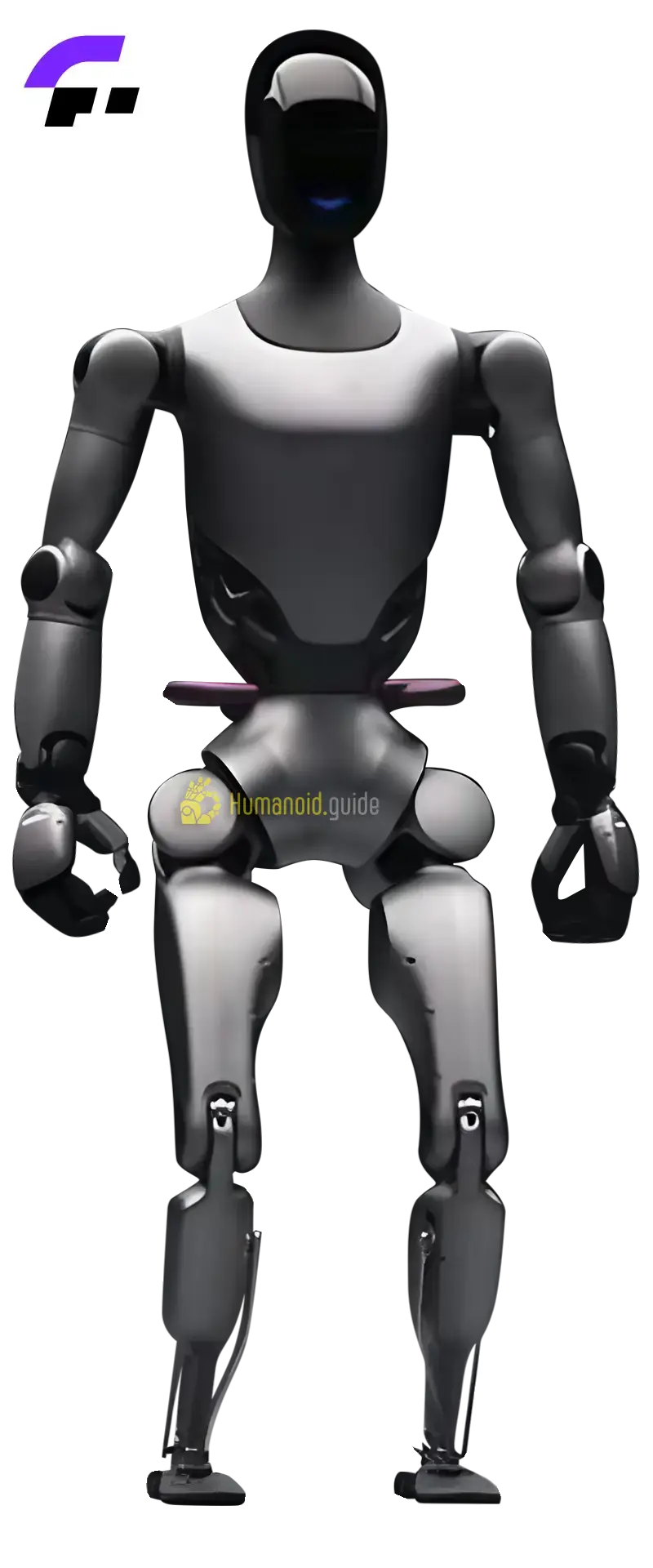
Launched in late 2024 by Fourier Robotics (Shanghai, China), the GR‑2 is the direct successor to the earlier GR‑1, scaling up the joint count to 53 and integrating 24‑degree‑of‑freedom hands capable of force‑sensitive grasping. Fourier targets academic research, AI‑embodiment labs, and high‑dexterity industrial tasks. With a 1.75 m, 63 kg frame, the robot moves at up to 18 km/h and can lift 3 kg – enough for part handling, tool manipulation, or laboratory pick‑and‑place. The standout feature is its open platform: the GR‑2 ships with direct support for NVIDIA Isaac Lab, ROS, and MuJoCo simulation, letting labs develop and train policies without vendor lock‑in. Pricing begins at $200,000 for the base unit, but fully configured research packages (sensors, compute upgrades, software licences) can reach $500,000. As of mid‑2026, the GR‑2 is on pre‑order with first pilot deliveries expected in Q3 2026. Full Fourier GR‑2 specs and availability
AgiBot G2 Genie Overview
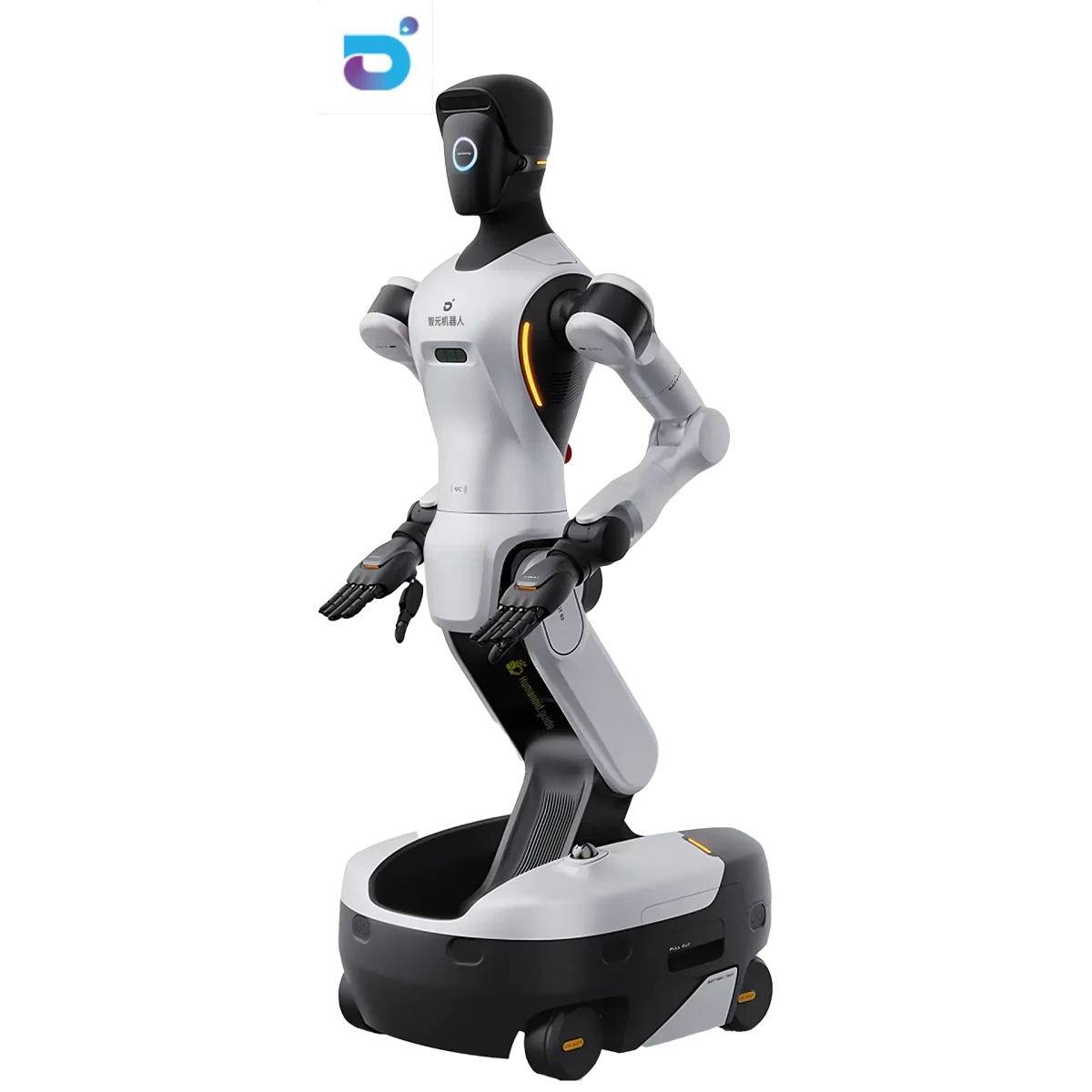
The AgiBot G2 Genie, introduced in 2025 by AgiBot (Shanghai, China), is a bipedal humanoid engineered for industrial endurance and continuous‑operation pilots. Standing 1.75 m and weighing 55 kg, it features 32 degrees of freedom and a maximum speed of 7 km/h – deliberately slower to preserve stability and runtime. Its signature hardware feature is a dual‑battery system: two hot‑swappable batteries each provide 2 hours of runtime, allowing one battery to be exchanged while the robot continues working on the other, effectively eliminating downtime. Payload has not been specified, but AgiBot positions the G2 Genie for logistics, light assembly, and inspection roles. The robot runs a proprietary software stack with a Python SDK and a partial ROS 2 bridge, prioritising ease of integration for industrial clients. Pricing is a fixed $200,000 for the standard configuration, with early‑access units already deployed in select Chinese factories. Full AgiBot G2 Genie overview
Price & Total Cost of Ownership
| Cost Factor | Fourier GR‑2 | AgiBot G2 Genie |
|---|---|---|
| Base hardware | $200,000 | $200,000 |
| Typical configured price | $200,000–$500,000 (sensor/compute options) | $200,000 (standard config) |
| Software licences / SDK | Open‑source (free), optional NVIDIA Isaac enterprise | Proprietary licence included in purchase |
| Annual support / SLA | ~$15,000–$25,000 (enterprise) | ~$10,000–$20,000 (negotiated) |
| Spare batteries | ~$2,000 per swappable pack | ~$1,500 per hot‑swappable module (2 included) |
| Estimated 3‑year TCO (base) | ~$245,000–$575,000 (depending on config) | ~$240,000–$260,000 |
Both robots open at $200 K, but the GR‑2’s open‑platform flexibility can drive the TCO higher when maxed‑out sensor and compute bundles are purchased. The G2 Genie, by contrast, ships as a fixed‑config unit, which keeps the three‑year total owner‑ship cost in a tight band. For a university lab that already owns an NVIDIA Sim workstation, the GR‑2’s zero‑cost SDK and ROS ecosystem can offset the hardware premium; for an industrial plant that needs minimal tinkering and guaranteed uptime, the G2 Genie’s simplicity and dual‑battery model often result in a lower effective cost per operating hour.
Winner: The AgiBot G2 Genie offers a more predictable, tightly scoped budget; the Fourier GR‑2’s value is higher if the organisation will exploit its dexterity and open‑source stack.
Performance & Specs Head‑to‑Head
Payload & Strength
Fourier publishes a 3 kg whole‑arm payload for the GR‑2, supported by 380 N·m peak torque in the hip and knee joints. This enables the robot to handle small components, tools, and assembly tasks reliably. AgiBot has not published a payload figure for the G2 Genie, but the lower‑DOF design and slower joint motors suggest a lighter work envelope, likely in the 1–2 kg range for the arms. For any task requiring repeatable lifting above 2 kg, the GR‑2 is the only verifiably capable option.
Winner: Fourier GR‑2.
Speed & Agility
The GR‑2’s 18 km/h top speed (among the fastest humanoid walkers) lets it traverse lab floors and factory aisles quickly, while the G2 Genie’s 7 km/h pace is a deliberate design choice to maximise battery life and minimise joint stress. Speed is less critical in confined industrial cells, but for multi‑station logistics or research trials that need high throughput, the GR‑2’s velocity advantage is significant.
Winner: Fourier GR‑2.
Battery & Runtime
The GR‑2’s swappable 2‑hour battery relies on a single‑pack design, meaning the robot must stop for a manual swap (likely a 5‑minute process). The G2 Genie’s dual hot‑swappable batteries provide a continuous 4‑hour runtime with zero downtime — one battery powers the robot while the second charges externally, and they are exchanged without rebooting. For a 24/7 industrial pilot, this architecture turns battery changes into a background operation, whereas the GR‑2 would need multiple stops in a shift. In a research lab where uninterrupted operation is less critical, the GR‑2’s 2‑hour runtime is perfectly manageable.
Winner: AgiBot G2 Genie for sustained industrial operation; tie for lab environments.
Degrees of Freedom & Dexterity
The GR‑2’s 53 DOF (including 24‑DOF hands with force‑sensitive fingers) enables extremely fine manipulation — writing, connecting cables, using human tools. AgiBot’s 32 DOF provides a solid bipedal locomotor but simpler grippers, limiting dexterity to gross grasping. The GR‑2’s dexterity advantage is the single biggest differentiator, making it the go‑to platform for dexterous‑AI research and any industrial process that mimics human handwork.
Winner: Fourier GR‑2.
Software & SDK Ecosystem
Fourier built the GR‑2 as an open‑platform humanoid. Out of the box, it supports: - ROS 2 (full stack, including navigation and manipulation) - NVIDIA Isaac Lab and Isaac Sim for reinforcement learning and sim‑to‑real transfer - MuJoCo for physics simulation - C++ and Python APIs for custom controllers - Community‑driven tutorials and ROS packages.
AgiBot’s approach is more closed: a proprietary Python SDK provides access to joint control and perception pipelines, while a limited ROS 2 bridge exposes basic topics for integration with existing ROS‑based fleets. Advanced autonomy features (map‑based navigation, task orchestration) run inside AgiBot’s fleet manager, which is not open‑source. This makes the G2 Genie easier for a system integrator to deploy with little custom coding, but restricts a research lab’s ability to customise low‑level control.
Winner: Fourier GR‑2 for research and custom development; AgiBot G2 Genie for turnkey industrial deployment.
Autonomy & Sensors
The GR‑2 ships with an RGB‑D stereo camera suite and IMU, providing sufficient data for visual SLAM and object detection when paired with the user’s chosen stack (e.g., NVIDIA Isaac). AgiBot’s sensor payload includes stereo cameras and a LiDAR (model not specified), likely giving the G2 Genie better depth perception for factory floors. AgiBot also offers pre‑programmed autonomy modules (inspection patrols, conveyor‑loading) that work out of the box, whereas the GR‑2 expects the user to build or train autonomy policies. Thus, the G2 Genie can be productive faster in a structured industrial environment, while the GR‑2 requires more engineering effort to reach similar autonomous performance.
Winner: AgiBot G2 Genie for immediate industrial autonomy; Fourier GR‑2 for research flexibility.
Build Quality & Durability
Neither manufacturer publishes an IP rating, so sealed‑component assumptions must be conservative. The G2 Genie’s 55 kg, enclosed‑casing design and slower joint speeds suggest a focus on daily industrial serviceability. The GR‑2, while well‑constructed, reveals more exposed actuators and delicate 24‑DOF hands that demand careful handling — ideal for a lab but risky on a dirty factory floor. Both robots come with a 12‑month warranty; AgiBot’s enterprise SLA tends to be more industrial‑focused with on‑site support options in China.
Winner: AgiBot G2 Genie (by design intent, not by certified IP data).
Which Should You Buy? Fourier GR‑2 vs AgiBot G2 Genie by Use Case
- Choose the Fourier GR‑2 if:
- Your primary need is dexterous manipulation research, AI‑embodiment, or fine‑motor policy training.
- You already use ROS 2 / NVIDIA Isaac Sim and want to avoid vendor lock‑in.
- You need documented payload data (3 kg) for integration design.
- You plan to write custom controllers or test novel end‑effectors.
- Budget can flex to $300K‑$500K for a fully‑loaded research unit.
- Choose the AgiBot G2 Genie if:
- You are piloting a continuous‑operation industrial use case (24/7 logistics, inspection loops).
- Hot‑swappable batteries and guaranteed 4‑hour cycles are non‑negotiable.
- You prefer a simpler, ruggedised robot that ships with pre‑built autonomy tasks.
- Your development team wants a Python‑only SDK with ready‑made integration rather than full‑stack ROS 2 customisation.
- Predictable $200K pricing and a fixed Bill‑of‑Materials fit your procurement process.
- Choose neither if:
- You need a robust, proven track record of thousands of operating hours in a named facility — both robots are still early‑adopter platforms without widely published production data.
- Your application demands more than 3 kg payload (GR‑2) or any verifiable payload (G2 Genie) — in that case, consider a cobot arm or a higher‑payload humanoid like the Tesla Optimus or Figure 02.
Real‑World Deployments & Track Record
As of June 2026, neither Fourier GR‑2 nor AgiBot G2 Genie has published a named commercial deployment with operating‑hour and unit‑count figures. Fourier has delivered pre‑production GR‑2 units to select academic partners (names undisclosed) for NDA‑protected pilot studies. AgiBot reports early‑access “factory trials” in China’s manufacturing sector but has not released location names or performance statistics. Both robots are in the formative pilot stage, meaning that any purchasing decision carries early‑adopter risk. Organisations that require battle‑tested reliability should factor in the cost of extended on‑site validation, or consider robots with at least some public production data (e.g., Unitree G1).
SDK, Software & Developer Ecosystem
The developer experience for the two platforms diverges sharply.
- Fourier GR‑2: Ships with full ROS 2 packages, a comprehensive C++/Python API, and ready‑to‑use models for NVIDIA Isaac Sim and MuJoCo. The user community, though nascent, is growing on GitHub and Fourier’s own developer portal. Training reinforcement‑learning policies for the 24‑DOF hands is straightforward with the provided sim‑to‑real pipeline. Any lab with ROS experience can have the robot walking and grasping within days.
- AgiBot G2 Genie: Offers a dedicated Python SDK that abstracts joint control, perception, and task orchestration. The ROS 2 bridge exposes only a subset of topics, limiting deep customisation. AgiBot’s fleet manager provides centralised monitoring and pre‑built routines (patrol, load conveyor), which dramatically reduces engineering time for standard industrial deployments. However, researchers wanting to export custom neural‑network policies may find the closed ecosystem restrictive.
Winner: Fourier GR‑2 for open‑source research and AI development; AgiBot G2 Genie for rapid industrial deployment that doesn’t require deep software customisation.
Support, Warranty & Availability
Both companies offer a 12‑month hardware warranty with optional enterprise SLAs. Fourier’s support infrastructure is still maturing outside China, but its collaboration with NVIDIA resellers gives North American and European customers a channel for on‑site service. AgiBot’s support is currently China‑centric, though it is building distributor partnerships for international markets. Availability: The GR‑2 is on pre‑order with first units expected Q3 2026; the G2 Genie is already available (early access, limited stock) with shorter lead times for qualified buyers. For organisations that need a robot tomorrow, the G2 Genie has the edge. For those willing to wait for a more open‑source‑ready platform, the GR‑2’s late‑2026 delivery window must be planned around.
Winner: AgiBot G2 Genie for immediate availability; Fourier GR‑2 for long‑term ecosystem value.
Comments