

TL;DR Verdict: The Unitree Go2 starts at $1,600 — 46 times cheaper than the $74,500 Boston Dynamics Spot — and delivers comparable quadruped mobility with modern AI features like voice interaction and 4D LiDAR on higher trims. Spot is the industrial workhorse for hazardous, mission‑critical inspection with a 14 kg payload, IP54 rating, and proven enterprise support. Choose the Go2 for research, education, and light inspection; choose Spot for heavy‑duty industrial deployment and regulated environments.
Boston Dynamics Spot ($74,500 – $150,000) is the benchmark quadruped for autonomous inspection, while the Unitree Go2 ($1,600 – $22,500) has upended the market with consumer‑friendly pricing and surprising capability. This comparison puts every detail — price, specs, autonomy, software ecosystems, real‑world deployments — side by side to help you pick the right robot for your workflow. We’ll also show where each model shines, and where both fall short, so you can make a confident purchase decision.
Quick Verdict: Who Wins?
- Best overall value: Unitree Go2 — 95 %+ of basic quadruped functionality at a fraction of the cost.
- Best for heavy industrial inspection: Boston Dynamics Spot — unmatched payload, durability, and enterprise‑grade fleet management.
- Best for research & education: Unitree Go2 — affordable, open SDK, and advanced sensing options (4D LiDAR, GPT voice).
- Best for high‑speed coverage: Unitree Go2 — 9 km/h vs Spot’s 5.76 km/h.
- Best for autonomous manipulation: Boston Dynamics Spot + Spot Arm — 18 DOF with End‑of‑Arm tooling, full API control.
Boston Dynamics Spot vs Unitree Go2: Specs Compared
The table below captures the core technical differences. Note that Spot’s payload and IP rating are designed for industrial abuse, while the Go2’s top speed and sensor suite reflect a research‑first design.
| Specification | Boston Dynamics Spot | Unitree Go2 |
|---|---|---|
| Price (base) | $74,500 | $1,600 |
| Price (configured) | Up to $150,000 (Enterprise + Arm) | Up to $22,500 (EDU with LiDAR) |
| Weight | 32.5 kg | 15 kg |
| Height | 840 mm | 400 mm |
| Payload | 14 kg | 5 kg |
| Max speed | 5.76 km/h (1.6 m/s) | 9 km/h (2.5 m/s) |
| Battery life | 1.5 hours | 1.5 hours |
| Degrees of freedom | 12 (18 with Spot Arm) | 12 |
| IP rating | IP54 (dust & splash) | IP54 (all models) |
| Onboard compute | Custom (Spot CORE) | Jetson Orin NX (Pro/EDU) or Raspberry‑Pi class (Air) |
| Sensors / LiDAR | Stereo cameras, optional Spot CAM+ | Depth cameras, 4D LiDAR on EDU/Pro |
| SDK languages | C++, Python | C++, Python |
| ROS2 support | Yes (via spot_ros) | Yes (native ROS2 Humble) |
| Autonomy / fleet software | Scout fleet management, Autowalk | App‑based remote control, basic waypoint following |
| Safety certs | ISO 10218‑1 / R15.08 compliant | CE, FCC (model‑dependent) |
| Availability / lead time | 6–8 weeks (direct) | Immediate (online store) |
| Warranty / support | Enterprise SLA available | 1‑year standard, limited enterprise support |
Boston Dynamics Spot: The Gold Standard for Industrial Inspection
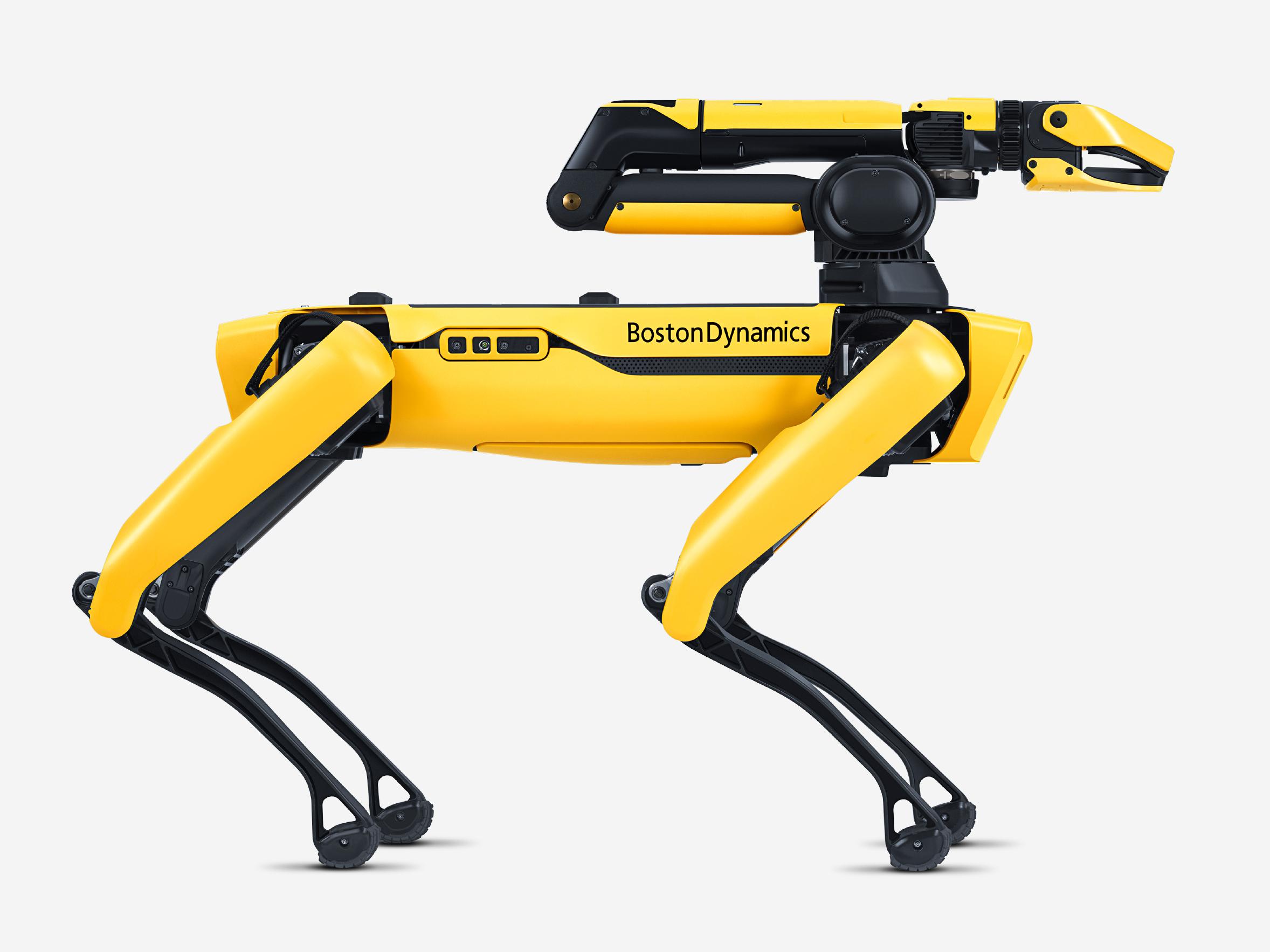
Launched commercially in 2020, Boston Dynamics Spot is a quadruped built for harsh, regulated environments. With a base Explorer Kit at $74,500 and a fully‑loaded enterprise package up to $150,000, Spot is the choice when failure is not an option. Its 32.5 kg frame carries a 14 kg payload — enough for a Spot Arm, LIDAR payload, or gas sensor — and the IP54 rating lets it work in rain, dust, and factory floors. Spot is available worldwide through Boston Dynamics’ direct sales, and a growing fleet of certified partners provides integration and support.
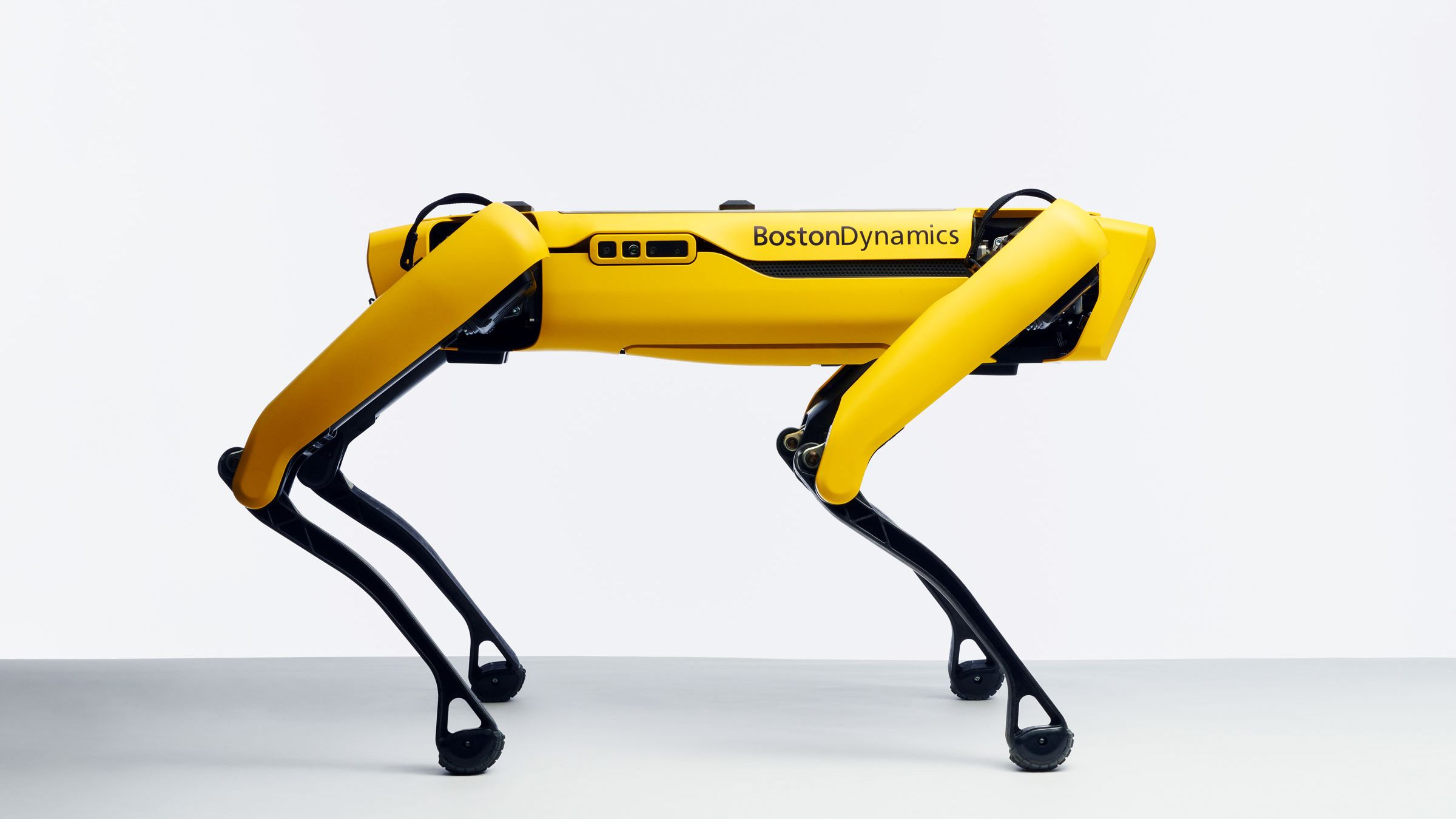
The robot runs a time‑tested autonomy stack: Autowalk for taught routes, Scout for fleet teleoperation, and a fully documented API that enterprises use to integrate Spot into existing workflows. The optional Spot Arm adds six additional degrees of freedom, transforming the platform into a mobile manipulator for valve turning, switch throws, and item retrieval. Safety certifications and ITAR compliance make Spot the only option for many defense and critical infrastructure buyers.
Unitree Go2: The Affordable Quadruped That Punches Above Its Weight
Unitree Go2, launched in 2023, starts at an almost unbelievably low $1,600 for the Air version and tops out at $22,500 for the fully‑loaded EDU model with 4D LiDAR and on‑board Jetson Orin NX compute. At just 15 kg and 40 cm tall, it’s a compact, agile platform that’s easy to transport and deploy. The top speed of 9 km/h makes it one of the fastest commercial quadrupeds, and the 1.5‑hour battery matches Spot’s endurance while carrying a 5 kg payload.
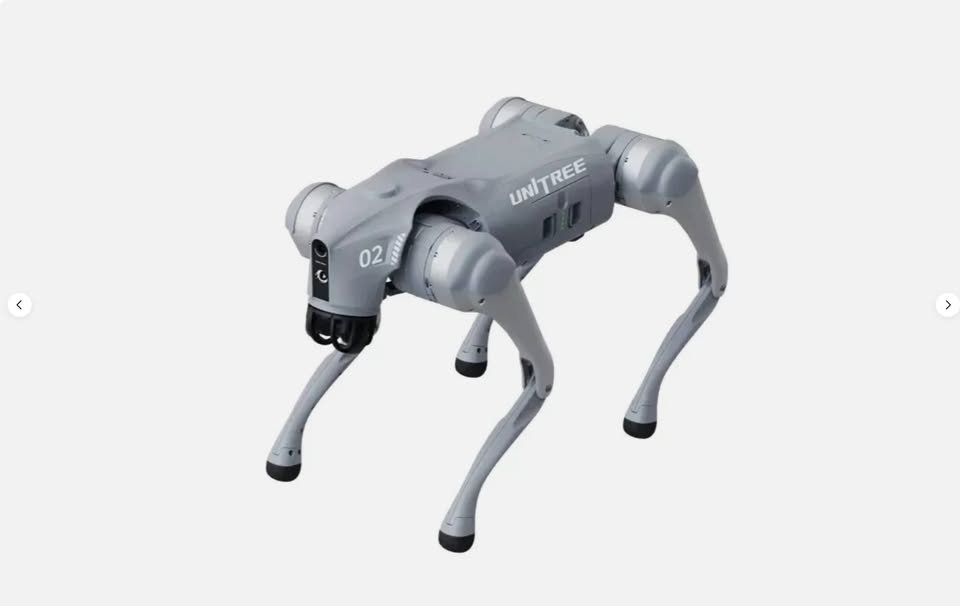
What truly sets the Go2 apart is its onboard intelligence. Pro and EDU models include a 4D LiDAR for SLAM, depth cameras, and even GPT‑powered voice interaction — a feature that lets operators issue natural language commands directly to the robot. Unitree’s SDK is open and active, with ROS2 Humble support, Gazebo simulation models, and Isaac Sim integration. This has made the Go2 a darling of university labs and research institutions worldwide, where budget and rapid iteration matter more than hardened industrial reliability.
Head‑to‑Head by Dimension
Price & Configurations
Spot’s base Explorer Kit includes the robot, two batteries, charger, and basic autonomy. Moving to the Enterprise trim adds Scout fleet management, Spot CAM+ (pan‑tilt‑zoom camera), and a longer service plan. The Go2, by contrast, starts with the $1,600 Air model (no LiDAR, basic compute) and climbs through the Pro ($3,300) and EDU ($4,300 with Orin NX) to the $22,500 EDU option that bundles 4D LiDAR, a powerful GPU, and full autonomous navigation. Winner: Unitree Go2 — unmatched price/performance for non‑critical use.
Performance & Specs
Payload
Spot’s 14 kg payload is nearly three times the Go2’s 5 kg. That margin lets Spot carry a fully‑integrated manipulator arm, extra sensors, or a heavy inspection payload — something the Go2 simply cannot match. Winner: Boston Dynamics Spot.
Speed
The Go2’s 9 km/h top speed outruns Spot’s 5.76 km/h, reducing cycle times on large‑area patrols. For warehouse or field mapping where speed is safety‑limited, the difference matters. Winner: Unitree Go2.
Battery Life
Both robots claim 1.5 hours under typical loads. Spot’s swappable battery and fleet‑wide charging ecosystem are a practical advantage in 24/7 operations, but the raw endurance is a tie. Winner: Tie.
Degrees of Freedom
Standard 12 DOF legs are identical; Spot’s optional Arm brings it to 18, enabling mobile manipulation tasks that the Go2 cannot perform natively. Winner: Boston Dynamics Spot.
Software & SDK Ecosystem
Spot’s API is mature, well‑documented, and embraced by a large integrator ecosystem. ROS2 is supported through the spot_ros wrapper, Python and C++ libraries are first‑party, and Scout provides enterprise‑grade fleet management with role‑based access control. Unitree’s SDK is open and similarly broad: C++ and Python, native ROS2 Humble, and integration with NVIDIA Isaac Sim. The Go2 lacks a polished fleet‑management equivalent to Scout, but its open‑source community is large and fast‑growing. Winner: Boston Dynamics Spot for enterprise deployment; Unitree Go2 for open‑source/R&D friendliness.
Autonomy & Sensors
Spot’s Autowalk creates repeatable inspection routes with visual teach‑and‑repeat, while Scout enables remote teleoperation over 4G/5G. The Go2’s onboard 4D LiDAR (on higher trims) provides impressive SLAM, and its voice‑control feature is genuinely novel. However, Spot’s autonomy stack is more repeatable and certified for industrial use. Winner: Boston Dynamics Spot.
Build Quality & Durability
Spot’s IP54 rating, ruggedized frame, and proven track record in refineries, mines, and power plants put it in another league. The Go2 is also IP54 on paper, but its lighter build and consumer‑grade components are not meant for the same abusive environments. Winner: Boston Dynamics Spot.
Price & Total Cost of Ownership
The sticker‑price gap is staggering: $1,600 for a Go2 Air versus $74,500 for a Spot Explorer. But the total 3‑year cost of ownership widens further when you factor in service, software, and accessories.
A 3‑year TCO estimate for a moderately equipped unit:
- Spot Enterprise with Arm: $150,000 upfront + $15,000/year (Scout, support, spares) ≈ $195,000 over 3 years
- Unitree Go2 EDU (max config): $22,500 upfront + $2,000/year (extended warranty, occasional spares) ≈ $28,500 over 3 years
That means you could run nearly seven fully‑loaded Go2s for the cost of a single Spot Enterprise deployment. For budget‑conscious labs and startups, the math is decisive. For an oil & gas operator where unplanned downtime costs millions per day, Spot’s reliability and support are worth the premium.
Explore Boston Dynamics Spot on Robot Overflow | Explore Unitree Go2 on Robot Overflow
Which Should You Buy? Boston Dynamics Spot vs Unitree Go2 by Use Case
Choose Boston Dynamics Spot if… - You operate in oil & gas, mining, power generation, or chemical plants where safety certifications and ruggedness are non‑negotiable. - You need mobile manipulation (valve turning, switch actuation) with the Spot Arm. - Your workflow depends on enterprise fleet management (Scout) and ITAR compliance. - Downtime carries a five‑ or six‑figure hourly cost, and you require an SLA‑backed support contract. - You are integrating with legacy industrial systems via a mature, well‑supported API.
Choose Unitree Go2 if… - You are a university lab, robotics startup, or educator needing a budget‑friendly research platform. - Light inspection (warehouse patrol, parking lot surveillance) is your goal and a 5 kg payload is enough. - You want the latest AI features — natural‑language commands, 4D LiDAR SLAM — out of the box. - Speed and agility matter more than extreme durability. - You value an active open‑source community and native ROS2 support.
Choose neither if… - You need a humanoid form factor for working in spaces designed for people. Consider the Unitree G1 or Tesla Optimus.
Real‑World Deployments & Track Record
Boston Dynamics Spot has logged thousands of hours at sites like BP’s North Sea platforms (autonomous methane leak detection), NASA’s JPL (off‑world analogue testing), and large construction firms for 360‑degree progress capture. These deployments are backed by published case studies and third‑party validation, reinforcing Spot’s reputation as the most field‑proven quadruped.
Unitree Go2 is newer, having shipped to over 10,000 customers globally since its 2023 launch (Unitree Robotics, 2025 corporate update). It is used in robotics programs at institutions such as ETH Zurich, Carnegie Mellon, and Tsinghua University, and has been deployed for light patrol in malls and warehouses. While the Go2 lacks the same depth of industrial case studies as Spot, its rapid adoption in research and education is a testament to its capabilities. Note that some enterprise and government buyers may face regulatory hurdles due to Unitree’s China‑based supply chain; the U.S. House Select Committee on China has flagged Unitree for potential data‑security concerns (2025 report), though Unitree denies any embedded backdoors.
SDK, Software & Developer Ecosystem
Boston Dynamics Spot: - SDK: C++ and Python, fully documented API. - ROS2: Supported via spot_ros (community‑maintained but endorsed). - Simulation: Gazebo and Isaac Sim support through URDF models. - Fleet: Scout (web‑based, multi‑robot, role‑based access). - Community: Moderately large, enterprise‑oriented, limited open‑source sharing.
Unitree Go2: - SDK: C++ and Python, open‑source example projects. - ROS2: Native ROS2 Humble support, real‑time topic publishing. - Simulation: Official MuJoCo and Isaac Sim models. - Fleet: Basic Unitree app (individual control), community fleet plugins emerging. - Community: Large, open‑source, active on GitHub and forums; rapid feature iteration.
Winner depends on the audience: for corporate IT/OT teams, Spot’s Scout and enterprise documentation are superior; for academic and hacker communities, the Go2’s open ecosystem is leader.
Support, Warranty & Availability
Spot is sold directly through Boston Dynamics with a posted lead time of 6–8 weeks. Enterprise customers can purchase annual service plans with guaranteed response times, access to replacement parts, and on‑site training. The standard warranty covers 1 year, with extended plans available.
The Go2 is available immediately through Unitree’s online store and authorized distributors, with shipping from China typically taking 2–3 weeks. Support is primarily email‑based, and while Unitree has improved its English‑language documentation, enterprise‑grade SLAs are not offered. The standard warranty is 1 year; extended warranties are possible but harder to arrange. For U.S. buyers, used Spot units on platforms like eBay can drop the entry price to $45,000–$90,000, while used Go2s appear in the $1,200–$18,000 range, making both platforms accessible on the secondary market.
Comments