

For autonomous inspection and remote data collection, Boston Dynamics Spot ($74,500–$150,000) is the proven quadruped with 14 kg payload, IP54 rating, and thousands of deployed units. For human‑scale factory tasks like parcel handling and parts sorting, UBTECH Walker S1 ($75,000 enterprise quote) brings a 41‑DOF humanoid form factor, bimanual manipulation, and pilot deployments at automotive plants. The two robots serve entirely different form factors — choose Spot when you need mobility and sensing in unpredictable environments, and Walker S1 when a human‑shaped station is required on the production line.
Boston Dynamics Spot is a rugged quadruped purpose‑built for remote inspection, while UBTECH Walker S1 is an enterprise humanoid tackling assembly‑line tasks. This comparison breaks down price, specs, mobility, and industrial fit to help you decide which form factor — quadruped or humanoid — matches your operational needs. We examine the Boston Dynamics Spot and the UBTECH Walker S1 head‑to‑head across cost, payload, speed, software ecosystem, and real‑world deployment, so you can route each robot to its strongest use case.
Quick Verdict: Who Wins?
| Category | Winner | Why |
|---|---|---|
| Best for autonomous inspection | Boston Dynamics Spot | Proven quadruped with 14 kg payload, IP54 rating, extensive fleet management software, and deployments in oil & gas, construction, and utilities. |
| Best for human‑scale factory tasks | UBTECH Walker S1 | Humanoid form with 41 DOF, bimanual dexterity, and pilot deployments in automotive logistics (parcel handling, parts sorting). |
| Best overall value | Boston Dynamics Spot | Starts at $74,500 and covers a wider range of tasks (inspection, data collection, payload transport); broader off‑the‑shelf software ecosystem reduces integration cost. |
| Best budget pick for manufacturing | UBTECH Walker S1 | At $75,000 it is comparably priced to a high‑end Spot Enterprise bundle but is the only option for human‑shaped assembly stations; lower‑cost Spot EDU models don’t fill this niche. |
Boston Dynamics Spot vs UBTECH Walker S1: Specs Compared
The most immediate difference is the form factor: a four‑legged, dog‑like robot that traverses stairs and rough terrain versus a 1.72‑meter bipedal humanoid that stands upright to work side‑by‑side with human operators. The table below highlights quantitative differences — Spot dominates payload, speed, and environmental resilience, while Walker S1 has vastly more degrees of freedom and the human‑scale reach needed for factory workcells.
| Specification | Boston Dynamics Spot | UBTECH Walker S1 |
|---|---|---|
| Price (base) | $74,500 (Explorer) | $75,000 (enterprise quote) |
| Price (configured) | $100,000 – $150,000 (Enterprise, Inspection) | $75,000 (single config) |
| Height | 840 mm | 1,720 mm |
| Weight | 32.5 kg | 76 kg |
| Payload | 14 kg | 3 kg |
| Max speed | 5.76 km/h (1.6 m/s) | 5.0 km/h |
| Battery life | 1.5 hours | 2.0 hours |
| Degrees of freedom | 12 (legs only); 18 with Spot Arm | 41 (full body) |
| IP rating | IP54 (dust/water resistant) | Not published |
| Onboard compute | Custom NVIDIA Jetson‑based | Not published |
| Sensors | 5 stereo cameras, IMU, lidar (optional) | Cameras, lidar, force/torque sensors |
| SDK languages | Python, C++, ROS1/ROS2 | Not published |
| ROS2 support | Yes (official ROS driver) | Not published |
| Autonomy / fleet software | Scout (Autowalk, fleet management) | Not published |
| Safety certifications | Not published (IEC 62368‑1 compliance) | Not published |
| Availability | Direct purchase, worldwide | Enterprise quote only |
| Warranty | 1 year (extendable) | Not published |
Biggest deltas: Spot’s 14 kg payload dwarfs Walker S1’s 3 kg, making it viable for carrying sensors or a robotic arm. Walker S1’s 41 DOF gives it human‑like dexterity for bimanual tasks that Spot cannot perform. From a price perspective, both start near $75,000, but Spot’s higher‑end configs climb above $100,000 when adding an arm and inspection software.
Boston Dynamics Spot: Rugged Quadruped for Inspection
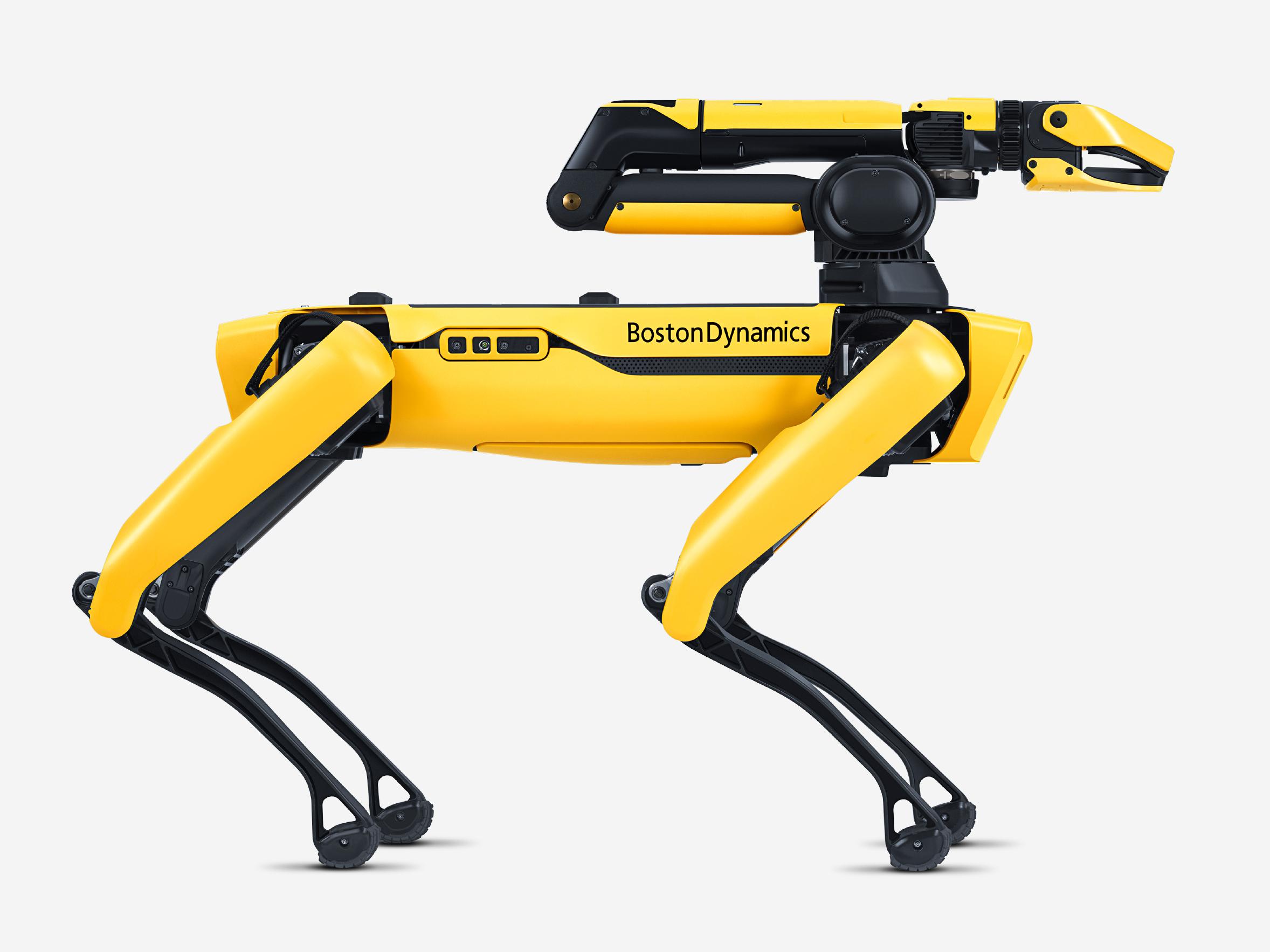
Boston Dynamics Spot is a four‑legged, electrically‑actuated mobile robot that first shipped commercially in 2020. Manufactured in Waltham, Massachusetts, USA, Spot is designed for remote inspection, data collection, and payload transport across dynamic environments. It can climb stairs, walk over gravel, and right itself after a fall.
Key capabilities include a 360‑degree perception system, an optional Spot Arm that adds 6 DOF and extends payload to 14 kg, and the Scout autonomy software for waypoint‑based autonomous missions. Spot is sold directly through Boston Dynamics’ online store and a network of certified resellers. Used units can be found on secondary markets at roughly $45,000 – $90,000, reflecting the robot’s multi‑year field history.
Spot is covered by a one‑year hardware warranty, extendable through service contracts. With thousands of units shipped worldwide, it remains the most widely deployed commercial legged robot, serving industries from electric utilities to construction and pharmaceutical manufacturing.
UBTECH Walker S1: Humanoid for Manufacturing
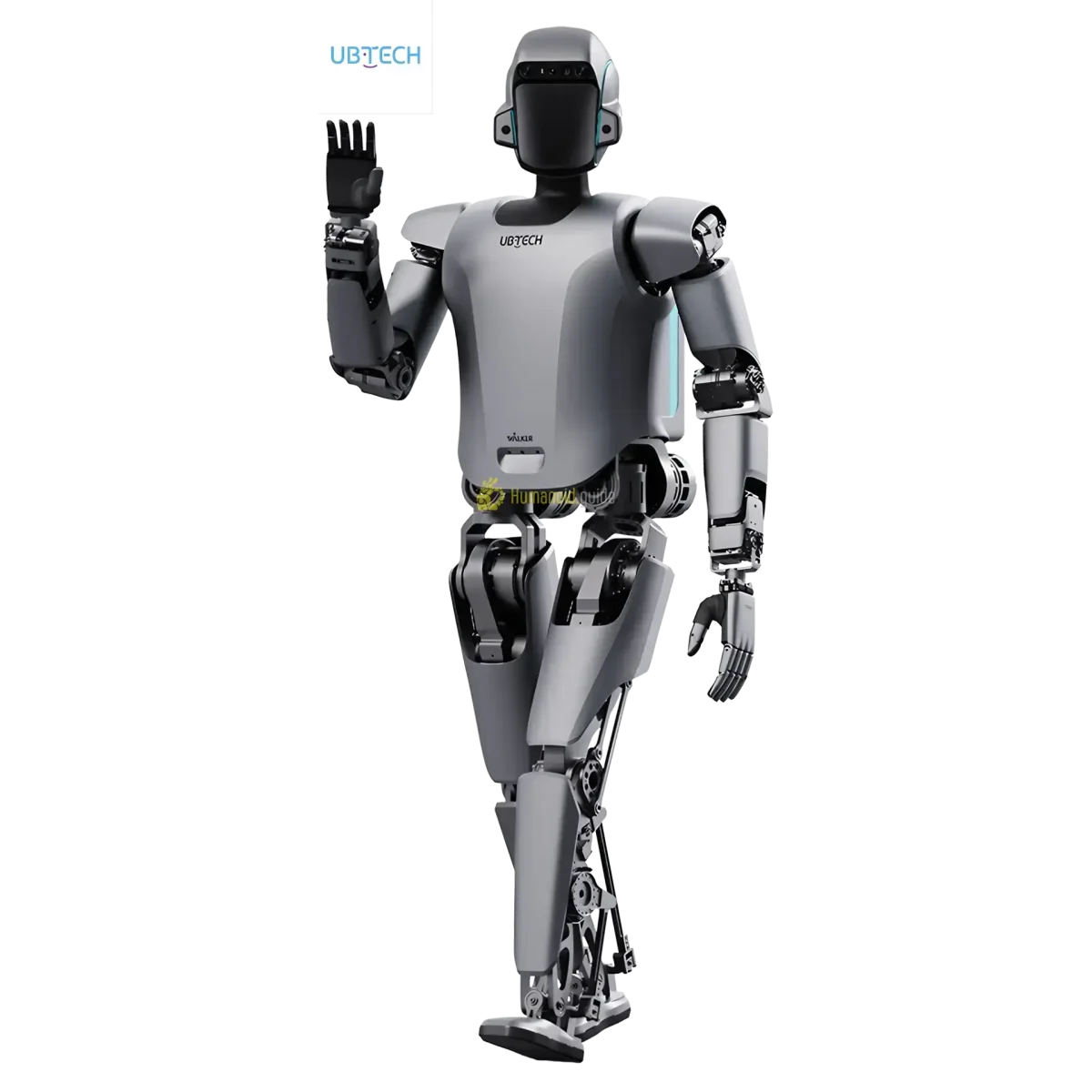
UBTECH Walker S1 is a full‑sized humanoid robot introduced in 2025 by UBTECH Robotics of Shenzhen, China. Standing 1.72 m tall and weighing 76 kg, it is designed to operate inside human‑centric factory environments — particularly automotive assembly and logistics lines — where it can perform parcel handling, parts sorting, and light assembly tasks.
The robot’s 41 degrees of freedom (arms, legs, torso, head) enable bimanual manipulation and stable bipedal walking. It carries a 3 kg payload per arm and can run for up to 2 hours on a single charge. UBTECH supplies Walker S1 via enterprise quotation only; pricing is listed at $75,000 per unit. As of mid‑2025, Walker S1 has been piloted at automotive factories in China, with UBTECH reporting deployments for parcel logistics and component handling. Detailed SDK information is not publicly available, though the robot is expected to run a proprietary control stack with some camera‑based perception.
Head-to-Head by Dimension
Price & Configurations
Both robots sit at the same base‑price starting line — $74,500 for Spot’s Explorer Kit versus $75,000 for Walker S1. However, Spot’s pricing scales with mission packages: the Enterprise configuration adds enhanced autonomy and fleet management at around $100,000, while the full Inspection package (including Spot Arm, thermal camera, and Spot CAM+) can reach $150,000. Walker S1 is offered in a single‑configuration enterprise quote, though it’s reasonable to expect additional costs for integration, training, and service contracts. Winner: Boston Dynamics Spot for transparent tiered pricing and wider purchase options (direct, reseller, used market). Walker S1’s availability through enterprise quote limits comparison shopping.
Performance & Specs
Payload
Spot’s 14 kg payload (with Spot Arm) is nearly five times greater than Walker S1’s 3 kg. This allows Spot to carry heavy sensors, gas detectors, radiation monitors, or even a small manipulator while still moving. Walker S1’s payload is sufficient for small parts handling but cannot carry heavy inspection equipment. Winner: Boston Dynamics Spot.
Speed
Spot’s top speed of 5.76 km/h (1.6 m/s) is 15% faster than Walker S1’s 5.0 km/h. For covering large industrial sites or outdoor terrain, Spot’s slightly higher speed reduces mission time. In a factory aisle, the difference is negligible. Winner: Boston Dynamics Spot by a narrow margin.
Battery
Walker S1 lasts 2.0 hours versus Spot’s 1.5 hours, giving it 33% more runtime per charge. This is significant for continuous shift work, where fewer battery swaps mean higher uptime. Winner: UBTECH Walker S1.
Degrees of Freedom
Spot’s 12 leg joints (18 with arm) are optimized for locomotion and basic manipulation; Walker S1’s 41 DOF span arms, legs, torso, and head. This enables true bimanual dexterity — picking, placing, and light assembly — that Spot cannot replicate. Winner: UBTECH Walker S1.
Software & SDK Ecosystem
Spot’s software stack is mature and well‑documented. It supports Python and C++ SDKs, ROS1 and ROS2 drivers, and the Scout web‑based fleet management platform for autonomous missions, mapping, and remote operation. A large community of developers and integrators has built payloads, software plugins, and integrations for industrial inspection applications. UBTECH has not published an SDK for Walker S1, and ROS2 support is unconfirmed. This makes Spot far easier to integrate into existing workflows. Winner: Boston Dynamics Spot.
Autonomy & Sensors
Spot offers 360‑degree stereo vision and optional lidar, combined with Autowalk (teach‑and‑repeat autonomy) and Scout for multi‑robot fleet management. It can navigate dynamic environments, avoid obstacles, and return to base autonomously. Walker S1’s onboard perception includes cameras and lidar, but the extent of autonomous navigation (beyond basic walking) is unclear. The humanoid is designed to move between fixed stations rather than autonomously roaming a facility. Winner: Boston Dynamics Spot for proven autonomous navigation and fleet management.
Build Quality & Durability
Spot carries an IP54 rating, meaning it is protected against limited dust ingress and water splashes from any direction. It operates reliably in rain, mud, and industrial dust, and has a demonstrated self‑righting capability. Walker S1’s ingress protection rating is not published, and its bipedal stability in unstructured environments outside of factory floors is untested at scale. Winner: Boston Dynamics Spot.
Price & Total Cost of Ownership
At the starting price, Spot’s Explorer Kit ($74,500) and Walker S1 ($75,000) are nearly identical. However, the true three‑year cost widens quickly due to software and support. Spot’s annual software subscription (Scout fleet management, Autowalk) can add $10,000–$20,000 per year; extended warranties and service contracts increase that further. A fully equipped Inspection Spot with an arm and payloads can total $150,000 upfront. Walker S1’s enterprise price likely bundles first‑year support, but long‑term service agreement details are under NDA.
For a three‑year horizon: - Spot (mid‑range Enterprise): ~$100,000 hardware + ~$45,000 software/support ≈ $145,000. - Walker S1: $75,000 hardware + estimated $30,000 for support/integration (assuming similar service levels) ≈ $105,000.
If the task fits a humanoid, Walker S1’s lower overall TCO may be compelling. However, Spot’s broader task versatility and ecosystem can spread the cost across multiple inspection workflows. For any use case requiring payloads over 3 kg, Spot remains the only option, effectively turning its higher TCO into a requirement rather than a choice.
➡️ Request a Spot quote ➡️ Inquire about Walker S1
Which Should You Buy? Boston Dynamics Spot vs UBTECH Walker S1 by Use Case
Choose Boston Dynamics Spot if… - Your primary task is autonomous inspection, remote sensing, or data collection across large, unstructured, or hazardous sites (oil & gas, power plants, construction, mining). - You need payload capacity (up to 14 kg) to carry sensors, a manipulator arm, or sampling equipment. - You require an IP‑rated robot that can handle dust, rain, and uneven terrain. - Software extensibility, ROS2 integration, and a broad developer ecosystem are important. - You need fleet management for multi‑robot autonomous missions.
Choose UBTECH Walker S1 if… - You operate a manufacturing or logistics line where human‑sized workstations are already in place and tasks involve bimanual manipulation (parcel handling, lightweight part sorting, assembly). - The 3 kg payload per arm matches your typical part weight. - 2‑hour battery runtime aligns with shift cycles. - You are willing to work directly with UBTECH for custom integration and can accept early‑adopter enterprise support terms.
Choose neither if… - You need heavy payload manipulation (≥15 kg) — consider a traditional cobot or industrial arm. - You require a fully turnkey, plug‑and‑play solution — both platforms demand integration work.
Real‑World Deployments & Track Record
Boston Dynamics Spot has amassed thousands of deployed units since 2020 across over 40 countries. Named deployments include BP’s use of Spot for autonomous gas detection and thermal imaging at oil refining facilities (announced 2021), National Grid for electrical substation inspection (2022), and Merck’s pharmaceutical manufacturing site for environmental monitoring (2023). Spot’s ability to operate in rain, snow, and high‑radiation zones has been repeatedly validated. As of mid‑2026, Boston Dynamics reports that Spot has logged over 1 million total operating hours globally (source: Boston Dynamics customer update, Q1 2026).
UBTECH Walker S1 has been piloted in select automotive factories since late 2025. UBTECH disclosed in early 2026 that Walker S1 units are handling parcel logistics and parts sorting tasks at a major Chinese automaker’s assembly line, with each robot operating approximately 6–8 hours per day in structured environments. Publicly available operating hours or total units shipped have not been disclosed. The humanoid’s real‑world footprint remains small compared to Spot, but it represents one of the earliest humanoid‑in‑production deployments.
Key takeaway: Spot’s massive deployment base and documented field hours offer a wealth of operational data and proven reliability. Walker S1’s early factory pilots are promising, but buyers should expect a steeper learning curve and less ecosystem maturity.
SDK, Software & Developer Ecosystem
Software integration is critical for industrial robots, and here the gap is pronounced. Spot’s SDK is openly documented, supporting Python 3, C++, and ROS 1 Noetic / ROS 2 Humble. The robot can be controlled directly, integrated into custom autonomy stacks, or used with simulation environments like NVIDIA Isaac Sim. A developer community maintains plugins for advanced SLAM, object detection, and payload control. UBTECH has not released a public SDK for Walker S1, and ROS2 compatibility is unconfirmed, which means enterprise users must rely on UBTECH’s proprietary integration services. This limits third‑party payload development and slows time‑to‑deployment. Winner: Boston Dynamics Spot for its open, mature ecosystem.
Support, Warranty & Availability
Spot ships worldwide with a one‑year hardware warranty, extendable through annual service plans that include next‑business‑day replacement and software updates. Enterprise customers can purchase multi‑year support agreements directly from Boston Dynamics. Walker S1 is available only through enterprise quotation; warranty terms and support SLAs have not been publicly disclosed, though UBTECH is expected to provide on‑site integration and maintenance as part of the contract. For buyers who need transparent, predictable support terms, Spot is the lower‑risk choice.
Comments