

The Agibot G2 Genie is a 55 kg agile industrial biped from Shanghai with hot‑swappable batteries and a $200K price tag, while the Apptronik Valkyrie is a 125 kg NASA‑developed space humanoid built for extreme environments. This Agibot G2 Genie vs Apptronik Valkyrie comparison breaks down every spec, real‑world deployment, and price detail to help research labs, universities, and industrial automation teams decide which robot matches their mission — from lunar surface research to factory floor assembly.
Agibot G2 Genie vs Apptronik Valkyrie: Specs Compared
| Specification | Agibot G2 Genie | Apptronik Valkyrie |
|---|---|---|
| Price (base) | $200,000 (early‑access quote) | ~$250,000 (research program; not sold publicly) |
| Price (configured) | Undisclosed (quote‑based) | Not applicable |
| Weight | 55 kg | 125 kg |
| Height | 175 cm | 190 cm |
| Payload | Not specified | Not published |
| Max speed | 7 km/h | 5.4 km/h |
| Battery / Runtime | Dual hot‑swappable batteries, 4 hours total | 1 hour (fixed battery) |
| Degrees of freedom | 32 | 44 |
| IP rating | Not published | Not published |
| Onboard compute | Not disclosed | Not disclosed |
| Sensors / LiDAR | RGB‑D cameras, LiDAR (details not disclosed) | Multi‑sensor head (LiDAR, stereo cameras, IMU) |
| SDK languages | Not disclosed | ROS‑based (C++, Python) |
| ROS2 support | Not confirmed | Expected (ROS2 research builds) |
| Autonomy / fleet | Not disclosed | Research autonomy (NASA) |
| Safety certs | None publicly known | None publicly known |
| Availability | Early access, limited units | Not commercially available; research collaboration |
| Warranty / support | Enterprise support by AgiBot; terms unknown | No commercial warranty; NASA partnerships only |
The biggest quantitative gap is the battery life and weight. The G2 Genie runs four times longer on a charge and at less than half the mass of the Valkyrie, while the Valkyrie counters with 12 extra degrees of freedom, giving it finer dexterity for complex manipulation tasks.
Agibot G2 Genie: Agile Industrial Research Humanoid
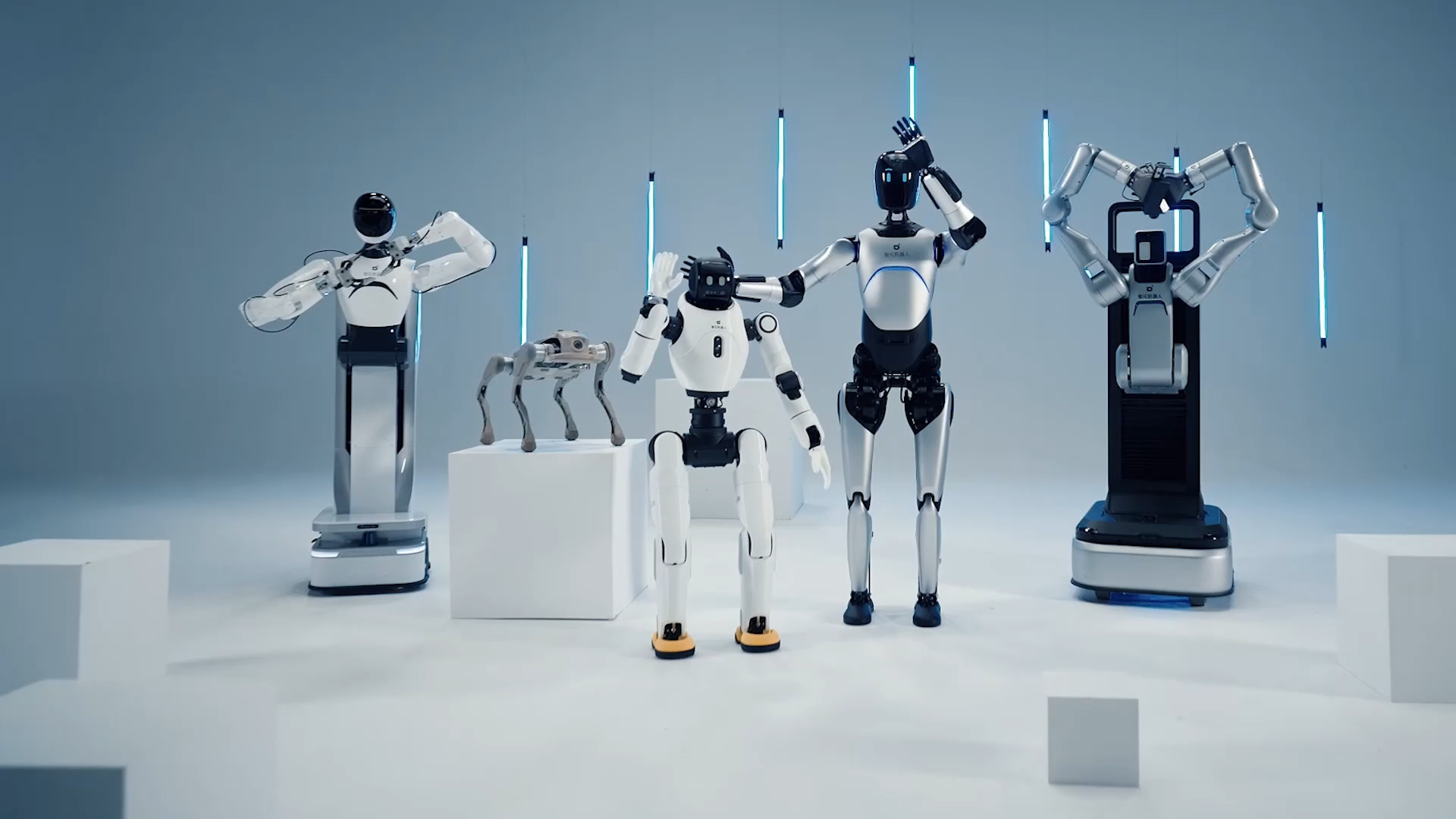
The Agibot G2 Genie was unveiled in 2025 by AgiBot (Shanghai). Standing 175 cm tall and weighing only 55 kg, it is one of the lightest full‑sized bipedal humanoids available. The robot runs on dual hot‑swappable 4‑hour battery packs, enabling 8‑hour continuous operation with a mid‑shift swap. Its 32 degrees of freedom allow natural walking and upper‑body manipulation, though detailed joint specifications are not publicly listed. Maximum walking speed is 7 km/h, making it brisk enough for large factory floors. The G2 Genie is offered through early‑access programs for industrial automation research and university labs, with pricing starting at approximately $200,000. Since AgiBot does not disclose final configured prices, every sale is quote‑based and may include sensor packages, grippers, or compute upgrades.
For more technical details, visit the AgiBot G2 Genie database page.
Apptronik Valkyrie: NASA‑Born Heavy‑Duty Research Humanoid
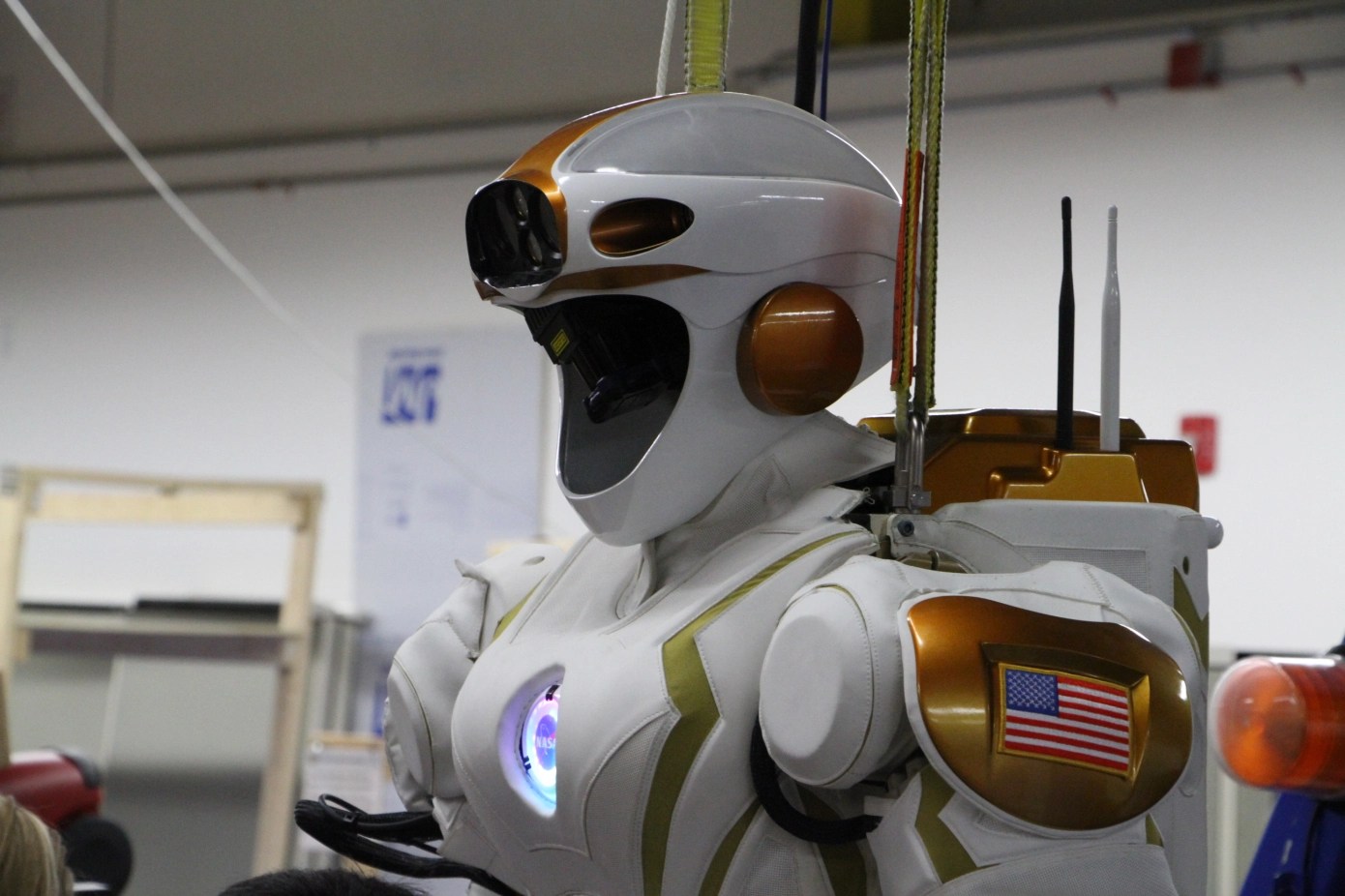
The Apptronik Valkyrie is a 190 cm, 125 kg bipedal robot originally built for NASA’s DARPA Robotics Challenge. Developed in Austin, Texas, it is a research platform designed for space exploration, disaster response, and extreme‑environment manipulation. With 44 degrees of freedom — 6 in each leg, 7 in each arm, 3 in the waist, and multiple hand‑ and head‑actuated joints — Valkyrie achieves human‑like dexterity far beyond most industrial humanoids. Its runtime, however, is a major limitation: the fixed onboard battery lasts just 1 hour. The robot is not sold commercially; instead, it is made available to select NASA partners and academic institutions through research collaboration agreements. If a third‑party lab wanted to build or acquire a Valkyrie‑class machine, the estimated cost is around $250,000, though no retail path exists.
Full specifications can be found on the Apptronik Valkyrie database page.
Price & Configurations
Both robots operate in the $200K–$250K range, but the purchasing realities are completely different.
- Agibot G2 Genie – Base price of $200,000 is quoted for early‑access units. Configuration (grippers, additional sensors, compute upgrades) can push the price higher, but AgiBot does not publish a public price list. Orders are handled directly through AgiBot’s enterprise sales team, and limited units are shipping to research partners in 2026.
- Apptronik Valkyrie – The $250,000 figure is an estimate of the cost to reproduce a Valkyrie‑class robot under a NASA‑Apptronik partnership. There is no store, no dealer network, and no purchase order process. To get a Valkyrie, a university or agency must enter a formal research collaboration with NASA and Apptronik. This route is typically restricted to space‑robotics labs and DARPA‑funded programs.
Winner: Agibot G2 Genie — it is the only robot you can actually buy with a standard corporate purchase order, even if lead times are long.
Performance & Specs
Payload
Payload specifications are not published for either robot. Valkyrie’s large, powerful arms were designed to lift heavy objects in a disaster scenario, but exact numbers are kept by NASA. Agibot has not yet released the G2 Genie’s arm payload either. For heavy lifts, the Valkyrie’s robustness likely gives it an advantage, but no hard data exists to confirm.
Winner: Not determinable without published payload figures.
Speed
The G2 Genie walks at 7 km/h, noticeably faster than Valkyrie’s 5.4 km/h. While neither is a race machine, the 30 % higher speed matters in a factory or warehouse setting where longer travel distances are common.
Winner: Agibot G2 Genie.
Battery & Runtime
This is the most dramatic difference. The G2 Genie carries two hot‑swappable 4‑hour batteries, for a total runtime of up to 8 hours with a quick swap. Valkyrie’s fixed pack delivers a single hour of operation — a serious constraint for any practical workload. The hot‑swap capability means the G2 Genie can run continuously without recharging downtime.
Winner: Agibot G2 Genie, by a landslide.
Degrees of Freedom
Valkyrie’s 44 DOF surpasses the G2 Genie’s 32 by a wide margin. With independent wrist, finger, and waist joints, Valkyrie can twist, grip, and balance in ways the G2 Genie cannot. For dexterity‑intensive tasks — turning valves, using power tools, climbing ladders — the extra DOF are essential.
Winner: Apptronik Valkyrie.
Software & SDK Ecosystem (Brief)
Both robots lean on ROS (Robot Operating System) — Valkyrie’s NASA heritage guarantees a ROS‑based control stack, and the community has contributed drivers for simulation and hardware abstraction. Agibot has stated that the G2 Genie will support ROS‑compatible development, but as of mid‑2026 no public SDK or API documentation has been released. This makes Valkyrie the more developer‑ready platform in terms of software maturity, even if the hardware itself is hard to access.
Winner: Apptronik Valkyrie, thanks to a decade of open‑source ROS history.
Autonomy & Sensors
Autonomy levels remain at the research stage for both. Valkyrie uses a head‑mounted sensor suite (LiDAR, stereo cameras, IMUs) and has demonstrated semi‑autonomous manipulation during the Space Robotics Challenge. The G2 Genie is seen in promotional videos performing autonomous navigation and object grasping, but no published papers or datasets detail its sensor stack or autonomy algorithms. Valkyrie’s multi‑year track record in NASA challenges gives it more credibility.
Winner: Apptronik Valkyrie — more documented autonomous capabilities.
Build Quality & Durability
Valkyrie’s 125 kg frame is built to survive radiation, dust, and impact to meet NASA’s space‑grade aspirations. Its legs and arms use series‑elastic actuation for compliance and shock absorption. The G2 Genie is lightweight and likely not designed for extreme environments; instead it targets indoor, clean factory floors. The hot‑swappable battery design shows practical engineering for uptime, but overall ruggedness points to Valkyrie.
Winner: Apptronik Valkyrie for extreme environments; Agibot G2 Genie for portability and easy battery changes in a lab/factory.
Price & Total Cost of Ownership
When you factor in a 3‑year operating horizon, the numbers tip further toward the G2 Genie. Estimated TCO includes:
| Cost component | Agibot G2 Genie (3‑year) | Apptronik Valkyrie (3‑year) |
|---|---|---|
| Hardware | $200,000 | $250,000 (if built under partnership) |
| Software / support | ~$30,000 (enterprise support) | $0 (no commercial support) |
| Batteries / spare parts | ~$10,000 (extra batteries) | Unknown, likely high (custom build) |
| Total 3‑year TCO (est.) | ~$240,000 | >$250,000 (not purchasable) |
The G2 Genie’s clear advantage is that it exists as a product with a defined cost path. For the Valkyrie, the true TCO is impossible to estimate because there is no standard acquisition route, no spare‑parts catalog, and no commercial warranty. Labs working with Valkyrie must fund their own engineering support and repair resources.
Winner: Agibot G2 Genie, the only robot with a defined, predictable TCO.
Which Should You Buy? Agibot G2 Genie vs Apptronik Valkyrie by Use Case
- Choose the Agibot G2 Genie if:
- You need a bipedal humanoid for industrial automation research on a real factory floor.
- Your lab requires long runtimes (4+ hours) with hot‑swappable batteries.
- You want a purchasable robot with an enterprise support path, even if early‑access.
- Lightweight portability (55 kg) and 7 km/h speed matter for mobile manipulation demos.
- Choose the Apptronik Valkyrie if:
- Your research focuses on space robotics, planetary exploration, or disaster response.
- Extreme dexterity (44 DOF, high‑fidelity hands) is critical for complex manipulation.
- You can secure a NASA partnership or DARPA funding — because the Valkyrie is not for sale.
- You need a heavy‑duty machine that mimics human astronauts at 125 kg and 190 cm.
- Choose neither if:
- You are looking for a production‑ready cobot with safety certification (look at UR or FANUC).
- Budget is <$100K; both robots are research‑grade and expensive.
- Your application is a simple pick‑and‑place task where a fixed‑arm cobot does the job better.
Real‑World Deployments & Track Record
Apptronik Valkyrie has been used in the DARPA Robotics Challenge (DRC) 2015, where it performed disaster‑response tasks, and in NASA’s Space Robotics Challenge, where teams teleoperated it to solve simulated Mars tasks. Valkyrie units reside at NASA Johnson Space Center, MIT, and the University of Edinburgh, with ongoing research. Over nearly a decade, the platform has accumulated thousands of test hours, making it one of the most studied humanoids in the U.S. (source: NASA technical papers, 2015‑2024).
Agibot G2 Genie is far newer. Unveiled in 2025, early‑access units were delivered to unnamed industrial partners in 2026. Agibot has not published deployment counts, operating hours, or customer case studies. Demo videos show the G2 Genie walking, carrying boxes, and manipulating tools, but actual plant‑floor data is absent. The robot’s real‑world track record is essentially zero for now.
Winner (track record): Apptronik Valkyrie, with a decade of NASA‑backed research. For organizations that value proven hardware history, this is a significant point.
SDK, Software & Developer Ecosystem
Valkyrie’s software stack is almost entirely open‑source ROS‑based. Over the years, NASA and Apptronik have released simulation models (Gazebo), control libraries, and whole‑body motion planners. While not a polished commercial SDK, a motivated developer can stand up a Valkyrie simulation and begin research. ROS2 compatibility is being tested in newer builds, and the community provides tutorials via the Space Robotics Challenge.
For the G2 Genie, Agibot has not yet released any public SDK, simulation model, or API documentation. The robot is expected to support ROS2, given modern Chinese humanoids like Unitree H1 and GR1 do, but until a release appears on GitHub or Agibot’s developer portal, the ecosystem is a black box. This makes Valkyrie far more attractive for software‑driven research teams that need to build custom autonomy stacks.
Winner: Apptronik Valkyrie — despite its age, the software ecosystem is far more open and academically supported.
Support, Warranty & Availability
- Agibot G2 Genie: Available through early‑access purchase. AgiBot provides enterprise‑level support with direct engineering contact during the pilot phase. However, no standard warranty terms or spare‑parts catalog have been published. Lead times are not publicly stated; interested buyers should contact AgiBot directly.
- Apptronik Valkyrie: Not available for purchase. NASA‑partner labs receive technical support from NASA and Apptronik engineers, but there is no warranty, no replacement parts supply chain, and no commercial service contract. Labs must budget for maintenance and repairs themselves. The only path to a Valkyrie is through funded research collaborations, which can take months to years to arrange.
For a research institution that simply wants to own a robot and start experimenting, the G2 Genie is the only realistic choice, despite the immaturity of its support structure.
Winner: Agibot G2 Genie — because availability beats a non‑purchasable platform.
Comments