

Standing at opposite ends of the $30,000 humanoid robot market, the AgiBot G1 and Unitree H2 represent two distinct design philosophies from China’s leading robotics startups. Both aim to bring general‑purpose humanoids into research labs and industrial pilots, but they prioritise different capabilities: the AgiBot G1 pushes the envelope on dexterity with its 53 degrees of freedom and dexterous hands, while the Unitree H2 focuses on payload, endurance, and a battle‑tested platform derived from the widely deployed H1. This article compares them head‑to‑head across price, specs, software, real‑world readiness, and ideal use cases, so you can decide which one fits your work.
| Verdict | Winner | Why |
|---|---|---|
| Best overall value | Unitree H2 (base) | $29K base config delivers longer battery, higher payload, and confirmed April 2026 shipments — a low‑risk, high‑capability package for most users. |
| Best for manipulation & dexterity | AgiBot G1 | 53 DOF total and 24-DOF hands offer unmatched finger‑level control for grasping and fine manipulation research. |
| Best for industrial endurance | Unitree H2 | 7 kg payload, 3 h battery, and 5.4 km/h walking speed outperform the G1 in sustained physical tasks. |
| Best budget pick | AgiBot G1 | At $28,000 with no additional configuration tiers, it’s the lowest‑priced option with advanced hand capabilities. |
AgiBot G1 vs Unitree H2: Specs Compared
The table below captures every published quantitative dimension. For areas where manufacturers have not released specifications, we mark them clearly — no estimates.
| Specification | AgiBot G1 | Unitree H2 |
|---|---|---|
| Price (base) | $28,000 (introductory, limited 200 units) | $29,000 |
| Price (configured range) | $28,000 (single config) | $29,000 – $60,000 |
| Height | 175 cm | 182 cm |
| Weight | 55 kg | 70 kg |
| Payload | 5 kg | 7 kg |
| Max speed | 4 km/h | 5.4 km/h |
| Battery runtime | 2 hours | 3 hours |
| Degrees of freedom (total) | 53 | 31 |
| DOF (arms) | 7 per arm (estimated) | 7 per arm |
| DOF (hands) | 24 per hand | Not published (likely single‑digit) |
| IP rating | Not published | Not published |
| Onboard compute | NVIDIA Jetson (unspecified) | Not published (likely high‑end Jetson) |
| Sensors | RGB‑D cameras, unspecified others | RGB‑D cameras, LiDAR (model unconfirmed) |
| SDK languages | Agi Studio SDK (Python/C++ expected) | Unitree SDK (Python, C++); ROS2 support |
| ROS2 support | Yes, via Agi Studio SDK (ROS2 compatible) | Yes, full ROS2 driver available |
| Autonomy/fleet management | Not published | Unitree Scout (fleet management) |
| Availability | Pre‑order, limited 200 units; delivery timeline not public | Pre‑order, first shipments April 2026 |
| Warranty/support | Not published | Not published |
The starkest difference is in the degrees of freedom: AgiBot’s 53 total DOF — including 24 in each hand — dwarfs the H2’s 31, but the H2 counters with a 40% higher payload, 50% longer battery, and 35% faster walking speed.
AgiBot G1: High‑DOF Dexterity Platform
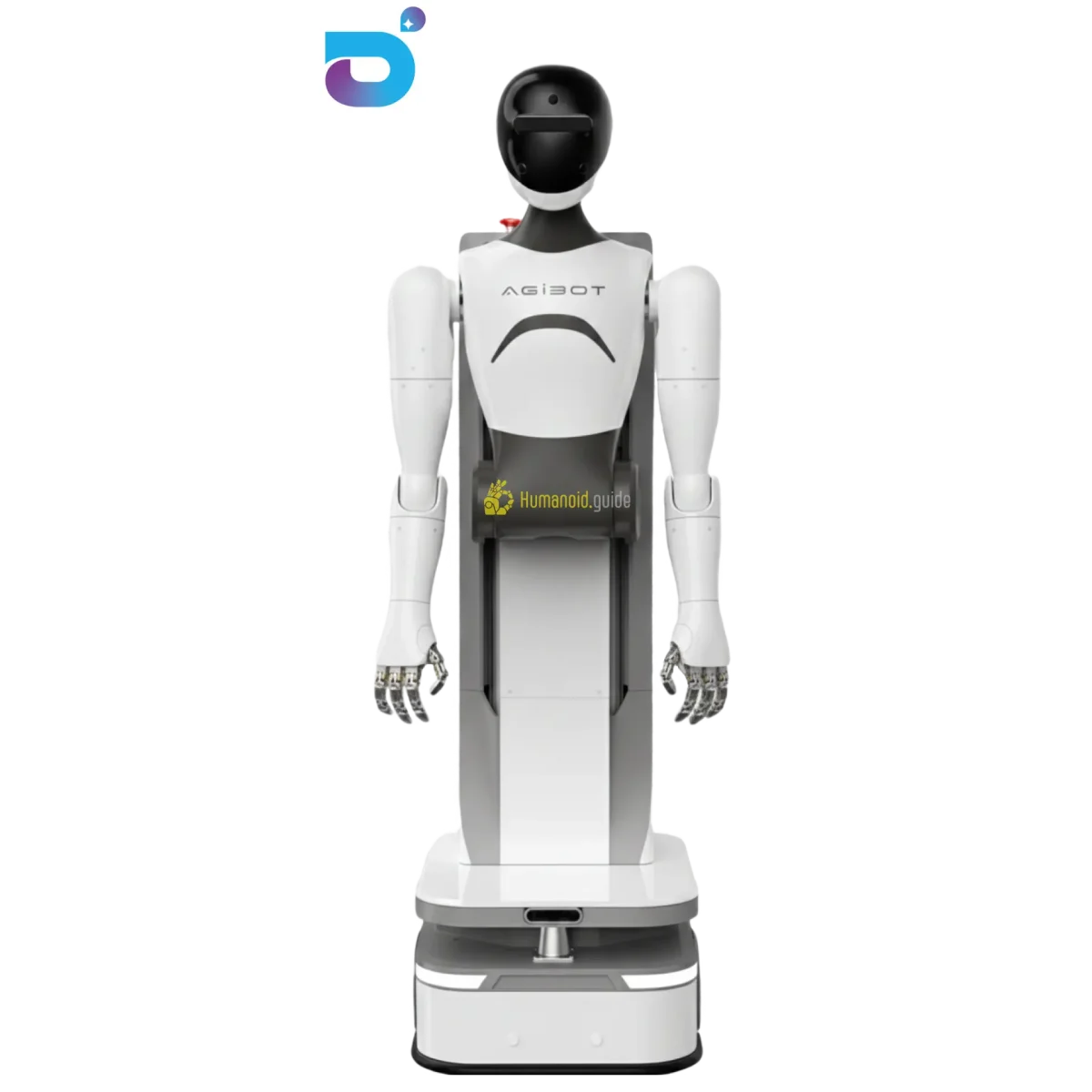
AgiBot, based in Shanghai, unveiled the G1 in 2025 as its first general‑purpose humanoid targeted at researchers and developers. Standing 175 cm tall and weighing 55 kg, it is noticeably lighter than the Unitree H2 (70 kg). Its headline feature is a full‑body 53 degrees of freedom — an unusually high number for a production‑intended robot — distributed across its legs, arms, waist, head, and particularly its hands (24 DOF per hand). This design promises advanced whole‑body manipulation and a level of finger dexterity that few competitors match.
Onboard compute runs on an NVIDIA Jetson module, and sensing relies on RGB‑D cameras for depth perception and environment mapping. The introductory price of $28,000 is available for a limited run of 200 units, with pre‑orders live and delivery expectations carefully described as “limited quantities” — a sign that production ramping is still underway. No fleet management, SDK ecosystem maturity, or public deployments are yet available, making the G1 a high‑potential but unproven platform.
Unitree H2: Payload‑Focused, Endurance‑Optimized
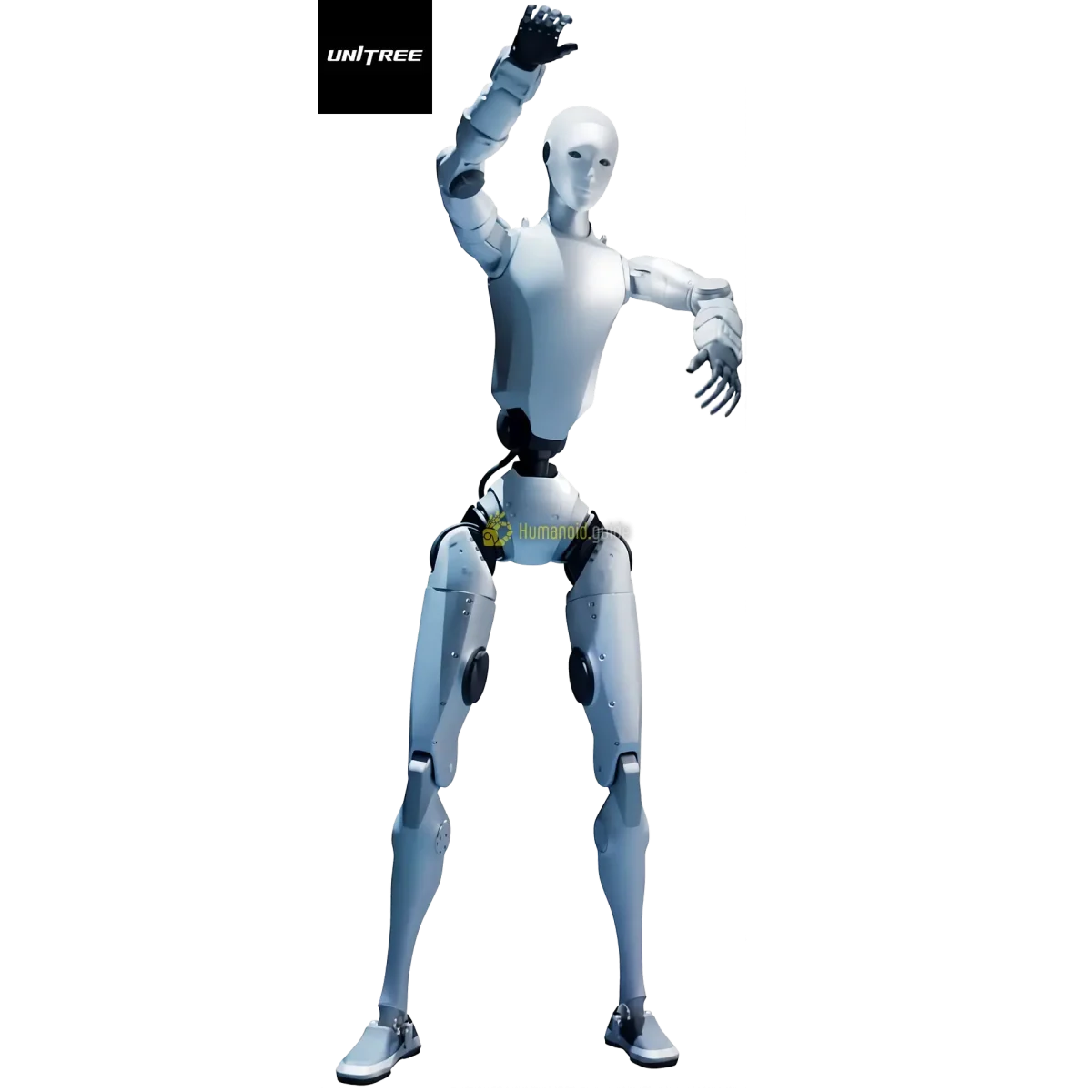
The Unitree H2, built in Hangzhou, is the direct successor to the well‑received H1 — a robot that shipped to dozens of research labs and performed reliably in dynamic walking and manipulation demos. Launched in 2025 with pre‑orders opening for April 2026 delivery, the H2 doubles down on industrial utility: 7 kg payload (single‑arm), 3‑hour battery life, and a top walking speed of 5.4 km/h. Its 182 cm frame and 70 kg weight make it one of the larger and heavier electric humanoids in this price bracket.
The robot retains the H1’s 7‑DOF per arm but refines the manipulation pipeline with better gripper options and a bionic head featuring facial expressions — an interface and social‑awareness feature. Total DOF stands at 31, a deliberate choice to keep the platform robust and reliable. Unitree’s established SDK, ROS2 drivers, Isaac Sim support, and Scout fleet management tool give the H2 a mature software ecosystem that few peers, including AgiBot, can match today.
Price & Configurations
The AgiBot G1 enters at a flat $28,000 for its introductory batch — no upsell tiers, no add‑ons yet published. For a high‑DOF dexterity platform, this price is aggressively low. However, the limited 200‑unit run and ambiguous delivery timeline make it a risky bet for anyone needing a robot on a firm schedule.
The Unitree H2 starts at $29,000, just $1,000 more, but its configuration extends up to $60,000 for fully‑loaded variants. The base model already includes the full‑body hardware and 3‑hour battery; higher tiers likely package advanced sensing, gripper options, and service contracts — though exact config details remain undisclosed. Critically, the H2 has a published first‑shipment window (April 2026) that gives buyers a concrete planning horizon.
Winner: AgiBot G1 for absolute dexterity per dollar; Unitree H2 for certainty of delivery and a scalable config path.
Performance & Specs
Payload & Speed
The Unitree H2 lifts 7 kg per arm, versus the G1’s 5 kg — a 40% advantage. With a top walking speed of 5.4 km/h (vs. 4 km/h), the H2 also covers ground faster, making it more efficient for logistics or inspection tasks that traverse facilities.
Winner: Unitree H2
Battery & Runtime
The H2’s 3‑hour battery triples the endurance of many competitors and offers a full 50% more operational time than the G1’s 2‑hour cell. For pilot programs or field testing, that extra hour can be the difference between a productive day and premature downtime.
Winner: Unitree H2
Degrees of Freedom (Dexterity)
This is where the G1 shines: 53 total DOF, with 24 DOF dedicated to each hand. That enables finger‑level in‑hand manipulation, tool use, and complex grasping that the H2’s simpler hands simply cannot replicate. Even if the H2’s hands have unspecified DOF, the gulf is likely 20+ DOF per hand — a massive design divergence.
Winner: AgiBot G1
Sensors & Compute
Both robots use RGB‑D cameras and NVIDIA Jetson‑class compute, but the G1’s Jetson is the only publicly confirmed model. Unitree has not detailed H2’s processor yet, but its H1 predecessor used a combination of Intel and NVIDIA Orin — a proven stack likely carried forward. The H2 also seems to include LiDAR, adding robustness in low‑light or dust‑rich environments.
Winner: Unitree H2 (more complete sensing package, even if not fully detailed)
Software & SDK Ecosystem
Unitree’s software stack is a known quantity: a Python/C++ SDK with ROS2 drivers, Gazebo/Isaac Sim support, and a fleet orchestration tool (Scout) used across its quadruped and humanoid lineup. This mature, documented ecosystem dramatically lowers the development barrier.
AgiBot’s “Agi Studio” SDK is brand new — while it promises ROS2 compatibility and high‑level simulation, no large developer community, tutorials, or real‑world integration stories are available. Until the G1 ships in volume and third‑party packages emerge, the H2 offers far less friction for software teams.
Winner: Unitree H2
Autonomy & Mobility
The H2’s faster walk, combined with the H1’s demonstrated dynamic balancing and stair‑climbing, suggests a robust locomotion stack. AgiBot has shown the G1 walking stably in promotional videos, but at a slower 4 km/h and without the same level of public field‑testing.
Winner: Unitree H2
Build Quality & Durability
Both robots lack published IP ratings, but the H2’s heavier weight (70 kg vs 55 kg) and its ancestor H1’s track record suggest a structurally tougher platform. The G1 is lighter, likely prioritising agility over ruggedness. Without multi‑lab durability reports, the H2’s lineage gives it a stronger reliability signal.
Winner: Unitree H2
Price & Total Cost of Ownership
Over a three‑year ownership window, hardware is only part of the picture. At $28,000 with no config upsells, the AgiBot G1’s base price is unbeatable — but software support, spare parts, and the potential for early‑production teething issues are unknowns that could inflate operational cost. Since the robot is not yet shipping widely, shipping, import duties, and after‑sales service remain opaque.
The Unitree H2 starts at $29,000 but can scale to $60,000 depending on configuration. A fully‑loaded H2 might include extended warranty, advanced sensing, and fleet management subscriptions — typical of Unitree’s enterprise models. Even the base unit likely includes access to Unitree’s ROS2 stack and community support without extra licensing fees. The H2’s broad availability (via international distributors) eases logistics and import.
Winner: AgiBot G1 for minimal upfront cost; Unitree H2 for predictable TCO and support infrastructure.
Which Should You Buy? AgiBot G1 vs Unitree H2 by Use Case
- Choose the AgiBot G1 if… your primary focus is dexterous manipulation research — grasping, in‑hand object repositioning, tool use, or advanced AI‑driven hand policies. The 24‑DOF hands and full‑body 53 DOF are unmatched at this price. You are willing to wait for a limited‑batch unit and accept early‑adopter risk.
- Choose the Unitree H2 if… you need higher payload (7 kg), longer battery life (3 h), or faster traversal (5.4 km/h). You value a proven software environment, ROS2 native support, and a manufacturer with an established support network. April 2026 shipment clarity is also a major plus for project planning.
- Choose neither if… you need a robot shipping immediately with guaranteed specs — both are pre‑order platforms. You might instead consider the in‑stock Unitree H1 or other current‑generation humanoids that are already in labs.
Real‑World Deployments & Track Record
Note: No public, independently verified deployments exist for either robot as of June 2026.
The AgiBot G1 has been shown only in company‑released demonstration videos, with no named external customers, operating hours, or endurance reports. Its 200‑unit limited pre‑order means that even early adopters are just beginning to receive units. All claims around dexterity and autonomy remain unvalidated outside AgiBot’s labs.
The Unitree H2 has not yet shipped (first units expected April 2026). However, its predecessor, the H1, was widely deployed in academic robotics labs (MIT, CMU, Stanford) and appears in dozens of peer‑reviewed locomotion and manipulation papers. The H1 demonstrated dynamic walking, stair climbing, and general ruggedness — traits that Unitree claims are refined in the H2. While not a guarantee, this lineage gives the H2 a significant credibility advantage.
Winner: Unitree H2 (based on H1’s proven performance)
SDK, Software & Developer Ecosystem
- AgiBot G1: Runs AgiBot’s “Agi Studio” SDK, which reportedly supports Python and C++, ROS2 interfaces, and simulation integration. However, no public documentation, GitHub repositories, or user forums exist yet. The lack of a developer community means most users will be pioneering their own integration work.
- Unitree H2: Inherits the extensive Unitree SDK ecosystem. Python and C++ APIs are well documented; ROS2 drivers (including real‑time control and Gazebo/Isaac Sim models) are available on GitHub. Unitree’s Scout fleet manager works across robots. A global developer forum and active Discord/Reddit communities accelerate troubleshooting and code sharing.
Winner: Unitree H2
Support, Warranty & Availability
Both vendors are based in China, but Unitree has established international distributor networks and a track record of shipping robots globally. The H2’s April 2026 first‑shipment date is a specific, public commitment. Warranty terms and spare‑parts logistics have not been published for either robot, but Unitree’s experience supporting the H1 and B2 quadrupeds suggests they can deliver enterprise‑grade service — at least for higher‑tier customers.
AgiBot, as a newer entrant, has not yet demonstrated global logistics capability. The limited 200‑unit run may be a pilot batch with minimal after‑sales support.
Winner: Unitree H2 (by virtue of existing support infrastructure)
Comments