

Verdict: The Unitree G1 is the smarter buy for most buyers in 2026 — it starts at $13,500, ships immediately, and comes with a mature SDK and real-world deployment track record. The AgiBot G1 ($28,000) counters with superior manipulation (53 DOF, 5 kg payload) and dexterous 24‑DOF hands, making it the better choice for fine‑manipulation research, but it’s still on pre‑order and unproven in the field.
Two Chinese humanoid robots — the AgiBot G1 from Shanghai-based AgiBot and the Unitree G1 from Hangzhou-based Unitree Robotics — sit at different points on the cost‑capability curve. One is a high‑DOF manipulation specialist that’s just beginning to ship; the other is a mass‑produced, modular platform that’s already in dozens of labs worldwide. This comparison breaks down pricing, specs, software ecosystems, and real‑world readiness so you can decide which AgiBot G1 vs Unitree G1 fits your project.
Quick Verdict: Who Wins?
- Best overall value: Unitree G1 (EDU configuration, ~$30,000) — proven platform, active developer community, immediate availability.
- Best for high‑DOF manipulation research: AgiBot G1 ($28,000, limited pre‑order) — 53 DOF and true dexterous hands.
- Best for locomotion and speed tasks: Unitree G1 (7.2 km/h vs 4 km/h) — nearly twice as fast.
- Best budget pick: Unitree G1 Base ($13,500) — the most affordable general‑purpose humanoid on the market.
- Best for immediate deployment: Unitree G1 — in stock; AgiBot G1 batch is limited to 200 units and delivery dates are not yet public.
AgiBot G1 vs Unitree G1: Specs Compared
The numbers below tell a story of two different design philosophies: the AgiBot G1 pushes DOF and hand dexterity to the extreme, while the Unitree G1 balances cost, speed, and modularity. All figures are manufacturer‑published unless noted.
| Specification | AgiBot G1 | Unitree G1 |
|---|---|---|
| Price (base) | $28,000 (introductory, limited) | $13,500 (Base) |
| Price (configured) | $28,000 (single configuration) | $30,000–$73,900 (EDU/Ultimate) |
| Height | 1,750 mm | 1,270–1,320 mm (adjustable) |
| Weight | 55 kg | 35 kg |
| Payload (per arm) | 5 kg | 3 kg |
| Max speed | 4 km/h | 7.2 km/h |
| Battery life | 2 hours | 2 hours |
| Degrees of freedom | 53 total (24 DOF hands) | 23–43 total (depending on config) |
| IP rating | Not published | Not published |
| Onboard compute | NVIDIA Jetson (model not disclosed) | Not disclosed (custom embedded) |
| Sensors | RGB‑D cameras | Intel RealSense D435i, optional LiDAR |
| SDK languages | Not confirmed | Python, C++, ROS2 |
| ROS2 support | Not confirmed | Yes |
| Autonomy / fleet mgmt | Not published | Scout fleet management (optional) |
| Safety certifications | Not published | Not published |
| Availability | Pre‑order (limited 200 units) | In stock, ships immediately |
| Warranty / support | Not published | 1‑year warranty, global support |
The most striking delta is hand dexterity: the AgiBot G1’s 24‑DOF hands are a class above the Unitree G1’s 2‑finger or optional 5‑finger gripper (max ~12 DOF). But the Unitree G1 counters with 80% faster locomotion, 20 kg lighter weight, and a proven supply chain. Winner on paper for most users: Unitree G1, because it’s actually available and battle‑tested.
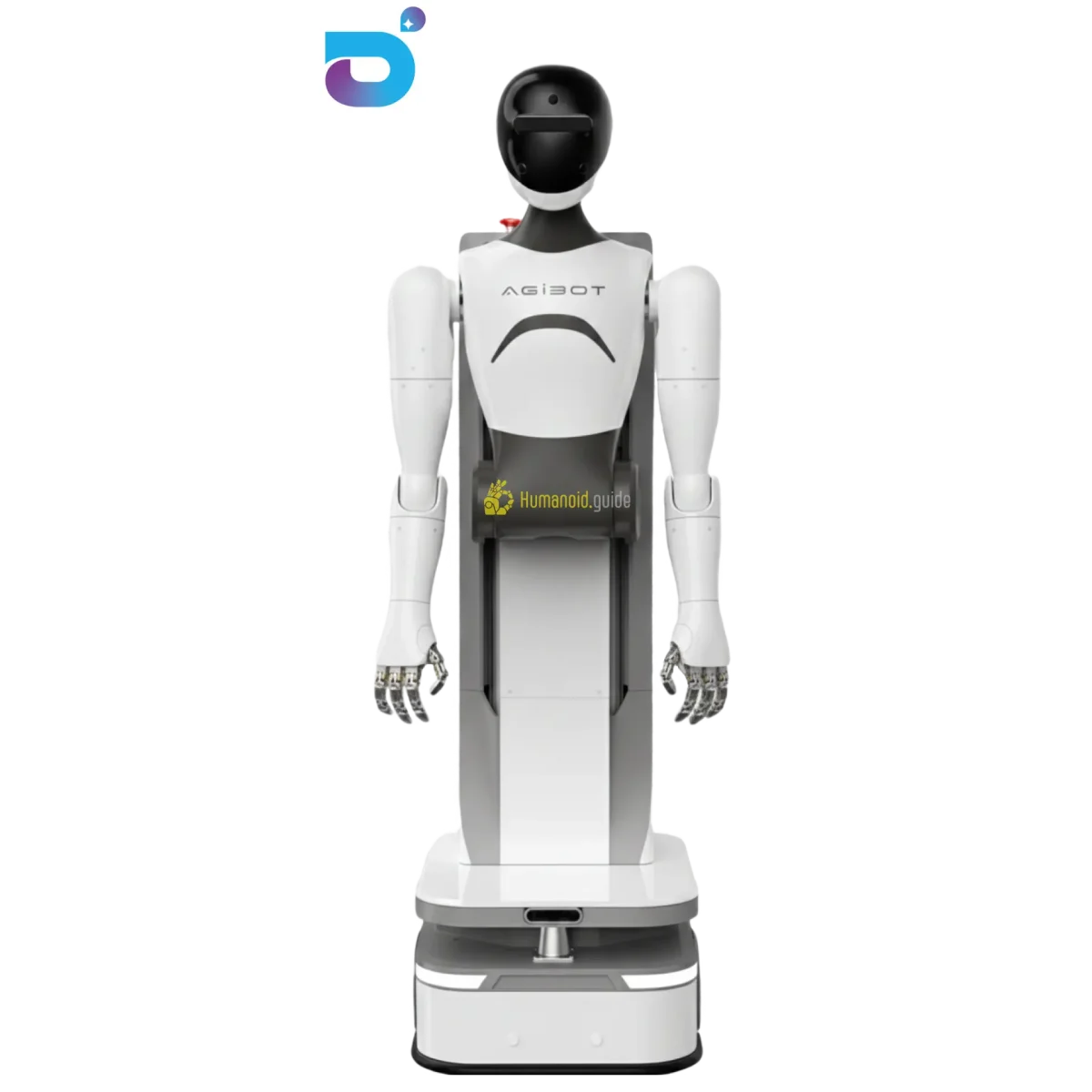
AgiBot G1: The Dexterity Specialist
AgiBot, founded in Shanghai in 2023, introduced the G1 in 2025 as a general‑purpose humanoid aimed at research and light industrial tasks. The headline numbers are a 53‑DOF body with fully articulated, 24‑DOF hands — numbers that surpass most rivals at a $28,000 introductory price. The robot stands 1.75 m tall, weighs 55 kg, and carries a 5 kg payload per arm. It relies on RGB‑D cameras and an NVIDIA Jetson edge computer for perception and control. AgiBot has announced only 200 units for this first pre‑order batch, so availability is a major question mark. The SDK and software ecosystem have not been publicly detailed, and no third‑party reviews or real‑world deployments are yet available.
Unitree G1: The Proven, Modular Workhorse
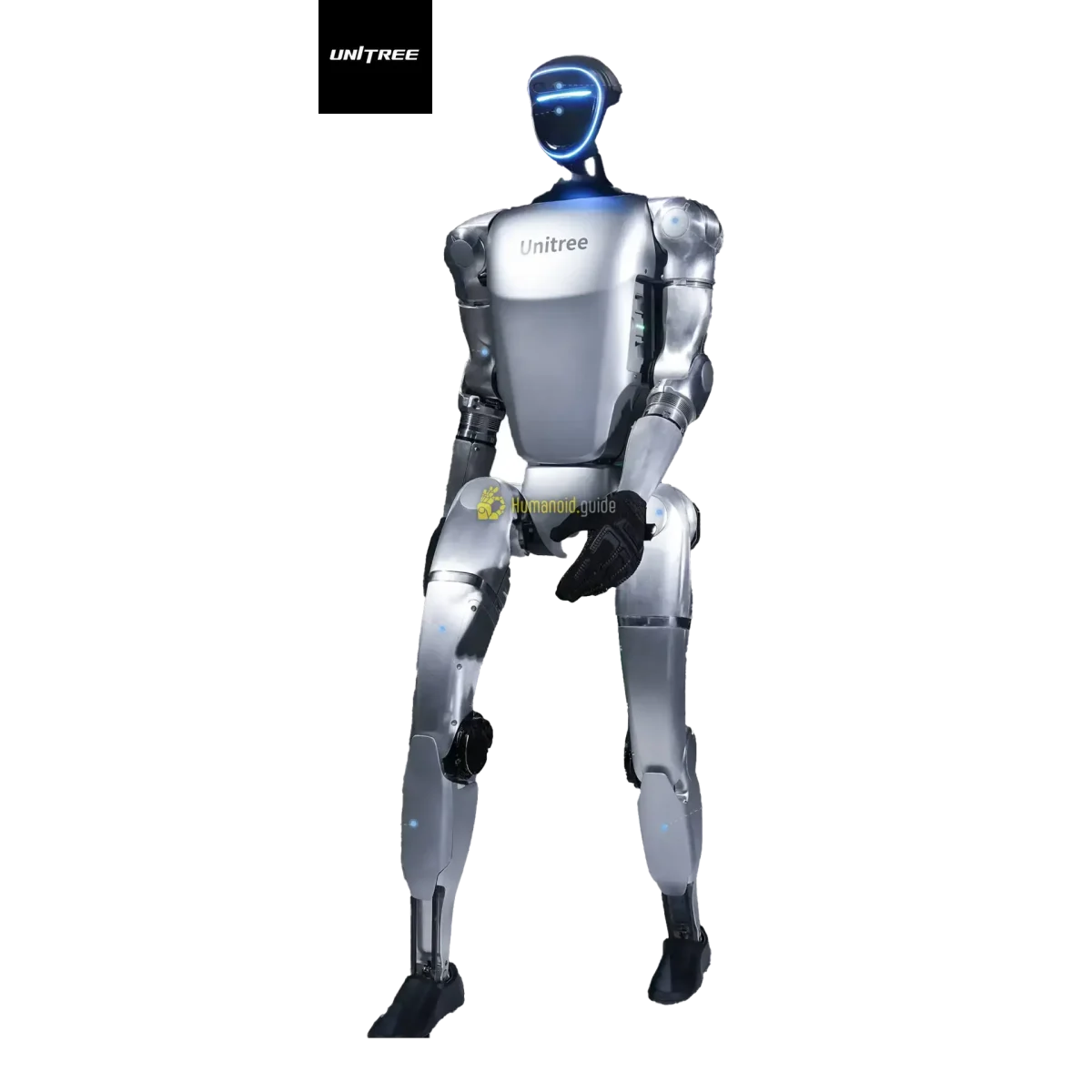
Unitree Robotics launched the G1 in 2024 and rapidly turned it into the best‑selling humanoid robot in its price band. With a starting price of $13,500 for the Base configuration, the G1 disrupts a market that previously started at $90,000+. The robot is compact (127–132 cm adjustable), weighs only 35 kg, and can reach 7.2 km/h — fast for a biped. Payload is a modest 3 kg, but the modular design allows upgrades: the EDU ($30,000) adds four‑limb force control and an LED‑matrix face, while the Ultimate ($73,900) packs NVIDIA compute, a 5‑finger hand, and a LiDAR. Over 500 units are already in the field across research labs and pilot projects worldwide. The SDK supports Python, C++, and ROS2, with an active GitHub community and deployed examples on NVIDIA Isaac Sim.
Price & Configurations
The AgiBot G1 is sold in a single configuration at $28,000 — a flat price for its introductory run of 200 units. No leasing, RaaS, or tiered options have been announced, and future pricing beyond the first batch is unknown. Shipping timelines are not yet public.
The Unitree G1 family covers a wide spectrum:
- Base ($13,500): 23 DOF, basic 2‑finger gripper, no force control, 2 h battery, Intel RealSense camera.
- EDU ($30,000): 43 DOF, 4‑limb force control, LED face, 5‑finger hand option, extended I/O.
- Ultimate ($73,900): 43 DOF, NVIDIA Jetson Orin, 5‑finger hand, Livox LiDAR, Wi‑Fi 6, and full simulation support.
A three‑year TCO (hardware + software updates + 1‑year spares) for an EDU unit sits around $35,000–$40,000 with standard academic support; the AgiBot G1’s TCO is impossible to estimate because no service contracts or spare‑parts pricing exist. If you need to deploy multiple robots today, the Unitree G1 is the only option with a transparent, scalable cost model. Winner: Unitree G1, for price transparency and immediate availability.
Performance & Specs: Head‑to‑Head
Payload & Manipulation
The AgiBot G1’s 5 kg arm payload and 24‑DOF hands are its main advantage. Such dexterity opens the door to fine manipulation tasks (e.g., precision assembly, lab pipetting) that the Unitree G1’s basic gripper cannot handle. The Unitree G1’s 3 kg payload is sufficient for light pick‑and‑place and object transport but leaves heavy tools behind. Note that the Unitree Ultimate can mount a 5‑finger hand, but with an overall arm DOF still lower than the AgiBot’s integrated 24‑DOF hands. Winner: AgiBot G1.
Locomotion Speed
With a top speed of 7.2 km/h, the Unitree G1 is almost twice as fast as the AgiBot G1’s 4 km/h. For warehouse navigation, patrol, or any task where moving between stations is frequent, that difference compounds. Winner: Unitree G1.
Battery & Runtime
Both robots claim a 2‑hour battery life under normal operation. Neither manufacturer discloses the actual battery capacity in watt‑hours, making a true comparison difficult. In practice, the Unitree G1’s lighter weight (35 kg vs 55 kg) may translate into slightly less energy consumed per step, but without independent testing, treat the 2‑hour figure as identical. Winner: Tie.
Degrees of Freedom & Hardware Complexity
53 DOF (AgiBot G1) vs 23–43 DOF (Unitree G1). Higher DOF isn’t always better — it adds control complexity and maintenance burden — but for researchers who need a high‑DOF kinematic chain, the AgiBot G1 is the obvious choice. The Unitree G1 is purposefully simpler to keep costs down and reliability up. Winner: AgiBot G1, for raw DOF; Unitree G1 for practicality.
Software & SDK Ecosystem
This is where the gap widens dramatically. Unitree provides a mature SDK with Python and C++ bindings, full ROS2 support, NVIDIA Isaac Sim integration, and an open‑source sample library on GitHub. Scout fleet management software allows multi‑robot coordination, and the developer community actively shares solutions. Unitree’s regular firmware updates and detailed documentation are a known quantity.
AgiBot has published no SDK, no ROS2 drivers, no public GitHub repository, and no simulation model at the time of writing. The NVIDIA Jetson compute suggests eventual support for popular robotics stacks, but until AgiBot releases the software stack, the G1 remains a black box. For any team that values quick integration and community support, the Unitree G1 is the only safe bet. Winner: Unitree G1.
Autonomy & Sensors
The AgiBot G1 ships with RGB‑D cameras and an NVIDIA Jetson edge computer, theoretically capable of running SLAM and object detection pipelines. However, no out‑of‑the‑box autonomy stack has been demonstrated publicly. The Unitree G1, in EDU and Ultimate trims, runs Unitree’s own locomotion and navigation stack, supports Intel RealSense depth and optional Livox LiDAR, and has been shown performing autonomous navigation in demo videos and research papers. Real‑world autonomy is still limited on both — neither is a turnkey autonomous worker — but the Unitree G1 has at least a published, replicable autonomy baseline. Winner: Unitree G1.
Build Quality & Durability
No IP rating has been published for either robot, and neither is designed for outdoor industrial use without modifications. The AgiBot G1’s heavier 55 kg frame and more complex joint anatomy could mean higher maintenance needs, but no reliability data exists. The Unitree G1, thanks to its lightweight aluminum‑alloy chassis and simpler actuator design, has accumulated thousands of hours in labs with only occasional joint replacements, according to community reports. The Unitree G1’s 1‑year warranty and global support network further reduce risk. Winner: Unitree G1, based on available evidence.
Price & Total Cost of Ownership
Sticker price is only the beginning. A full three‑year TCO must factor in software maintenance, spare parts, out‑of‑pocket shipping, and support. For the Unitree G1 EDU, a realistic academic TCO is $35,000–$40,000 when one includes annual software upgrades (free for EDU), one set of spare actuator modules, and shipping. The Base model comes in under $16,000 TCO over three years, making it the cheapest humanoid platform ever sold.
The AgiBot G1’s TCO is impossible to calculate. The $28,000 pre‑order buys you a robot — but no warranty terms, spare parts pricing, or software update policy have been disclosed. If anything breaks, you’re on your own until AgiBot builds a support infrastructure. For a one‑off research purchase, that risk may be acceptable. For any organization that needs more than one robot or production‑level reliability, the Unitree G1 is the far lower‑risk investment. Winner: Unitree G1.
Which Should You Buy? AgiBot G1 vs Unitree G1 by Use Case
Choose the AgiBot G1 if: - Your research requires 24‑DOF dexterous hands and the highest possible arm articulation. - You can accept the risk of a pre‑order batch with no public software stack. - You are a well‑funded lab that can afford to port your own SDK and wait for the hardware. - You value a 5 kg arm payload and full‑body 53‑DOF kinematics above immediate availability.
Choose the Unitree G1 (Base/EDU/Ultimate) if: - You need a humanoid that ships today and has a proven developer ecosystem. - You want a modular platform that scales from $13,500 to $73,900 as funding allows. - You value ROS2 support, NVIDIA Isaac Sim compatibility, and active community support. - Your tasks involve locomotion, mobile manipulation with light payloads, or multi‑robot coordination.
Choose neither if: - You require IP‑rated, industrial‑grade hardware — neither robot meets that standard today. - Your payload needs exceed 5 kg — consider a cobot or a larger format humanoid. - You need a fully autonomous, out‑of‑the‑box worker robot — both require significant development.
Real‑World Deployments & Track Record
As of June 2026, no publicly documented real‑world deployments exist for the AgiBot G1. The first 200 pre‑order units have not yet been delivered or verified by third parties.
In contrast, Unitree reports over 500 G1 units shipped to universities and research institutions worldwide. The robot has appeared in peer‑reviewed locomotion studies, manipulation demos, and multi‑robot experiments. YouTube and GitHub contain dozens of independent test videos and codebases. While Unitree does not publish exact operating‑hour totals, the sheer unit count and public documentation give the G1 a meaningful lead in real‑world maturity. This track record is one of the strongest arguments for choosing the Unitree platform today.
SDK, Software & Developer Ecosystem
Repeat buyers and system integrators care as much about software as hardware. Unitree’s SDK, released alongside the G1, supports Python and C++, with ROS2 wrappers, Docker images, and pre‑built Isaac Sim assets. The company maintains an active developer forum and regularly updates firmware. Third‑party libraries like unitree_legged_sdk and unitree_ros2 are widely used.
AgiBot has not released any SDK, simulation model, or code examples. While the NVIDIA Jetson onboard suggests compatibility with standard AI and robotics frameworks, developers will effectively be starting from scratch. Until that documentation ships, the AgiBot G1 is a hardware package looking for a software ecosystem.
For any organization that values developer productivity and time‑to‑result, the Unitree G1 is the clear winner here.
Support, Warranty & Availability
Unitree offers a standard 1‑year warranty on the G1, with extended service contracts available for enterprise buyers. Replacement actuators, batteries, and sensors can be ordered directly from Unitree’s online store, and a global network of distributors provides local support in North America, Europe, and Asia. Lead time for a stock G1 is typically 1–2 weeks.
AgiBot has not published warranty terms, service plans, spare‑parts availability, or lead time for the G1 pre‑order batch. Buyers should be prepared for minimal support during the early adopter phase. For the risk‑averse, this is a deal‑breaker; for labs that can self‑serve, it may be acceptable.
Comments