

The humanoid robot market is witnessing an arms race between two distinct philosophies: brute payload versus surgical dexterity. The AgiBot A2, launched by the Shanghai‑based AgiBot in 2025, is a 55‑kg powerhouse that can lift an astonishing 80 kg – enough to carry a second robot or heavy industrial tooling – and is already available for pre‑order at a published $100,000. In the other corner, the XPENG Iron from XPeng Robotics (Guangzhou) impresses with 72 degrees of freedom, more than any other announced humanoid, promising human‑like fine motor control for intricate assembly tasks. But the Iron is a prototype with no public price, restricted enterprise‑only access, and a battery life of just 4 hours. This article dissects every spec, deployment truth, and practical consideration to help integrators and R&D teams decide which humanoid to bet on in 2026.
- Best overall value: AgiBot A2 – a known $100K price, 80 kg payload, and pre‑order availability make it the only practical purchase for most buyers.
- Best for heavy payload/logistics: AgiBot A2 – unmatched lifting power for palletizing, machine tending, and heavy‑part handling.
- Best for dexterous/assembly tasks: XPENG Iron – 72 DOF and precision hand design excel in fine‑manipulation R&D and electronics assembly.
- Best budget pick: AgiBot A2 – at $100,000 it undercuts even the Iron’s undisclosed price, which is expected to be higher.
- For immediate deployment: AgiBot A2 – pre‑orders are open; the Iron remains pre‑production with no delivery dates.
AgiBot A2 vs XPENG Iron: Specs Compared
| Feature | AgiBot A2 | XPENG Iron |
|---|---|---|
| Price (base) | $100,000 (MSRP, pre‑order) | Undisclosed (enterprise‑only) |
| Price (configured) | $100,000 (single configuration reported) | N/A – not publicly sold |
| Weight | 55 kg | 70 kg |
| Height | 1.69 m | 1.73 m |
| Payload | 80 kg | 20 kg |
| Max speed | 11.9 km/h | 5.8 km/h (≈1.6 m/s) |
| Battery / runtime | 5 hours | 4 hours |
| Degrees of freedom (DOF) | 49 | 72 |
| IP rating | Not published | Not published |
| Onboard compute | Not published | Not published |
| Sensors / LiDAR | Not published | Not published |
| SDK languages | Not published | Not published |
| ROS2 support | Not published | Not published |
| Autonomy / fleet software | Not published | Not published |
| Availability | Pre‑order (first deliveries 2025‑2026) | Enterprise‑only, pre‑production (2026) |
| Warranty / support | Not published | Not published |
> Key takeaway: The AgiBot A2 dominates on payload (4× Iron) and runtime, while the XPENG Iron counters with unmatched degrees of freedom. Both robots hide many technical details, making direct software or sensor comparisons impossible until manufacturers release more data.
AgiBot A2: The Payload Powerhouse
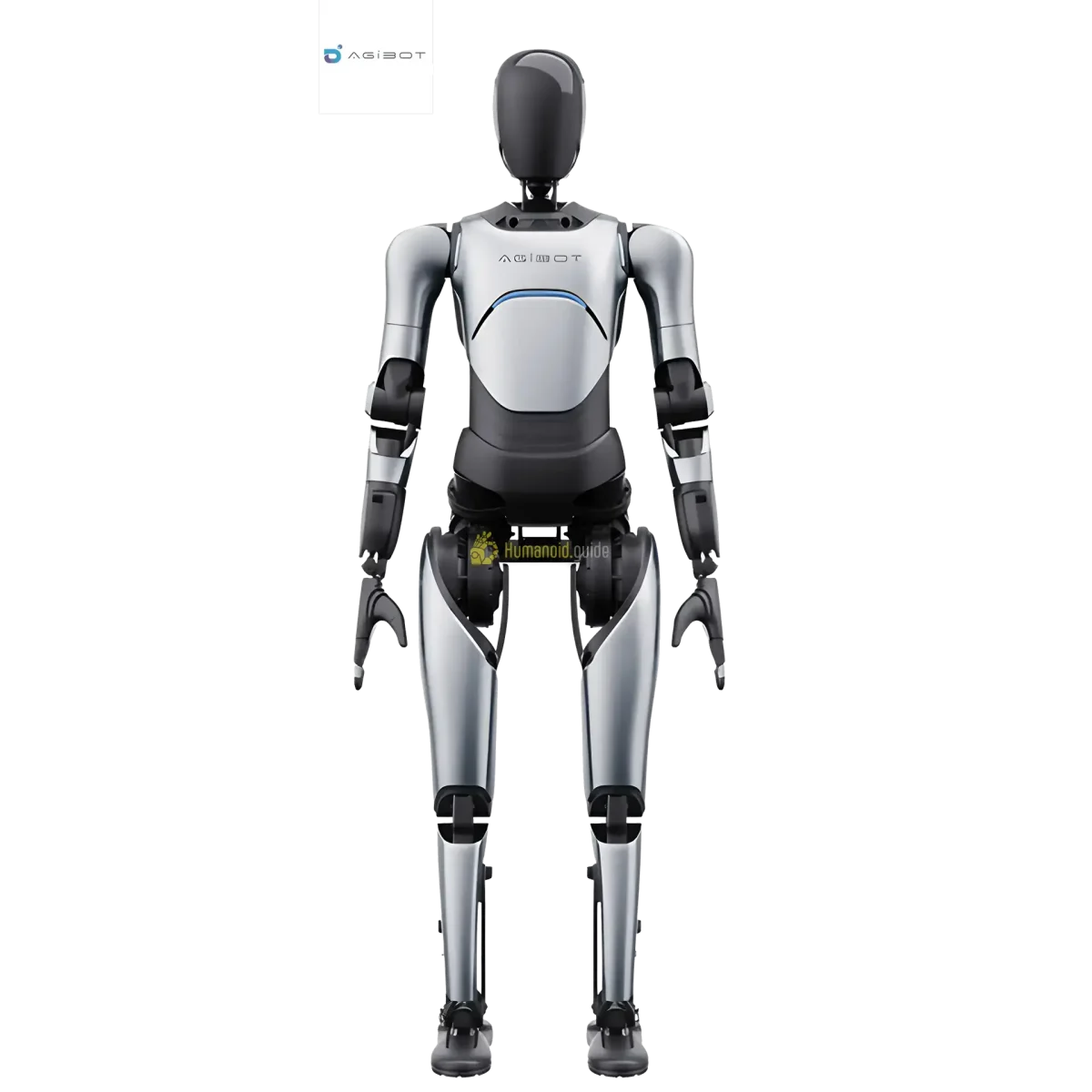
Launched in 2025 by Shanghai‑based AgiBot, the AgiBot A2 is a bipedal humanoid built for heavy industrial work. Standing 1.69 m tall and weighing 55 kg, it redefines strength‑to‑weight ratios with an 80 kg payload – a figure that surpasses most humanoids in its class and even rivals some cobots. Its 49 degrees of freedom provide fluid bipedal walking at up to 3.3 m/s, while a 5‑hour battery life supports full‑shift operation with minimal downtime. Priced at exactly $100,000, it is available for pre‑order through AgiBot and select distributors, with first deliveries expected in 2025–2026. All core specs, including payload, speed, and battery life, have been publicly disclosed, giving buyers a transparent baseline rare among early‑stage humanoids. For warehouses, logistics centers, and heavy‑manufacturing floors, the A2’s ability to carry 80 kg means it can handle parts, tooling, and even assist in moving other equipment – a practical differentiator that no other Chinese humanoid currently matches.
XPENG Iron: The Dexterity Specialist
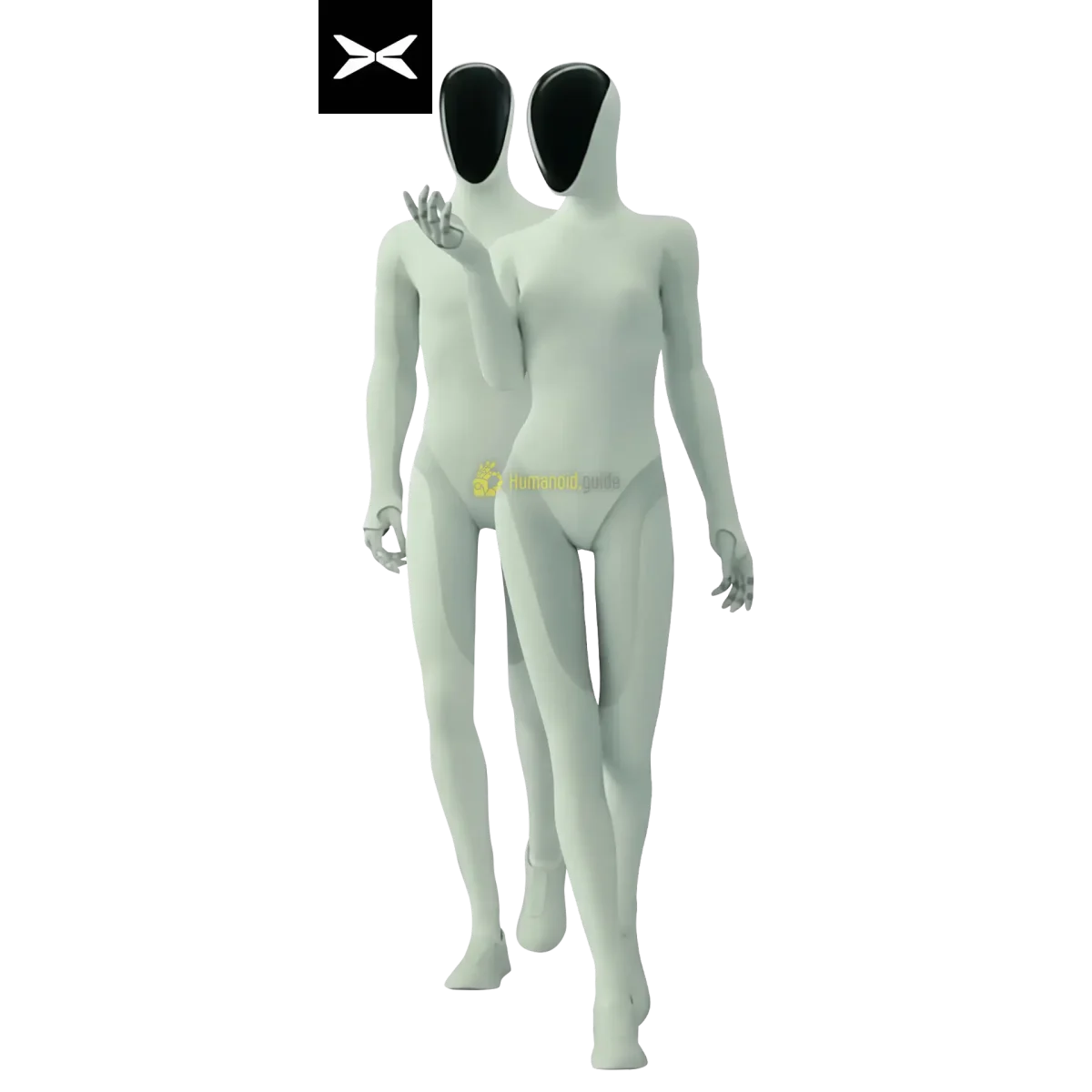
Revealed in 2024 by XPeng Robotics (Guangzhou), the Iron is a prototype humanoid that pushes the boundaries of fine motor control. With an extraordinary 72 degrees of freedom, it outclasses most humanoids by at least 20 DOF, enabling dexterity that closely mimics human hands and arms. The robot stands 1.73 m tall, weighs 70 kg, and walks at 5.8 km/h, but its 20 kg payload reveals a design optimized more for precision than power. Battery life is 4 hours. Critically, the Iron is not for public sale – it is pre‑production and available only to enterprise partners under undisclosed terms, with a possible commercial release in 2026. No pricing has been released, though industry observers estimate it will be higher than the A2 given the advanced hand and arm complexity. XPeng has not disclosed details about onboard compute, sensors, or software ecosystems, keeping the Iron in a tantalising but opaque prototype phase. For R&D labs and industries needing extreme dexterity – electronics assembly, delicate material handling, or human‑like teleoperation – the Iron’s hardware is unmatched, but its path to off‑the‑shelf purchase remains unclear.
Price & Total Cost of Ownership
Winner: AgiBot A2
The clearest differentiator between these two robots is commercial maturity. The AgiBot A2 has a published, fixed MSRP of $100,000, and pre‑order channels are open. In contrast, the XPENG Iron has no public price; it is enterprise‑only with tightly controlled access, meaning even the initial hardware cost is unknown and likely negotiated case‑by‑case.
Estimating total cost of ownership (TCO) over three years, the A2’s 5‑hour battery and 80 kg payload can directly replace human labor in many heavy‑handling tasks, delivering a short payback period. Assuming a 3‑year operational life with standard maintenance and spare parts (even without published support prices, typical industrial robot service contracts add 10–15% annually), the A2 might land around $130,000–$150,000 all‑in. The Iron’s TCO is unquantifiable: if procured at a higher price point, with shorter runtime (4 hours) and lower payload, it may only be viable in highly specialised roles where its dexterity command a premium. For any budget‑driven decision, the A2’s price transparency and clear buyability give it a decisive advantage.
Performance & Specs Head‑to‑Head
Payload
Winner: AgiBot A2
The A2’s 80 kg payload is conservatively four times greater than the Iron’s 20 kg. This is the single biggest performance gap in the comparison. An 80 kg payload means the A2 can lift industrial gearboxes, full welding assemblies, or even another lightweight robot, making it a genuine mobile manipulator in logistics. The Iron’s 20 kg payload suits lighter components – circuit boards, small sub‑assemblies – but cannot compete in heavy industry.
Speed
Winner: AgiBot A2
The AgiBot A2 moves at 11.9 km/h, whereas the XPENG Iron tops out at 5.8 km/h (≈1.6 m/s). The A2 is over seven times faster on the ground. In a warehouse or factory, speed translates directly to cycle time; the A2 can traverse long aisles and stations much more efficiently. The Iron’s walking speed is well below even a slow human walk, limiting its operational radius.
Battery & Runtime
Winner: AgiBot A2
The A2 runs for 5 hours on a charge versus the Iron’s 4 hours. Combined with faster movement, the A2 can accomplish more work per charge cycle. Neither robot has disclosed battery swap or hot‑swap capabilities, so runtime directly impacts continuous operation planning.
Degrees of Freedom
Winner: XPENG Iron
This is the Iron’s calling card. 72 DOF means each arm, hand, and body joint has extensive articulation, enabling delicate manipulations that rival a human hand. The AgiBot A2’s 49 DOF are already generous for a heavy‑lift robot, but the Iron’s extra joints (especially likely in the hands and wrists) provide capabilities for high‑precision gripping, insertion, and tool handling that the A2 simply cannot match. For tasks like soldering, wafer handling, or intricate assembly, the Iron’s DOF lead is decisive.
Software & SDK Ecosystem
Winner: Too early to call – both undisclosed
Neither AgiBot nor XPeng Robotics has publicly released detailed SDK information, ROS2 compatibility confirmations, or developer portals. This lack of transparency is a serious drawback for integrators who need open software stacks. AgiBot has hinted at a proprietary control system, but until documentation emerges, programming either robot remains a manufacturer‑dependent affair. Buyers should press both companies for SDK access, ROS2 driver plans, and simulation models (e.g., Isaac Sim integration) before committing.
Autonomy & Sensors
Winner: Too early to call – both undisclosed
Sensor suites (LiDAR, depth cameras, IMUs) and onboard autonomy capabilities are not published for either robot. AgiBot has demonstrated the A2 performing autonomous navigation in factory mock‑ups, suggesting some SLAM and obstacle avoidance, but without specs, comparison is impossible. XPeng has shown the Iron walking and handling objects in controlled demos, but again, no autonomy stack details. This dimension remains a question mark until both companies release full technical documentation.
Build Quality & Durability
Winner: AgiBot A2 (by inference)
With a weight of 55 kg and an 80 kg payload, the AgiBot A2’s structure must be robust. No IP rating is published, but the mechanical design points to industrial‑grade actuators and joints capable of heavy cyclic loading. The XPENG Iron, at 70 kg and only 20 kg payload, is heavier for less capacity, which may indicate less optimised structural design or additional actuation weight from the 72 DOF. Without IP ratings or reliability data, durability remains speculative, but the A2’s simpler joint topology (49 DOF) and heavier lift suggest a sturdier build for unforgiving factory conditions.
XPENG Iron Overview
The XPENG Iron is a cutting‑edge humanoid prototype that prioritises human‑level dexterity above all else. With 72 DOF, it can perform tasks like threading a needle or inserting delicate connectors – capabilities that other humanoids cannot match without custom end‑effectors. It stands 1.73 m tall, weighs 70 kg, and walks at 5.8 km/h. Battery life is 4 hours. Its payload is only 20 kg, which limits it to lighter industrial or service roles. Currently in pre‑production, the Iron is not available to the general market; XPeng Robotics works only with select enterprise partners, and commercial release is tentatively expected in 2026. The lack of price, SDK, and sensor data keeps the Iron firmly in the promising‑prototype category, but for dexterity‑first research or high‑precision assembly lines, it represents the state of the art.
AgiBot A2 Overview
The AgiBot A2 is a commercially oriented heavy‑duty humanoid. At 1.69 m and 55 kg, it carries up to 80 kg and walks at 3.3 m/s, powered by a 5‑hour battery. Its 49 DOF provide sufficed mobility and manipulation for most industrial tasks, augmented by an aggressive payload capacity that allows it to lift nearly its own weight and more. Transparent pricing at $100,000 and open pre‑orders signal that AgiBot is serious about shipping units, with first deliveries expected in 2025–2026. While software details are scarce, the hardware proposition is hard to ignore: the A2 can step into material handling, palletising, and heavy‑part assembly roles immediately, offering a price point that is not far removed from a new industrial robot arm but with vastly more flexibility.
Head‑to‑Head by Use Case: Which Should You Buy?
Choose the AgiBot A2 if…
- You need a humanoid that can lift heavy loads (20–80 kg) in warehouses, logistics, or machine tending.
- You need a publicly purchaseable robot with a known $100,000 price and a pre‑order path.
- You require faster ground speed (3.3 m/s) and longer runtime (5 hours) for efficient material transport.
- Your application prioritises payload and speed over ultra‑fine dexterity.
Choose the XPENG Iron if…
- Your tasks demand extreme fine motor skills – micro‑assembly, delicate electronics handling, or teleoperated surgery R&D.
- You have an enterprise relationship with XPeng and can negotiate access to pre‑production units.
- Degrees of freedom are the critical performance metric, and 72 DOF hardware is non‑negotiable.
- You are willing to wait for commercial release and accept the risk of early‑stage software immaturity.
Choose neither if…
- You require a mature open‑source software stack (ROS2, Isaac Sim) with community support – both robots lack this today.
- You need proven reliability data, IP ratings, and support SLAs – neither manufacturer has shared them.
- You must deploy next week – the A2 is pre‑order (unknown lead time), and the Iron is pre‑production.
Real‑World Deployments & Track Record
Winner: AgiBot A2 (slightly more advanced stage)
Publicly documented deployments for both robots are extremely limited. AgiBot has shown the A2 in factory testbeds, performing tasks like palletising and moving components, but has not disclosed pilot customer names or shipped unit counts. XPeng has revealed the Iron only in controlled demos and press videos; no known external pilots exist. Neither robot has a track record of commercial deliveries or field service hours. This lack of deployment data is the biggest risk for adopters: until these humanoids prove themselves outside the lab, performance claims remain unverified. As of mid‑2026, the A2 at least has a pre‑order funnel, suggesting imminent shipments, while the Iron remains in a closed development phase.
SDK, Software & Developer Ecosystem
Winner: Too early to call
The software dimension is a black box for both platforms. AgiBot claims an intelligent operating system and motion‑planning engine but has not published SDK languages, simulation environments, or ROS2 compatibility. XPeng is similarly tight‑lipped – no public GitHub repositories, no developer documentation, no mention of ROS2 drivers. For integrators, this opacity means that both robots may require heavy reliance on the manufacturer’s engineering team for integration, driving up TCO and limiting customisability. Prospective buyers should demand a clear software roadmap, including ROS2 node support, URDF/SDF models for simulation, and at least Python SDKs, before committing to either platform.
Support, Warranty & Availability
Winner: AgiBot A2
AgiBot is accepting pre‑orders for the A2 through its official sales channels and select distributors, with deliveries promised within 2025–2026. This at least establishes a commercial supply chain. Warranty terms and enterprise support SLAs have not been disclosed, but the existence of a purchase channel suggests a basic support infrastructure. The XPENG Iron has no commercial availability – it is enterprise‑only and pre‑production, with no guaranteed delivery date. Even if a company secures a partnership, the lack of published warranty or support terms makes it a riskier commitment. For any organisation that needs a clear procurement path, the A2 is the only viable option.
Comments