

Verdict: G1 vs H1 at a Glance — The Unitree G1 is a compact, modular humanoid priced from $13,500, built for affordable research, education, and light manipulation. The Unitree H1 is a full‑size, high‑performance humanoid starting at $90,000, capable of 7 kg payloads and a world‑record 3.3 m/s running speed. If your budget is under $25,000 and you need a versatile, re‑configurable entry‑level humanoid, the G1 is the winner. If you require a heavy‑duty, high‑speed biped for dynamic locomotion research or real‑world transport tasks, the H1 is the clear choice.
Unitree’s two most talked‑about humanoids represent opposite philosophies: one is the price‑busting, modular swiss‑army knife (that you can actually afford), the other is a 47 kg athlete that set a bipedal speed world record. This article delivers a head‑to‑head comparison of the Unitree G1 and the Unitree H1 across price, performance, software, real‑world use, and support, so you know exactly which to buy for your lab, factory floor, or R&D project.
Quick Verdict: Who Wins?
- Best overall value — Unitree G1 — starts at $13,500, covers most research & education tasks, and scales from 23 to 43 DOF.
- Best for dynamic locomotion & heavy payload — Unitree H1 — world‑record running speed (3.3 m/s), backflip‑capable, and lifts up to 7 kg.
- Best for university labs on a budget — Unitree G1 — the base model arrives fully assembled and can later be upgraded.
- Best for industrial mobility pilots — Unitree H1 — full‑adult height (180 cm) and 7 kg payload fit human‑scale load transport trials.
- Best for entry‑level AI/ML research — Unitree G1 — Jetson Orin NX onboard, ROS2/Unitree SDK, and huge university adoption.
Unitree G1 vs Unitree H1: Specs Compared
The side‑by‑side table below lays out every decisive metric. Both robots share a 2‑hour battery, ROS2 support, and Unitree’s hot‑swappable battery ecosystem — but they diverge sharply in price, payload, and raw athletic performance.
| Specification | Unitree G1 | Unitree H1 |
|---|---|---|
| Price (base) | $13,500 | $90,000 |
| Price (configured range) | $13,500 – $73,900 | $90,000 – $150,000 |
| Height | 127–132 cm | 180 cm |
| Weight | 35 kg | 47 kg |
| Payload | 3 kg | 7 kg |
| Max speed | 7.2 km/h (2.0 m/s) | 11.9 km/h (3.3 m/s) |
| Battery life | 2 hours | 2 hours |
| Degrees of freedom | 23–43 (configurable) | 19 (base) / 27 (H1‑2 upgrade) |
| IP rating | Not published | Not published |
| Onboard compute | Jetson Orin NX (8 GB), Intel RealSense D435 | Undisclosed (NVIDIA Jetson‑class) |
| Sensors / LiDAR | Intel RealSense depth, optional LiDAR | Intel RealSense depth, optional LiDAR |
| SDK languages | C++, Python, ROS2 | C++, Python, ROS2 |
| ROS2 support | Yes (full) | Yes (full) |
| Autonomy / fleet software | Unitree SDK, gait libraries, sim models | Unitree SDK, MPC‑based walking, sim models |
| Safety certifications | Not disclosed | Not disclosed |
| Availability / lead time | In production, short lead time (weeks) | In production, typically 4–8 weeks |
| Warranty / support | Standard 1‑year warranty, enterprise SLA available | Standard 1‑year warranty, enterprise SLA available |
Biggest delta: The H1 costs 6.7× as much as the base G1, yet delivers 2.3× the payload and 1.65× the top speed, plus a full‑size adult frame. The G1 counters with up to 43 DOF — ideal for dexterous manipulation research — while the H1’s 19‑27 DOF are tuned for dynamic whole‑body motion.
Unitree G1: The Swiss‑Army Humanoid That Broke the Price Floor
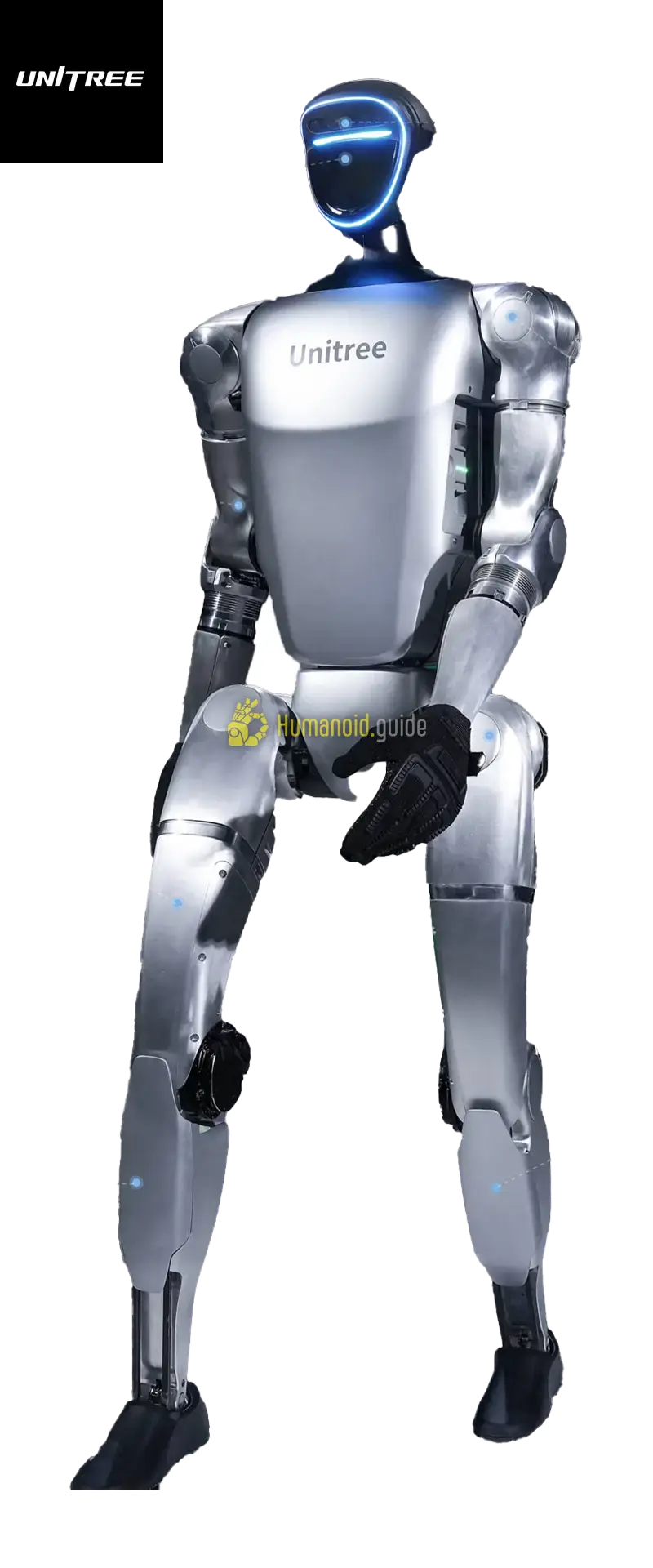
Launched in 2024 by Hangzhou‑based Unitree Robotics, the G1 is the most affordable production humanoid on the market. Its base price of $13,500 — roughly 15% of the H1’s cost — made headlines and triggered a surge in university adoption. The robot stands between 127 cm and 132 cm tall, weighs only 35 kg, and comes in three configurations: Base (23 DOF), EDU (up to 43 DOF with dexterous hands), and Ultimate. Payload is limited to 3 kg, but the modular design lets labs add sensors, arms, and hands incrementally. Over 1,000 units have been shipped to research institutions worldwide (Unitree Q1 2025 financial update). The G1’s onboard Jetson Orin NX provides ample compute for real‑time SLAM and policy learning, and the full ROS2/Unitree SDK stack means code can migrate directly to the H1.

Unitree H1: The Record‑Breaking Athlete for Human‑Scale Tasks
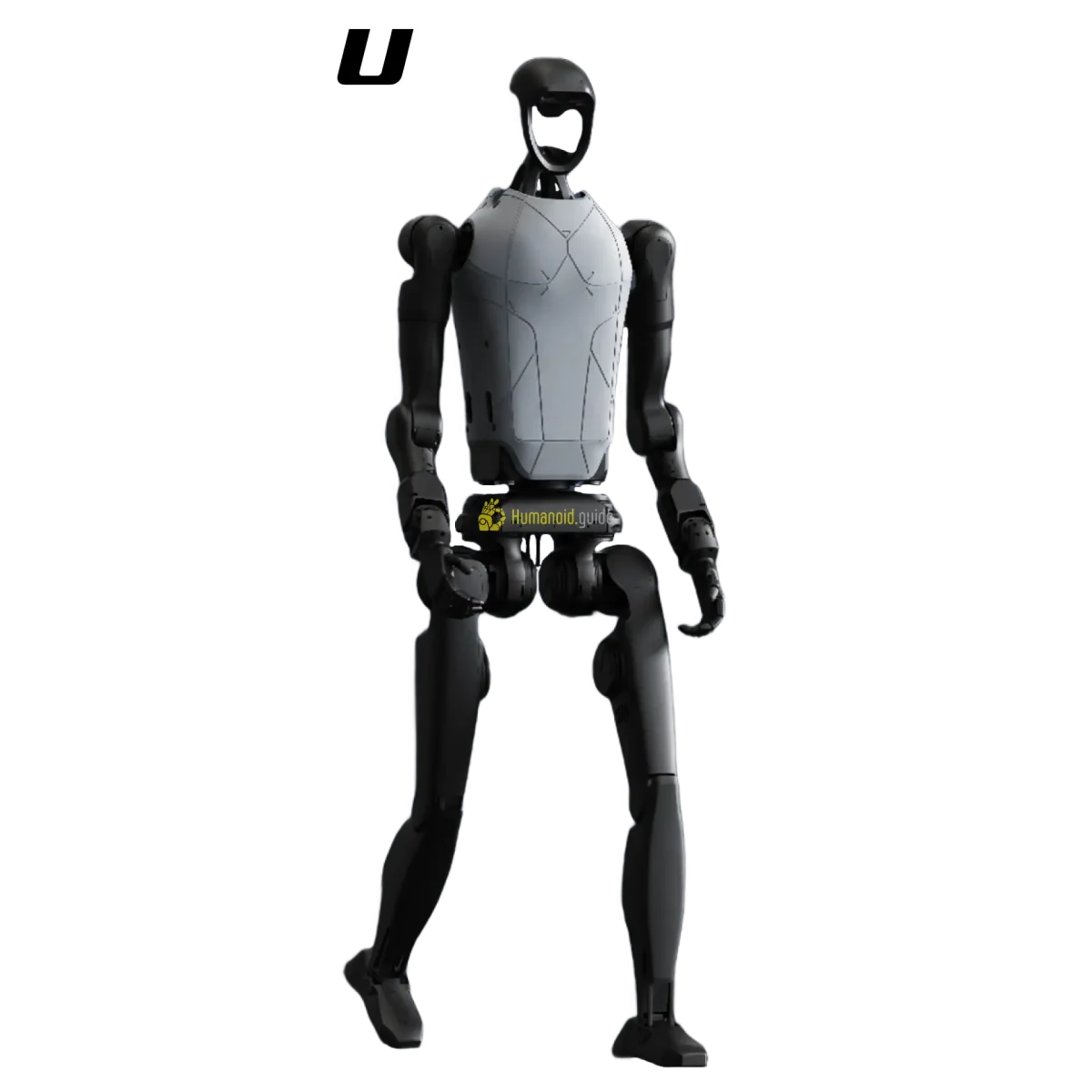
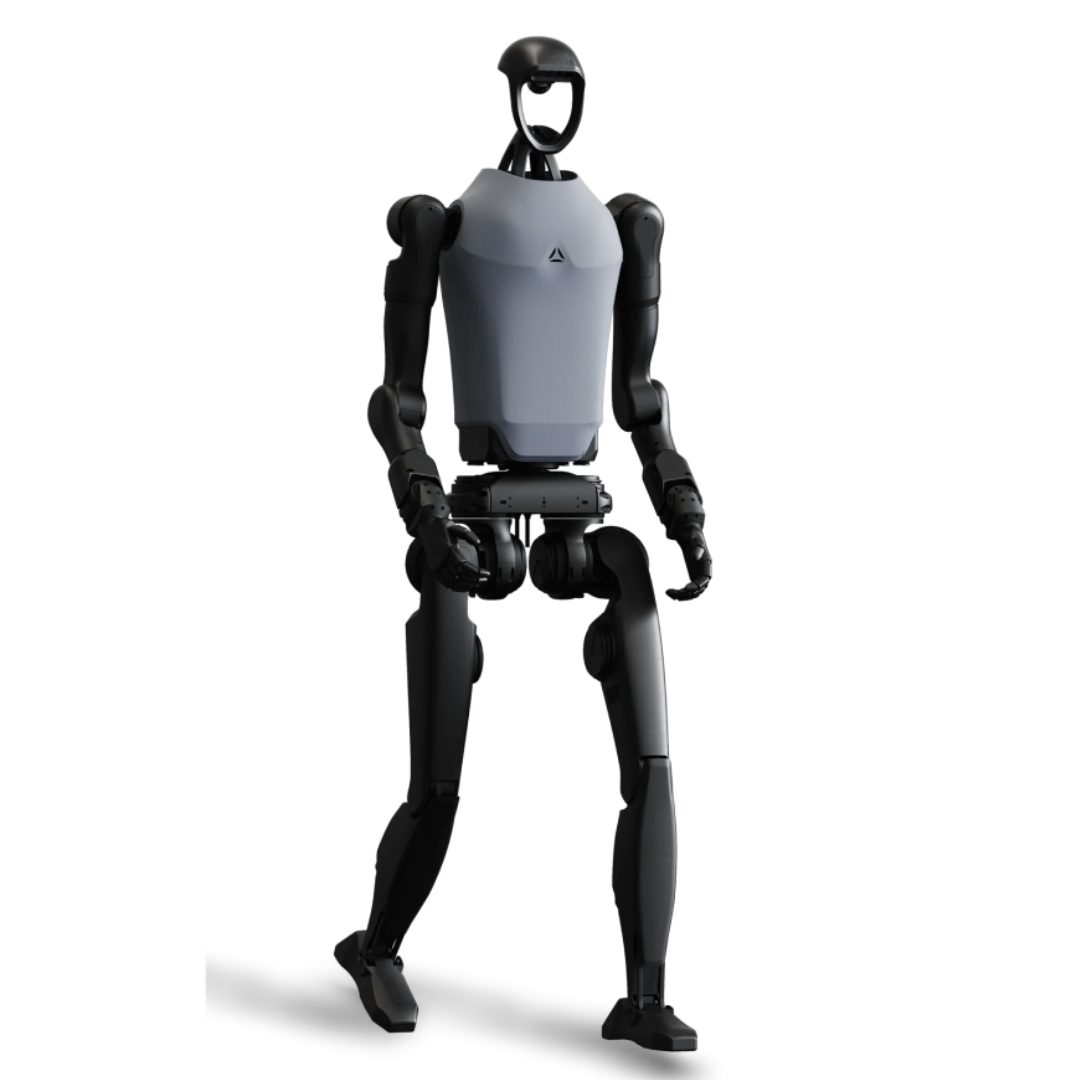
The Unitree H1 entered the scene in 2023 as a full‑size, high‑performance humanoid, priced from $90,000 to $150,000 depending on configuration. At 180 cm tall and 47 kg, it looks like an adult worker — and moves like one, too: in 2024 it set a supported bipedal running record of 11.9 km/h, the fastest recorded for an electric humanoid. The H1‑2 variant (shipping 2025) ups the total DOF to 27 and adds backflip capability. Despite the athleticism, payload is a workable 7 kg, enough for carrying components across a shop floor or moving payloads in dynamic walking trials. The H1’s hot‑swappable 864 Wh battery gives 2 hours of runtime, and Unitree’s model‑predictive control (MPC) walks robustly over uneven terrain. Used H1 units often appear around $64,000, making the platform more accessible for well‑funded labs. While not as universally deployed as the G1, the H1 is the reference platform for fast bipedal locomotion research.
Head‑to‑Head by Dimension
Price & Configurations
The price gap is the headline. A base G1 at $13,500 can be on your desk within weeks; the H1 base starts at $90,000. Even the maxed‑out G1 Ultimate ($73,900) is still below the H1 base. Add a spare battery and the Enterprise Software Suite to either, and the G1’s total cost still rarely exceeds $80,000, while a fully loaded H1‑2 can climb to $150,000. For buyers who only need a research‑grade biped for SLAM, manipulation, or AI learning, the G1’s cost leaves budget for additional sensors or computing. However, if the task demands a human‑size envelope and the ability to carry 7 kg rapidly, the H1’s premium buys a capability the G1 simply cannot match. Winner: G1 for value, H1 for absolute payload/speed requirements.
Performance & Specs
Payload
The H1 lifts 7 kg — over double the G1’s 3 kg — enabling it to transport small payloads, tooling, or even a lightweight fixture. The G1’s payload is adequate for light object manipulation but tops out quickly. Winner: H1.
Speed
The H1’s 11.9 km/h (3.3 m/s) is a world record for electric humanoids and is twice the G1’s 7.2 km/h. The H1 can sprint; the G1 jogs. For dynamic locomotion research, this gap is definitive. Winner: H1.
Battery
Both machines share a 2‑hour runtime and a hot‑swappable battery architecture. Real‑world endurance varies with load and gait, but there’s no practical difference. Winner: Tie.
Degrees of Freedom
The G1 offers 23 to 43 DOF, including optional dexterous hands with 12 DOF per hand, enabling advanced grasping and manipulation. The H1 comes with 19 DOF (27 on the H1‑2), optimized for whole‑body motion rather than finger‑level tasks. For manipulation‑centric projects, the G1’s expandable DOF is a big advantage. Winner: G1 for manipulation, H1 for whole‑body dynamics.
Software & SDK Ecosystem
Both the G1 and H1 run Unitree’s unified SDK with C++ and Python interfaces, full ROS2 integration, and simulation models for Isaac Sim and MuJoCo. The same code base, gait libraries, and fleet management API work across both platforms. No difference in software maturity or community resources. Winner: Tie.
Autonomy & Sensors
Unitree does not publish detailed autonomy specs for either robot, but both carry Intel RealSense depth cameras, an IMU, and optional external LiDAR. SLAM, obstacle avoidance, and MPC‑based walking are available via the SDK. The H1’s faster dynamics and heavier frame place higher demands on real‑time control, but the sensor suite is essentially identical. Winner: Tie.
Build Quality & Durability
Neither robot carries a public IP rating. The H1’s larger frame and higher‑speed falls naturally expose it to greater impact stress, though Unitree has demonstrated backflips and rugged terrain walking without damage. The G1’s smaller, lighter structure has proven robust in university labs, but exposure to water or dust is unrated. For standard indoor research environments, both are durable enough. Winner: Tie.
Price & Total Cost of Ownership
Beyond sticker price, consider the 3‑year total cost of ownership (TCO). For the G1, a typical EDU build at $43,900 plus a spare battery ($1,500) and software maintenance (~$1,000/year) totals roughly $48,400 over three years. The H1 base at $90,000 plus spare battery ($2,000) and similar software puts 3‑year TCO near $95,000 — double the G1.
Leasing or RaaS (Robot‑as‑a‑Service) options are not yet publicly available for either model, though Unitree’s enterprise sales team may structure payments for volume orders. If you’re outfitting a multi‑robot lab, the G1’s lower unit cost allows a fleet of 5–6 robots for the price of a single H1, which can accelerate data collection for learning‑heavy projects.
Bottom line: unless your application genuinely requires H1‑level speed and payload, the G1 delivers radically better financial efficiency.
Which Should You Buy? Unitree G1 vs Unitree H1 by Use Case
Choose the Unitree G1 if… - Your budget is under $25,000, or you need to maximize robots‑per‑dollar. - Your research focuses on dexterous manipulation, HRI, or visual‑language models (43 DOF option). - You operate an educational program where student‑safe, low‑cost platforms are essential. - You need a modular platform that grows with your lab’s capabilities.
Choose the Unitree H1 if… - You need a full‑size humanoid for real‑world transport, logistics pilot, or human‑scale interaction tasks. - Your work centers on high‑speed dynamic locomotion, fall recovery, or acrobatic maneuvers. - You have a funded project that demands the fastest electric biped on the market and a 7 kg payload. - You want to benchmark against the same platform that set the sprint record.
Choose neither if… - You need a proven industrial cobot with safety certifications (look at a UR10e or FANUC CRX). - Your application requires IP65 outdoor protection or 10 kg+ payloads (consider a quadruped like the Unitree B2). - Your total budget is below $10,000 — even the G1’s base price may be out of reach.
Real‑World Deployments & Track Record
Unitree G1 has been adopted by over 50 universities and research institutes (Unitree Robotics, “G1 Education Partnership Report,” Jan 2026). Typical use cases include robot‑learning research, human‑robot interaction studies, and STEM outreach. Deployment volume is in the low thousands, with lead times of 2–4 weeks.
Unitree H1 reached a major publicity milestone in September 2024 when a production H1‑2 achieved 3.3 m/s supported running (Unitree official press release, Oct 2024). It has been purchased by leading locomotion labs including the ETH Zurich RSL and the Dynamic Legged Systems Lab at IIT. Deployment numbers are far smaller than the G1, but each unit is a research flagship.
Unitree does not disclose total operating hours for either platform, but both have been publicly demonstrated walking, climbing stairs, and carrying loads repeatedly since launch.
SDK, Software & Developer Ecosystem
The Unitree developer experience is identical across G1 and H1. Key assets include: - Unitree SDK (C++/Python) with pre‑built gait, balance, and arm‑control modules. - ROS2 Humble packages, maintained and fully documented. - Simulation models for NVIDIA Isaac Sim, MuJoCo, and Gazebo. - Community centered on Unitree’s GitHub repository (4,500+ stars, active Discourse forum).
Because both robots share the same software stack, moving a research project from G1 to H1 requires minimal code changes. For labs that might eventually graduate to the H1, starting on the G1 preserves the investment. Winner: Tie.
Support, Warranty & Availability
Both robots carry a standard 1‑year warranty and can be extended with enterprise service agreements. Spare parts (motors, batteries, sensors) are readily available through Unitree’s e‑commerce portal and resellers like Robot Overflow. Lead times are typically faster for the G1 (under 3 weeks) due to mass‑produced inventory, while the H1 may take 4–8 weeks. Unitree’s support team provides documentation, firmware updates, and direct email/Slack support.
Winner: G1 edges ahead on faster availability and cheaper spare parts, but overall support parity is strong.
Comments