

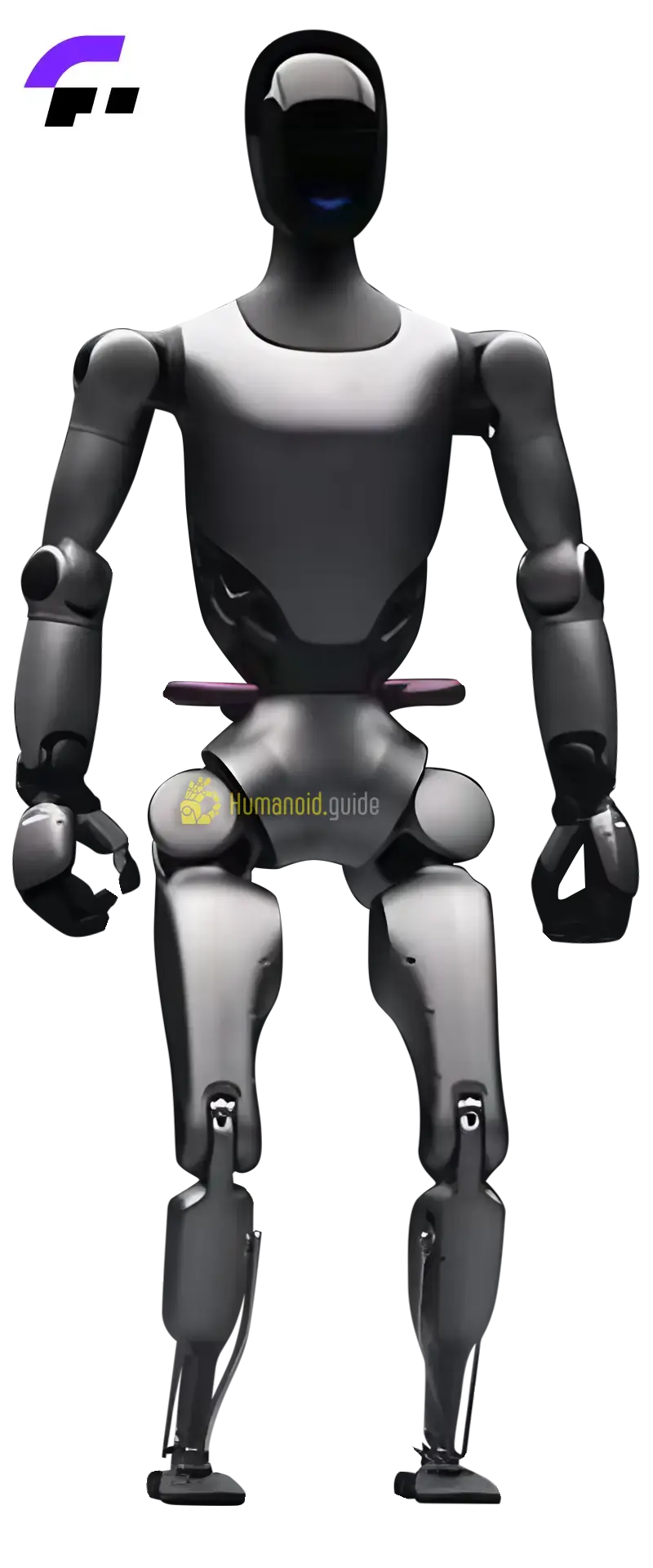
 Fourier GR-2 humanoid robot by Fourier, 53 DOF, 18 km/h speed.
The difference between the Fourier GR‑2 and the NEURA Robotics 4NE‑1 comes down to one word: availability. The GR‑2 isn’t a concept; it’s a pre‑order humanoid with detailed specs and an open software stack, made by Shanghai‑based Fourier. The 4NE‑1 from German startup NEURA Robotics promises a six‑hour runtime and 15 kg payload but has only been shown as a prototype with no confirmed release date. This comparison weighs every dimension—from price and degrees of freedom to SDKs and deployment readiness—so you know which humanoid fits a real‑world research or industrial program in 2026.
Robot database links: Fourier GR-2 and NEURA Robotics 4NE-1.
Fourier GR-2 vs NEURA Robotics 4NE-1: Specs Compared
The table below shows every published specification side‑by‑side. Missing data is marked “Not published” — these are precisely the gaps that reflect the prototype status of the 4NE‑1.
| Specification | Fourier GR-2 | NEURA Robotics 4NE-1 |
|---|---|---|
| Price (base) | $200,000 (pre‑order) | ~$200,000 (target, unconfirmed) |
| Price (configured) | Up to $500,000 (enterprise) | Not published |
| Height | 175 cm | 180 cm |
| Weight | 63 kg | 80 kg |
| Payload | 3 kg | 15 kg |
| Max speed | 18 km/h | 4 km/h |
| Battery life | 2 hours (swappable) | 6 hours |
| Degrees of freedom | 53 (12 per arm, 24 hand DOF) | 30 |
| IP rating | Not published | Not published |
| Onboard compute | NVIDIA Jetson Orin‑based, 275 TOPS | Not published |
| Sensors / LiDAR | Intel RealSense D455, LiDAR suite | Not published |
| SDK languages | C++, Python, ROS2 | Not published |
| ROS2 support | Yes | Undisclosed |
| Autonomy / fleet software | Open‑platform, NVIDIA Isaac compatibility | Not published |
| Safety certifications | Not published | Not published |
| Availability | Pre‑order (units shipping) | Enterprise‑only, prototype, no release date |
| Warranty / support | Enterprise service plans available | Not published |
The GR‑2 dominates in agility, dexterity, and compute clarity, while the 4NE‑1’s payload and battery numbers remain its upside—if it ever ships.
Fourier GR-2 Overview: The Agile, Open‑Platform Humanoid
The Fourier GR-2 is the second‑generation humanoid from Fourier, a robotics company headquartered in Shanghai, China. Announced in 2024, it builds on the GR-1 platform with a massive leap to 53 degrees of freedom, including 24‑DOF hands that enable fine manipulation. The robot weighs just 63 kg but stands 175 cm tall, with a peak joint torque of 380 N·m that powers a maximum running speed of 18 km/h—fast enough to chase a jogging human. Fourier positions the GR‑2 for research labs, universities, and early industrial pilots, offering a pre‑order path with units expected to ship to qualified enterprises. Pricing starts at $200,000, with higher‑tier enterprise configurations reaching $500,000. The open‑platform approach gives direct access to NVIDIA Isaac Lab, ROS 2, and the MuJoCo physics simulator, making the GR‑2 a compelling testbed for whole‑body control and AI‑based task learning.
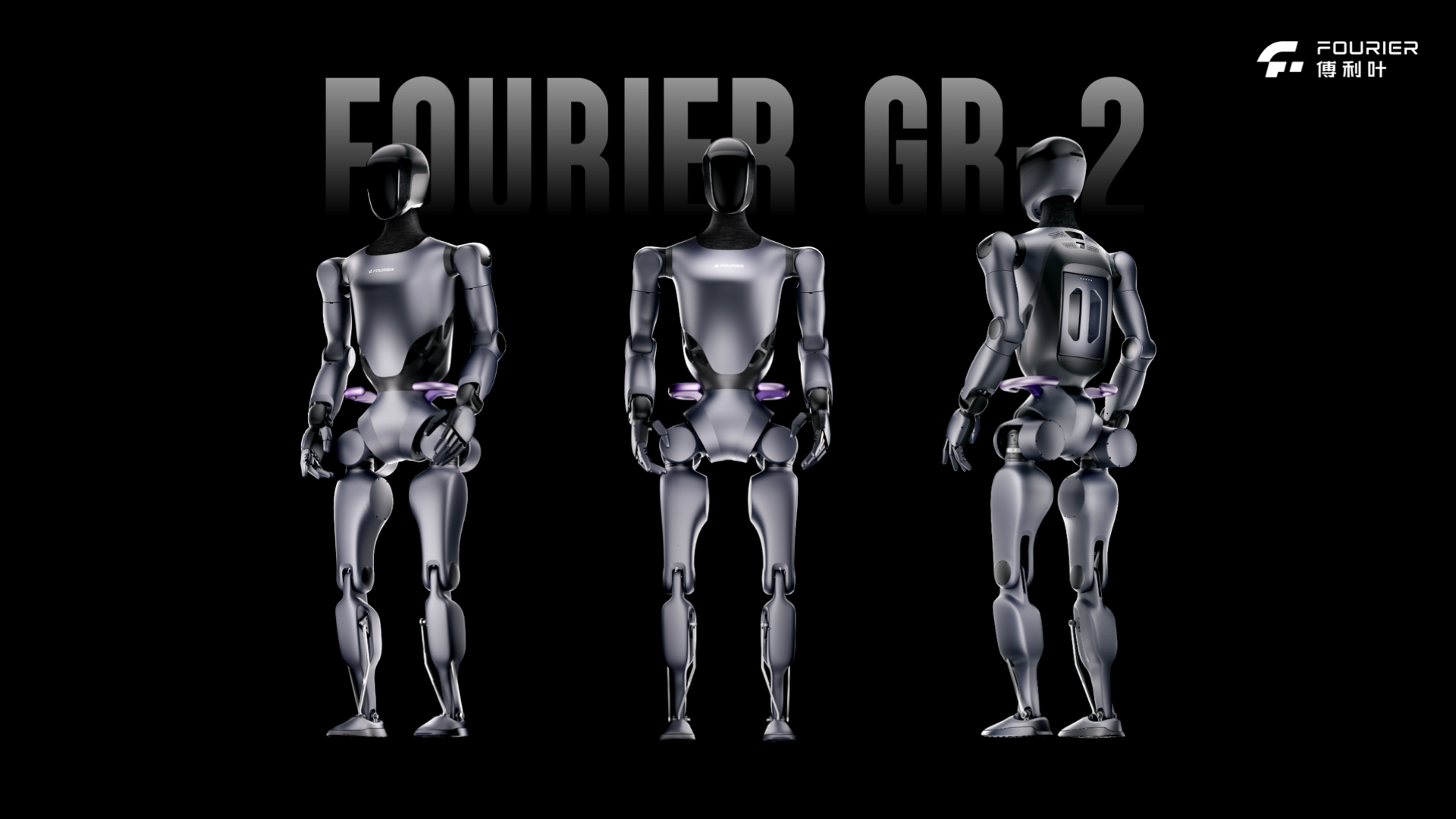 Fourier GR-2 side profile showing slim, lightweight frame.
NEURA Robotics 4NE-1 Overview: The Heavy‑Lifting Prototype
NEURA Robotics, based in Metzingen, Germany, revealed the 4NE-1 humanoid as part of its cognitive robotics portfolio. Touted as a “general‑purpose” humanoid, the 4NE-1 prototype boasts a 180 cm height, 80 kg weight, 30 degrees of freedom, and a substantial 15 kg payload capacity—more than enough for industrial bin‑picking and machine tending. Perhaps its most eye‑catching spec is the 6‑hour battery life, a full work shift without swapping. The company states a target price of around $200,000 per unit, but as of mid‑2026 the 4NE‑1 remains in the development phase, with no public commercial availability and only limited, controlled demos. NEURA has not released detailed software or SDK information, making it impossible to evaluate the platform’s openness for research. The 4NE‑1 is still an engineering prototype—impressive on paper, but not yet a product.
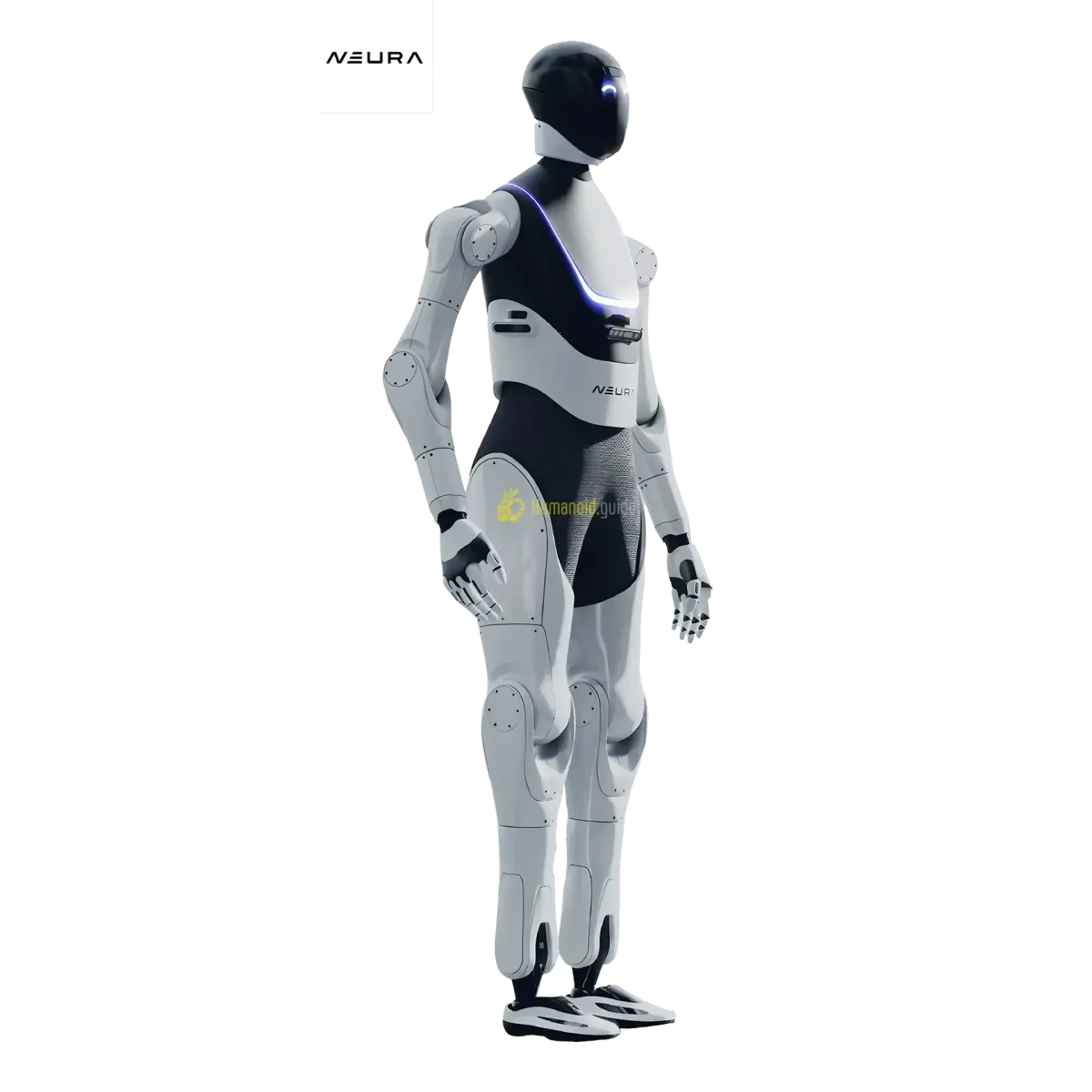 NEURA Robotics 4NE-1 prototype shown in lab environment, promising heavy payload and long runtime.
Head-to-Head by Dimension
Price & Configurations
Fourier offers a transparent pricing ladder starting at $200,000 for the GR‑2 base and scaling to $500,000 for enterprise configurations with expanded compute, sensor suites, and service plans. NEURA has only a stated target price of “around $200,000,” with no configuration tiers published. The GR‑2’s concrete MSRP makes budgeting and procurement straightforward; the 4NE‑1’s estimate is aspirational. Winner: Fourier GR‑2.
Performance & Specs
Payload
3 kg vs 15 kg. The GR‑2’s 3 kg payload limits it to lightweight object manipulation; the 4NE‑1’s 15 kg capability could handle actual factory tools and components. Winner: NEURA 4NE‑1.
Speed
18 km/h for the GR‑2 versus 4 km/h for the 4NE‑1. The GR‑2 can run, while the 4NE‑1 walks at a cautious pace. For dynamic navigation and research on locomotion, the GR‑2 is far ahead. Winner: Fourier GR‑2.
Battery Life
2 hours (swappable) for the GR‑2 vs 6 hours for the 4NE‑1. NEURA’s claimed duration would allow a full shift without interruption; the GR‑2 requires hot‑swapping, which is still viable but less seamless. Winner: NEURA 4NE‑1.
Degrees of Freedom
53 DOF (including 24‑DOF hands) on the GR‑2 dwarfs the 4NE‑1’s 30 DOF. That translates directly into dexterity: the GR‑2 can perform complex in‑hand manipulation while the 4NE‑1’s hand capabilities remain unspecified. Winner: Fourier GR‑2.
Software & SDK Ecosystem
The GR‑2 runs on an open, documented stack with official ROS 2, C++, and Python SDKs. It is natively compatible with NVIDIA Isaac Lab for reinforcement learning and MuJoCo for physics simulation. Researchers get full access to sensor streams and joint‑level control. The 4NE‑1’s software ecosystem is completely opaque: no published SDK, no ROS 2 confirmation, no simulation assets. For any team that needs to program its own behaviors, the GR‑2 is currently the only option. Winner: Fourier GR‑2.
Autonomy & Sensors
Fourier equips the GR‑2 with Intel RealSense D455 depth cameras, a LiDAR suite, and the NVIDIA Jetson Orin compute module (275 TOPS), enabling perception pipelines and onboard autonomy research. NEURA has not disclosed the 4NE‑1’s sensor suite or compute hardware. Until those specifications are public, the GR‑2’s sensor‑rich configuration makes it the demonstrably more capable autonomous platform. Winner: Fourier GR‑2.
Build Quality & Durability
Both robots lack published IP ratings or safety certifications. The GR‑2’s 63 kg frame hints at lightweight materials, while the 4NE‑1’s 80 kg weight suggests robust actuators. However, without third‑party durability tests or deployment data, neither robot has proven field reliability. Winner: Too early to call; both need published durability data.
Price & Total Cost of Ownership
Beyond the sticker price, total cost of ownership (TCO) for a humanoid includes software maintenance, spare parts, service contracts, and battery replacements. Fourier offers enterprise service plans with the GR‑2, covering updates and support, while the swappable battery system reduces downtime costs. A three‑year commitment for a GR‑2 might range from $300,000 to $700,000 all‑in, depending on the configuration and service level. For the 4NE‑1, TCO is impossible to calculate; with no commercial release, there are no service contracts, no spare‑parts pipeline, and no warranty terms. Even if the 4NE‑1 eventually matches its $200K target, unknown support costs add major financial risk. Winner: Fourier GR‑2—you can plan the budget; with NEURA you can’t.
Explore pricing and pre‑order options for the Fourier GR-2 on its product page.
Which Should You Buy? Fourier GR‑2 vs NEURA 4NE‑1 by Use Case
Choose the Fourier GR-2 if: - You are a university research lab needing an agile, open‑source‑friendly humanoid for locomotion and dexterous manipulation studies. - You plan to integrate with ROS 2, NVIDIA Isaac, or MuJoCo and require full sensor and joint‑level access. - You need a humanoid you can order today, not a prototype.
Choose the NEURA Robotics 4NE‑1 if: - Your application demands payload above 10 kg and you can wait 1–2+ years for a commercial release. - A 6‑hour runtime without battery swaps is mission‑critical. - You want to partner with a European manufacturer for eventual industrial deployments—on a longer horizon.
Choose neither if: - Your budget is well below $200,000; consider smaller humanoids like the Unitree G1 ($16K) or cobots for fixed‑task automation. - You need proven reliability, certifications, and immediate deployment; both of these robots are still early‑stage platforms.
Real-World Deployments & Track Record
Fourier has shipped GR‑2 units to select research institutions, and the robot has appeared in public demos at ICRA 2024 and the 2025 NVIDIA GTC. However, no large‑scale industrial deployment numbers have been published. NEURA’s 4NE‑1 has only been shown in lab‑setting videos and at a few closed‑door industry events; no units have been delivered to external customers. Deployment data source: Fourier’s press releases and trade fair schedules; NEURA’s corporate updates. Winner: Fourier GR‑2 edges ahead simply by being in external hands.
SDK, Software & Developer Ecosystem
The GR‑2 comes with a mature developer package: ROS 2 Humble, C++/Python libraries, NVIDIA Isaac Sim assets, and MuJoCo model files. This stack has been validated by third‑party researchers and allows rapid prototyping of RL‑based policies. In contrast, NEURA has not released any SDK documentation, ROS 2 nodes, or simulation models for the 4NE‑1. Without a public SDK, the 4NE‑1 remains a closed box for developers. Winner: Fourier GR‑2 (by a wide margin).
Support, Warranty & Availability
Fourier provides enterprise support with guaranteed response times and a warranty on the GR‑2 hardware, though exact terms are negotiated per contract. Lead times for pre‑orders are communicated upon inquiry, with deliveries expected within weeks or months. NEURA offers no publicly available warranty or support plan; the 4NE‑1 is not available for order, and there is no timeline for general availability. For any project that needs a humanoid in 2026, the GR‑2’s support structure is a clear advantage. Winner: Fourier GR‑2.
Comments